

Beidian Shuzhi and China-Japan Friendship Hospital Launch 'Yingzhi MedAssist' at Boao Super Hospital and Unveil 'Yingzhi Alpha Trusted Healthcare Data Platform'
“The challenges of aggregating, mining, and circulating clinical big data have long constrained the healthcare industry’s transition from experience-driven to data-driven models, constituting a core bottleneck in the implementation of precision medicine. Beidian Digital Intelligence boasts profound technical expertise in the field of trusted data and possesses a deep understanding of the healthcare sector. We are delighted to collaborate closely with Beidian Digital Intelligence to provide systematic support for resolving challenges in medical data application, thereby truly bringing clinical big data to ‘life’ and into ‘use,’ and injecting trusted data momentum into the high-quality development of the healthcare industry,” stated Professor Zuo Xianbo, Deputy Director of the Key Laboratory of Clinical Big Data Standardization and Integrated Application under the National Health Commission, and Director of the Big Data Center at China-Japan Friendship Hospital.
“As a dermatologist who has long worked on the front lines of clinical practice, I find that ‘Yingzhi Yizhu,’ an intelligent agent application jointly developed by Beidian Digital Intelligence and China-Japan Friendship Hospital, closely aligns with real-world clinical reasoning and provides important collaborative support for our diagnostic and treatment decisions. It not only efficiently uncovers deep-seated associations among diseases and rapidly retrieves literature and guidelines, but also significantly enhances the precision and safety of medication use, becoming a reliable and trustworthy partner in collaborative decision-making. We look forward to its continuous iteration and greater value creation in clinical settings in the future,” stated a dermatologist from Boao Super Hospital.
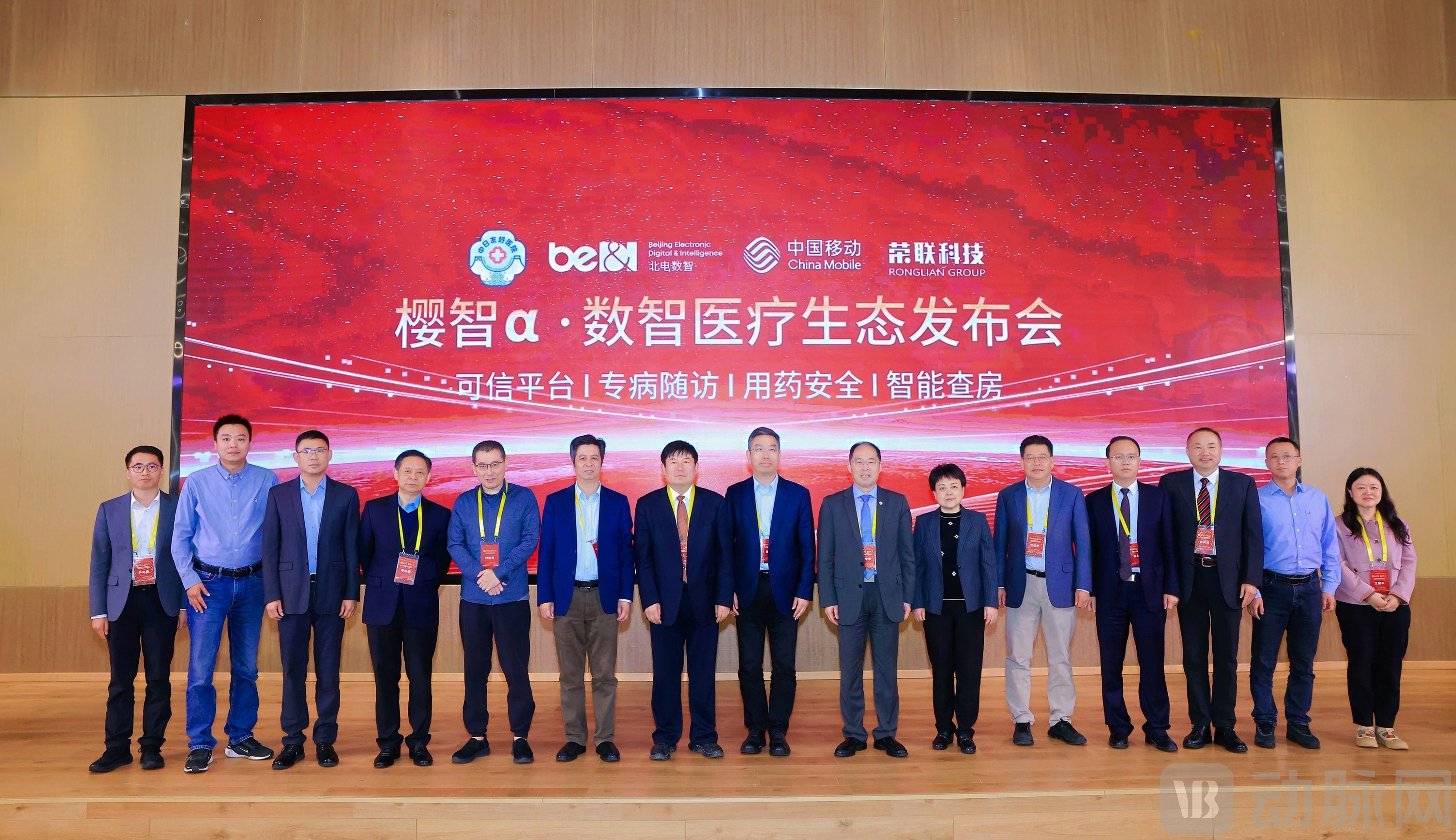
On December 27, at the 7th Boao Forum on Innovative Medicine for Skin Health, the AI agent application “Yingzhi Medical Assistant,” jointly developed by China-Japan Friendship Hospital and Beidian Digital Intelligence, made its debut. As the commercialized application of the “Yingzhi α·Dermatology-Specific Large Language Model” co-developed by both parties, it can be deeply integrated into the entire complex clinical decision-making process, ranging from in-depth case analysis to guidance on safe medication use. It has already been implemented in clinical practice at Boao Super Hospital, receiving positive feedback. During the forum, both parties also announced the launch of the “Yingzhi α·Trusted Healthcare Platform,” established through their deepened collaboration. Featuring an innovative “1+N+1” architecture, this platform has pioneered the end-to-end integration of medical data—from aggregation and governance to circulation and utilization—within China, thereby comprehensively promoting the release of the value of medical data elements.
Leveraging its full-stack layout of “data, computing, modeling, and application” and deep collaborations with leading hospitals, Beidian Digital Intelligence has established a comprehensive digital-intelligence platform system. Supported by domestically produced Hunyuan high-efficiency computing power, this system integrates data elements, model capabilities, and practical applications, fostering the deep integration of AI technology with the healthcare industry and providing a robust and trustworthy foundation for the end-to-end digital and intelligent transformation of the healthcare sector.
Equipped with clinical reasoning and full-process collaborative decision-making, “Yingzhi Medical Assistant” embeds AI deeply into the entire workflow of complex decision-making.
Leveraging the reliable and professional medical understanding, diagnostic, and generative capabilities of the “Yingzhi α Dermatology-Specific Large Language Model,” the new intelligent agent application “Yingzhi Medical Assistant” provides end-to-end intelligent support, ranging from medical record analysis and report interpretation to medication guidance and documentation generation. This solution aims to enhance the quality and efficiency of clinicians’ decision-making while promoting the standardization and normalization of diagnosis and treatment processes.
Distinct from “answer-style” auxiliary diagnostic plug-in tools based on general-purpose large language models, “Yingzhi Medical Assistant” is committed to building a “collaborative decision-making AI.” By deeply integrating high-quality clinical big data and systematically learning clinical reasoning and decision-making pathways, it serves as an intelligent assistant that understands physicians, possesses specialized expertise, and can be deeply embedded into clinical workflows. It provides end-to-end support for physicians in making complex diagnostic and treatment decisions, delivering multidimensional, comprehensive decision support.
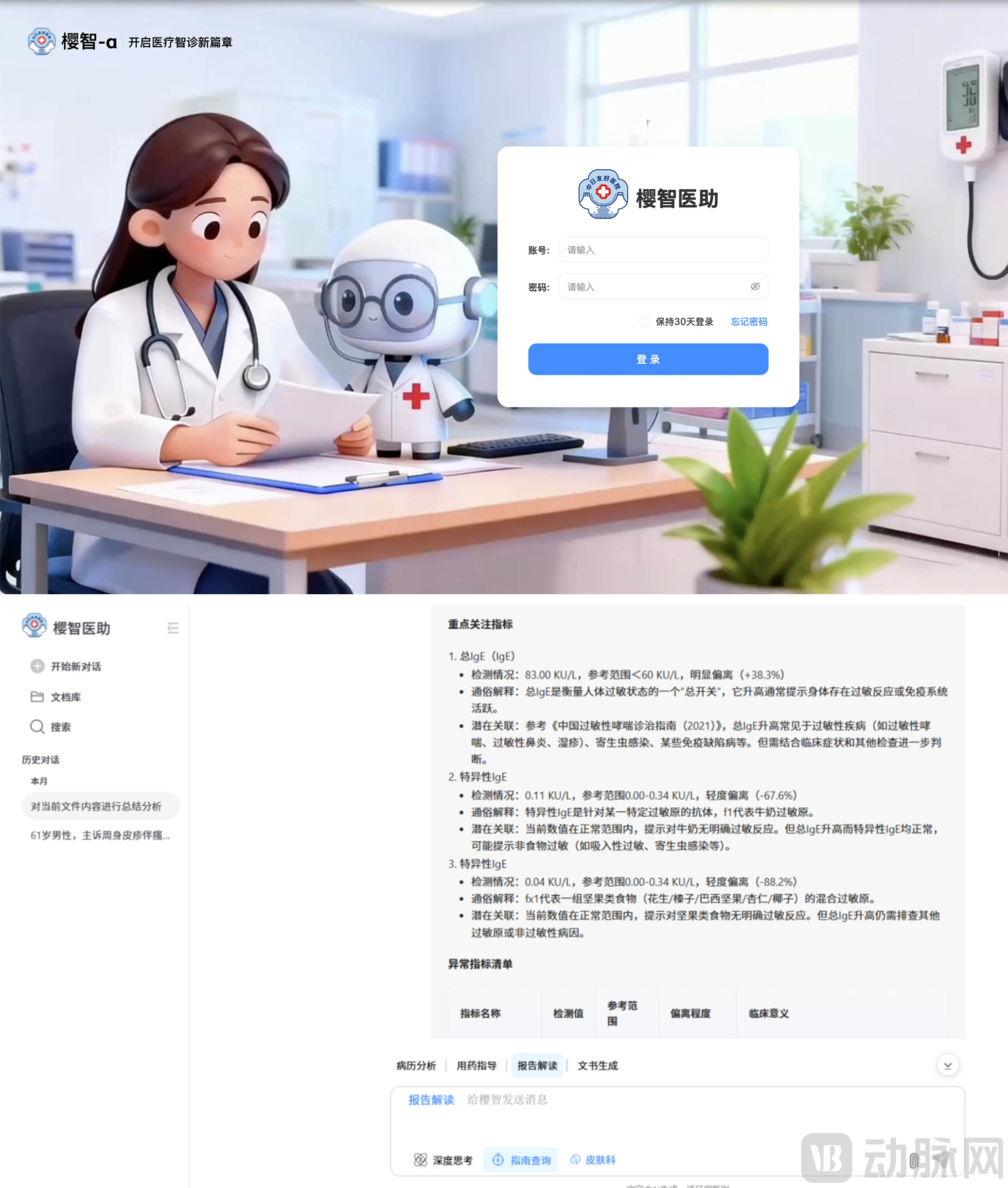
In practical applications, “Yingzhi Medical Assistant” can first assist physicians in collecting disease-related information to form an initial clinical impression, and then establish preliminary diagnostic hypotheses based on the patient’s chief complaints, symptoms from the history of present illness, and physical examination findings. During the differential diagnosis process, “Yingzhi Medical Assistant” constructs a differential diagnosis matrix following a logical progression from common conditions to rare and complex disorders, clearly presenting supporting and non-supporting evidence for each potential diagnosis, along with recommended decision pathways to aid physicians in making subsequent decisions. In the test-ordering phase, “Yingzhi Medical Assistant” leverages its extensive knowledge base to prioritize economical, low-risk, and non-invasive screening options initially; once the diagnostic scope is narrowed, it further recommends more targeted tests, which may involve minimal invasiveness or higher costs, to confirm the diagnosis.
Notably, throughout the analytical process, the model deeply explores cross-system characteristics and underlying causes behind symptomatic manifestations, identifies the intrinsic links between symptoms and systemic health, and alerts physicians to potential risk factors. All analyses are integrated with in-depth retrieval of vast, rapidly updated medical literature, clinical guidelines, and pharmaceutical knowledge, thereby providing “structured evidence-based rationale” for precise diagnosis and triaged care of complex cases, as well as “safe medication assessments” that balance efficacy, drug interactions, and the impact of systemic diseases.
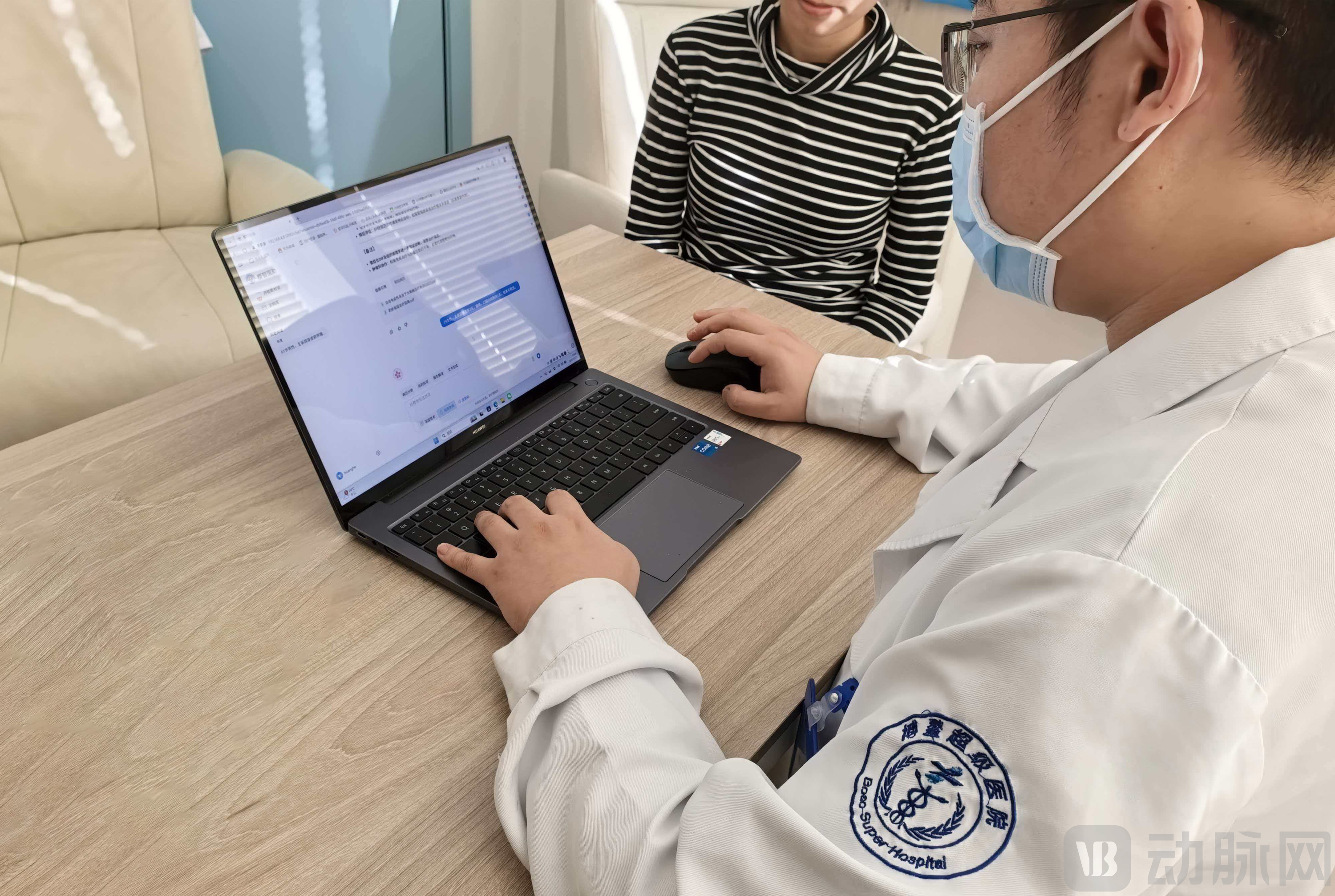
“Yingzhi Medical Assistant” will promote a new diagnostic and treatment paradigm of “human-AI collaborative intelligence,” making AI a trusted collaborative decision-making partner for physicians. Currently, this intelligent agent has been pioneered for clinical use at Boao Super Hospital. In the future, it will be gradually rolled out to medical institutions at all levels across China, leveraging a standardized intelligent assistance system to help alleviate the shortage of primary healthcare resources and the imbalance in regional diagnostic and treatment capabilities.
From Joint Model Development to Trusted Data: Comprehensive Collaboration to Support the Industrialization of Key Provincial Laboratories
Recently, the “Key Laboratory of Standardization and Integrated Application of Clinical Big Data” (hereinafter referred to as the “NHC Key Laboratory”), established by China-Japan Friendship Hospital, was officially approved. Relying on China-Japan Friendship Hospital and collaborating with multiple research institutes, the NHC Key Laboratory is dedicated to addressing core challenges in the intelligent application of cross-institutional medical big data. High-quality clinical big data serves as a critical foundational element for training large models and developing AI agents. However, due to the high sensitivity of medical data, its dispersed sources, and inconsistent standards, aggregation and access management prove difficult. Furthermore, uneven quality of raw data and the scarcity of rare disease data hinder the deep mining of data value. Strict security, privacy, and compliance constraints also impede cross-institutional data circulation and utilization. Consequently, the application of clinical big data has long faced four major practical challenges: “insufficient supply, limited flow, ineffective use, and security risks,” which have become key bottlenecks to the large-scale implementation of AI in healthcare.
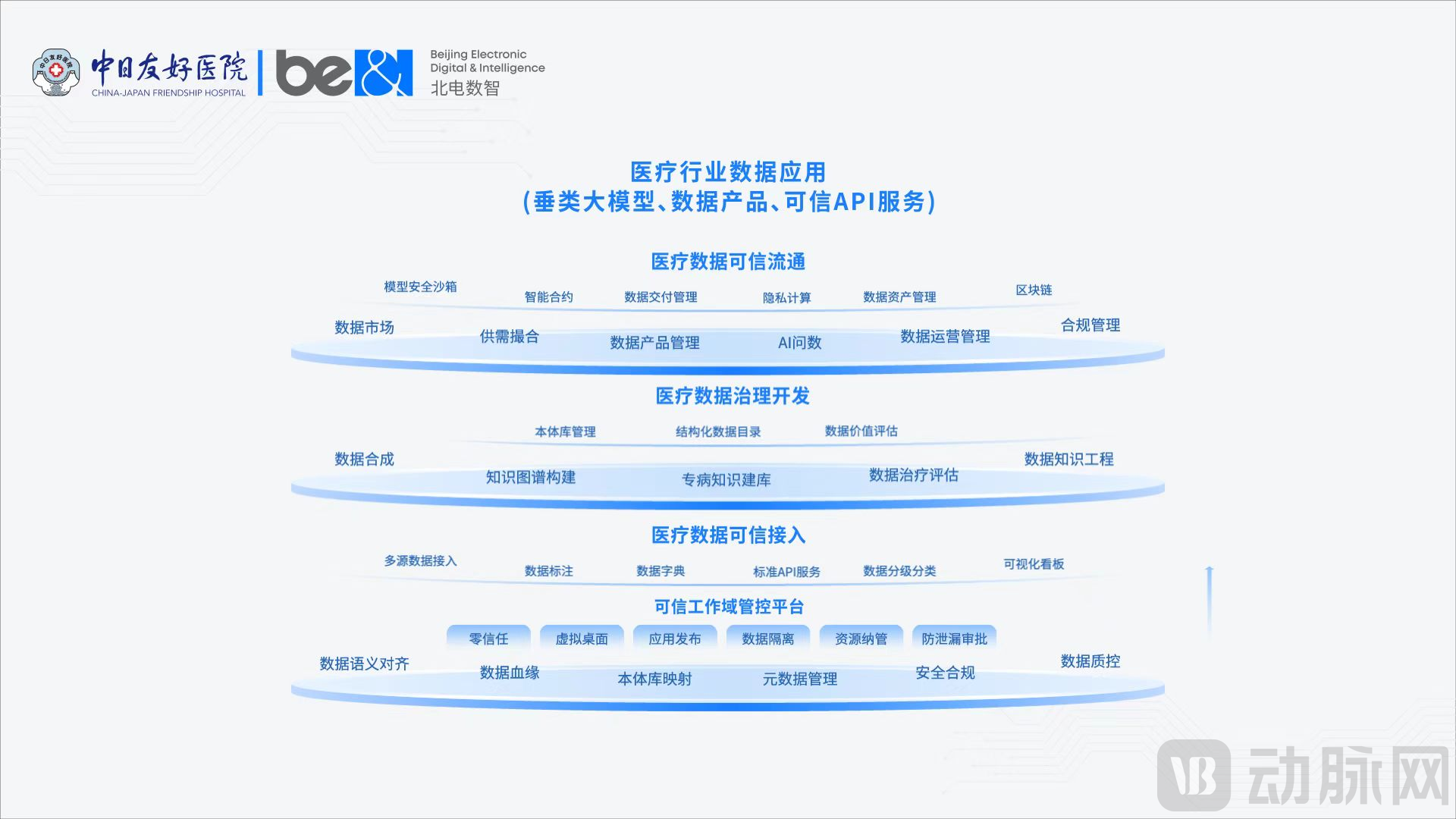
Addressing the core pain points in the aggregation, governance, and circulation of medical data, and leveraging the Honghu Trusted Space, Beidian Shuzhi, in collaboration with the Key Laboratory of the Commission, has launched the “Yingzhi α·Medical Trusted Platform,” innovatively establishing a new “1+N+1” paradigm for trusted medical data services:
One Trusted Data Access Platform: Provides unified aggregation and trusted access for various types of clinical data. The “Trusted Workspace Management Platform” allocates and manages all services and computing resources, establishing a secure and controllable virtual working environment with multi-dimensional isolation mechanisms. The “Medical Data Integration and Governance Platform” effectively enhances hospital research efficiency and promotes the development of precision diagnosis and treatment by integrating multi-source data, databases, and multidimensional research.
N Trusted Data Development and Governance Tools: Providing capabilities for data product development and data asset management, including data synthesis, medical knowledge engineering, medical data quality assessment, and value evaluation, to achieve in-depth mining of the full-chain value of medical data and trusted applications;
One Trusted Data Circulation Platform: Leveraging robust AI-powered data querying capabilities, it provides efficient and accurate technical support for data parsing and structured processing to build high-quality datasets, offering a unified and efficient trusted foundation for data circulation to enable seamless data flow.
“Yingzhi Alpha · Medical Trusted Platform” will effectively promote the standardization and integrated application of clinical big data, ensuring that data is “accessible, flowable, usable, and secure.” Leveraging this platform, Beidian Shuzhi and China-Japan Friendship Hospital will further deepen innovation in “AI + Healthcare” scenarios, focusing on the development of disease-specific and specialty-specific models for particular conditions, dynamic cognitive models covering the entire patient lifecycle, and data-driven intelligent applications for population health management. These efforts aim to advance lifecycle health management for residents and support the implementation of precision medicine. Additionally, as a partner of the Key Laboratory of the National Health Commission, Beidian Shuzhi will collaborate on the opening, governance, application, and translation of research findings related to clinical big data, co-creating a new ecosystem for intelligent scientific research.
Looking ahead, Beidian Digital Intelligence will deepen its collaboration with clients and partners to jointly promote the standardization and localization adaptation of the underlying infrastructure for medical AI. Together, we will explore new models for clinical big data services and value realization, continuously optimize and iterate large model technologies and related intelligent agent applications guided by actual clinical needs, and transform elements such as computing power, knowledge, and data into one-stop, implementable diagnostic and therapeutic support capabilities. By building a "human-machine collaborative" clinical decision-making system, we aim to advance healthcare from "experience-based medicine" to "intelligent medicine," empower the medical service system to improve quality and efficiency, and facilitate the effective implementation of the Healthy China strategy.