

Epigenetic Editing: From Concept to Clinic – A New Era in Precision Medicine
The human genome carries approximately 20,000 genes, but not all genes are expressed in every cell. Epigenetic modifications, serving as the "regulatory switches" for gene expression, have dysregulation linked to nearly all human diseases.
A review article published in Nature Reviews Drug Discovery points out that,Epigenetic editing technology enables precise rewriting of epigenetic marks without altering the DNA sequence, thereby achieving durable regulation of gene expression.
This review is authored byProfessor Elizabeth A. Heller of the Icahn School of Medicine at Mount Sinai, Professor Lacramioara Bintu of Stanford University, and Professor Marianne G. Rots of the University Medical Center Groningen in the NetherlandsCo-authored.
This article systematically reviews the developmental trajectory of epigenetic editing, from the initial proof-of-concept in 2003 to the launch of the first clinical trial in 2022. It demonstrates how this technology has overcome early concerns regarding efficacy, specificity, and stability, exhibiting therapeutic effects in animal models comparable to those of CRISPR-mediated gene knockout. Currently,At least 14 biotechnology companies have embarked on the development of epigenetic editing therapeutics,Three clinical trials have been initiated to test treatments for hepatocellular carcinoma, hepatitis B, and muscular dystrophy.
Epigenetics studies how gene expression is regulated through chemical modifications without changes in the DNA sequence. In the human genome,DNA methylation (5mC) is one of the most classic epigenetic modifications,This process primarily occurs on cytosine bases, affecting the transcriptional activity of genes. Histones, serving as the "spools" around which DNA is wrapped, are also regulated by post-translational modifications (such as acetylation and methylation), which modulate chromatin accessibility and gene expression. In recent years, large-scale multi-omics initiatives have revealed that many diseases are accompanied by genome-wide epigenetic alterations, driving the development of small-molecule epigenetic drugs (epi-drugs).
Currently,The FDA has approved 10 epigenetic drugs,Nine of these agents are used for cancer therapy, and one is indicated for Duchenne muscular dystrophy. These drugs modulate gene expression by inhibiting epigenetic “writers,” “erasers,” “readers,” or “remodelers.” For example, the hypomethylating agents azacitidine and decitabine are used to treat myelodysplastic syndromes, while histone deacetylase (HDAC) inhibitors such as vorinostat are used to treat T-cell lymphoma.
However, these small-molecule drugs have significant limitations:They act on the entire genome, lack gene specificity, and have transient effects, with epigenetic modifications rapidly reverting after drug discontinuation.More importantly, this "broad-spectrum" effect leads to severe side effects, limiting its widespread application beyond hematologic malignancies.
Epigenetic editing technologies offer a novel solution. This approach fuses programmable DNA-binding domains (DBDs) with epigenetic effectors,Achieving precise writing or erasure of epigenetic modifications at specific genetic loci.As early as 2003, researchers fused zinc finger proteins (ZFPs) with the histone methyltransferases G9a and Suv39H1, successfully enriching the repressive H3K9me3 modification at the VEGFA gene promoter region and achieving gene silencing.
However, this groundbreaking work saw little follow-up over the subsequent decade, until the emergence of CRISPR-Cas9 technology in 2013 reignited enthusiasm in the field. Catalytically dead Cas9 (dCas9) retains DNA-binding capability but lacks nuclease activity; it can be precisely targeted to specific genes via single guide RNA (sgRNA), providing a flexible and cost-effective platform for epigenetic editing. This technological innovation has rapidly transformed epigenetic editing from an exploratory tool used in a few laboratories into a therapeutic strategy heavily invested in by both academia and industry.
EpigeneticGenetic Editing Technology AdvancesIn the process of clinical translation, researchers need to address four core issues:Sufficiency and efficacy of editing, site-specificity, accessibility to heterochromatin, and stability of induced edits.These challenges were once considered “insurmountable obstacles” to the technology, but research over the past decade has systematically overcome them.
Adequacy and Efficacy of EditingIn this regard, early studies have confirmed that targeted editing of a single epigenetic modification is sufficient to alter endogenous gene expression. For example, in 2013, Maeder et al. utilized TALE-TET1 (TET being a DNA demethylase) to target demethylation of the ICAM-1 gene promoter, successfully activating gene expression; in the same year, Mendenhall et al. used TALE-LSD1 (a histone demethylase) to edit enhancers, achieving gene silencing.
DNA methylation editing has also demonstrated causal regulatory capabilities: ZFP-DNMT3A (DNA methyltransferase) can silence endogenous genes such as Her2/Neu. However,Editorial efficiency is highly dependent on the target gene, effector type, and cell type.Systematic studies have revealed that lowly expressed genes are more susceptible to DNA methylation-mediated silencing than highly expressed genes. Methylation of active transcription factor binding sites leads to gene repression, whereas methylation of repressive transcription factor binding sites paradoxically activates gene expression. These findings indicate that the “rules of engagement” for epigenetic editing are highly complex, necessitating a comprehensive consideration of effector activity, genomic accessibility, and the recruitment of endogenous transcription factors and chromatin regulators.
Site-specificityis a key requirement for clinical applications. Although the design of zinc finger proteins (ZFPs) and transcription activator-like effectors (TALEs) is relatively complex, numerous studies have confirmed their in vivo targeting specificity, including their application in gene editing within clinical trials. While CRISPR-dCas9 offers a simpler design, it suffers from off-target binding caused by sgRNA-DNA mismatches. Researchers have improved specificity through engineered CRISPR variants, chemical modification of sgRNAs, and off-target prediction algorithms.
It is worth noting that,Effectors themselves also influence specificity:Full-length effector proteins, such as TET1, p300, and DNMT3A, can induce genome-wide off-target modifications, even leading to cell growth inhibition and death, which poses a barrier to the construction of stable cell lines. Solutions include using only the catalytic core domain or rationally designing the effectors.
Encouragingly, researchers have achievedAllele-Specific Editing(allele-specific editing), which silences mutant alleles while preserving wild-type allele activity, paving the way for treating dominant oncogenic mutations and abnormal imprinting patterns.
Accessibility of HeterochromatinIt was once considered the primary obstacle to activating silent genes. Heterochromatin is highly condensed, theoretically limiting the binding of epigenetic editing tools. However, numerous studies have demonstrated that artificial transcription factors (ATFs) and epigenetic editors can successfully activate silenced fetal genes and tumor suppressor genes.
Although heterochromatin does influence binding kinetics and editing efficiency, this barrier is not insurmountable. Researchers have enhanced CRISPR-Cas9 activity at silenced loci by co-targeting transcriptional activators or combining epigenetic drugs, strategies that are equally applicable to improving the efficiency of epigenetic editing.
Furthermore, using the catalytic domain instead of the full-length effector, employing modular systems (such as SunTag and MS2), and applying small DNA-binding domains (DBDs) (such as ZFPs or smaller CRISPR variants like Cas12f) help overcome size limitations and improve accessibility to heterochromatin.
StabilityThis is one of the core advantages of epigenetic editing over genome editing: transient expression of editors can achieve durable gene regulation, with effects comparable to CRISPR knockout, while avoiding the risks associated with permanent genomic alterations. However, predicting which epigenetic edits will be maintained after editor removal remains a challenge.
Studies have shown that promoter-targeted DNA methylation can achieve durable silencing in certain genes (such as SOX2 and CDKN2A), but fails to be maintained in others (such as VEGFA). Genome-wide studies have revealed that approximately 25% of targets retain DNA methylation one week after editing, with this maintenance correlating with baseline enrichment of the repressive histone mark H3K27me3, suggesting that the synergistic interaction between DNA methylation and histone modifications is crucial for stability.
In fact,Combination editors significantly enhance maintenance effects.The groundbreaking 2016 study by Amabile et al. demonstrated that the combined targeting of B2M, IFNAR1, and VEGFA genes using KRAB and DNMT3A3L achieved a synergistic maintenance effect.
In 2021, Nuñez et al. conducted the first genome-wide screening using CRISPRoff (a KRAB-dCas9-DNMT3A3L fusion protein), demonstrating that transient silencing of many genes can be maintained long-term.
Milestone studies in 2024 showed that,A single intravenous injection of LNP-delivered ZFP-KRAB-DNMT3A3L mRNA for targeted silencing of the mouse Pcsk9 gene sustained cholesterol-lowering effects for at least one year and maintained efficacy for over two months following liver regeneration, with efficiency comparable to that of traditional gene knockout.
The successful application of epigenetic editing in animal models has laid a solid foundation for its clinical translation. This review categorizes in vivo studies into four types:Class I: Animal models with transgenic expression of editors; Class II: Animals generated from transient expression in early embryos; Class III: Transplantation studies using in vitro reprogrammed cells; Class IV: Disease models via direct in vivo administration.
Neuropsychiatric DisordersIt is one of the earliest application areas of epigenetic editing. In 2014, Heller et al. used ZFP-G9a to target the Fosb gene in the mouse brain and write inhibitory H3K9me3 marks, successfully blocking cocaine-induced Fosb expression and reward behaviors while reducing aggression in mice. Subsequent research has expanded to disease models such as post-traumatic stress disorder (PTSD) and alcohol use disorder.
Notably, in 2022, Bohnsack et al. used dCas9-p300 to target the SARE enhancer of the Arc gene, increasing H3K27ac modification and successfully ameliorating adult anxiety and excessive alcohol consumption behaviors following adolescent alcohol exposure. These studies not only validated the causal relationship between epigenetic regulation of specific genes and disease phenotypes but also demonstrated the potential of epigenetic editing interventions for complex psychiatric disorders.
Neurodegenerative Diseasesis another important target area. For Alzheimer’s disease, researchers have used dCas9-TET1 to demethylate the Cathepsin D gene, promoting amyloid-β degradation; alternatively, they have employed dCas9-DNMT3A to silence the APP gene (which encodes the amyloid precursor protein), thereby reducing the production of pathological proteins.
In 2024, Han et al. developed a light-induced exosomal delivery system for the dCas9-DNMT3A ribonucleoprotein (RNP) complex. Administered intranasally to target the Bace1 gene (which encodes β-secretase 1), this approach alleviated amyloid pathology and improved deficits in recognition memory.
In Parkinson’s disease models, targeted delivery of dCas9-DNMT3A via brain-specific exosomes silenced the SNCA gene (which encodes α-synuclein), thereby alleviating disease-like impairments. Research on fragile X syndrome (FXS) has been particularly encouraging: the FMR1 gene becomes heterochromatic and transcriptionally silenced due to repeat expansion. Liu et al. used dCas9-TET1 to demethylate FMR1, successfully activating its expression and rescuing the phenotype in an FXS mouse model, with the activation effect sustained for up to three months in transplanted neurons. This study not only demonstrates that epigenetic editing can activate deeply silenced heterochromatic genes, but also suggests its durability in post-mitotic neurons.
OncologyResearch in this field has primarily focused on Class III (cell transplantation) studies. Multiple studies have demonstrated that stably expressing ZFP-DNMT3A or TALE-TET1 to edit tumor cells, followed by transplantation into animal models, can reduce tumor invasiveness by targeting the silencing or activation of single cancer-related genes (such as SOX2, MGMT, Par4, and Dpp4).
In 2025, Lin et al. used CRISPRoff to transiently silence the MGMT gene (which encodes O6-methylguanine-DNA methyltransferase), thereby sensitizing primary glioblastoma cells to temozolomide chemotherapy; the silencing effect persisted for at least 10 days post-transplantation. These studies suggest that even transient epigenetic editing may enhance the efficacy of existing therapies.
Liver Diseasehas become the field with the greatest potential for clinical translation.Two independent studies in 2024 separately reported on the achievement of long-term cholesterol lowering by targeting the PCSK9 gene:Cappelluti et al. encapsulated ZFP-KRAB-DNMT3A3L mRNA in lipid nanoparticles (LNPs); after a single intravenous injection in mice, Pcsk9 silencing and cholesterol-lowering effects persisted for at least one year and remained evident for more than two months even after forced liver regeneration. Similarly, O’Donnell et al. achieved Pcsk9 silencing lasting up to six months using TALE-MQ1 (a bacterial DNA methyltransferase).
More importantly, subsequent studies in humanized transgenic mice and primates validated the efficacy and durability, and confirmed that reversibility of silencing can be achieved by targeting TET1, with the recovery of PCSK9 expression sustained in vivo for at least 42 days. These data provide robust evidence for the clinical application of epigenetic editing.
In terms of delivery technologies, adeno-associated virus (AAV) and lipid nanoparticles (LNPs) are the two mainstream platforms. AAV is the most commonly used delivery method for CRISPR tools in clinical trials; however, serious adverse events, including fatalities, suggest that viral capsids may induce immunotoxicity. The 4.7 kb payload limit of AAV also restricts the application of large epigenetic editors. Researchers are overcoming this barrier by developing dual-AAV systems, employing smaller Cas variants (such as Cas12f), or adopting strategies that recruit endogenous effectors (e.g., ZFP fusions with H3K4me0 and DNMT3L to recruit endogenous DNA methyltransferases). As the successful vector for SARS-CoV-2 mRNA vaccines, LNPs have demonstrated application potential in epigenetic editing. Their low immunogenicity allows for repeated dosing, and tissue-specific delivery can be achieved through targeted ligands.
Furthermore, non-viral delivery methods (such as engineered cells, scaffolds, virus-like particles, and recombinant proteins) are also being explored. In 2025, Yano et al. reported for the first time the carrier-free intratracheal delivery of zinc finger protein (ZFP) or dCas9 fused with TET1 and TDG (thymine DNA glycosylase) recombinant proteins. By targeting the Cxcl11 gene in mouse lung epithelial cells via aerosol inhalation and intranasal solution, they achieved demethylation and gene activation, thereby restoring interferon-gamma responsiveness in mice.
The pace of clinical translation is accelerating.At least 14 companies have engaged in the development of epigenetic editing therapeutics, with most adopting strategies targeting DNA methylation or demethylation. In 2022, Omega Therapeutics’ OTX-2002 became the first epigenetic editing drug to enter clinical trials. This therapy utilizes a combination of ZFP-MQ1 and ZFP-KRAB to silence the MYC oncogene, targeting solid tumors such as hepatocellular carcinoma, and has received FDA Orphan Drug designation. However, the Phase I/II MYCHELANGELO I study (enrolling 24 patients) failed to advance further.
Tune Therapeutics’ Tune-401 has initiated clinical trials in the Western Pacific region, employing CRISPR-mediated DNA methylation to silence hepatitis B virus genes, including both integrated and episomal covalently closed circular DNA (cccDNA). In 2025, Epicrispr’s EPI-321 received FDA orphan drug designation and completed treatment of its first patient; this therapy uses dCasMINI (dCas12f) to restore DNA methylation of the DUX4 gene in patients with facioscapulohumeral muscular dystrophy (FSHD), with its small size enabling adeno-associated virus (AAV) delivery. Other clinical pipeline candidates target diseases such as Alzheimer’s disease (APOE ε4), Duchenne muscular dystrophy (UTRN), amyotrophic lateral sclerosis (C9orf72), Huntington’s disease (HTT), and Parkinson’s disease (SNCA).
Epigenetic editing technology has evolved from proof-of-concept to clinical trials in just two decades, demonstrating its immense potential as a novel therapeutic strategy.Compared with permanent genome editing, epigenetic editing offers the unique advantages of being “precise, reversible, and durable.”Studies have confirmed that this technology can achieve therapeutic effects comparable to CRISPR knockout, while avoiding chromosomal translocations and other genomic abnormalities potentially caused by DNA double-strand breaks. More importantly, the reversibility of epigenetic editing provides a safety guarantee for clinical applications: primate studies have demonstrated that targeting TET1 can restore the expression of silenced genes, with the restorative effect lasting for at least 42 days.
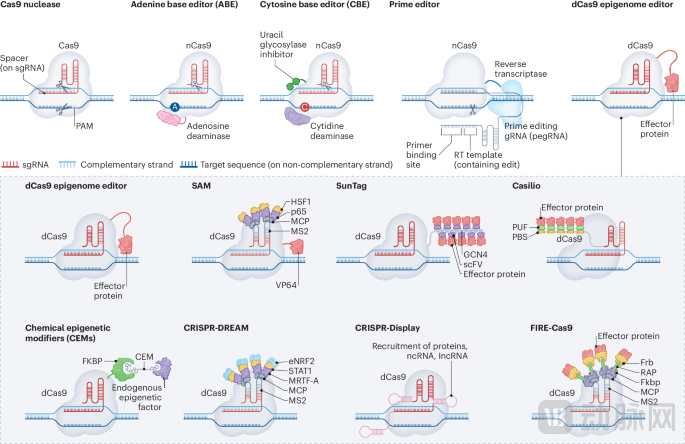
Figure: Discoveries and Epigenome Editing Technologies in Medicine
(Source: Nature)
However, this technology still faces challenges.There is still a lack of concise rules for predicting the efficacy and stability of specific epigenetic edits in a given gene and cell type.The current "rules of engagement" encompass multiple factors, including effector domain activity, genomic locus accessibility, recruitment of endogenous transcription factors and chromatin regulators, CpG density, nucleosome positioning, and the usage of alternative transcription start sites.
High-throughput screening and systematic studies are filling this knowledge gap, but personalized prediction still requires further development. In addition,Optimization of delivery technologies, development of biomarkers, and in-depth understanding of the mechanisms of epigenetic reprogramming,These are all key to achieving widespread clinical application.
From an ethical perspective, epigenetic editing is considered less invasive and more reversible than genome editing, yet both pose potential risks to human health and evolution. Due to erasure waves and epigenetic reprogramming during embryogenesis, the likelihood of transgenerational inheritance following epigenetic editing is far lower than that associated with genome editing. Although mouse studies have shown that gene-targeted methylation and related phenotypes can be inherited across generations, this may be linked to experimentally induced DNA “scars.” Rigorous and responsible technological innovation will ensure the safe application of this powerful and versatile new therapeutic approach.
Looking ahead, epigenetic editing is poised to become a vital component of precision medicine. With the continued optimization of platforms such as ZFPs, TALEs, and CRISPR, alongside improvements in delivery systems including LNPs, AAVs, and others, this technology will offer therapeutic options for a broader range of diseases.
Ongoing clinical trials will provide critical efficacy and safety data, guiding the direction of subsequent drug development. Epigenetic editing is not merely a research tool, but a therapeutic strategy poised to transform clinical practice. From “broad-spectrum drugs” to “precision editing,” and from “proof-of-concept” to “clinical application,” each leap forward in this technology is reshaping our understanding of gene regulation and disease treatment, bringing new hope to countless patients.