

Hong Kong as the Bridgehead for Chinese Medical Companies Going Global: An Exclusive Interview with Prof. Yu Changhai, Chairman of Hong Kong Biotechnology Association

Hengrui Pharma
Innovative and High-Quality Pharmaceutical Developer

Cofoe
Intelligent Medical Device R&D, Production, and Sales Company
In 2025, the surge on the Hong Kong Stock Exchange once again drew the attention of mainland China’s healthcare industry to Hong Kong.
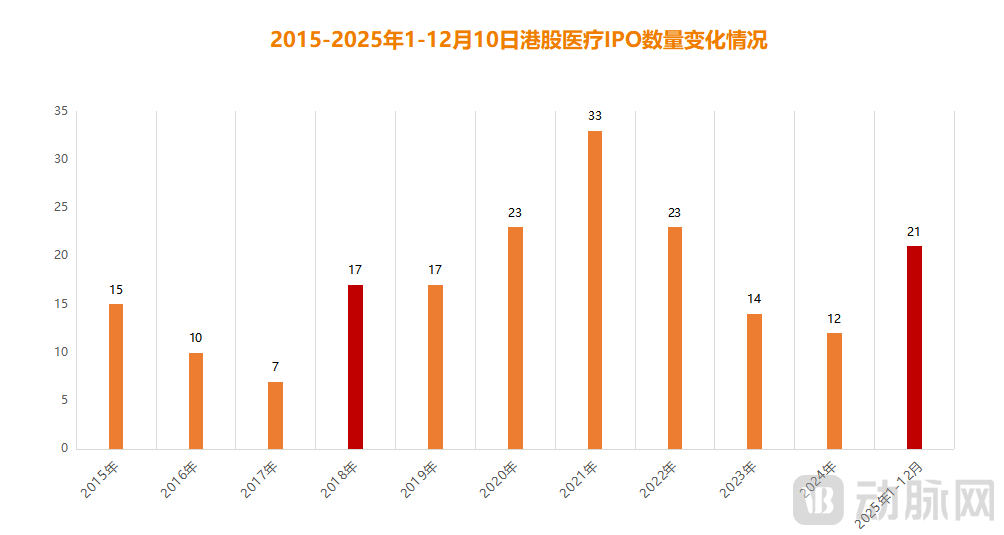 Figure 1. Changes in the Number of Healthcare IPOs on the Hong Kong Stock Exchange, 2015–2025 (Data Source: Wind)
According to Wind statistics, as of December 10, 2025,A total of 21 biopharmaceutical companies from mainland China have successfully listed on the Hong Kong Stock Exchange, in addition, apart from the four companies that have already passed the hearing (Genor Biopharma, Hanseatai, BenQ Medical Center, and HuaRen Bio),There are still 47 pharmaceutical companies queuing for IPO on the Hong Kong Stock Exchange.. This is undoubtedly a rare scene of vibrancy; it should be noted that over the past two years, the entire biopharmaceutical sector of the Hong Kong stock market has been nearly at a standstill, with only a handful of companies going public and financing amounts repeatedly hitting new lows.
In addition to being a prime hub for IPOs,Hong Kong also serves as a key springboard for Chinese healthcare companies seeking to expand overseas at this stage.. In May 2025, Hengrui Pharma successfully listed on the Hong Kong Stock Exchange, becoming the largest pharmaceutical IPO in Hong Kong over the past five years, with a market capitalization exceeding HK$290 billion on its listing day. Following its Hong Kong listing, Hengrui significantly accelerated its internationalization process, not only rapidly establishing a registration and commercialization network covering North America, Europe, and the Asia-Pacific region, but also completing several major business development (BD) transactions with partners including GSK, Glenmark, and Braveheart Bio. According to analyses by multiple informed sources, Hengrui Pharma’s overseas revenue is projected to achieve a year-on-year growth of 50% or even higher in 2025.
Furthermore, the same applies to medical devices. In 2025, includingCofoe, Yuanhua Intelligence, Aierbo Nuode, Jianshi Medical, MGI Tech, United Imaging Healthcare...and other mainland medical device companies have all used Hong Kong as a springboard to achieve rapid access to overseas markets and brand endorsement. Taking Cofoe Medical as a specific example, in June 2025, it completed the acquisition of Hong Kong’s Ximanna Medical, which operates more than 30 retail centers. Leveraging this acquisition, Cofoe rapidly established its overseas sales channels, with third-quarter revenue and net profit increasing by 6.63% and 3.30%, respectively.
In fact, Hong Kong has always played a crucial role in driving the development of China’s healthcare industry. Particularly since the introduction of Chapter 18A of the Hong Kong Stock Exchange Listing Rules, it has opened up financing channels for a cohort of pre-profit biotechnology companies, enabling them to achieve a series of R&D breakthroughs and advance industrialization, thereby helping them rapidly grow into innovative enterprises with international competitiveness, such asJunshi Biosciences, Innovent Biologics, BeiGene, GenesisCare, MicroPort MedBotare all typical representative cases.
So, at this juncture, in the face of new opportunities for development in the healthcare industry, how can Hong Kong assume its critical role as the “super-connector” between Chinese healthcare enterprises and overseas markets? Furthermore, how can Mainland China and Hong Kong build a more efficient cycle of capital, talent, and innovation to jointly address the severe challenges facing the global healthcare industry?
 Figure 2. Professor Yu Changhai, Chairman of the Hong Kong Biotechnology Association
On the occasion of the “2025 Proxima Investment Healthcare Innovation Summit,” key figures from across the upstream and downstream sectors of Hong Kong’s healthcare innovation industry gathered at the event. Their insights covered a wide range of topics, from the Hong Kong SAR government’s support for R&D to opportunities in global capital markets. During the conference, VCBeat conducted exclusive interviews withProfessor Yu Changhai, Justice of the Peace (Hong Kong), Chairman of the Hong Kong Biotechnology Organization, Chairman of the Guangdong-Hong Kong-Macao Greater Bay Area Biotechnology Alliance, Professor at Peking University, and Member of the Biotech Listing Advisory Group of The Stock Exchange of Hong Kong, aiming to address questions from the professional perspective of a seasoned expert, while offering new insights and viewpoints.
To facilitate better reading and understanding, the following is an edited transcript of the dialogue between VCBeat and Professor Yu Changhai:
A Rush of Listings: Has the HKEX IPO Landscape Changed?
VCBeat:In 2025, the Hong Kong stock market’s healthcare sector was abuzz with activity. Not only did a large number of companies successfully go public, but more than 50 healthcare firms were also queued up for listings, marking an unprecedented scale. How do you view this IPO frenzy? What do you believe are the main driving forces behind it?
Prof. Yu Changhai: First and foremost, this is an inherent law of industry cycles,Investment is inherently volatile., after hitting a low point in previous years, the market has entered a phase of renewed recovery in 2025. Consequently, healthcare companies that have survived market elimination and remained dedicated to their core operations are naturally seizing this window of opportunity to go public.
Next is the attractiveness of the Hong Kong stock market. In the past, everyone only needed to target the mainland market, but the prevailing view now is that“Go Global or Go Under”, this also reflects the strong demand among mainland Chinese healthcare enterprises to “go global.” As the Hong Kong stock market has long served as a bridge connecting the mainland with overseas markets, listing on the Hong Kong Stock Exchange represents a “shortcut” for these companies to expand internationally. With its abundant overseas resources and policies aligned with international standards, the Hong Kong Stock Exchange enables mainland healthcare enterprises to enter the global market more easily and effectively.
Finally, it is reflected in the enhancement of Hong Kong's international influence.Hong Kong Returns to Top Three in 2025 Global Financial Centres Index, second only to New York and London. Consequently, we have witnessed a significant re-concentration of top-tier global capital and leading enterprises in Hong Kong. This has undoubtedly revitalized liquidity in Hong Kong’s capital markets, driven valuation recovery, and provided mainland Chinese healthcare companies with more ample financing windows and greater international exposure, thereby facilitating smoother IPO processes.
VCBeat:Since the introduction of Chapter 18A for Hong Kong-listed stocks in 2018, we have witnessed a magnificent wave of capitalization in China’s biotechnology industry. However, under the combined pressures of shifting macroeconomic conditions and clinical and commercial outcomes falling short of expectations, the capital market quickly cooled, significantly tightening the window for IPOs and leading to a brutal industry consolidation. Now, faced with a new surge of listings in the Hong Kong market, are you also concerned about the formation and subsequent bursting of a bubble?
Professor Yu Changhai:Investment will inevitably involve bubbles., this is an inevitable trend in the industry. In fact, each bubble also weeds out a portion of uncompetitive enterprises; it is a process of natural selection, so there is no need to be overly concerned.
Furthermore, compared to other industries, even if there is a bubble in biotechnology, it will ultimately materialize into tangible products. These products are subject to strict regulatory oversight, making it unfeasible to rely on mere storytelling. Therefore, in my view, the product-related bubble is negligible; the value has always been present, but progress is hindered by slow R&D processes or the lack of suitable commercialization pathways.
Metropolises in the North and South, Hong Kong’s FDA: Is Hong Kong’s Healthcare Sector Poised for Takeoff?
VCBeat:In 2025, beyond the surge in Hong Kong stocks and the significant return of overseas capital and enterprises, Hong Kong has also undertaken numerous initiatives in the healthcare sector. These developments conceal many growth opportunities for mainland Chinese medical companies. Could you please provide a brief overview?
Professor Yu Changhai: Indeed, in October 2025,The Hong Kong government also stated that it has invested over HK$200 billion in innovation and scientific research., biotechnology is certainly a key area of investment. While over RMB 200 billion may not seem substantial for mainland China, it represents a significant commitment in a compact market like Hong Kong. Consequently, we are witnessing an accelerated return of top-tier talent to Hong Kong. Furthermore, with five universities in Hong Kong currently ranked among the world’s top 100, the talent agglomeration effect is particularly pronounced.
In addition to software, Hong Kong is also rapidly expanding its hardware infrastructure, with multiple life science parks already under construction. In fact, Hong Kong is planning to develop two major urban hubs: the Northern Metropolis, which connects with Shenzhen and focuses on scientific research, and the Southern Metropolis, centered on the Victoria Harbour business district with a primary emphasis on financial services. These two areas are designed to form a dual-engine development pattern of “Northern Innovation and Technology, Southern Finance,” further consolidating Hong Kong’s global strategic position in the field of medical technology.
Furthermore,“The Centre for Medicines and Medical Devices Regulation (CMPR) of Hong Kong,” also known as the “Hong Kong-version FDA,” is also being advanced in an orderly manner and is scheduled to be officially launched within 2026.. In accordance with the plan, the center will introduce internationally accepted review and approval standards and establish an independent, professional, and efficient regulatory system. While accelerating the approval of locally developed innovative drugs and high-end medical products, it will also attract global companies to conduct clinical trials and submit registration applications in Hong Kong, thereby strengthening the development of the industrial ecosystem and enhancing Hong Kong’s international competitiveness in the field of life sciences.
VCBeat:The “Hong Kong FDA” you just mentioned has recently attracted significant attention within the industry, with many viewing it as a new starting point that holds the promise of reshaping the rules and landscape of China’s medical internationalization. What is your perspective on this? Why has Hong Kong chosen to establish such a regulatory center at this particular juncture? What substantive impacts will it have on the mainland’s healthcare industry in the future?
Professor Yu Changhai: Hong Kong did not only recently begin this endeavor; in fact, we have long been pursuing this path. However, it is indeed a challenging journey, as establishing a truly impartial regulatory system that gains global recognition is exceedingly complex. Nevertheless, we have consistently been exploring viable solutions.
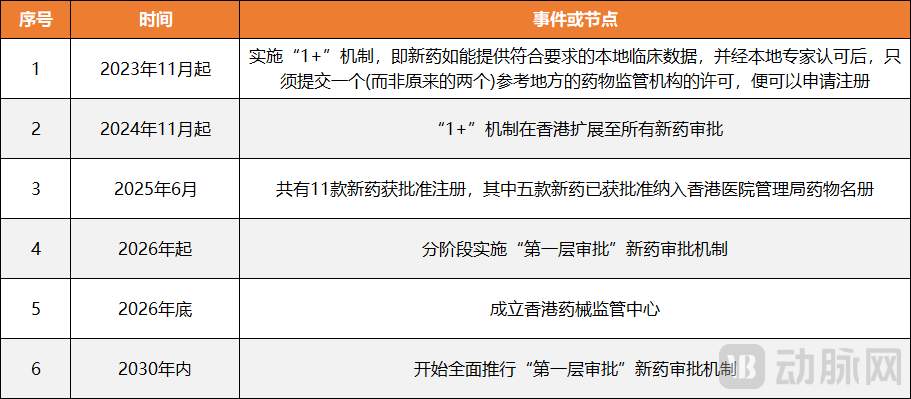 Figure 3. Timeline for the Hong Kong Special Administrative Region’s Promotion of the “Hong Kong-style FDA” Initiative (Source: Caijing Magazine)
In the early stages, Hong Kong implemented a “2+” regulatory system, under which approval from authoritative agencies in two other jurisdictions was required before the Department of Health of Hong Kong would conduct its secondary review; only after passing all reviews could products be sold or supplied in Hong Kong. Starting in 2023, Hong Kong introduced a “1+” policy, whereby applicants need only obtain approval from one drug regulatory authority and secure endorsement by local experts to apply for registration in Hong Kong. This has indeed accelerated the drug approval process since the mechanism took effect., 11 new drugs, including those for the treatment of critical illnesses such as cancer, have been approved, with five of them included in the Drug Formulary of the Hospital Authority of the Hong Kong Special Administrative Region。
However, this still relies on approval from external agencies, leaving Hong Kong with limited say in the process. Therefore, as an international medical hub, Hong Kong must establish such a regulatory window if it seeks to solidify its influence in the global market. Furthermore, only with a “Hong Kong-version FDA” can Hong Kong attract more innovative drugs to enter its market more rapidly and at more reasonable prices, thereby significantly enhancing the territory’s healthcare standards.
Certainly, the establishment of a “Hong Kong-version FDA” is undoubtedly of significant value for innovative drugs from mainland China:On the one hand, its review system and standards are not significantly different from those of the NMPA; as long as the criteria are met, market approval is not difficult to obtain. On the other hand, Hong Kong enjoys higher international recognition and trust, making it easier for mainland China’s innovative drugs approved in Hong Kong to enter the global market., for companies expanding overseas, this not only means a faster international registration pathway but also significantly reduces expansion costs by leveraging Hong Kong’s mutual recognition mechanism for clinical data and its global financing platform, truly realizing the “springboard effect” of “registering in Hong Kong and exporting to the world.”
How Can Hong Kong and Mainland China Establish Deeper Healthcare Ties in the Future?
VCBeat:It is evident that China’s healthcare sector has developed rapidly in recent years. In certain frontier fields, the gap between China and the United States is negligible, with China even taking a leading position. This progress is undoubtedly driven by mainland enterprises’ investments in innovative healthcare. Looking ahead, we remain committed to innovation. Given Hong Kong’s rich heritage of innovation, how do you envision these two entities being effectively integrated to achieve a synergistic effect greater than the sum of their parts (1+1>2) in biotech innovation?
Professor Yu Changhai: This has in fact been ongoing between Hong Kong and the mainland. Taking my own experience as an example, when I was a university professor in Hong Kong in the early days, I frequently traveled to the mainland. Crossing the border was very convenient; often, I could be working in Hong Kong in the morning, visit companies in Shenzhen Bay in the afternoon, and return to Hong Kong by evening. The entire exchange process was highly efficient and convenient.
Now, the situation is markedly different. The establishment of the Greater Bay Area has directly tightened the ties between Hong Kong and mainland China,If you visit some laboratories or research institutions in Hong Kong today, you will find that 80%–90% of the researchers there are from mainland China., and currently, research institutions, hospitals, and technology companies of all sizes in Hong Kong are basically collaborating with the mainland, with their R&D projects being highly sophisticated and at a world-leading level.
Therefore, it is certain that Hong Kong and the Chinese mainland will see further multi-layered cooperation in medical innovation. The current priority should be to effectively link their respective core advantages: the mainland leverages its vast clinical resources, large-scale data, and manufacturing capabilities, while Hong Kong contributes its internationally aligned regulatory experience, capital market access, and intellectual property protection mechanisms. This synergy aims to establish a fully integrated chain—spanning “basic research–clinical validation–industrial translation–market access”—within the Greater Bay Area, thereby creating a sustainable, iterative closed loop for innovation translation.
VCBeat:Collaboration at the innovation level is indeed promising. Furthermore, the linkage between healthcare in Hong Kong and mainland China is also reflected in global expansion efforts, especially given the strong demand currently seen among mainland Chinese healthcare enterprises. As a key springboard for mainland Chinese healthcare companies entering overseas markets, how should these enterprises collaborate synergistically with Hong Kong?
Prof. Yu Changhai: In October 2025, Alibaba spent HK$7.2 billion to purchase a building in Causeway Bay, intending to establish it as the group’s dual headquarters center in Hong Kong. Additionally, throughout that year, many major pharmaceutical companies also set up their Asian headquarters in Hong Kong. The conclusion drawn from this is,For companies to take root in Hong Kong, they must establish a physical presence there., and this is equally true for mainland Chinese medical enterprises: you must have a physical entity in Hong Kong to forge closer ties with the global market.
In fact, choosing Hong Kong as a launchpad for global expansion is a highly efficient and strategically forward-looking decision for mainland Chinese healthcare enterprises. On one hand, Hong Kong boasts a high degree of internationalization; its legal regulations and industry-specific standards are largely aligned with international norms. Consequently, companies that adapt to the Hong Kong market are less likely to encounter “acclimatization issues” when entering overseas markets. Furthermore, mainland Chinese healthcare firms are generally familiar with Hong Kong, sharing natural affinities in terms of business environment, culture, and language. This familiarity significantly reduces communication and operational costs while enhancing the efficiency of implementation.
On the other hand, it is reflected in the exit strategy for global expansion. Going global inevitably carries risks, especially in a high-tech, cutting-edge sector like biotechnology, where the probability of failure often exceeds that of success. Once a venture fails, it means the company must withdraw and quickly return to its home market.However, if a company uses Hong Kong as a springboard for overseas expansion, even if its ventures abroad fail and it retreats, it will not face total collapse; it can still remain in Hong Kong to seek new market opportunities.This is the core reason why many healthcare enterprises choose to establish their Asian headquarters or subsidiaries in Hong Kong: it significantly enhances fault tolerance for global expansion, substantially reduces exit costs, and preserves the possibility of re-entering international markets.
VCBeat: It is undeniable that Hong Kong plays a crucial role in the development of mainland China’s healthcare enterprises. In recent years, many such companies have established a presence in Hong Kong and achieved rapid growth. It is foreseeable that more mainland healthcare firms will flock to Hong Kong in the future, whether for IPOs, business collaborations, or other purposes. Could you offer them some guidance or suggestions on how to truly establish themselves in Hong Kong?
Professor Yu Changhai: As I just mentioned,"If you want to develop your career in Hong Kong, the first thing you need is a foothold here.". This is critically important because capital needs to remain fluid. You cannot simply transfer funds earned in Hong Kong immediately to the mainland, as this prevents the formation of a closed-loop economic cycle. Consequently, you will also be unable to establish genuine long-term trust with clients and build a robust business network in Hong Kong.
Secondly, it must be highly flexible.Scientific research in the medical field must be rigorous and uncompromising. However, conducting business is a different matter; it requires openness. As Hong Kong is inherently a highly free and internationalized global city, mainland Chinese medical enterprises operating there will be better positioned to expand into Southeast Asia and even reach the global market.
The final point is to strive for integration into the local industrial ecosystem.In recent years, Hong Kong has been continuously strengthening the development of its local medical innovation ecosystem. This effort is reflected not only in the construction of multiple life science parks but also in the launch of the “Hong Kong-version FDA.” Amidst this process, numerous opportunities are undoubtedly emerging. Mainland Chinese healthcare enterprises should closely monitor these developments and strive to become part of the local ecosystem at an early stage. By first navigating regulatory requirements, capital channels, distribution networks, and multicultural team management, they can then use Hong Kong as a springboard to enter the global market more smoothly, ultimately achieving the leap from local innovation to international expansion.