

Xing Chuanhua and Shihua Medicine: Advancing the Vision of 'Cancer as a Chronic Disease' Through AI-Driven Multi-Omics
“Tuberculosis is commonly known as ‘consumption’ in folk parlance, and there was once a saying that ‘nine out of ten patients with consumption would die.’ In the 1970s, China witnessed the transition of tuberculosis from an incurable fatal disease to a controllable and curable one.”
Seated in his office by the shores of Yangcheng Lake in Suzhou Industrial Park, Dr. Xing Chuanhua opened our discussion on cancer with an analogy bearing the imprint of the times. The gentle sunlight spilled across the floor outside the window, and the scientist, who has been back in China for four years to build his startup, wore an expression of rational wisdom.
“Today, cancer research is gradually achieving breakthroughs in making the disease controllable and treatable. The transition of cancer from a terminal illness to a condition amenable to chronic management and control represents a promising future,” she stated.
Drawing an analogy between cancer and tuberculosis is not merely a rhetorical device. A review of medical history reveals that tuberculosis transformed from a dreaded, fatal disease into a preventable and manageable chronic condition, thanks to the discovery of antibiotics such as streptomycin, the establishment of public health systems, and the widespread adoption of vaccines. This represents a complete evolution from “incurable” to “targeted intervention” and ultimately to “systematic prevention and control.”
Cancer, too, is gradually approaching such a crossroads. However, relying solely on single-point breakthroughs in drug development has hit a ceiling; we urgently need a systemic upgrade in cognition and strategy.
Since the enactment of the U.S. National Cancer Act in 1971, humanity’s war on cancer has spanned more than half a century. Despite continuous breakthroughs in targeted therapies and immunotherapies, one harsh reality remains unchanged: for most people, cancer still signifies an extremely high mortality rate and the accompanying fear.
The core contradiction lies not only in the lack of therapeutic options, but also in the late detection.
“Cancer is considered a terminal illness not merely because it is difficult to treat. Many diseases can become terminal in their advanced stages,” Xing Chuanhua pointed out incisively, “but because by the time it is detected, it is already too late.”
In the field of cancer prevention and treatment, there exists a significant “survival rate gap”: if detected at an early stage (Stage I), the 5-year survival rate for most cancers can reach 90% or higher (for instance, the Stage I survival rate for breast cancer exceeds 99%); however, once the disease progresses to an advanced stage (Stage IV), this figure plummets dramatically to 20% or even single digits.
This is also why the five-year survival rate for cancer in the United States (approximately 69%) is significantly higher than that in China (approximately 43.7%)—the primary reason is that the rate of early detection in the United States is about twice as high as that in China, allowing more patients to be identified at a “curable stage.”
“Chronic Management of Cancer”: One strategy is to significantly advance the timeline of cancer detection into a window where it is controllable and curable, combined with appropriate treatment. By adopting an approach similar to the management of hypertension and diabetes—through regular monitoring and intervention—it is possible to identify cancers at the stage of “high-risk nodules” or “microscopic lesions.” When coupled with rational control measures and enhancement of the human immune system, this approach holds promise for achieving long-term coexistence as a chronic disease, or even cure.
But this is not merely a medical vision; it is a complex systems engineering endeavor involving technology, ethics, capital, and social psychology.
Dr. Xing Chuanhua, an advocate of AI-powered precision medicine and a globally renowned expert in medical artificial intelligence, studied under Donald Bitzer, an early pioneer in AI and a member of the U.S. National Academy of Engineering. With two decades of research experience in AI and genomics, this scientist seeks to address the defining challenges of our era through her expertise in AI-driven multi-omics.
This is not merely a conversation about technology, but also an exploration of how humanity can rationally confront the “black box” of life.
A core strategy for achieving the chronic management of cancer lies in “early detection.” But why was this not pursued over the past few decades, and why is it now considered feasible?
The answer lies within two exponentially advancing technological curves: one is the precipitous drop in the cost of gene sequencing, and the other is the explosive growth of artificial intelligence capabilities.
Decoding the Truth of Life Behind ATCG
In 2001, the draft of the Human Genome Project (HGP) had just been completed. As the world celebrated the deciphering of the “book of life,” young Xing Chuanhua boarded a flight to the United States.
At that time, she had just graduated from Heilongjiang University and had been working at China Telecom for three years. It was an era when the dot-com bubble had just burst and the 9/11 attacks sent shockwaves around the globe. Standing at this crossroads of history, this resilient young woman from Northeast China fell into deep contemplation: “What are my strengths? What can I contribute to this world?”
She turned her attention to the intersection of biology and mathematics. “At that time, the human genome had just been sequenced, and everyone was excited. But what intrigued me was: How could DNA, composed of just four letters—A, T, C, and G—decode such a wide array of distinct information as sex, height, ethnicity, and disease?”
This simple yet incisive curiosity drove her to make a bold choice: to decipher the unknown world of life through mathematical principles.
She sought out Professor Donald Bitzer at North Carolina State University. An academician of the U.S. National Academy of Engineering, the father of PLATO, and the inventor of plasma television, he was then transitioning from the field of communications to genetic research. In this seemingly cross-disciplinary arena, the mentor and mentee hit it off immediately.
Over the subsequent decade, she became a patient decoder, searching for the subtle clues of life within massive datasets. At Duke University School of Medicine, she collaborated with winners of the highest international awards in statistical machine learning algorithms and pioneers of the Human Genome Project to explore how to push the boundaries of machine algorithms in deciphering complex human diseases. At Boston University, she participated in the renowned Framingham Heart Study. This epidemiological study, spanning three generations and more than half a century, gave her a profound realization: disease patterns can be derived from real-world data based on large samples.
However, she also keenly identified a significant technological gap:Data generation capacity is growing exponentially, while data interpretation capabilities remain in the “Stone Age.”
With the iteration of sequencing technologies from the first generation to the current fourth generation, the cost of sequencing has dropped from an initial $3 billion to a few hundred dollars or even lower. The volume of data we can acquire is growing explosively, but this is akin to being given a library full of books yet being unable to comprehend their meaning without mastering the rules of language.
“We have only just begun to decipher the workings of living organisms,” Xing Chuanhua stated bluntly.
Existing algorithms also have limitations: they either focus solely on the “independent feature analysis” of individual genes or are restricted to capturing only pairwise gene associations, referred to as “first-order dependencies.” However, living organisms constitute extremely complex systems, characterized by high-dimensional, non-linear interactions among genes, environmental factors, proteins, and metabolites.
Even deep learning and artificial neural networks, which have gained significant popularity in recent years, face challenges in biological applications: they require massive sample sizes (thousands or even tens of thousands of cases) for training, whereas high-quality clinical samples are often expensive and scarce. More critically, neural networks are prone to “overfitting,” making it difficult to accurately correct for biases between the sample data and the real world.
She further explained, “Clinical samples are inherently scarce and expensive; if an algorithm merely rote-memorizes sample features but fails to correct for biases relative to the real world, it amounts to a waste of data.”
“Existing general-purpose algorithms are simply inadequate for the task of deciphering life.”This technical “dissatisfaction” became the direct impetus for her subsequent entrepreneurial venture.
Leveraging AI to Integrate Multi-Omics
In 2013, Xing Chuanhua joined the pharmaceutical giant AstraZeneca as Head of Research and Development. There, she began leveraging AI to address specific drug development challenges and advanced the implementation of precision medicine.
It was then that she proposed the concept of “AI Multi-omics.”
If traditional genetic testing is akin to “blind men feeling an elephant,” touching only one leg (a single gene), then multi-omics aims to integrate multiple types of information—such as visual, auditory, and tactile data—to reconstruct the full picture of the elephant.
Xing Chuanhua offered a vivid analogy: “If you look at ten people, judging by appearance alone, you may not be able to distinguish who is from Northeast China and who is from Shanghai. However, if you consider a combination of features—such as facial appearance, height, accent, dietary habits, and style of dress—the accuracy of identification will improve significantly.”
This is the core technical logic of Shihua Medicine:Break the linear mindset of “one gene, one disease” and leverage proprietary AI algorithms to integrate multi-source data—including genomics (DNA), transcriptomics (RNA), proteomics, metabolomics, and even imaging—to capture traces of cancer from extremely faint signals.
This concept is highly forward-looking. Raju Kucherlapati, a professor at Harvard University and a key strategist behind the Obama Precision Medicine Initiative, once told her:“Xing, you are the first to use AI to integrate multi-omics.”(You are the first person to use AI to integrate multiomics.)
However, the forward-looking nature of an idea does not automatically translate into the power to change reality. While participating in the Framingham Heart Study at Boston University, Xing Chuanhua had already recognized that “scientific research can address specific, real-world problems.” Yet she also keenly observed that although AI holds immense potential in precision medicine, algorithmic development remains rudimentary, with both the creation of original algorithms and their translation into industry applications still in their infancy.
“I began to consider whether I should do something that truly changes human health and lives, rather than just publishing papers.”To truly transform the current landscape of cancer diagnosis and treatment, academic papers alone are insufficient; there must be viable products. “Academia is about identifying problems, while business is about solving them.”
In 2015, the same year President Obama announced the Precision Medicine Initiative, Chuanhua Xing registered a company in the United States named “XPrecision,” signifying “super precision.” This decision stemmed from her firsthand experience at AstraZeneca: although she served as the head of precision medicine for a star oncology immunotherapy drug, she recognized that the most powerful innovations often emerge from startups. “I perceived the significant impact of AI on pharmaceuticals and biotechnology, so I wanted to incubate these original technologies myself.”
At XPrecision, she completed the preliminary model validation, development, and U.S. clinical validation, collaborating with laboratories accredited by CAP and CLIA to verify the feasibility of the AI multi-omics model. As technical validation was concluded and large-scale translation prepared, a critical choice lay before her: translate in the United States or in China?
In 2021, spurred on by several like-minded friends, Xing Chuanhua decided to return to China and establish Shihua Medicine in Suzhou. This was not merely a business decision, but a major turning point in her life—she had to part with her son, who was studying in the United States, and plunge alone into the fiercely competitive entrepreneurial landscape in China.
But she is well aware that this is the inevitable path to realizing the vision of “transforming cancer into a chronic condition.” “If a project with significant impact on cancer progression emerges, I hope it will benefit the people of our homeland first.” XPrecision has achieved the technological breakthrough from “0 to 1,” while Shihua Medicine’s mission is to ensure the practical implementation of this technology, thereby changing the fate of countless patients.
With theory and technology in place, how can we turn this vision into reality? “Chronicizing cancer” is not just a slogan; it requires concrete products and clear pathways.
Xing Chuanhua’s answer can be summarized in seven Chinese characters:Detected at a curable stage.
Significantly Advance the Time of Detection
Cancer development is a protracted process; it often takes years or even decades from the initial cellular mutation to the formation of a visible tumor. This interval presents a substantial "time window."
“Previously, we referred to it as ‘early screening and early diagnosis,’ but I now prefer the term ‘detection at a curable stage,’” explained Xing Chuanhua.“Advancing the time of diagnosis by six months to two years would lead to vastly different outcomes for patients.”
At this stage, the number of cancer cells is still low, and the immune system remains dominant; with timely intervention, the cure rate is extremely high.
However, this is not easy. At this stage, cancer is often “invisible,” existing in a molecular state prior to mass formation. Conventional imaging modalities (such as CT and ultrasound) struggle to detect minute lesions, while traditional tumor marker assays lack sufficient sensitivity.
Debunking the "One Drop of Blood" Myth
The market is flooded with various myths about “early screening,” the most famous of which is the once-sensational “blood-drop cancer test” scam. In response, Xing Chuanhua expressed the rigorous attitude of a scientist: “It is impossible to detect cancer from a single drop of blood.”
She deconstructed the absurdity from a technical perspective: To detect cancer at an early stage, the level of circulating tumor DNA (ctDNA) in the blood is extremely low. To achieve medical-grade diagnostic accuracy (for example, identifying two cancer cells among 10,000 cells), the total number of cells contained in just a single drop of blood is simply insufficient.
Xing Chuanhua’s solution is built precisely on a profound understanding of this issue. Shihua Medical adopts the 10 mL blood volume recommended by the “Expert Consensus on Minimal Residual Disease in Non-Small Cell Lung Cancer,” as sufficient sample size is the foundation of medical-grade precision. However, the greater challenge lies in accurately identifying the faint cancer signals amidst the overwhelming background noise of normal cell signals, even when an adequate sample is available.
This is precisely where AI-driven multi-omics comes into play. As she previously analogized: it is difficult to distinguish between people from Northeast China and those from Shanghai based solely on facial appearance; however, when features such as facial characteristics, height, accent, dietary habits, and attire are analyzed in combination, the identification accuracy improves significantly. In cancer detection, she integrates multi-source data—including genomics, transcriptomics, proteomics, metabolomics, and even imaging—to allow weak signals across multiple dimensions to corroborate one another, thereby extracting authentic cancer signals from massive amounts of noise. This is not merely a simple superposition of data, but rather the application of original algorithms to understand the high-dimensional, non-linear interactions within the complex system of living organisms.
Currently, Shihua Medicine has completed the development of early diagnostic products for three major high-incidence cancers—lung cancer, breast cancer, and colorectal cancer—and has begun implementing them in China’s tertiary Grade A hospitals through scientific research collaborations and laboratory-developed tests (LDTs). Rather than offering generic “risk assessments,” their solutions address specific clinical challenges that trouble physicians most—for instance, determining whether a pulmonary nodule detected on CT is benign or malignant, and whether surgical resection is necessary.
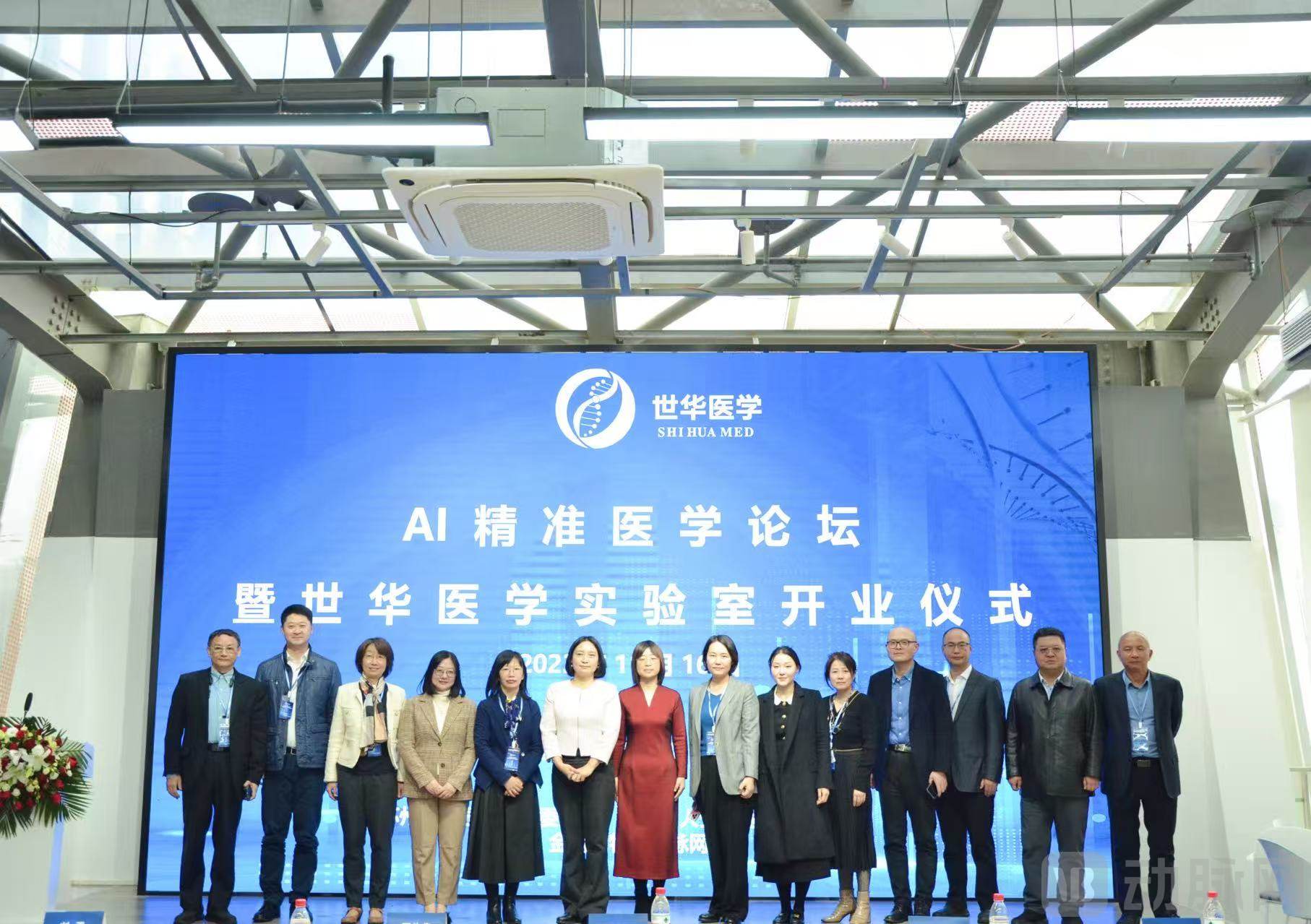
Source: Photo provided by the interviewee
To use an analogy, if only one feature—gene mutations—is considered, the accuracy may be as low as 20%; however, by simultaneously analyzing multiple dimensions, including gene mutations, protein expression, metabolite levels, and imaging characteristics, and allowing these weak signals to corroborate one another, the accuracy can exceed 90%. According to publicly available data, Shihua Medicine’s AI multi-omics technology achieves a 10%–20% higher accuracy rate in early screening and diagnosis of Stage I and II cancers compared to similar products.
What does this mean? For a patient with pulmonary nodules detected by CT, traditional methods may require needle biopsy or even direct surgery to determine whether the nodules are benign or malignant. In contrast, AI-driven multi-omics analysis of blood samples can provide highly accurate assessments without invasive procedures—thereby sparing patients with benign nodules from unnecessary surgical trauma and enabling those with malignant nodules to receive timely treatment.
The Closed Loop from “Prevention” to “Treatment”
In addition to precise diagnosis, Xing Chuanhua has also established a tiered prevention and control system:
• Initial Screening Level:For the healthy population, we are launching an inclusive comprehensive screening program. This approach extends beyond genetic testing by integrating low-dose CT scans and routine health checkup indicators, leveraging AI to provide comprehensive risk alerts. To achieve widespread adoption, the solution must be “intelligent, convenient, and affordable.”
• Health Management Level:“Just like when you’re driving, you need to know when to hit the gas and when to brake,” Xing Chuanhua offered by analogy. “Patients must take proactive control of their own bodies, rather than blindly relying on doctors. They should develop a ‘driver’s sense’ for their physiological indicators.”
• Postoperative Monitoring:For diagnosed patients, monitor minimal residual disease (MRD). Upon detection of early signs of recurrence, intervene immediately to prevent cancer relapse.
When discussing this series of strategic initiatives, Xing Chuanhua recalled a past incident.
In early 2020, the COVID-19 pandemic erupted, and Wuhan went into lockdown. Xing Chuanhua, who was in the United States at the time, was consumed with anxiety. “As an AI professional, I began calculating the transmission distance and speed of the virus.” She self-funded her research and successfully resolved the issue of viral sequence identification by leveraging her own AI models and third-generation sequencing technology.
Although this technology was never commercialized, the experience reflects her underlying philosophy toward technological development—driven not by commercial monetization, but by a commitment to solving real-world problems. “I remember when Wuhan went into lockdown. Many Chinese individuals in the United States shared the same sentiment at that time, strongly desiring to contribute to the pandemic response through their own expertise.”
This non-utilitarian motivation may be traced back to the depths of her heart. Many years ago, her father passed away from cancer; the progression from diagnosis to death was so rapid that she felt she “didn’t have time to save him.” “Not every family can bear such a loss. If my expertise can save many people, it would be a form of redemption for my life.” At this point, her voice, usually rational and composed, grew subdued. “This matters more than any honor.”
However, this regret did not confine her to the realm of personal emotion. She saw a bigger picture: according to statistical data, early detection of cancer can directly increase the cure rate from 20% to 90%. But the reality is that the huge gap in the 5-year survival rate for cancer between the United States and China (about 69% vs. 43.7%) is not due to how much more advanced the drugs are, but because the probability of early detection in the United States is twice that of China. "The reason why cancer is considered a terminal illness is not because it is difficult to treat, but because it is discovered too late."
This is precisely why she insists on promoting inclusive screening that is “intelligent, convenient, and affordable.” Her goal is not merely to create a diagnostic product, but to drive a systemic transformation in public health—making early cancer screening an integral part of everyone’s health management, akin to the routine monitoring of hypertension and diabetes. The “Century Without Cancer Initiative” she proposes may sound like an ambitious vision, but her logic is clear: if annual check-ups can accurately detect cancer at its early stages, if every individual can develop a strong sense of control over their own physiological metrics, and if the entire society can participate in this process, then cancer will no longer be a lethal killer, but rather a chronic condition with which people can coexist.
“I may have only achieved a milestone in early diagnosis and screening, but greater efforts require the cooperation of society as a whole.” She is unconcerned about who receives the credit, stating, “What matters more to me is that it can truly save many lives. In fact, nearly every family has relatives who have gone through similar experiences, so this serves as a reward to my spirit and life, which is what matters most.”
It is precisely this sense of social responsibility, rooted in personal regret yet transcending individual emotion, that has served as the spiritual engine sustaining her on a challenging path. It also imbues Shihua Medicine’s technology with greater warmth—transforming it from mere cold algorithms and data into a beacon of hope for countless families.
Can cancer be conquered with good technology alone? Xing Chuanhua’s answer: Far from it.
“This is a social systemic project,” she emphasized, “technology is only one part of it.”
Data Silos: The Locked "AI Goldmine"
If technology is the engine, then data is the fuel. What causes anxiety for Xing Chuanhua is the issue of fuel supply—data sharing in China remains fragmented into isolated silos.
The logic behind AI evolution is simple: the more data available, the more accurate the model becomes. In reality, however, formidable data silos exist among hospitals and research institutions. “Data holds no value if it is not shared; keeping it hoarded does not make it any safer,” said Xing Chuanhua with resignation.
“If we fail to break down data silos, we may lose our strategic advantage in the future competition for biological data, despite our large population base. This is not merely a commercial issue but a critical factor for national biosafety and competitiveness.”
Beware of the Hype of “Storytelling” and Safeguard the Credibility of Technology
When the data mine is difficult to excavate, entrepreneurs must also face another severe challenge: the “noise” of the market environment.
“What is the most challenging aspect for China to achieve innovation, particularly innovation that leads globally?” Xing Chuanhua posed this question. “It is not the technology itself; rather, once a benchmark is set, imitators emerge with remarkable speed.”
“Some craft narratives to secure financing, as most investors lack technical expertise and focus solely on monetization potential; others engage in predatory pricing to seize market share through malicious competition.” Xing Chuanhua’s tone carried a hint of regret. Such chaotic practices not only create confusion but also erode the industry’s credibility. “If this sector is ruined by such misconduct, and public trust in its technology collapses, the real victims will be those genuinely committed to substantive work—and, even more critically, the patients who could otherwise have been saved.”
Xing Chuanhua is inherently low-key, yet she recognizes that “I must shoulder certain responsibilities to clarify these key concepts for the industry and jointly uphold the credibility of our technology.”
Bridging the Communication Gap
If noise from the external environment constitutes explicit obstacles, then cognitive differences represent implicit barriers. For a returning overseas scientist, this is often the most costly “communication tax” on the entrepreneurial journey.
“In fact, more than 50% of my time in communication is spent on ‘education,’” sighed Xing Chuanhua.
The education she refers to is a bidirectional, or even multidirectional, process.
On one hand, there is the capital market. A few years ago, when she first returned to China, AI-driven multi-omics was an extremely unfamiliar concept. “At that time, I was the only one using AI exclusively for tumor diagnosis. People couldn’t understand it and felt like I was speaking gibberish.”
On the other hand, there is the highly cautious community of physicians. Ninety percent of doctors are accustomed to relying on established, traditional methods that have been validated over decades. Convincing them that an intangible AI algorithm can outperform clinical experience requires a prolonged process of trust-building and extensive validation through clinical data.
“It’s not so much a misunderstanding as it is a high communication cost.” She realized that the effort required to explain the principles and value of AI-driven multi-omics to individuals from different backgrounds varied significantly: the time and approach needed to explain it to friends differed markedly from those required for investors and professionals.
To advance her work more efficiently, she adopted a strategic approach to collaboration: forging strategic partnerships with industry leaders such as China Resources and Sinopharm, leveraging their distribution channels to reach end users, and using tangible outcomes to bridge the gap in understanding. Meanwhile, she has observed positive changes: “Compared to when I first returned to China four years ago, communication is now much easier, and there is greater recognition and acceptance of cutting-edge technologies.” To this day, she has not abandoned her efforts to communicate with the broader market; instead, she is advancing in a more pragmatic manner—combining education with demonstrated results through collaboration.
Entrepreneurial Choices: The Trade-offs Behind the Spotlight
Having overcome the myriad challenges related to data, market dynamics, and public perception, Xing Chuanhua still faces one final hurdle: restructuring his personal life.
Starting a business requires not only overcoming various challenges but also re-planning one’s personal life. In Xing Chuanhua’s original vision, she could remotely “manage” a company just as she had done as a professor in the United States. But reality quickly shattered that illusion. “Without being fully immersed, you simply cannot drive things forward.”
Thus, she made a choice: to return to China alone, leaving her husband and their son, who was attending middle school, on the other side of the ocean.
“I never imagined being separated from my family. I am a mother, and he is a minor child; this sacrifice is immense.” When speaking of her family, her tone lost some of the scientist’s composure and gained a touch of maternal tenderness.
“Everyone juggles multiple roles, being a father, a son, and a husband, among others,” said Xing Chuanhua. “For women, the pressure of these multiple roles may be even more pronounced.”
Xing Chuanhua candidly admitted that she has encountered many talented peers who hesitate to leave academia and shy away from the risks of entrepreneurship, as family responsibilities incline them toward safer and more stable career paths. Among her circle of friends, she is the only one who has taken this leap. “This segment is severely lacking; society as a whole is in dire need of such individuals.”
What brought her comfort was her son’s remarkable understanding. “He knows that Mom is doing something important—working to cure cancer.” Coincidentally, her son has also shown a strong interest in science. What moved her even more was this: “My husband has been wonderfully supportive, and my child understands that Mom is engaged in something significant. They are even thinking about how to research cures for cancer.”
“I may not be by his side as a study companion, but I have set an example for him through my actions: one can go all out for a mission.” This grand narrative of “for the sake of human health” is concretized in Xing Chuanhua’s life into countless nights spent working until 3 a.m.
“Just a couple of days ago, I was planning to scale back, but yesterday I ended up working until 3 a.m. again. To make it to today’s interview, I didn’t even put on makeup, so my complexion might look a bit off,” she said, pointing to her face with a self-deprecating smile.
But she also acknowledged that this choice comes with its costs. “For me, the only burden too heavy to bear is the longing for my family.” “Some entrepreneurs manage to achieve success and maintain a healthy balance between family and career. As an old Chinese saying goes, ‘If you cannot sweep your own house, how can you sweep the world?’ You must first take care of yourself and your family before you can attend to affairs beyond.”
The “lonely courage” behind this spotlight may well be the truest hallmark of entrepreneurs.
Despite numerous challenges, Xing Chuanhua remains composed about the future. This composure stems from a profound understanding of the essence of technology.
The New Frontier After AlphaFold
When it comes to AlphaFold, the AI system developed by Google DeepMind for predicting protein structures that has stunned the scientific community in recent years, she displayed a seasoned composure.
“AlphaFold has validated AI’s capability in predicting the structures of static small molecules, which is remarkable. However, in my view, it is more akin to a decompositional tool and has not yet reached the level of an ‘integrated’ algorithm capable of simulating dynamic life systems, as I envision.”
“She believes that decoding life is not merely about predicting a structure, but rather about understanding complex dynamic changes. This requires more advanced algorithmic systems, larger datasets, and multi-module collaboration. ‘We still have 90% of living organisms unknown to us. The work of decoding has only just begun.’”
Tackling the “Hard Nut” of Second-Generation Technology
Shihua Medicine has already taken its first step by developing early cancer detection products, even though they currently cover only major cancer types such as lung cancer, breast cancer, and colorectal cancer.
“The ‘egg’ of the first-generation product has been laid and validated. What we need to do now is to make it undergo fission.”
But her gaze has already shifted to more distant horizons—the research and development of second-generation technologies. “That is the true high ground of scientific research, but I regret having devoted too much energy to commercial operations in the early stages to keep the company running.” She plans to redirect greater effort back to her core scientific pursuits once the company’s commercialization efforts are on track, tackling the more challenging “hard nuts to crack.” She is well aware that in the biotechnology sector, only continuous original technology can serve as a company’s moat.
A Decryption Marathon Without a Finish Line
In Xing Chuanhua’s blueprint, cancer is merely the first project she aims to commercialize upon her return to China. “This is enough to keep me busy for a hundred years,” she said with a smile.
But her ambitions extend far beyond this. If AI-driven multi-omics can truly decipher the complexities of living organisms, it has the potential to transform not only cancer care but also the management of cardiovascular diseases, diabetes, and even aging itself.
“Even if cancer is brought under control one day, it does not mean that our deciphering of life has come to an end. This is a marathon with no finish line.”
As the interview drew to a close, our conversation returned to the initial metaphor—“eradicate cancer as we did tuberculosis.”
This is by no means a one-person or one-company show. It requires the concerted efforts of society as a whole, including targeted therapies, immunotherapy, traditional Chinese medicine (TCM) conditioning, early diagnostic technologies, and health management. Every scientist like Xing Chuanhua is contributing to building this edifice.
Xing Chuanhua said, “I believe in ‘keeping a low profile as a person, but striving for excellence in work.’ Keep your eyes on the long-term goals, then bow your head and move forward steadily, step by step. After all, skyscrapers are built brick by brick, and every day I am that bricklayer.”
This pragmatic and forward-looking quality may well be the most defining hallmark of this generation of returnee scientists.
For young people aspiring to enter this field, her advice is straightforward: “Talent is not cultivated; it is selected. Ask yourself: Who are you? What are your strengths? What problems do you want to solve? Do not simply go with the flow.”
She paused, then added a rather “counterintuitive” management perspective: “In the company, I never engage in empty talk about contributions with junior employees; for young people, it’s important to discuss tangible benefits and professional growth. Only when dealing with core talent who truly possess a sense of mission do I talk about vision.”
But for those young people who truly want to change the world, her message strikes at the core: “What matters is who you are; you must take yourself seriously before you can become Somebody.” The power of belief begins with self-belief—a true reflection of her own journey as she crossed over from telecommunications to biomedicine and moved from academia into entrepreneurship.
Finally, she discussed a scene from a public forum.
When she proposed the “Cancer-Free Century Plan,” the host remarked, “Xing Bo, this plan is quite good, though it’s a bit hard to believe.”
Xing Chuanhua smiled and replied, “This is our vision, as well as the mission and goal we have consistently strived to achieve. Just as no one in the 1970s believed that tuberculosis would become a manageable condition, we hope that in the future, people will look at cancer and think, ‘It’s no big deal.’”
This is not only a testament to the confidence of scientists, but also an enduring hope for humanity in the face of disease. The discussion on the “chronic management of cancer” has only just begun.