Shanghai Jiao Tong University Unveils Innovative Pelvic Repair Mesh with Optimized Biocompatibility, Mechanical Performance, and Two-Thirds Cost Reduction
Pelvic Organ Prolapse (POP) is a condition in which organs such as the bladder, uterus, or rectum descend due to laxity of the female pelvic floor muscles. Although not life-threatening, it significantly impacts the health and quality of life of women worldwide, earning it the moniker “social cancer.”
The core affected population consists of middle-aged and elderly women. The incidence is highly correlated with the accelerating aging of the population, laxity of the pelvic floor muscles, and childbirth-related injuries, making it one of the significant public health issues affecting the health of middle-aged and elderly women. Furthermore, as the degree of population aging in China continues to deepen, the potential patient population for pelvic organ prolapse will continue to expand, with the total number of cases showing an upward trend.
However, primary healthcare institutions currently face a core contradiction in managing pelvic organ prolapse (POP): a large patient base versus insufficient diagnostic and treatment resources. Moreover, existing treatment regimens are associated with high rates of postoperative complications and recurrence. This leads to frequent referrals of patients to tertiary hospitals due to disease relapse or suboptimal therapeutic outcomes, which not only increases the financial burden on patients but also results in the redundant consumption of primary care resources, thereby creating a vicious cycle characterized by "difficulties in accessing medical care for patients and low efficiency of primary healthcare services."
In this context,Shanghai Jiao Tong University Center for Interdisciplinary Research and Translation of Novel Biomaterials in Medicine and EngineeringDeveloped an Innovative Domestically Produced Titanium-Coated Repair Patch(hereinafter referred to as the “Innovative Repair Patch”),Committed to providing innovative solutions with superior performance, stable efficacy, and affordable pricing to tens of millions of patients with pelvic floor disorders.Currently, this project is a signed initiative under SPARK China, which provides resource empowerment in the form of industry advisors, project management, systematic coursework, and financial support.
Current treatment options for pelvic organ prolapse mainly fall into three categories, but all have significant limitations:
First,Traditional Surgical Treatment, its core limitations include a large wound area, prolonged postoperative recovery period, and elevated risk of postoperative infection; furthermore, patients face a significant risk of disease recurrence, indicating that both overall treatment safety and long-term outcomes require improvement;
Second,Biological Patch Therapy, although this regimen can alleviate symptoms to some extent, the high product price increases the financial burden on patients; the degradation rate of the mesh is difficult to precisely control, making it unable to meet clinical needs based on individual differences; furthermore, some patients may experience immune rejection reactions, which compromises treatment safety;
Third,Synthetic Mesh RepairFrom a technical perspective, synthetic meshes offer more stable mechanical properties than biological meshes, with superior tensile strength and resistance to folding, and they carry no risk of degradation. In terms of cost-effectiveness, synthetic meshes cost approximately one-third as much as biological meshes and can be mass-produced at scale, making them better suited for widespread adoption in primary healthcare institutions. Furthermore, they have a broader range of indications, being compatible with various surgical procedures such as abdominal wall repair, inguinal hernia repair, and pelvic organ prolapse repair, while also offering greater operability during surgical procedures.
Leveraging the aforementioned advantages,Synthetic Mesh Has Become the Mainstream Choice for Physicians and Patients in Pelvic Floor Repair Surgery. However, currently, synthetic mesh products on the market still suffer from many unresolved pain points: first, biocompatibility and mechanical properties constrain each other, making it difficult to optimize both simultaneously.Poor Biocompatibility, which can easily lead to postoperative complications;Insufficient Mechanical Properties, leading to complications such as mesh migration and rupture; second,Insufficient Uniformity and Stability of the Coating, coatings prepared by traditional vapor deposition processes are prone to uneven thickness; coatings that are too thin may induce inflammatory responses, while those that are too thick can compromise patient comfort.
In this context, there is an urgent clinical need for solutions capable of achieving“Synergistic Optimization of Biocompatibility and Biomechanical Properties”innovative repair patch solutions. Meanwhile, for surgeons, it is necessary to enhance the product'sIntraoperative Maneuverability, ensuring operational precision; for patients, it is necessary to strengthenPostoperative Treatment Stability, thereby reducing the risk of complications. This optimization strategy serves as the entry point for the Center for Interdisciplinary Research and Translation of Novel Biomaterials in Medicine and Engineering at Shanghai Jiao Tong University to address clinical challenges in pelvic floor repair.
As a recognized technological pinnacle in the field of pelvic floor repair, the research and development of synthetic meshes involves the interdisciplinary integration of materials science, biomedical engineering, and mechanics. It requires achieving a balance between material structure and properties, precise control of surface modification technologies, and human-adapted design of mechanical performance, presenting extremely high levels of difficulty. Benefiting from the following core advantages, the Center for Interdisciplinary Research and Translation of New Biomaterials and Medical Engineering at Shanghai Jiao Tong University possesses inherent advantages in overcoming the aforementioned technical barriers:
First, the Center for Interdisciplinary Research and Translation of New Biomaterials and Medical Engineering at Shanghai Jiao Tong University is anchored by a doctoral team from Shanghai Jiao Tong University and supported by multiple top-tier technical experts and senior market consultants. As a multidisciplinary team composed of professionals in materials science, mechanics, medicine, engineering, and other fields, itsPossesses deep technical expertise in low-temperature plasma deposition and biomechanical modeling, capable of addressing key technical challenges such as the robust bonding of titanium coatings to polypropylene meshes and the secondary regulation of mechanical properties.;
Secondly,Strong Foundation in Medical-Engineering Interdisciplinary StudiesThe team has co-established translational centers with several renowned medical institutions, including Ruijin Hospital, Shanghai Sixth People’s Hospital, and Renji Hospital. This collaboration enables real-time identification of clinical pain points, ensuring that technology development remains closely aligned with clinical needs. Furthermore, by leveraging the platform of the Shanghai Jiao Tong University Center for Interdisciplinary Research and Translation in Biomaterials and Medical Engineering, the team efficiently advances the translation and commercialization of scientific research outcomes.
Third,Robust Intellectual Property Portfolio. The team currently holds nearly 65 invention patents, along with multiple software copyrights, and has published over 300 high-impact academic papers, thereby establishing a systematic technical protection network that provides robust intellectual property safeguards for the commercialization of research outcomes;
Fourth,Professional Commercialization Support Capabilities. The team is supported by an experienced group of market advisors with extensive expertise in medical device incubation and capital pathway planning, providing professional guidance on product commercialization to effectively accelerate the industrialization of technological achievements;
Fifth,SPARK China EmpowermentDuring the product development process, SPARK China provided financial support and access to its technology transfer platform resources, built communication bridges between the team and clinical institutions as well as industry chain partners, and will subsequently assist in addressing key issues such as product registration approval and market access, significantly shortening the overall cycle of translational commercialization.
Leveraging its solid technical foundation and well-rounded team structure, the teamSuccessfully Overcame the Core Technical Challenges in the R&D of Synthetic Meshes, which not only provides innovative solutions to the clinical pain points in pelvic floor repair but also effectively alleviates the service burden on primary healthcare facilities.
To address the persistent challenges in the field of surgical meshes, including suboptimal biocompatibility, inconsistent coating quality, and mismatched mechanical properties, the Center for Interdisciplinary Research and Translation of New Biomedical Materials at Shanghai Jiao Tong University hasMetal-Doped Composite Coating Technology, Time-Shared Controlled Magnetron Sputtering Technology, Biomechanical Model Coupled Optimizationas a foundation, systematically address industry challenges.
Specifically, the innovative repair patch developed by the team has established significant technical competitiveness, primarily reflected in the following aspects:
First,Low-Temperature Plasma Magnetron Sputtering Process Ensures High-Quality and Stable Coatings. The team employs low-temperature plasma-assisted magnetron sputtering technology, operating entirely at low temperatures to effectively prevent thermal damage to the polypropylene substrate while achieving uniform, defect-free, and complete coating coverage.
Specifically, this technology boasts two innovative advantages: first, by leveraging plasma modulation and based on nanoscale thin-film growth mechanisms, it can preciselyThe thickness of the metal layer is controlled within the range of 10–100 nanometers.Second, for the antimicrobial titanium/silver (7–9%) coating, controllable adjustment of film adhesion was achieved through nucleation lattice regulation technology, laying a key technical foundation for optimizing patch performance.
Second,Multimetallic Ratio Modulation: Balancing Biocompatibility and Antibacterial Properties.To address the challenge of controlling coating uniformity, the team employed molecular dynamics simulations to elucidate the interaction mechanisms between plasma and polymer molecular chains, thereby providing a theoretical basis for the uniform deposition of metal atoms. To tackle the unclear nucleation mechanism during metal deposition on polypropylene surfaces, the Interdisciplinary Research and Translation Center for New Biomedical Materials at Shanghai Jiao Tong University conducted cytotoxicity assays and animal implantation studies, clarifying the microscopic mechanisms underlying the nucleation process.
Meanwhile, the team prepared the coating by composite doping titanium with other functional metals in specific ratios. This composite structure not only significantly enhances the biocompatibility of the patch with human tissue and reduces rejection reactions, but also imparts long-lasting antibacterial properties to the patch through the sustained release of metal ions, thereby lowering the risk of postoperative infection.
Third,Customized Constitutive Models for Precise Matching of Mechanical Properties. The team independently developed a dynamic mechanical constitutive model tailored to human tissues. This model accurately matches the dynamic mechanical properties of human tissues. Through coupled optimization of manufacturing processes and the model, it effectively reduces stress concentration after patch implantation, prevents complications such as displacement and rupture caused by mechanical mismatch, and enhances repair stability.
Fourth,Anisotropic woven structure enhances comfort during human use.. The innovative repair mesh is made of monofilament polypropylene, meeting ergonomic requirements; it boasts excellent mechanical properties, with a deformation rate of less than 5% after 200 cycles of stretching and contraction testing; its lightweight, large-pore design ensures clear intraoperative visibility and facilitates tissue ingrowth and integration; ultimately, it reduces postoperative pain and significantly enhances patient comfort, providing a high-quality clinical solution that combines mechanical stability with biocompatibility.
According to Dr. Xuan Weicheng,InnovationThe price of the repair patch is expected to be controlled at approximately one-third that of competing products.. This is mainly due to the following factors:
● Independently Developed Production Equipment, avoiding the high premium of imported equipment and significantly reducing fixed asset investment costs;
● Raw materials use domestically produced polypropylene., thereby avoiding issues such as compounded costs of imported raw materials, supply chain instability, and prolonged delivery lead times;
● Adopts a roll-to-roll continuous production process, enhancing production efficiency while reducing labor and energy consumption costs per unit of product;
● With the Support of University Research Platforms, and funding for interdisciplinary projects, which effectively reduced capital investment during the R&D phase;
● Streamline the Supply Chain System, enabling direct integration with hospital terminals and further reducing cost expenditures across the entire product lifecycle.
From the perspective of market structure, key production technologies for synthetic meshes, such as plasma deposition and interfacial nucleation control, have long been monopolized by foreign companies, posing significant technical barriers for domestic enterprises. According to Dr. Xuan Weicheng, currently,Approximately 90% of the synthetic mesh market is still dominated by international brands, while domestic products hold a relatively low market share.
“Currently, the most commonly used polypropylene mesh in clinical practice provides clear support; however, complications such as mesh erosion, exposure, and pain occur at a rate of 10%–30%, severely affecting patients’ quality of life. Although imported titanium-coated meshes have improved biocompatibility through optimized coatings, they suffer from two major drawbacks: first, their high cost imposes a significant financial burden on patients’ families; second, their sizes are designed for European and American populations, so some domestic patients cannot achieve proper flattening after implantation, compromising surgical outcomes.” Project collaboration expert,Chen Aozheng, Associate Chief Physician, Pelvic Floor Disease Diagnosis and Treatment Center, Tongren Hospital Affiliated to Shanghai Jiao Tong University School of MedicineIntroduction.
As a physician who has long specialized in pelvic floor reconstruction surgery, Director Chen Aozheng performs over 100 pelvic floor reconstruction procedures annually. Through his clinical practice, he has gained profound insight that the clinical challenges in the field of pelvic floor repair cannot be thoroughly resolved by surgical technique improvements alone, which neither address the inherent issues of the materials nor meet patients’ core demands for “effective management of pelvic organ prolapse, reduction of postoperative complications, and alleviation of the medical burden.”
Therefore, Director Chen Aozheng’s team has established a medical-engineering collaborative partnership with the Research and Translation Center for Interdisciplinary Studies in Biomedical New Materials at Shanghai Jiao Tong University. The aim is to translate clinical needs into targets for technological R&D, jointly developing a domestically produced titanium-coated mesh that is truly tailored to the Chinese population, safe, highly effective, and affordable, thereby enabling more patients with pelvic floor disorders to access high-quality medical resources.
Director Chen Aozheng introduced that prior to the collaboration, both parties had already completed the product concept validation, raw material screening, and preliminary experiments, clearly defining core indicators such as the biocompatibility and mechanical stability of the patch. This established a closed-loop process of “clinical needs identification, engineering R&D, and clinical validation,” ensuring the project avoided detours from the outset. “Currently, the innovative repair patch has completed animal and cellular experimental validations, with results showing:The product’s performance and biocompatibility are equivalent to, or even surpass, those of imported meshes..” said Director Chen Aozheng.
Over the next three to five years, Dr. Xuan Weicheng, the project leader, believes that the hernia repair mesh industry will exhibit five major development trends:
● Accelerated Domestic Substitution, domestic repair mesh products will gradually replace imported products, continuously increase their market share, and gradually assume a dominant position in the market;
● Precision in Technology, further enhancing the product's personalized adaptability to better align with the physiological characteristics and restorative needs of the Chinese population in terms of performance;
● Product Functions Are Becoming Increasingly Integrated, integrating multiple functions such as antibacterial activity, anti-adhesion properties, and promotion of tissue repair, thereby comprehensively enhancing product performance;
● Costs Are Becoming More Affordable, thereby better benefiting the primary healthcare market and the broader patient population;
● Further Expansion of Application Scenarios, it will transcend the traditional scope of pelvic floor repair and hernia repair, extending into fields such as plastic and reconstructive surgery and post-tumor surgical reconstruction; in the future, it is even expected to achieve the development of universal meshes adaptable to multiple scenarios.
Next,The team will focus on optimizing composite coatings of titanium and other metals., to explore the coating formula with optimal performance. Meanwhile, addressing the issue that traditional synthetic meshes are prone to exposure at wound and inflammatory sites, the team will undertake the development of absorbable synthetic meshes to further enhance their biocompatibility and clinical application outcomes.
In addition,The team is currently advancing the expansion of the surgical mesh product portfolio., develop mesh products that can be adapted to different anatomical sites and surgical procedures; in the long term, the team will explore the research and development of universal coatings and materials compatible with various surgical techniques and anatomical regions, striving to create mesh products that meet clinical needs across multiple scenarios. This effort aims to bring high-quality medical products tailored for the Chinese population from the laboratory into clinical practice, thereby truly achieving equitable access to medical resources.
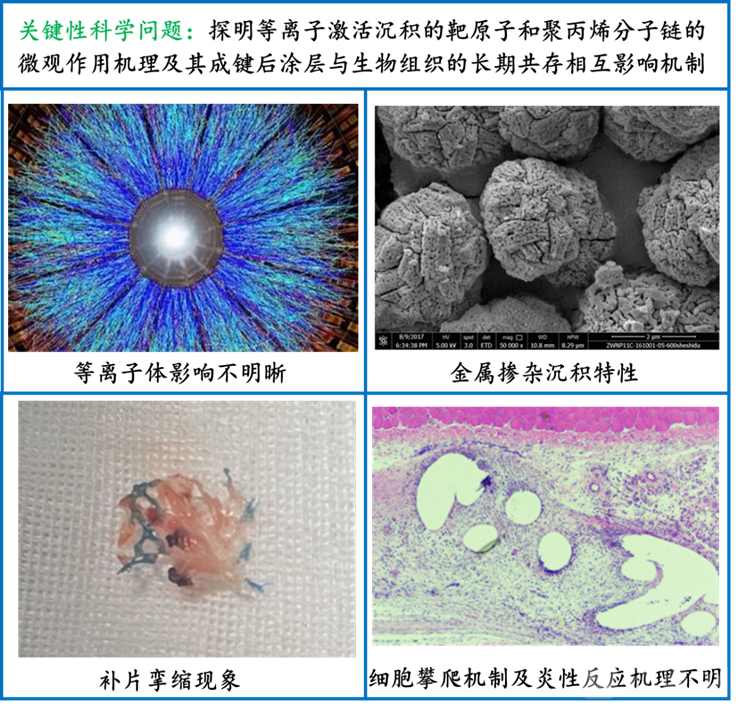
Manifestation of the Complexity Associated with Key Scientific Issues
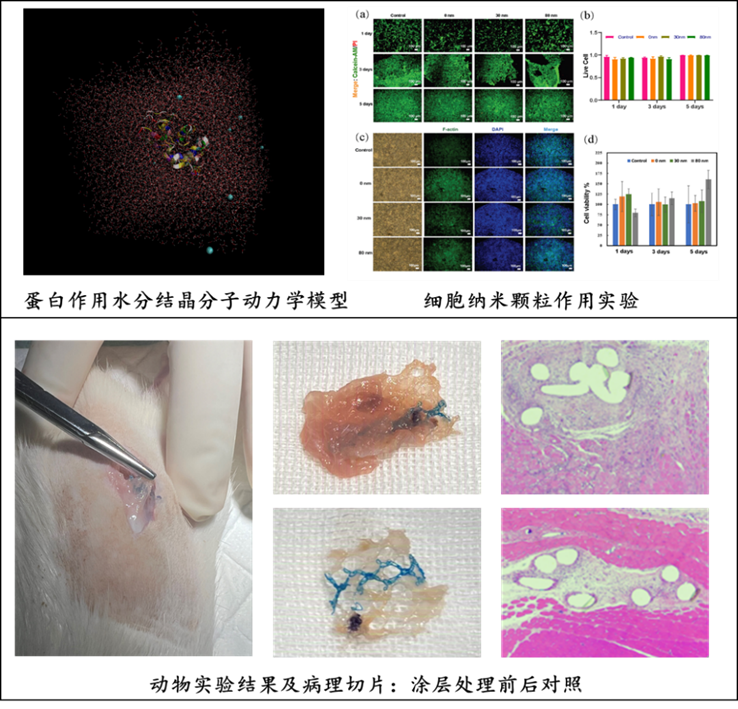
Research Foundation on Biocompatibility Animal Experiment Results and Molecular Models
About SPARK China
The SPARK Medical Innovation Translation Platform originated at Stanford University in 2006. Adopting a design-thinking-based approach, it emphasizes starting from user needs and integrating clinical requirements, regulatory considerations, and financial assessments at an early stage to ensure close alignment between academic research and industry realities, thereby enhancing the success rate of translation. The program focuses on proof-of-concept development for drug, device, and diagnostic projects, providing funding support and expert guidance. Currently, the SPARK platform spans more than 30 countries worldwide, with over 50 branches established. As of 2025, the cumulative global translation success rate across all branches reached 57%.
In November 2024, SPARK China was officially established in Shanghai through a collaboration between the Institute of Advanced Medical Chips at the School of Biomedical Engineering, Shanghai Jiao Tong University, and Stanford University. As a member of SPARK GLOBAL—a non-profit organization founded in 2015 based on the Stanford SPARK platform, encompassing over 50 academic institutions worldwide—SPARK China brings together top-tier domestic research capabilities. By adopting the classic SPARK model, it identifies innovative projects from universities and hospitals, providing support such as funding and advisory services. Integrating the Stanford SPARK methodology and leveraging the global network of SPARK GLOBAL, SPARK China is committed to accelerating local medical innovation in China and facilitating the translation of academic achievements into clinical solutions.
Currently, the innovative repair patch developed by the Center for Interdisciplinary Research and Translation of New Biomaterials in Medical Engineering at Shanghai Jiao Tong University is seeking investment opportunities. If you are interested in this product, please contact us: