

Revolution Medicines Announces FDA Breakthrough Therapy Designation for Zoldonrasib (RMC-9805) in KRAS G12D-Mutant NSCLC with 89% Disease Control Rate
Recently, Revolution announced that its drug Zoldonrasib (RMC-9805) has received FDA Breakthrough Therapy Designation,Indicated for the treatment of adult patients with locally advanced or metastatic non-small cell lung cancer (NSCLC) harboring KRAS G12D mutations who have previously received PD-1/PD-L1 inhibitor therapy and platinum-based chemotherapy. Zoldonrasib is the first investigational drug targeting KRAS G12D mutations in NSCLC to receive FDA Breakthrough Therapy Designation, positioning it as a potential first-in-class therapy to capture early market advantage.
Poised to Fill the Market Gap for KRAS G12D-Mutant NSCLC
Zoldonrasib is a selective covalent inhibitor of RAS(ON) G12D,Promotes deep and durable tumor regression in multiple KRAS G12D cancer preclinical models.
From the structure of Zoldonrasib,It is an innovative ternary complex inhibitor that binds to cyclosporine A, specifically recognizing and targeting the KRAS G12D mutant protein in its “active state.” By covalently locking this active conformation (the GTP-bound state), it precisely blocks downstream signal transduction, inhibiting tumor cell proliferation and survival signaling pathways (such as the MAPK/ERK pathway), thereby exerting an antitumor effect. This design overcomes the long-standing perception of KRAS as an “undruggable” target. Acting like a “smart key,” the drug locks the G12D mutant protein at its peak activity, cutting off the energy sources essential for cancer cell survival and achieving targeted cytotoxicity.
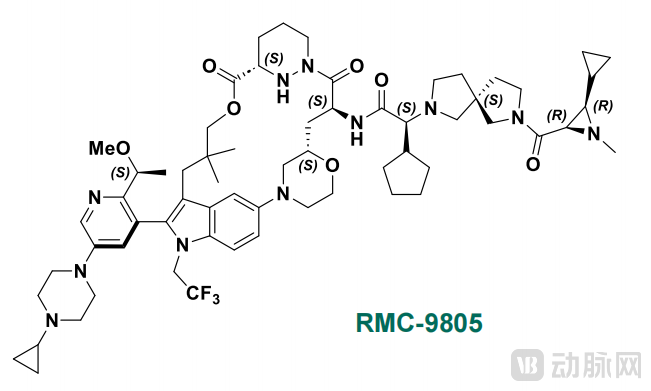 Chemical Structure of Zoldonrasib (RMC-9805)
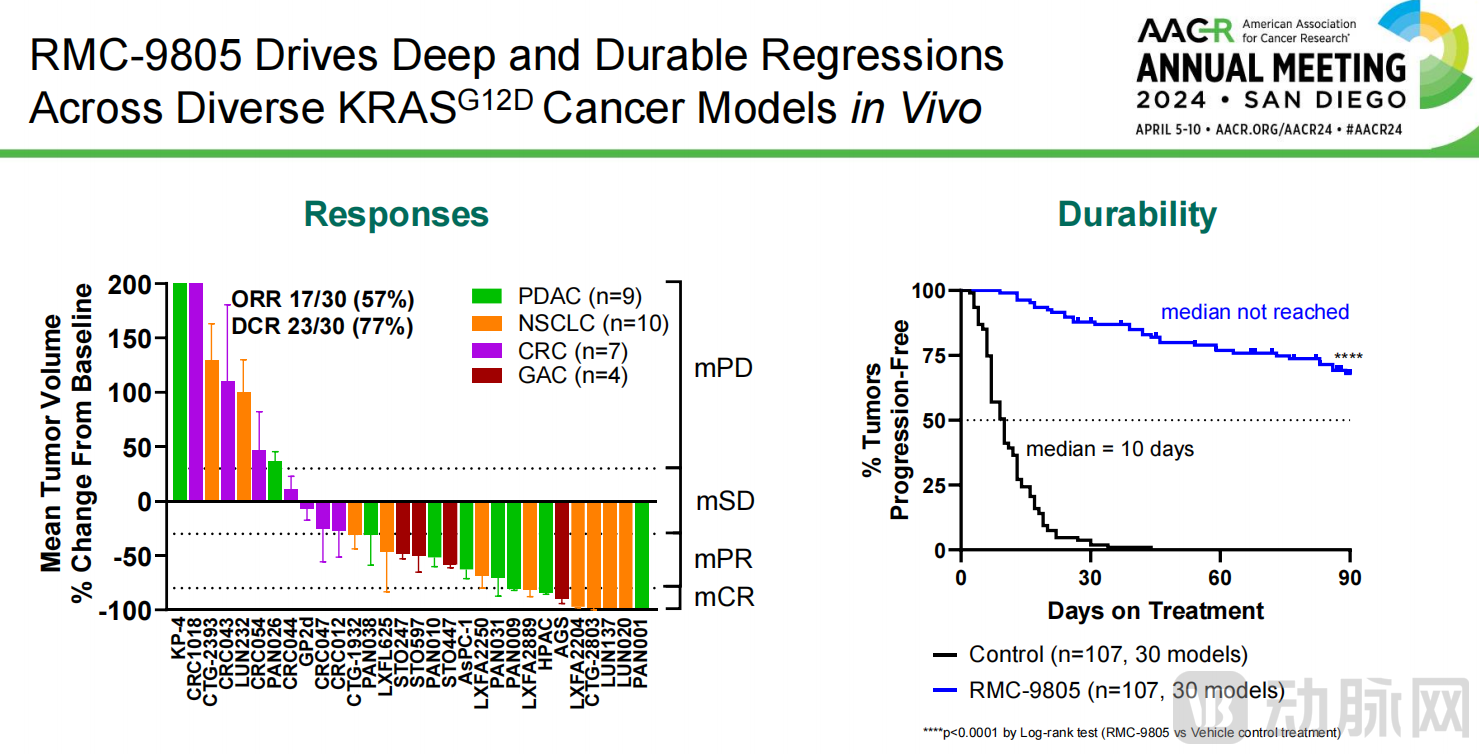 In various in vivo tumor models with KRAS G12D mutations,
Zoldonrasib (RMC-9805) Achieves Significant and Durable Tumor Regression
Zoldonrasib received Breakthrough Therapy Designation based on data from the monotherapy cohort of the Phase I RMC-9805-001 clinical trial. The results for the monotherapy cohort were as follows: In terms of efficacy, among 18 patients with KRAS G12D-mutated non-small cell lung cancer (NSCLC) treated with a daily dose of 1200 mg, the objective response rate (ORR) was 61%, and the disease control rate (DCR) reached 89%.At a daily dose of 1,200 mg, zoldonrasib demonstrated acceptable safety and tolerability in the patient population. Among the 90 patients treated, no Grade 4 or 5 adverse events were reported; most adverse events were Grade 1 or 2. Only one patient experienced a Grade 3 adverse event (diarrhea), which resolved after discontinuation of the drug.
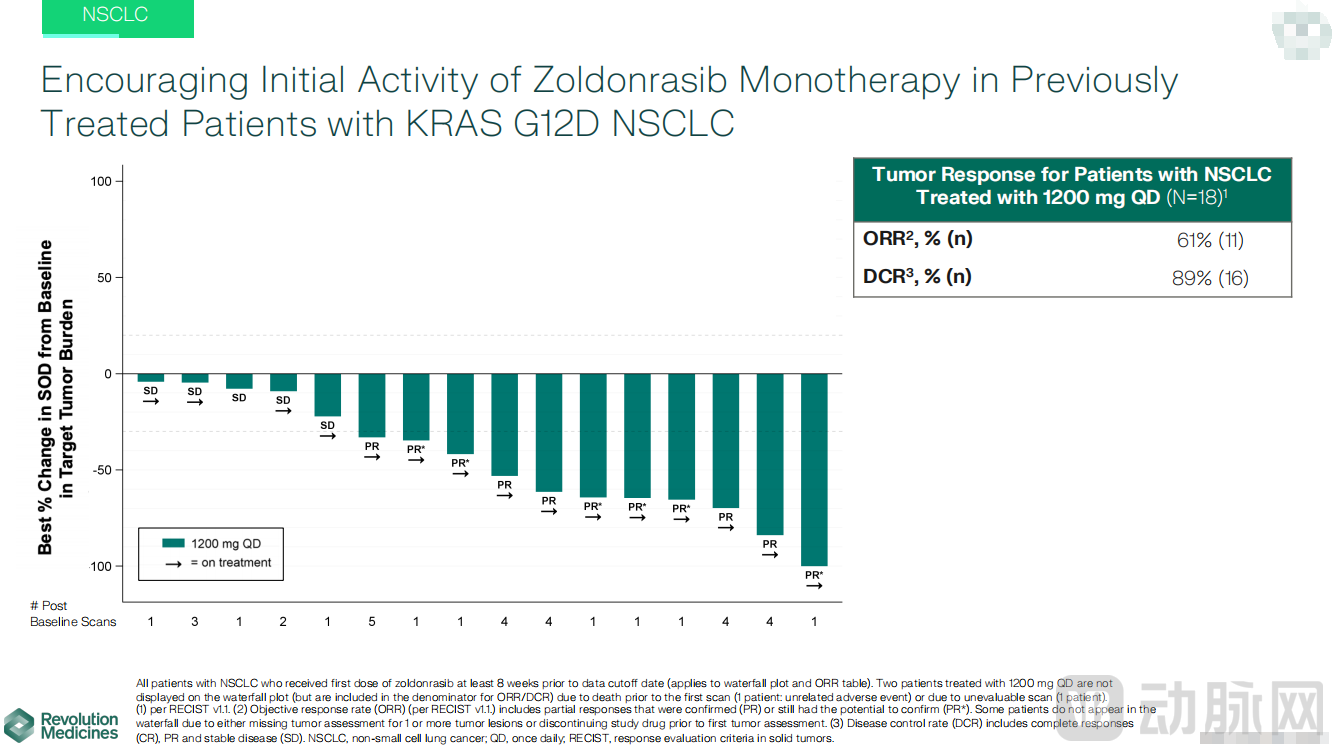 Phase I RMC-9805-001 Monotherapy Clinical Trial Cohort Data
Overall, there are currently no approved specific targeted therapies for non-small cell lung cancer (NSCLC) with KRAS G12D mutations. As the first investigational drug targeting KRAS G12D-mutated NSCLC to receive FDA Breakthrough Therapy Designation, Zoldonrasib has the potential to become a first-in-class therapy and capture early market advantage.
In addition to NSCLC,Currently, Revolution is evaluating monotherapy and combination regimens of Zoldonrasib across multiple tumor types and different lines of therapy.Other indications include:Patients with KRAS G12D-mutant pancreatic ductal adenocarcinoma (PDAC), patients with KRAS G12D-mutant colorectal cancer (CRC), and those with other solid tumors harboring KRAS G12D mutations (such as ovarian cancer, endometrial cancer, etc.).
Same Pipeline, Hengrui and Genfleet Have Entered Phase III
As the most common KRAS mutation, KRAS G12D corresponds to a substantial drug market size. According to Evaluate Pharma, the global market for KRAS G12D-targeted therapies is projected to reach $12 billion by 2035. Worldwide, pharmaceutical companies such as Revolution Medicines, Kumquat Therapeutics, Verastem, Astellas, AstraZeneca, Eli Lilly, Hengrui Medicine, GenFleet Therapeutics, Renuo Biopharma, Qilu Pharmaceutical, and TaiLi Bio have all established pipelines for KRAS G12D inhibitors.In terms of clinical progress, HRS-4642 from Hengrui Medicine and GFH375 from Genfleet Therapeutics are advancing the most rapidly, having entered Phase III clinical trials.
Hengrui Medicine HRS-4642:As a liposomal formulation, it can specifically bind to KRAS G12D, inhibit the phosphorylation of MEK and ERK proteins, and exert antitumor effects. In October 2025, HRS-4642 in combination with chemotherapy versus placebo plus chemotherapy as first-line treatment for advanced or metastaticPhase III clinical trial launched in adult patients with pancreatic cancer. For NSCLC, HRS-4642 is currently in Phase I clinical trials.Data presented at the 2025 ESMO Congress demonstrated that HRS-4642 exhibited potential antitumor activity in patients with KRAS G12D-mutated non-small cell lung cancer (NSCLC) who had received multiple prior lines of therapy. At a dose of 1,200 mg, the objective response rate (ORR) was 33.3%, and the disease control rate (DCR) was 88.9%. As of January 20, 2026, the cumulative R&D investment in HRS-4642-related projects amounted to approximately RMB 254 million.
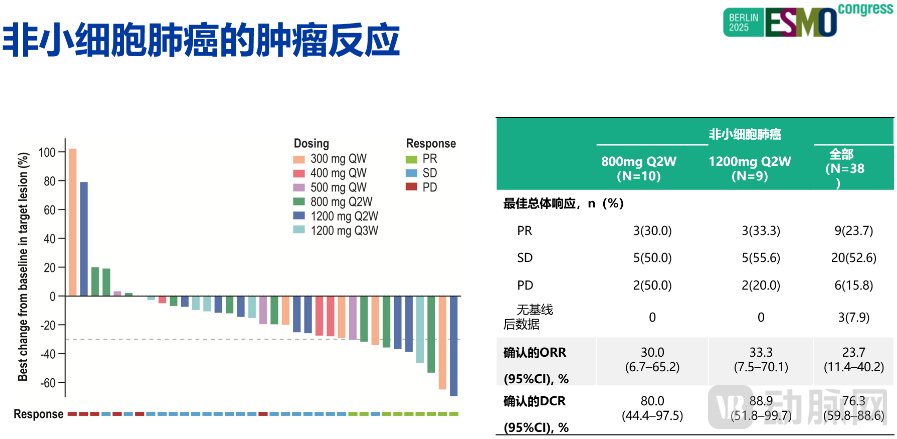
Tumor Response to HRS-4642 in NSCLC
Genfleet Therapeutics GFH375:By binding to the KRAS G12D protein in a non-covalent manner, it blocks the erroneous “continuous growth” signals sent to cells, thereby effectively inhibiting tumor proliferation. In November 2025, GFH375 officially initiated its first Phase III clinical trial, planning to enroll 320 patients with previously treated metastatic KRAS G12D-mutantPancreatic CancerPatients: Comparing the Efficacy, Safety, and Tolerability of GFH375 Monotherapy Versus Standard Chemotherapy Regimens.For NSCLC research, GFH375 is currently in Phase I/II clinical trials.At the 2025 WCLC, GenFleet Therapeutics presented clinical data for GFH375 in 26 evaluable, previously treated patients with KRAS G12D-mutated NSCLC: the ORR was 57.7% and the DCR was 88.5%; in the 600 mg QD dose cohort, the ORR was 68.8% and the DCR was 93.8%.
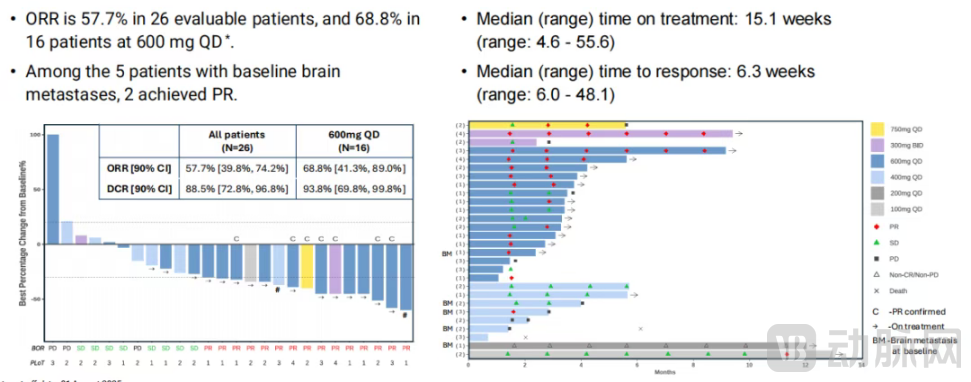 Tumor Response to GFH375 in NSCLC
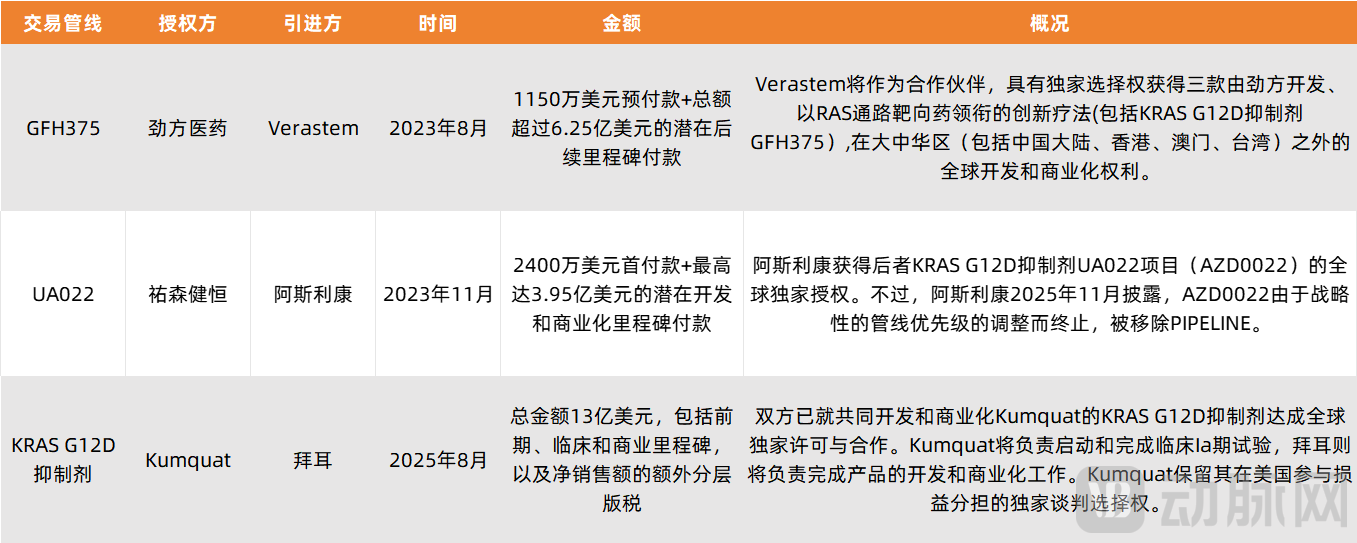
In terms of business development (BD) transactions, companies such as Genfleet Therapeutics, Yousen Jianheng, and Kumquat have secured licensing deals in recent years.
About Revolution
Revolution, founded in 2014 by scientists from the University of California, San Francisco (UCSF) and Stanford University, is dedicated to developing therapeutics for cancers driven by RAS gene mutations.It possesses the RAS(on) core technology platform,Focused on the development of small-molecule inhibitors that directly target RAS proteins in their active (ON) state;A triple-complex technology has also been established:By designing small-molecule drugs that facilitate the formation of a stable ternary complex among the drug, RAS proteins, and intracellular chaperones, the interaction between RAS proteins and downstream effector proteins is blocked, thereby inhibiting the RAS signaling pathway and achieving precise suppression of tumor cells.
Since its inception, Revolution has completed multiple rounds of financing, attracting renowned investment firms such as Third Rock Ventures, Column Group, and Nextech Invest. In February 2021, the company went public on the Nasdaq. In June 2025, it reached a $2 billion financing agreement with Royalty Pharma, comprising a $1.25 billion royalty prepayment and a $750 million term loan, to support the clinical development and commercialization of its core products.
In addition to Zoldonrasib (RMC-9805), the company is currently advancing two other RAS(ON) inhibitors: Daraxonrasib (RMC-6236) and Elironrasib (RM-6291).Daraxonrasib is advancing most rapidly as an oral pan-RAS inhibitor targeting multiple RAS mutant subtypes (such as KRAS G12X, G13X, and Q61X). Currently in Phase III clinical trials for the treatment of solid tumors including pancreatic ductal adenocarcinoma (PDAC), non-small cell lung cancer (NSCLC), and colorectal cancer (CRC), it has received FDA Breakthrough Therapy Designation and Orphan Drug Status. Elironrasib is a selective KRAS G12C inhibitor in clinical development; when used in combination with Daraxonrasib, it can overcome drug resistance.