

Zhiron Medical's Chief Scientist Leads Breakthrough in Solving Neuralink's Electrode 'Dropout' Problem, Securing Core Technology Leadership in Invasive Brain-Computer Interfaces
A research team led by Fang Ying, Senior Investigator at the Beijing Institute for Brain Disorders and Brain-inspired Intelligence, Founder and Chief Scientist of Zhiran Medical, has successfully developed a device that combines high-throughput signal acquisition with biomechanical compliance.Stretchable Flexible Electrodes,This technology breaks through the core bottleneck of traditional flexible electrodes in brain-computer interface (BCI) technology, which are prone to displacement and dislodgement in response to dynamic brain movements, thereby providing a foundational solution for the long-term stability of invasive BCI technology.This breakthrough finding was published in the international academic journal Nature Electronics on February 5.
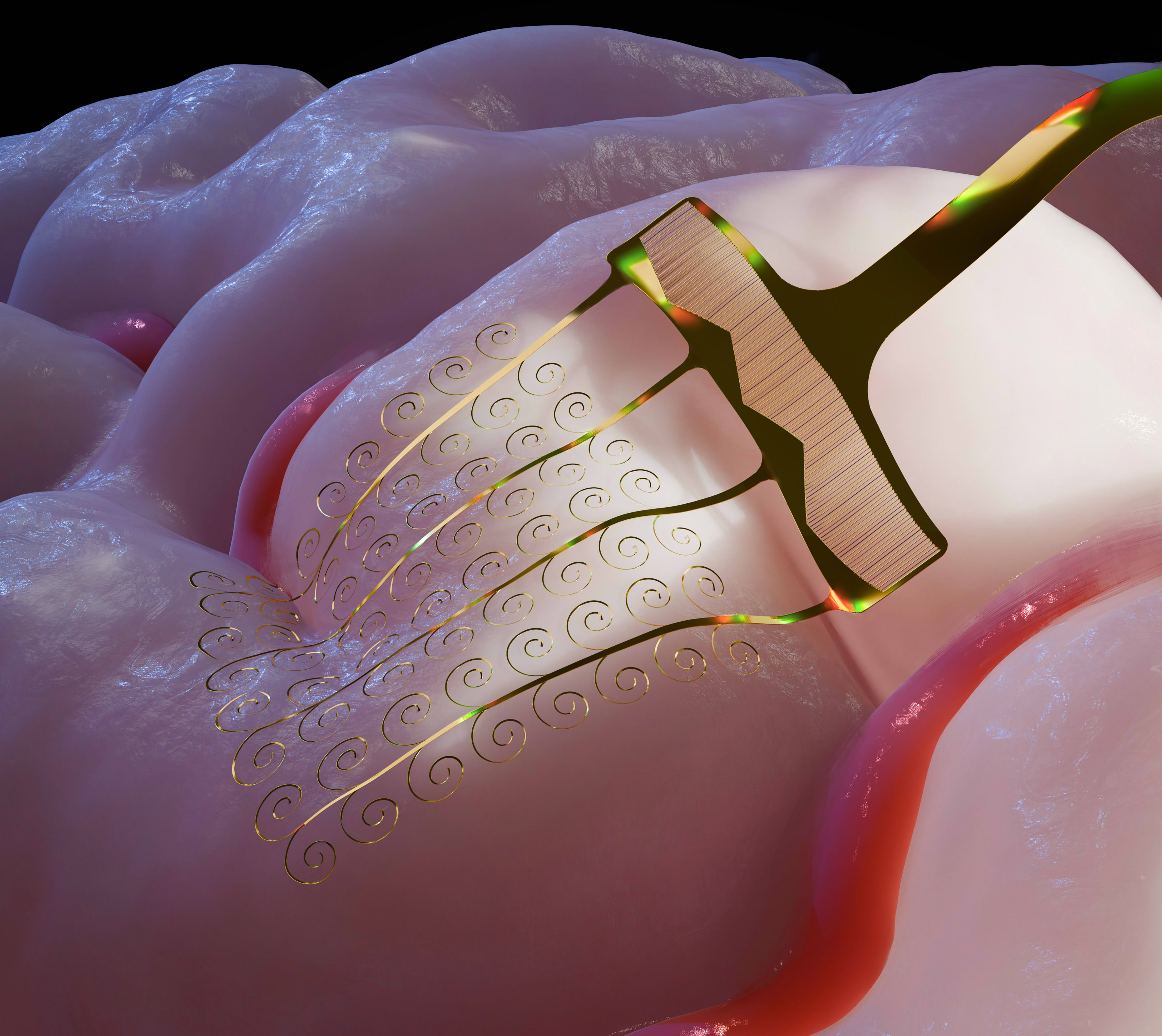
(Figure: Schematic diagram of high-throughput stretchable flexible electrodes)
(Figure: Screenshot of the official release from Nature Electronics)
Brain-computer interfaces (BCIs) hold the promise of achieving deep integration between human intelligence and artificial intelligence by establishing direct information exchange channels between the brain and external devices. Major countries and regions worldwide are accelerating their industrial layout in the BCI sector, and China has included it in the proposals for its 15th Five-Year Plan, underscoring the high level of national attention devoted to this field.Among the technical approaches to brain-computer interfaces (BCIs), the invasive approach is widely recognized as the ultimate direction in high-bandwidth human-computer interaction, owing to its ability to enable direct and precise information exchange between the brain and machines.
Neuralink, founded by Elon Musk, is a pioneer in the field of invasive brain-computer interfaces (BCIs). In early 2024, it completed the first human implantation of a 1,024-channel invasive BCI, generating significant excitement. However, within just weeks after the surgery, up to 85% of the flexible electrode threads retracted from the patient’s brain tissue, sparking deep international concern about the long-term stability of invasive BCI technology.
The root cause of this “accident” points directly to a common challenge facing invasive brain-computer interfaces: the linear structural design of traditional flexible electrodes fails to achieve effective mechanical stretchability. Our brain is not static; it pulsates rhythmically with respiration and heartbeat. Moreover, during physical movement, soft brain tissue undergoes displacement and deformation within the cranial cavity.In the face of dynamic brain motion, traditional linear electrodes cannot conform in real time to changes in brain tissue, making them prone to displacement or even dislodgement from the brain tissue.Electrode dislodgement not only directly reduces the quantity and decoding accuracy of acquired neural signals but may also trigger inflammatory responses in brain tissue.Therefore, developing novel flexible electrode technologies capable of adapting to the brain’s dynamic movements and achieving long-term, stable acquisition of neural signals is a critical technical challenge that must be urgently addressed for the clinical application of invasive brain-computer interface technology.
01
High-Throughput Stretchable Flexible Electrodes: The Ultimate Pathway for Invasive Brain-Computer Interfaces
Compared with traditional rigid electrodes, flexible electrodes better match the mechanical properties of brain tissue, significantly enhancing the biocompatibility of implanted devices, and are widely recognized as the fundamental core technology in the brain-computer interface industry. As a pioneer in this field,FangA UK team was the first internationally to demonstrate that implantable flexible electrodes can achieve long-term, high-fidelity neuronal signal acquisition in rodents.However, she maintains a clear understanding of these research findings: the ultimate end-users of invasive brain-computer interfaces (BCIs) are humans, and the physiological pulsations and intracranial displacement amplitudes in the brains of primates (including macaques and humans) are significantly greater than those in rodents. This magnitude of difference means that achieving long-term, stable interaction within the primate brain remains the most challenging scientific problem in the current field of brain-computer interfaces.
To address this industry-wide challenge, Fang Ying’s team proposed a novel high-throughput “stretchable” electrode architecture.Conventional linear electrodes rely solely on the tensile deformation of the bulk material under stress, making them highly susceptible to reaching their strain limits. In contrast, stretchable electrodes employ strain decoupling to convert tensile loads into bending and torsional deformations. This design leverages the extremely low bending stiffness of thin-film structures in flexible electronics, directing tensile stress toward instability-driven deformations with low energy barriers.Thanks to this, the electrodes can dynamically follow brain pulsations and intracranial displacement after implantation, ensuring long-term stability of the electrodes within brain tissue.
(Video: Dynamic movement effects of stretchable flexible electrodes after implantation into the brain)
“This stretchable electrode is also softer than traditional linear electrodes within the brain.“Researcher Fang Ying emphasized: Stretching Neuralink’s linear electrodes by 100 micrometers requires a force of 4 mN, whereas this stretchable electrode requires only 37 μN—just 1/100th of the former.”This means that the electrodes cause less mechanical damage to brain tissue, fundamentally avoiding the immune responses and glial scarring triggered by traditional linear electrodes—where glial scarring leads to a reduction in neuronal density around the electrodes, ultimately causing the electrodes to lose their signal acquisition capability.
02
Hardcore Validation: Stable Acquisition of Neural Signals in the Primate Brain!
To verify the implantation reliability and long-term stability of stretchable flexible electrodes, the research team conducted systematic validation using macaques as test subjects.The results demonstrate that stretchable, flexible electrodes can achieve long-term stable recording in the macaque brain. More breakthroughly, after implanting the 256-channel electrode, the team successfully acquired signals from 257 single neurons and achieved high-precision decoding of motor intentions.. A high neuronal yield is of milestone significance for the clinical translation of invasive brain-computer interface (BCI) technology. The underlying logic is tightly interlinked: effective acquisition of neuronal signals from the brain is a prerequisite for accurate decoding, and the quantity of acquired signals directly determines the decoding accuracy of BCI technology, thereby influencing the core efficacy of brain-computer interaction.This means that, with the same number of electrode channels, maintaining a high neuron yield over the long term enables the continuous capture of more valid signals, thereby delivering more durable and superior clinical benefits to patients.
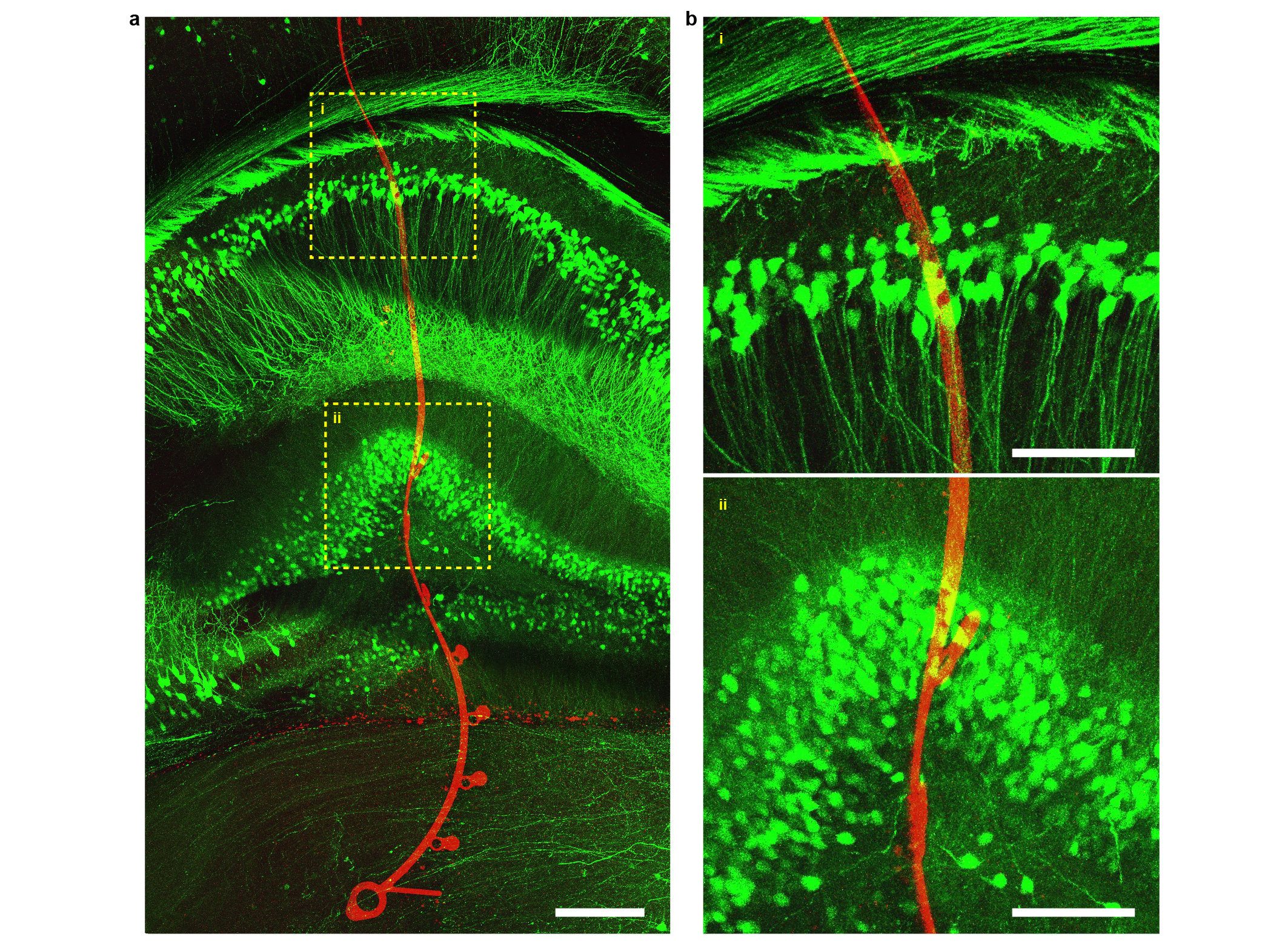
(Figure: Biocompatible interface between stretchable flexible electrodes and brain tissue after long-term implantation)
To further validate the architecture's large-scale signal acquisition capability,The team successfully implanted a 1,024-channel high-density stretchable flexible electrode into the primate brain—a scale on par with Neuralink’s core metrics—and successfully acquired large-scale, high-quality neuronal signals, further validating the superior performance of stretchable flexible electrodes.
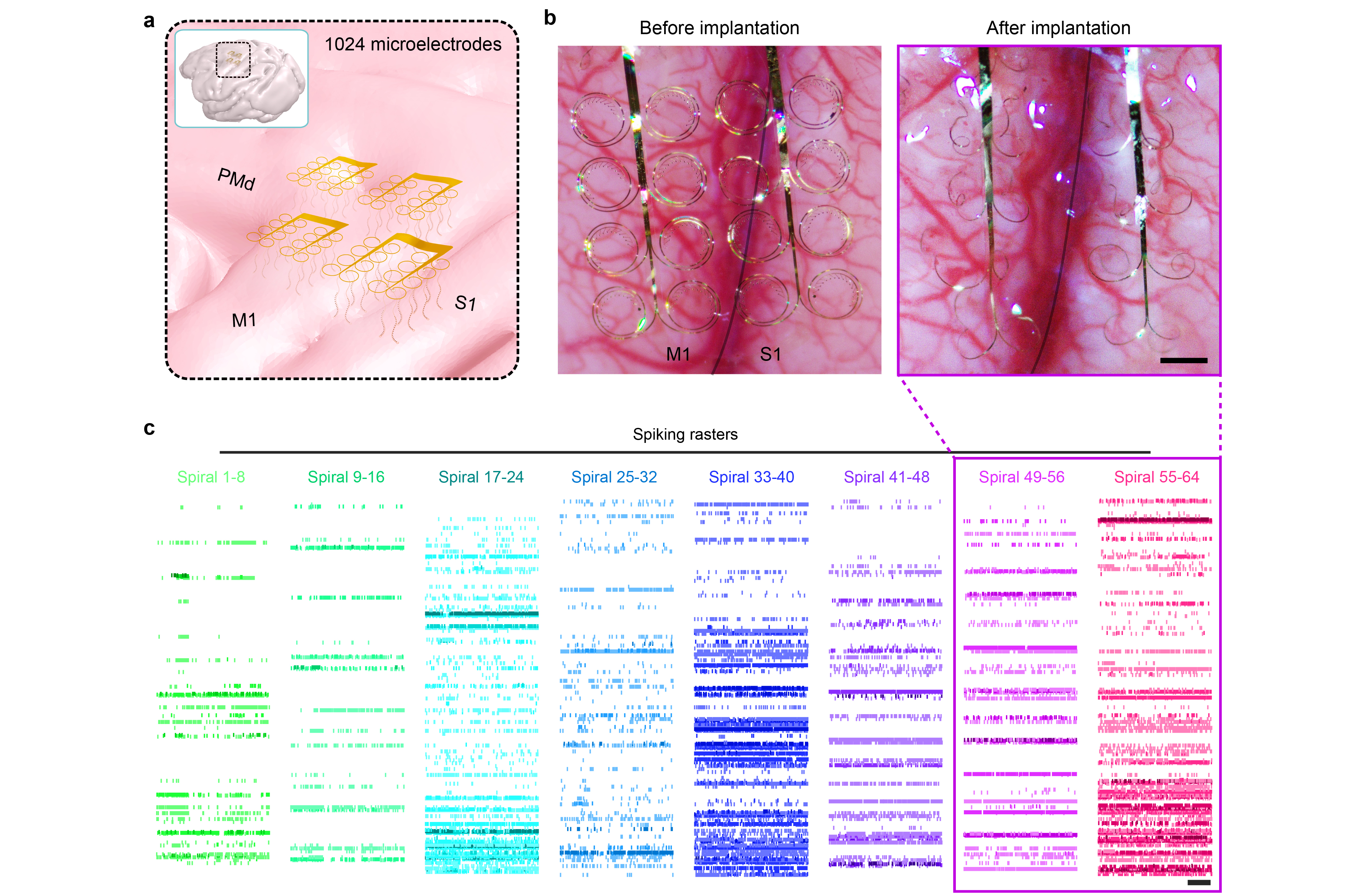
(Figure: Recording of neuronal activity in the brain after implantation of a 1024-channel stretchable flexible electrode)
03
Global Leader: Zhiran Medical Secures the “Center Stage” in the Invasive Brain-Computer Interface Race
Fang Ying’s team has achieved a groundbreaking result that goes far beyond breaking the deadlock in the clinical translation of invasive brain-computer interfaces (BCIs). Looking past current technical bottlenecks toward the future, invasive BCIs may become the core pillar of high-throughput human-machine interaction within a few years, while the breakthrough significance of stretchable flexible electrodes will become increasingly evident in the daily lives of ordinary people.
Imagine this scenario: invasive brain-computer interface (BCI) technology has shed its aura of frontier mystery and become fully integrated into daily life. An extreme sports enthusiast, with a BCI device implanted in their brain that features stretchable flexible electrodes as its core, runs and leaps through mountainous terrain and performs aerial flips on a skateboard. They no longer need to constantly worry about the implanted device interfering with their movements, nor do they have to fear electrode lead dislodgement or brain injury caused by vigorous physical activity. This ease of mind stems from the electrode’s exceptional dynamic compliance—It can easily accommodate displacement amplitudes of approximately 10 millimeters. Even in the event of accidental collisions, it securely anchors to the target brain region, continuously and stably capturing neuronal signals, thereby ensuring that brain-computer interaction remains smooth and precise in dynamic scenarios.
This breakthrough in core technology is bound to propel “Zhiran Medical,” co-founded by Fang Ying—a Chinese company committed to independent innovation in core technologies and already capable of mass production—into the spotlight on the international stage of invasive brain-computer interfaces.This research achievement by the Zhiran Medical team precisely aligns with the forward-looking layout for future industries outlined in China’s 15th Five-Year Plan, clearing critical obstacles for the transition of invasive brain-computer interface (BCI) technology from the laboratory to large-scale clinical application in China. As technological iteration and clinical implementation steadily advance, China is poised to secure a core voice in the global invasive BCI sector, leading industry development through technological advantages and empowering human progress with this cutting-edge technology.