

White Paper on the Ecosystem of Medical Information Technology Innovation Released to Advance Integration of IT and Healthcare
In February 2026, under the guidance of the Digital Health and Medical Intelligence Information Technology Application Innovation Branch of the China Health Information and Healthcare Big Data Association, the Shuanghua Digital Health and Medical Intelligence Industry Research Institute, in collaboration with VCBeat, medical institution experts, and relevant industry enterprises, jointly released the “White Paper on the Ecosystem of the Medical Information Technology Application Innovation Industry” (hereinafter referred to as the “White Paper”).
"The White Paper" is grounded in promoting the integrated and symbiotic development of information technology and the healthcare sector. Addressing the needs of medical institutions, it presents a technical architecture analysis of the healthcare information technology innovation (Xinchuang) industry and anticipates industry challenges.
Amid the macro backdrop of intensifying global technological competition and accelerated digital transformation in healthcare, medical information technology application innovation (ITAI) has become a critical issue concerning national information security, the enhancement of healthcare service efficiency, and the modernization of public health systems. This White Paper aims to provide comprehensive industry insights and decision-making references for government agencies, healthcare institutions, technology enterprises, and investment firms by accurately identifying industry pain points and future demands.
Analysis of Technology and Applications from the Perspective of Industrial Architecture
The White Paper posits that China’s medical information technology innovation industry has established a multi-layered technological framework encompassing foundational hardware, foundational software, application software, information security, and artificial intelligence. This framework is driving the healthcare sector’s transition from informatization to intelligentization, laying the groundwork for a more efficient and inclusive healthcare system.
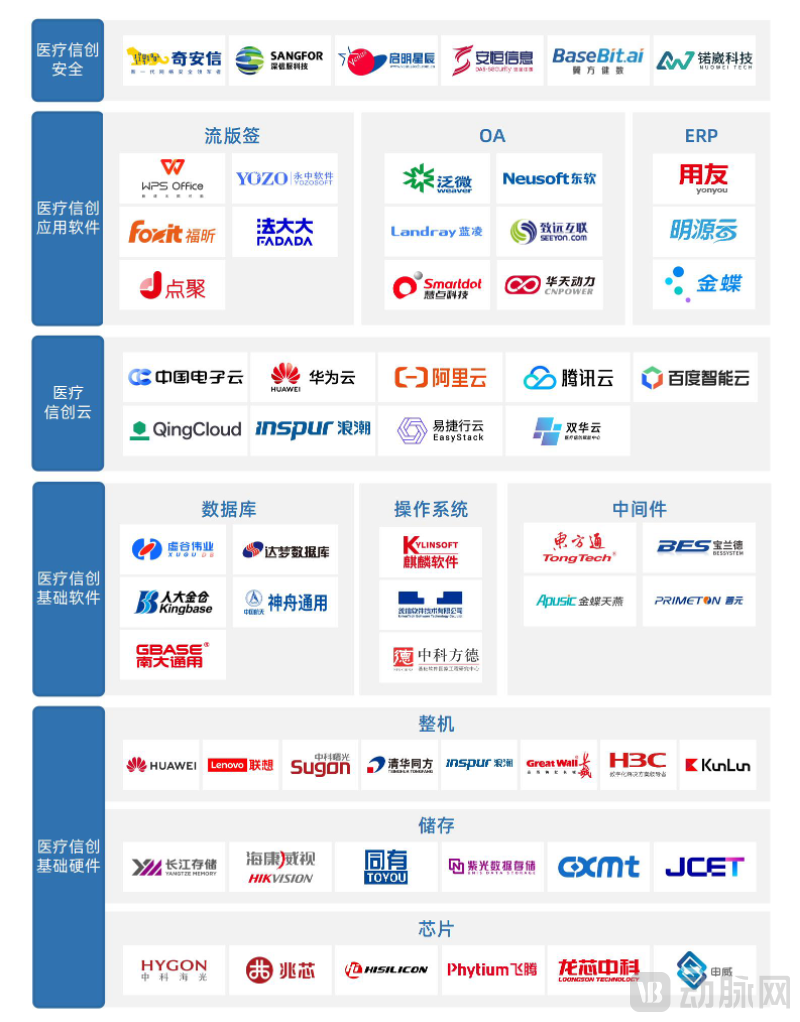
Figure 1: Architecture of the Domestic Medical Information Innovation Industry Map from the "White Paper on the Ecosystem of the Medical Information Innovation Industry"
Basic hardware is the physical cornerstone of autonomous control.The White Paper analyzes that domestic server manufacturers have launched server products based on domestically produced chips, with some products gradually approaching international advanced levels in performance and demonstrating stable operation in core business systems of medical institutions.
Basic software serves as the bridge between hardware and applications.The White Paper points out that domestically produced operating systems have basically achieved good adaptation to mainstream hardware platforms and are gradually strengthening their application in medical institutions. Domestically produced database and middleware products have further improved in performance and functionality, meeting the needs of core hospital business systems and providing stable message transmission and transaction processing capabilities for application systems.
Application software is the direct embodiment of intelligent healthcare.The White Paper indicates that healthcare IT vendors are continuously launching medical application software based on domestic technology stacks, with successful deployments across numerous healthcare institutions. These applications are being continually optimized in terms of functional completeness and business adaptability, thereby meeting the daily operational needs of healthcare institutions. In terms of user experience, domestically developed medical application software has achieved breakthroughs in usability and intelligence, driven by in-depth research into local requirements.
Artificial Intelligence Is the New Engine of Healthcare Innovation.The “White Paper” points out that, in the context of China’s information technology application innovation (Xinchuang) ecosystem, the development of medical AI is characterized by the domestication of computing power, the independent development of algorithms, and the scenario-specific deployment of applications. Domestically developed medical AI applications are playing an increasingly important role in various areas, including clinical workflows, patient experience, and hospital management.
Steps and Processes for Migrating and Splitting Practical Operations
“White Paper” formulates a technical migration plan for the information technology application innovation (Xinchuang) transition of medical institutions, based on the current state of their informatization infrastructure in China. The plan aims to replace foreign technology systems with domestically produced hardware and software solutions through a gradual substitution approach. While ensuring compliance with information system construction standards, security and controllability of core technologies, and stable and continuous business operations, the migration is to be completed in three major phases and five key steps.
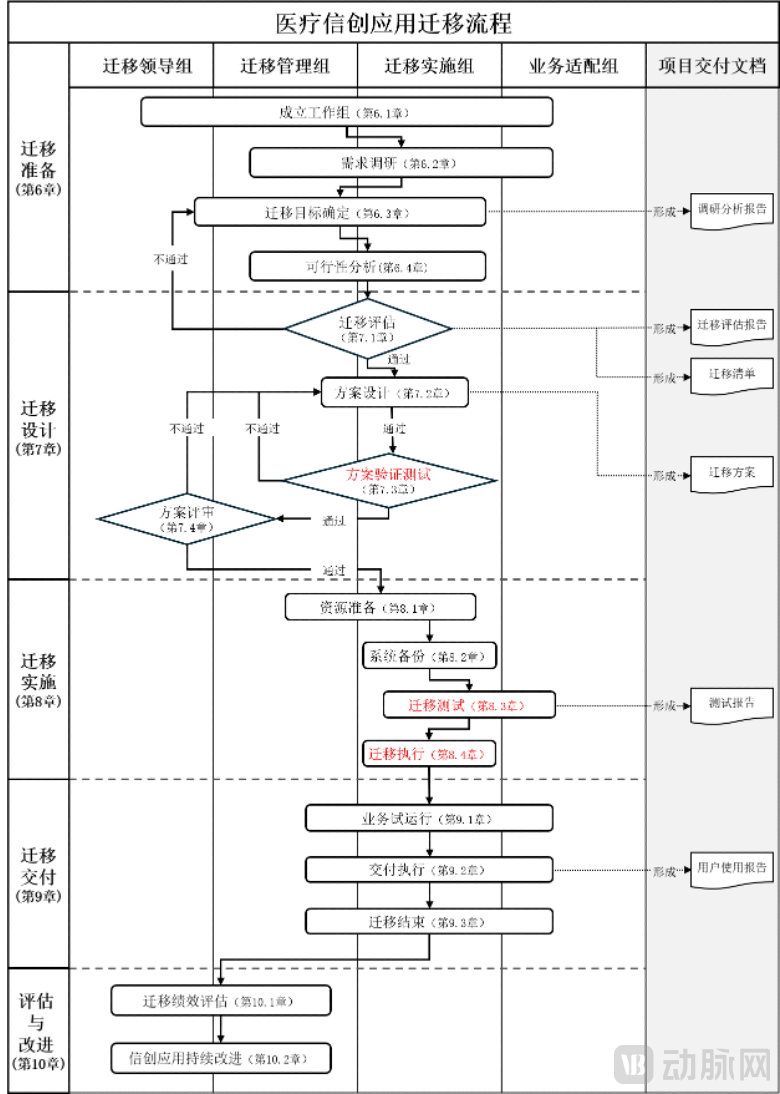
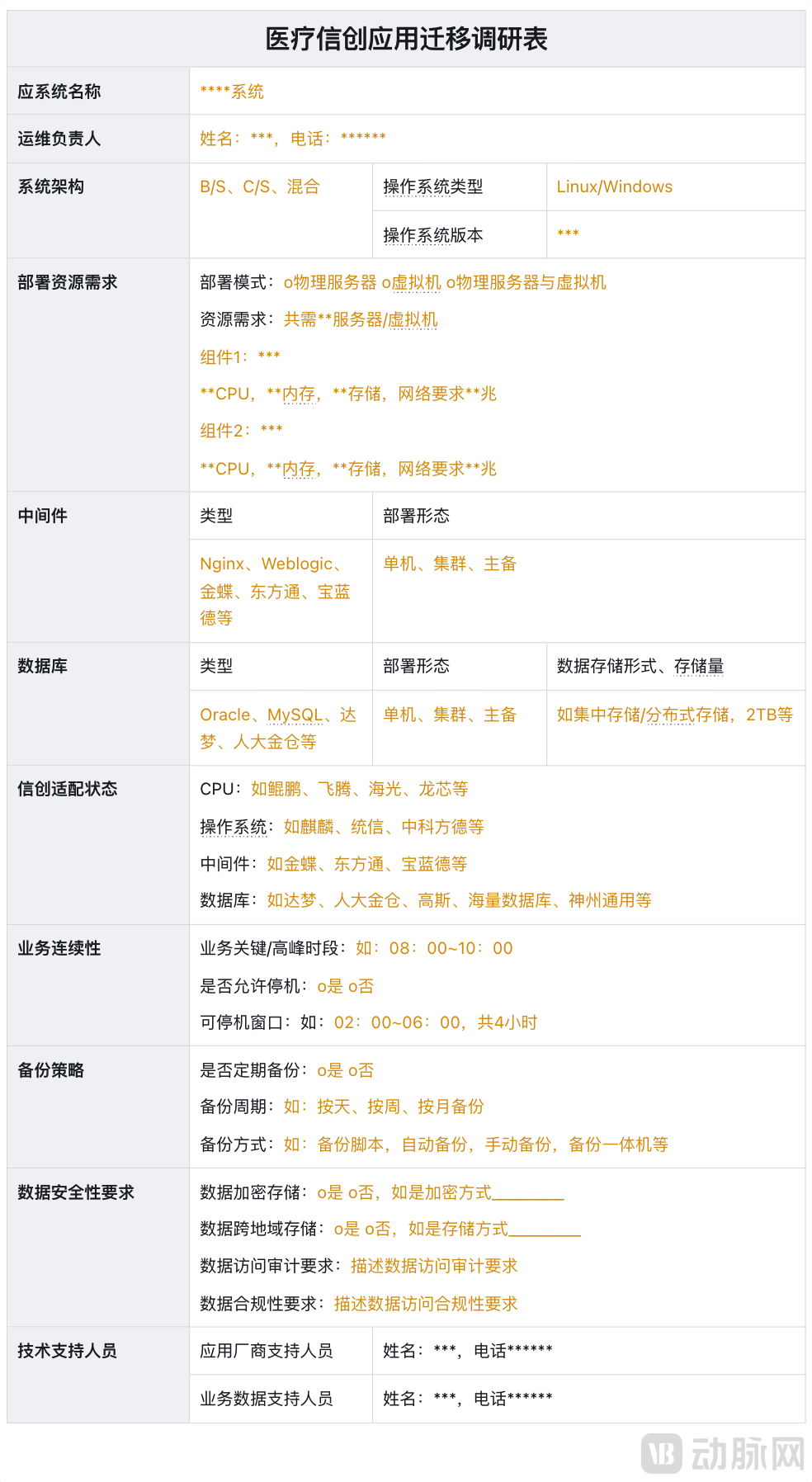
Figure 2: “White Paper on the Ecosystem of the Medical Information Technology Application Innovation Industry” – Migration Process for Medical ITAI Applications and Survey Form for Medical ITAI Application Migration
During the migration planning phase, conduct requirements assessment, technology selection, risk assessment, and project plan formulation.Needs assessment primarily involves a comprehensive evaluation of the existing information systems in healthcare institutions to clarify migration objectives and requirements. Technology selection entails choosing appropriate domestically produced basic hardware and software, as well as products from the Information Technology Application Innovation (ITAI) ecosystem, based on the results of the needs assessment, and formulating a technical migration plan. Risk assessment requires identifying potential risks during the migration process and developing corresponding mitigation measures. Finally, a detailed migration project plan should be developed, including project schedule, personnel allocation, and resource distribution.
Migration Implementation Phase: Environment Setup, Data Migration, Application Migration, and Testing and ValidationEnvironment setup refers to establishing a foundational hardware and software environment based on domestically produced technologies, including servers, operating systems, databases, and middleware. Data migration involves transferring data from existing information systems to the domesticated environment, ensuring data integrity and consistency. Application migration entails porting applications from existing information systems to the domesticated environment, followed by adaptation and debugging to ensure proper operation. Finally, comprehensive testing of the migrated information system is conducted, including functional, performance, and security testing, to ensure the system meets expected requirements.
The migration go-live phase includes go-live preparation, system cutover, and monitoring and operations.Go-live preparation requires the formulation of a go-live plan, along with pre-launch training and preparatory work. System cutover involves migrating the existing information system to a domestically produced environment to ensure business continuity. Monitoring and operations entail real-time monitoring and maintenance of the migrated information system to promptly resolve any issues that arise.
Key Challenges and Response Strategies for the Migration of Healthcare IT Application Innovation
“The White Paper” analyzes and summarizes that the migration of medical IT application innovation faces challenges such as high technical complexity, significant difficulties in data migration, and insufficient personnel training. In response to these challenges, “The White Paper” proposes corresponding countermeasures:
1. High technical complexity: Healthcare institutions should select mature, domestically produced technological products and solutions, fully leverage technical support from open-source communities, and strengthen collaboration with technology enterprises to jointly address technical challenges.
2. High Difficulty in Data Migration: Data migration is a critical component of migrating healthcare applications to domestic IT infrastructure. Healthcare institutions should develop detailed data migration plans and employ automated data migration tools to ensure data integrity and consistency. Meanwhile, data security protection must be strengthened by adopting technologies such as encrypted transmission and data masking to safeguard data security.
3. Insufficient Staff Training: Medical institutions should strengthen training for medical and technical personnel to enhance their awareness and proficiency in using domestically produced technological products. Training content should cover information technology application innovation (Xinchuang) knowledge, the operation of domestic operating systems and application software, and security management.
The White Paper provides an outlook on the future development of the healthcare IT application innovation industry. With the continuous maturation of domestically produced technologies, strengthening policy support, and growing market demand, the healthcare IT application innovation industry is poised for a period of rapid growth. In the future, the industry will exhibit overall trends characterized by sustained technology-driven innovation, expanding application scenarios, and increasingly robust ecosystem development, thereby continuously propelling the healthcare sector’s transition from informatization to intelligentization.
VCBeat will continue to monitor developments and publish reports related to the "White Paper on the Ecosystem of the Medical Information Technology Innovation Industry," while also planning related events.
If you are interested in obtaining the full content of the “White Paper” or participating in training related to the “White Paper,” please contact shchanyeyanjiuyuan@163.com.