Chengdu Biopharma: Decoding Its Capital Appeal and Global Breakthrough Strategy

VCBeat
Internet Medical Health Media
The biopharmaceutical sector is accelerating its emergence as a key growth pole in the global innovation economy. Driven by sustained policy support, evolving technological pathways, and adjustments in capital structure, innovation activities within the industry remain vibrant. As a significant biopharmaceutical industry cluster in western China,In recent years, Chengdu has seen a steady rise in investment and financing activity, driven by the continuous accumulation of its locational advantages, industrial platforms, and innovation resources.: On one hand, leading venture capital firms are accelerating their local presence; on the other, domestic innovative enterprises are gradually establishing verifiable technological and product capabilities across multiple niche sectors, thereby enhancing regional influence.
The 14th episode of the “China Innovative Healthcare Asset Lounge” Trading Roundtable, jointly hosted by VCBeat and Weijieyao, has officially launched. This episode’s roundtable focuses on“Setting Sail from Chengdu, Breaking Through with Value: Why Is Chengdu’s Biopharmaceutical Industry Both ‘Attracting Capital’ and ‘Gaining Prominence’?”Themed around this topic, the session was moderated by Du Jiangbo, Managing Partner and Head of Investment at Huige Capital. The invited guests included Shi Rongwei, Deputy General Manager of Chengdu Bio-City Equity Investment Fund Management Co., Ltd. (Guosheng Capital); Jiang Bowen, Chairman and General Manager of Sichuan Modern Traditional Chinese Medicine Innovation Technology Co., Ltd.; Li Yingfu, Founder and Chairman of Hybio Pharmaceutical; and Wei Jun, Founder and CEO of Regent Pharmaceuticals.The roundtable discussion centered on the core logic of capital evaluating regional innovation assets, enterprise value creation across different technological pathways, and industrial ecosystem synergy, deconstructing from a practical perspective the project assessment and sector layout strategies from the buyer’s viewpoint.
Capital Empowerment: The Logic of Industrial Layout under the Synergy of State-Owned and Market-Oriented Capital
The “Capital-Attracting” Secret of Chengdu’s Biopharmaceutical Industry Lies in the Synergy Between State-Owned and Market-Oriented Capital, Forming a Capital Support System That Covers the Entire Lifecycle, Leveraging Industrial Guidance While Enhancing Investment Efficiency Through Market Mechanisms.
Shi Rongwei, Deputy General Manager of Chengdu Bio-town Equity Investment Fund Management Co., Ltd. (Guosheng Capital), introduced that Guosheng Capital adheres to the principle of “equal emphasis on policy guidance and market mechanisms” in its layout of the biopharmaceutical sector, with a key focus on areas such as biotech drugs, innovative chemical drugs, and innovative medical devices. Leveraging the Chengdu Tianfu International Bio-town, Guosheng Capital has established an industrial fund system with a total scale of approximately RMB 17 billion through a parent-subsidiary fund structure. By collaborating with market-oriented institutions and utilizing reinvestment mechanisms, it guides social capital to invest in local early-stage projects and facilitates the landing of high-quality projects in Chengdu. To date, this fund system has invested in over 100 companies, nine of which have completed their IPOs, while several others are in the IPO application stage. The investment portfolio covers enterprises at various development stages, including Ruijian Pharmaceutical, Niuchuang Medical, and Zeling Biotechnology. She stated that state-owned capital investments place greater emphasis on the synergistic value of projects to the regional industrial chain, prioritizing enterprises that strengthen and supplement the chain and drive industrial agglomeration, while also taking into account technological foresight and team execution capabilities.
As a representative of market-oriented funds, Du Jiangbo, Managing Partner at Huige Capital, pointed out thatMarket-oriented funds place greater emphasis on limited partner (LP) returns, risk-adjusted returns, and decision-making efficiency., yet it does not conflict with the industrial orientation of state-owned capital. In practice, the long-term strategic deployment capabilities of state-owned capital complement the decision-making efficiency of market-oriented funds, thereby providing enterprises with a relatively stable capital support environment through co-investment.
From a corporate perspective, Jiang Bowen, Chairman and General Manager of Sichuan Modern Traditional Chinese Medicine Innovation Technology Co., Ltd., noted that the current venture capital ecosystem for innovative TCM remains relatively weak. Among privately offered funds registered nationwide in China, only eight include “Traditional Chinese Medicine” in their names, and there is a relative lack of TCM biotech companies with scalable capabilities as well as mature incubation systems. Against this backdrop, his team is collaborating with local governments to explore the establishment of a special TCM industry fund, focusing on supporting the development of innovative pipelines to address the early-stage funding gap in the sector.
Li Yingfu, Founder and Chairman of Haibowei Pharmaceutical, drew on his own fundraising experience to note that state-owned capital funds hold advantages in docking efficiency and policy coordination, whereas market-oriented capital applies stricter project screening criteria, with particular emphasis on the competitive landscape of drug pipelines, the quality of preclinical data, and the potential for clinical translation. In the current market environment, these high standards are, to some extent, compelling companies to enhance their R&D and translational capabilities.
Regarding financing for cutting-edge technology projects, Wei Jun, Founder and CEO of Ruijian Medicine, shared that the company’s shareholders include both state-owned entities and market-oriented funds as well as industrial investors. In its early stages, the company faced a cautious overall financing environment in the cell therapy sector. As its technology platform matured and phased clinical results became increasingly clear, capital attention gradually rebounded. She believes that, regardless of the nature of the capital, investment decisions ultimately revert to an assessment of a company’s fundamentals, including its ability to consistently deliver high-quality data and its long-term development potential.
Corporate Innovation: Selecting Differentiated Tracks and Building Core Competencies
Beyond capital, the market recognition of Chengdu’s biopharmaceutical assets hinges primarily on the quality of corporate innovation and the ability to deliver results.Leverage Core Strengths to Establish a Differentiated Positioning, is the key to building core competitiveness.
Li Yingfu pointed out that small-molecule innovative drug companies should avoid blind expansion in project initiation. Haibowei has focused on oncology and analgesia since its establishment, seeking structural opportunities within mature targets: for instance, it specifically addresses resistance mutations associated with the BTK target, with its candidate drugs already showing positive efficacy signals; it also strategically positions itself in niche segments of targets such as KRAS G12D, G12V, and Pan-KRAS by keeping pace with technological windows. He emphasized that companies must benchmark themselves against global competition; if they fail to rank among the top tier of similar products, their commercial potential will be significantly constrained.
Wei Jun broke through from a technological white space, leveraging induced pluripotent stem cells (iPSCs) as a foundational platform and integrating chemical induction with AI-assisted design to build a technical system for directed functional modification of cells, focusing on unmet clinical needs such as Parkinson’s disease. Her team deliberately avoided the crowded oncology sector, differentiating itself through off-the-shelf cell products that offer superior safety profiles and controllable costs. Relevant projects have already received FDA Fast Track designation and Regenerative Medicine Advanced Therapy (RMAT) designation. She believes that intellectual property must be strategically secured early in the development of new technologies to establish robust technical barriers.
Jiang Bowen stated that innovative traditional Chinese medicine (TCM) holds unique advantages in demonstrating clinical feasibility, with a R&D logic significantly different from that of chemical and biological drugs. He recommended focusing on complex areas where Western medicine faces short-term breakthrough challenges, such as autoimmune, metabolic, and psychiatric disorders. The company has currently obtained Investigational New Drug (IND) approvals for two Class 1.1 innovative TCM products through collaborative R&D and plans to independently advance them to the New Drug Application (NDA) stage.
Capital markets have responded with strong approval. Shi Rongwei noted that state-owned capital places greater emphasis on companies’ differentiated pathways and sustainable technological barriers; whether through structural innovation in mature sectors or exploration of entirely new technologies, any endeavor that addresses genuine clinical needs deserves long-term support. Du Jiangbo added that market-oriented funds are most wary of homogeneous competition. The high-intensity R&D investment and self-iterative capabilities demonstrated by innovative enterprises in Chengdu are precisely the key factors enabling them to gain a foothold in global competition.
Ecosystem Building: A Path of Development Through Regional Characteristics and Industrial Synergy
The sustained development of Chengdu’s biopharmaceutical industry is primarily attributable to“Platform + Services + Capital” Ecosystem Support with Multi-Party Collaboration Among Government, Investors, Enterprises, and Research Institutions, creating a development environment that is both competitive and differentiated.
Shi Rongwei elaborated on the ecological logic of Tianfu International Bio-City: By coordinating multiple sectors—including investment, operations, and technological services—the park provides comprehensive support tailored to the R&D pace of enterprises. The clustering of portfolio companies within the park creates synergistic effects in R&D, supporting infrastructure, and policy alignment, which constitutes the core advantage of regional investment promotion. This model has successfully attracted high-quality projects such as Ruijian Pharmaceuticals and Niuchuang Medical to settle and cluster in the area, further reinforcing its core competitive edge in regional investment attraction.
In the field of innovative traditional Chinese medicine (TCM), Tianfu TCM City has carved out a differentiated path. Jiang Bowen introduced that Pengzhou has invested over RMB 2 billion in constructing the Tianfu TCM Innovation Hub, with the company deeply engaged in the park’s industry-education integration operations and the co-development of an innovation and entrepreneurship ecosystem. On the policy front, Pengzhou offers subsidies of up to 35% for innovative TCM pipelines, which, when combined with the provincial-level 20% support, can cover up to 55% of R&D expenses, effectively alleviating the early-stage R&D financial burden on enterprises.
Ms. Wei shared the considerations behind choosing to establish operations in Chengdu. She stated that, in addition to capital and policy factors, Chengdu’s long-term planning for new modalities in innovative drugs, along with the government’s substantive support in areas such as connecting with clinical principal investigators (PIs) and developing R&D facilities, can help companies accelerate project advancement. These elements serve as critical prerequisites for enterprises to sustain their investment in high-risk innovation.
As a representative of a locally grown enterprise, Li Yingfu has a particularly direct sense of the changes in Chengdu’s industrial ecosystem. He noted that support from multi-level governments—provincial, municipal, and district—as well as state-owned capital funds, has provided significant confidence for the company’s R&D efforts.
In his discussion, Du Jiangbo summarized that the core competitiveness of Chengdu’s biomedical ecosystem does not lie in any single policy or individual entity, but rather in the synergistic relationships formed among multiple stakeholders: state-owned capital and market-driven capital complement each other under different objectives; industrial parks and government agencies join forces in terms of services and policies; and enterprises are gradually establishing closer ties with scientific research and clinical resources.
Global Expansion: Practical Pathways and Value Realization in Overseas Business Development
“Breaking out” centers on breakthroughs in overseas markets, with overseas business development (BD) becoming a key pathway for biopharmaceutical companies to enhance their value.Enterprises must prioritize international competitiveness by proactively strategizing intellectual property, regulatory pathways, and compliance systems, leveraging robust data and differentiated advantages to penetrate the global market.
Li Yingfu shared the BD strategy for small-molecule innovative drugs: The core of international business development is gaining global recognition for assets,Hard data is the most critical support. From the outset of project initiation, enterprises should establish goals for international competitiveness, attract engagement with multinational pharmaceutical companies through methods such as official website presence and participation in international conferences, and ultimately rely on product strength to gain recognition.
Regarding business development (BD) for novel modalities such as cell therapy, Wei Jun highlighted three key factors: first, securing intellectual property coverage in core countries to maximize asset value; second, providing multinational corporations (MNCs) with clear regulatory pathway guidance to compensate for their lack of experience; and third, mitigating risks associated with CMC (Chemistry, Manufacturing, and Controls) technology transfer and overseas New Drug Applications (NDA). She noted that multinational pharmaceutical companies exercise caution in decision-making, placing greater emphasis on platform extensibility and value validation.
Du Jiangbo of Huai Ge Capital shared the “0 to 1” effect: once Chinese biopharmaceutical companies achieve their first breakthrough in overseas business development (BD), they are likely to experience explosive growth thereafter. He noted that while multinational corporations (MNCs) have an urgent demand for innovative assets from China, they remain concerned about issues such as data rigor and patent loopholes; therefore, companies must use robust data to break down stereotypes.
Shi Rongwei stated that state-owned capital, on one hand, leverages government platforms to build bridging connections, and on the other, deeply collaborates with foreign investment institutions to establish resource platforms for corporate business development (BD); however, the core remains dependent on product strength. Jiang Bowen noted that overseas BD for innovative traditional Chinese medicine (TCM) is still in an exploratory phase. While its safety advantages offer potential competitiveness in the fields of chronic and complex diseases, the key lies in developing truly breakthrough TCM therapies in therapeutic areas that Western medicines cannot overcome in the short to medium term.
Optimization Directions and Future Outlook: Jointly Building a Global High Ground for Biopharmaceutical Innovation
While acknowledging Chengdu’s achievements in attracting investment and gaining prominence in the biopharmaceutical sector, the panelists offered recommendations for improvement based on practical pain points, thereby providing direction and closure for the high-quality development of Chengdu’s biopharmaceutical industry.
Li Yingfu pointed out that while Sichuan boasts abundant clinical resources, its collaborative efficiency remains insufficient. He noted that cooperation approval processes at some hospitals are cumbersome, and the flexibility of policies regarding foreign investment access and foreign exchange management needs improvement. He expressed hope that the government would draw on coastal regions’ experiences to optimize relevant mechanisms and policies. Wei Jun acknowledged Chengdu’s efficient services in areas such as capital facilitation and connecting with clinical principal investigators (PIs), and suggested further enhancing international supporting services to increase its appeal to high-quality innovative enterprises. Jiang Bowen proposed accelerating the establishment of a western branch center of the Center for Drug Evaluation (CDE) and learning from coastal practices to provide regulatory guidance and registration facilitation for pharmaceutical companies in western China.
Shi Rongwei stated that state-owned capital will continue to gather corporate appeals and liaise with competent authorities to promote the resolution of issues such as the utilization of clinical resources and foreign investment market access. Industrial optimization requires multi-party collaboration among the government, capital, and enterprises to improve the ecosystem.
Du Jiangbo summarized that although Chengdu’s biomedical industry still faces core challenges such as coordination of clinical resources, adaptation to foreign investment policies, and provision of internationalized supporting services, it has firmly established a foundational framework driven by dual capital engines, differentiated corporate innovation, and multi-party regional collaborative empowerment. This distinctive development path has ensured that the innovative strength of Western China’s biomedical sector continues to gain visibility within the industry.
In short, the challenges at this stage are an inevitable part of the industry’s upward trajectory. Today, Chengdu has solidified the foundational underpinnings of its biopharmaceutical sector. The synergistic mechanisms between state-owned capital and market forces, enterprises’ differentiated innovation capabilities, and a multi-stakeholder industrial ecosystem have all taken shape, with innovation vitality continuing to be unleashed. Looking ahead, as the industrial ecosystem is further refined and local innovation potential is more fully stimulated, this vibrant hub in western China will undoubtedly carve out its own distinctive path within the global landscape of biopharmaceutical innovation.
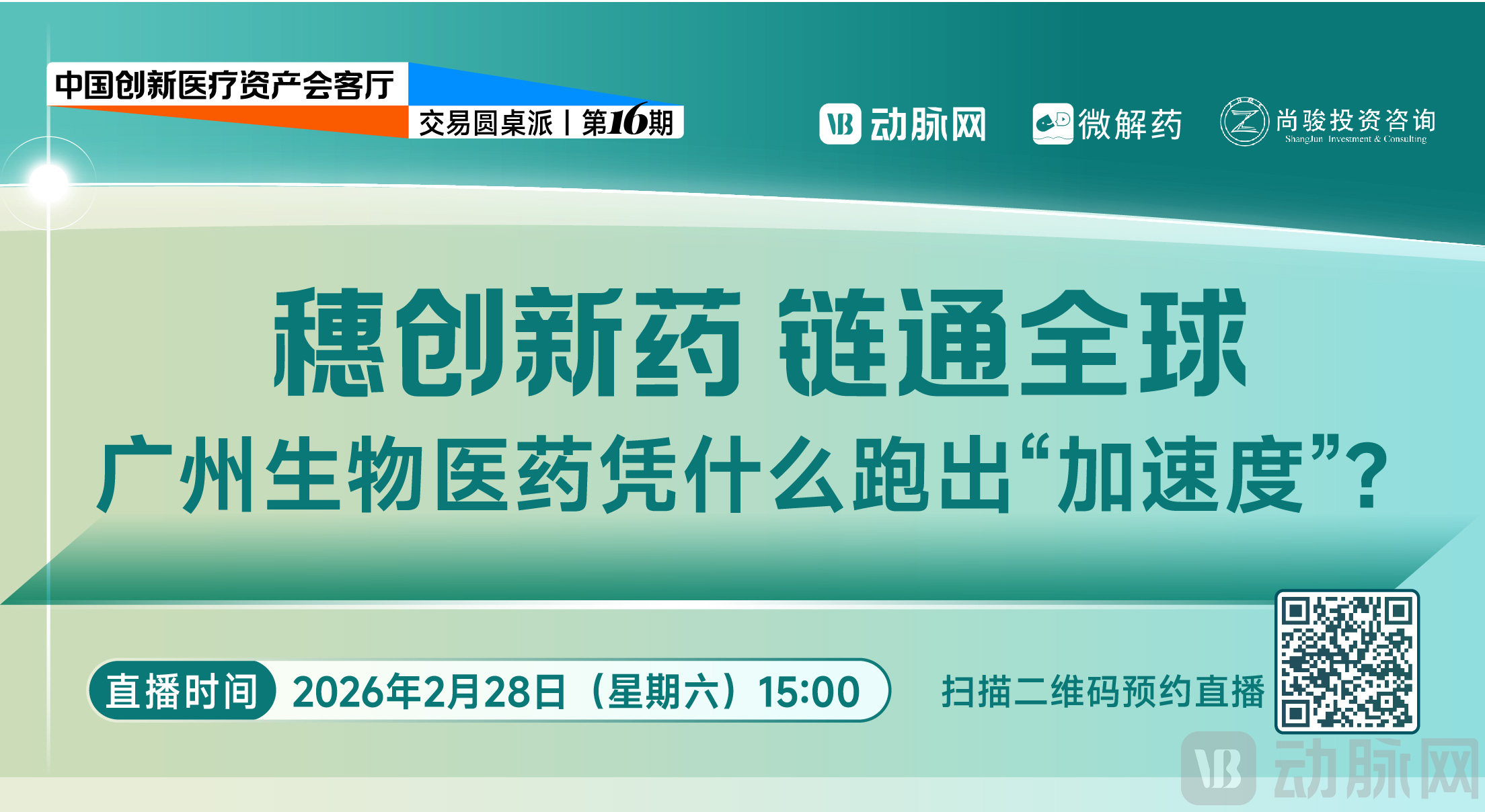
China Innovative Healthcare Assets Reception Hall – “Deal Roundtable” Episode 16
Roundtable Topic: "Guangzhou's Innovative Drugs, Connecting to the World: Why Is Guangzhou's Biopharmaceutical Industry Accelerating?"
Inviting Key Representatives from Shangjun Investment, Guangzhou Health Industry Investment, Feichuang Biotech, and Najin Technology to Discuss Accelerating Guangzhou’s Biopharmaceutical Industry!
Scan the QR code to book your appointment for free!