

JD Health Unlocks New Frontiers in Medical AI by Empowering Healthcare and Revitalizing Supply Chains

JD Health
Internet Medical and Health Service Platform Provider
As the Two Sessions convene nationwide, “AI+” has once again emerged as a buzzword at the meetings.
According to the recently released 57th Statistical Report on China’s Internet Development, as of December 2025, the number of generative artificial intelligence users in China reached 602 million, representing a 141.7% increase from the end of 2024, with a penetration rate of 42.8%.
For the general public, AI is integrating into every aspect of daily life at a perceptibly rapid pace, including essential scenarios such as medical consultations and healthcare access. This progress relies on the collaborative efforts of multiple stakeholders, with hospitals, technology companies, and pharmaceutical and medical device enterprises all playing pivotal roles.
Taking JD Health as an example, the company has not only empowered medical services with AI but also deeply integrated AI into its pharmaceutical supply chain system, achieving remarkable business results and financial performance.
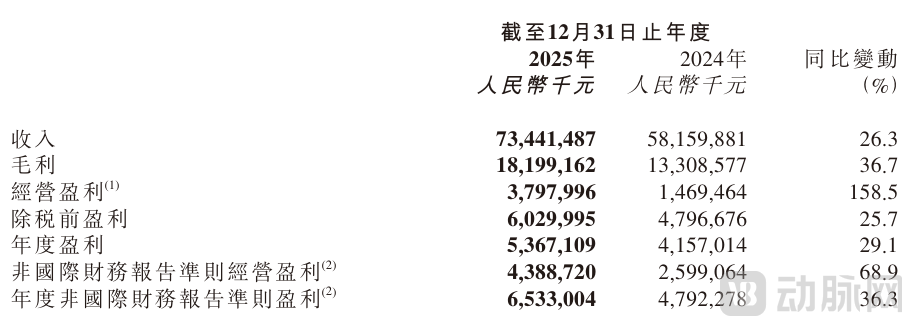
JD Health Financial Summary, Image Source: 2025 Annual Report
On March 5, JD Health released its 2025 financial report, which showed that as of December 31, 2025, the platform’s annual active users reached a new high of 218 million; total revenue for the year amounted to RMB 73.4 billion, representing a year-on-year increase of 26.3%; net profit under non-International Financial Reporting Standards (Non-IFRS) reached RMB 6.5 billion, up 36.3% year on year; and the Non-IFRS net profit margin stood at 8.9%, the highest level since the company’s inception.
Despite the medical AI industry’s bottlenecks in business models and profitability challenges, AI has become an engine for revenue and profit growth for JD Health.
As the overall user base continues to grow and AI technology permeates various aspects of social life at an accelerating pace, public demand for AI-driven healthcare services has become increasingly urgent and specific, extending far beyond simple Q&A chatbots.
Over the past year, JD Health has continuously refined its end-to-end service loop encompassing “medical consultation–testing–diagnosis–medication,” while strengthening its specialized capabilities in dermatology, mental health, and chronic disease management. Building on this foundation, JD Health has developed the “AI Jingyi” product suite for users, which includes more than ten categories of professional AI agents—such as AI physicians, AI pharmacists, and AI nutritionists—as well as AI agents representing over 1,000 specialist physicians from Grade 3A hospitals, providing users with 24/7 consultation services.
Unlike consumer-grade applications such as e-commerce and entertainment, which prioritize user experience, AI applications in the healthcare sector impose stricter requirements on accuracy, professionalism, and safety, in addition to enhancing patient experience.
As the technical foundation of “AI Jingyi,” the “Jingyi Qianxun” large language model integrates authoritative clinical practice guidelines, real-time medical literature, and real-world data through multimodal perception and deep retrieval technologies, establishing a dynamically updated evidence-based knowledge base to provide precise decision support for various specialized AI agents. Since its launch one year ago, the “AI Jingyi” series has achieved a 98% positive rating, with its AI doctor “Da Wei” completing hundreds of millions of interactions by the end of 2025.
For a long time, China’s healthcare service system has faced challenges such as the uneven distribution of high-quality resources, cumbersome in-hospital diagnosis and treatment processes, and a lack of post-discharge health management.As the mainstay of healthcare services, public medical institutions are continuously advancing the development of smart hospitals to address these challenges. The rapid advancement of AI has provided a significant opportunity for the upgrading and iterative improvement of smart hospitals.
Targeting hospitals, JD Health has launched its large language model product, “JD Zhuoyi,” which has already been implemented at multiple medical institutions, including the First Affiliated Hospital of Wenzhou Medical University and Union Hospital affiliated with Tongji Medical College of Huazhong University of Science and Technology. After one year of practical application, “JD Zhuoyi” has served over 5 million patient visits, marking the entry of its smart hospital solutions into the phase of widespread practical deployment.
In 2025, the National Health Commission issued a draft for public comment on the “Graded Evaluation Methods and Standards for Smart Healthcare (2025 Edition).” Compared with previous electronic medical record grading systems, the new standards more clearly guide healthcare institutions’ informatization and smart transformation toward practical functionality, regional data sharing, data usability, and intelligence-driven development.
Based on the practical implementation of “JD Zhuoyi,” significant achievements have been made in core dimensions such as functional utility and intelligence-driven capabilities. It has effectively assisted medical institutions in optimizing diagnosis and treatment processes, enhancing patient healthcare experiences, and improving intelligent hospital management, thereby becoming a key force in advancing the development of smart hospitals.
Furthermore, in the field of internet healthcare, JD Health has engaged in deep collaborations with authoritative medical institutions such as Union Hospital affiliated to Tongji Medical College of Huazhong University of Science and Technology, and Renmin Hospital of Wuhan University, to explore innovative models of telemedicine and promote the application of AI in specialized medical care and other areas.
Medical and healthcare products serve as critical vehicles for disease prevention and control. Artificial intelligence (AI) not only deeply empowers medical services but also profoundly influences the product supply system. Currently, supply chains for pharmaceuticals, medical devices, nutritional supplements, and other health products face distinct pain points. AI offers solutions to these industry challenges by enabling precise supply-demand matching, driving product innovation and upgrades, and fostering efficient collaboration across the industrial chain. For JD Health, which has cultivated deep expertise in the pharmaceutical and medical device supply chain sector for many years, leveraging its “AI + Supply Chain” capabilities can effectively facilitate the implementation of these breakthrough solutions.
In the nutritional health sector, JD Health focuses on high-potential segments such as infant and child development, nutrition for the elderly, anti-inflammatory and anti-aging solutions, and ready-to-eat tonic products, aiming to uncover niche market demands and expand incremental growth opportunities in these specialized markets.Notably, as a blue-ocean market in its early stages, the special medical purpose food sector requires focused efforts to enhance awareness among physicians and patients and to penetrate in-hospital channels; JD Health has identified these areas as key focal points for its AI initiatives.
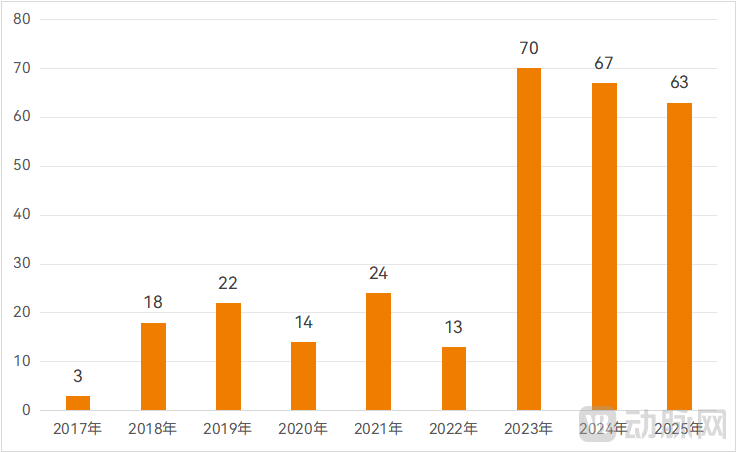
Approval Status of Foods for Special Medical Purposes, Data Source: Official Website of the State Administration for Market Regulation
In recent years, the special medical purpose food (FSMP) sector has seen rapid product-side development, with a surge in approved products particularly since 2023. For many patients with critical illnesses, FSMP is undoubtedly a “lifeline.” However, another reality is that FSMP faces challenges such as difficulties in hospital admission, insufficient willingness among doctors or dietitians to prescribe or recommend it, low efficiency in in-hospital nutrition management, and inadequate personalization in its use.
In 2025, JD Health, in collaboration with the First Affiliated Hospital of Wenzhou Medical University and the National Health Commission’s Clinical Nutrition and Intervention Laboratory, jointly launched an AI-driven comprehensive clinical nutrition management solution. This system leverages AI to assist healthcare professionals in efficiently formulating and implementing nutrition management plans. Furthermore, it introduces foods for special medical purposes (FSMP) into medical institutions, enabling patients to access professional nutritional support within hospitals and thereby improving their postoperative recovery experience.
As the online retail channel with the most comprehensive range of Foods for Special Medical Purpose (FSMP) in China, JD Health offers over 100 products, ensuring a stable supply to support end-to-end clinical nutrition management. Meanwhile, JD Health has signed “AI + Clinical Nutrition Supply Chain Ecosystem Co-creation” agreements with eight leading nutrition and health brands, including Methuselah, Kangai Medical, and Danone Nutricia, establishing an integrated pipeline from personalized nutrition plan formulation to precise product delivery.
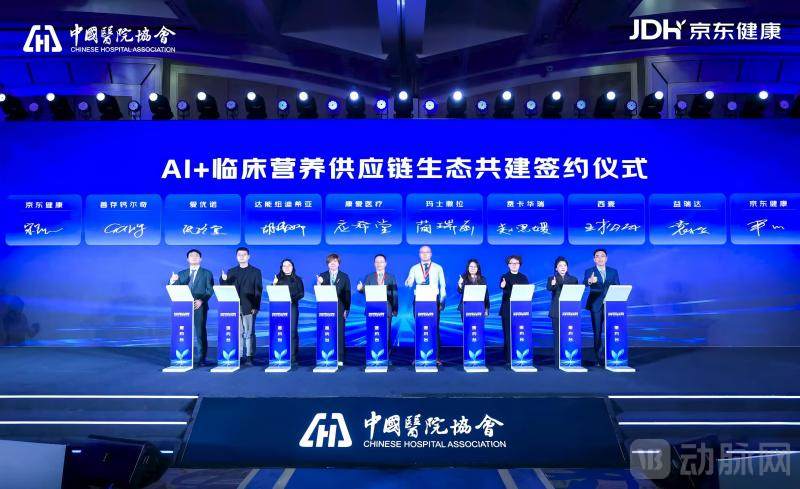
JD Health Signs Agreement with Leading FSMP Enterprise to Co-Build “AI + Clinical Nutrition Supply Chain Ecosystem”
In terms of user services, JD Health has pioneered a professional service matrix featuring “Human Nutritionists + AI Nutritionists,” establishing a long-term private-domain engagement mechanism. Since 2025, the AI Nutritionist has served a cumulative total of 20 million users, achieving a sales conversion rate of 45%, which has effectively enhanced market awareness and terminal penetration of foods for special medical purposes (FSMP).
Thus, it can be seen thatAI has played a pivotal role in streamlining the omnichannel distribution of foods for special medical purposes (FSMPs) from manufacturers to hospitals and ultimately to patients, providing robust support for product innovation and widespread adoption.Moving forward, replicating the AI-driven comprehensive clinical nutrition management solution across more medical institutions remains a key strategic focus for JD Health’s AI + supply chain initiatives.
In the medical device sector, the out-of-hospital market is gradually entering a stage of homogenization. Categories such as health monitoring, home-use consumables, and rehabilitation therapy are witnessing intense competition, with basic product functions becoming increasingly similar and technical barriers remaining weak. Upgrades are largely confined to superficial changes in appearance or minor functional tweaks. As users’ personalized needs go unmet, companies are trapped in price wars, leading to compressed profit margins.
Under this trend,Product innovation driven by user needs is the key for enterprises to break through the predicament of homogenization; AI technology, with its advantages of high efficiency and low cost, is the key to differentiated innovation in medical device products. In this regard, JD Health continues to deepen its cooperation with global medical device brands, leveraging AI to reshape product categories and user experience.
For example, JD Health has launched multiple co-branded, customized continuous glucose monitoring (CGM) products with brands such as Yuwell, Sinocare, and MicroTech, integrating AI to build an intelligent blood glucose management system that encompasses monitoring, analysis, intervention, and tracking. JD Health has also introduced AI into the adult wellness product sector, delivering immersive interactive experiences for users.
In the pharmaceutical sector, JD Health has previously established an omnichannel retail model, meeting patients’ varying medication needs—ranging from urgent to routine—through multiple channels, including JD Pharmacy, partnerships with platform merchants, and on-demand retail pharmacies.To further enhance the accessibility of medications for specific specialties and precisely meet patient needs, JD Health is leveraging AI to build a refined medication assurance network.
Taking pediatric medications as an example, insufficient accessibility in primary care and lower-tier markets remains a prominent issue. In recent years, the approval process for pediatric drugs has accelerated, with an increasing variety of formulations and dosage forms. However, retail inventory is still concentrated mainly in large children’s hospitals; general hospitals and retail pharmacies offer a limited selection, resulting in even lower accessibility in remote areas.
To address the supply-demand imbalance in pediatric medications, JD Health has pioneered the “Pediatric Pharmacy” model. In 2025, JD Health collaborated with Beijing Children’s Hospital to implement this model, integrating online and offline channels as well as payment and delivery services, thereby establishing a nationwide network for pediatric medication security.
Over the past two years, AI-enabled healthcare applications in China have experienced explosive growth, with increasingly diverse forms. However, significant shortcomings remain evident: some consumer-facing applications are confined to superficial Q&A interactions, lacking support from downstream treatment resources and thus failing to adequately address users’ actual needs; meanwhile, hospital-side products are constrained by factors such as data silos within hospitals and low willingness to pay, resulting in unclear profitability models.
As evidenced by the foregoing analysis, JD Health’s AI strategy is neither merely a consumer-facing efficiency tool nor an in-hospital technical solution, nor is it simply a marketing instrument for pharmaceutical and medical device companies. Its core value lies in the deep integration of AI with its robust supply chain capabilities, thereby enabling end-to-end empowerment spanning from services to the entire industry chain.
Specifically, targeting 218 million users, JD Health leverages AI technology and its robust supply chain resources to optimize the user experience in seeking medical care and purchasing medications.Users can efficiently access high-quality, end-to-end medical services and precisely match the required pharmaceutical and medical device products through “AI Jingyi” or hospitals partnered with “JD Zhuoyi.”
For healthcare institutions,Leveraging its dual capabilities in AI and supply chain management, JD Health not only helps hospitals accelerate the development of smart healthcare and enhance the scale of application, but also enriches their product offerings. This transforms hospital AI projects from mere cost centers into key drivers for boosting overall institutional competitiveness.
For pharmaceutical, medical device, and nutritional health supplement companies, JD Health leverages AI and its professional service ecosystem to develop compliant hospital access channels for products and precisely reach patient populations.; even reverse-customize market-fit products based on patients’ actual needs, thereby achieving efficient matching of supply and demand.
In short, from the perspective of medical health services and industrial development, JD Health has deeply integrated AI into its entire business system; from the perspective of its own development, JD Health has embedded AI into a sustainable business model. Meanwhile,In such a system, all stakeholders involved in AI applications can benefit from it, thereby providing stronger incentives for parties to promote the genuine adoption of AI and prevent the technology from becoming merely superficial.
In the future, competition in the AI-powered healthcare sector will be fundamentally rooted in technological prowess, but more critically, it will hinge on comprehensive capabilities such as resource integration, product commercialization, and supply chain collaboration. Enterprises capable of seamlessly integrating technology with services and supply chains will secure a competitive advantage in long-term development.