

Ningxia Medical University to Transfer Tuberculosis Diagnostic Patent Portfolio for RMB 600,000 to Ziye Biotech
Recently, Ningxia Medical University released a public notice on the conversion of scientific and technological achievements, proposing toMultiple Tuberculosis Diagnostic TechnologiesRelevant patents have been assigned to Ziye Biotechnology (Shanghai) Co., Ltd., with a total proposed conversion amount ofRMB 600,000. The inventors of this patented technology package areMa Guorong and His Team。
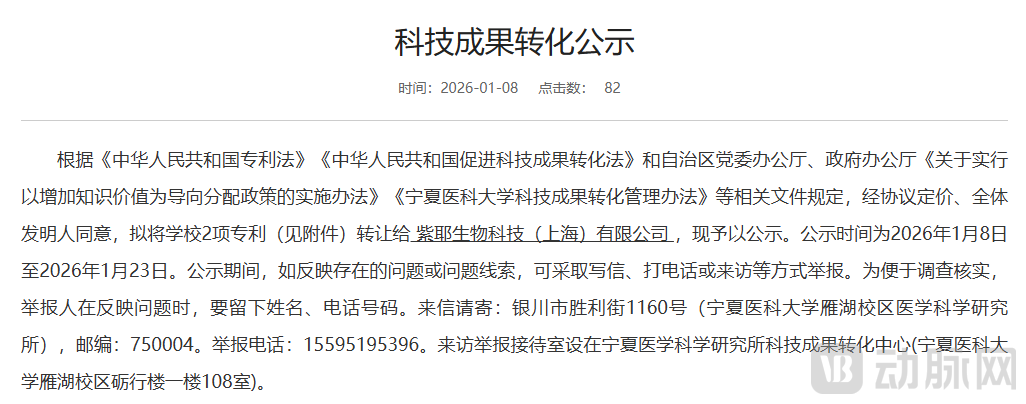
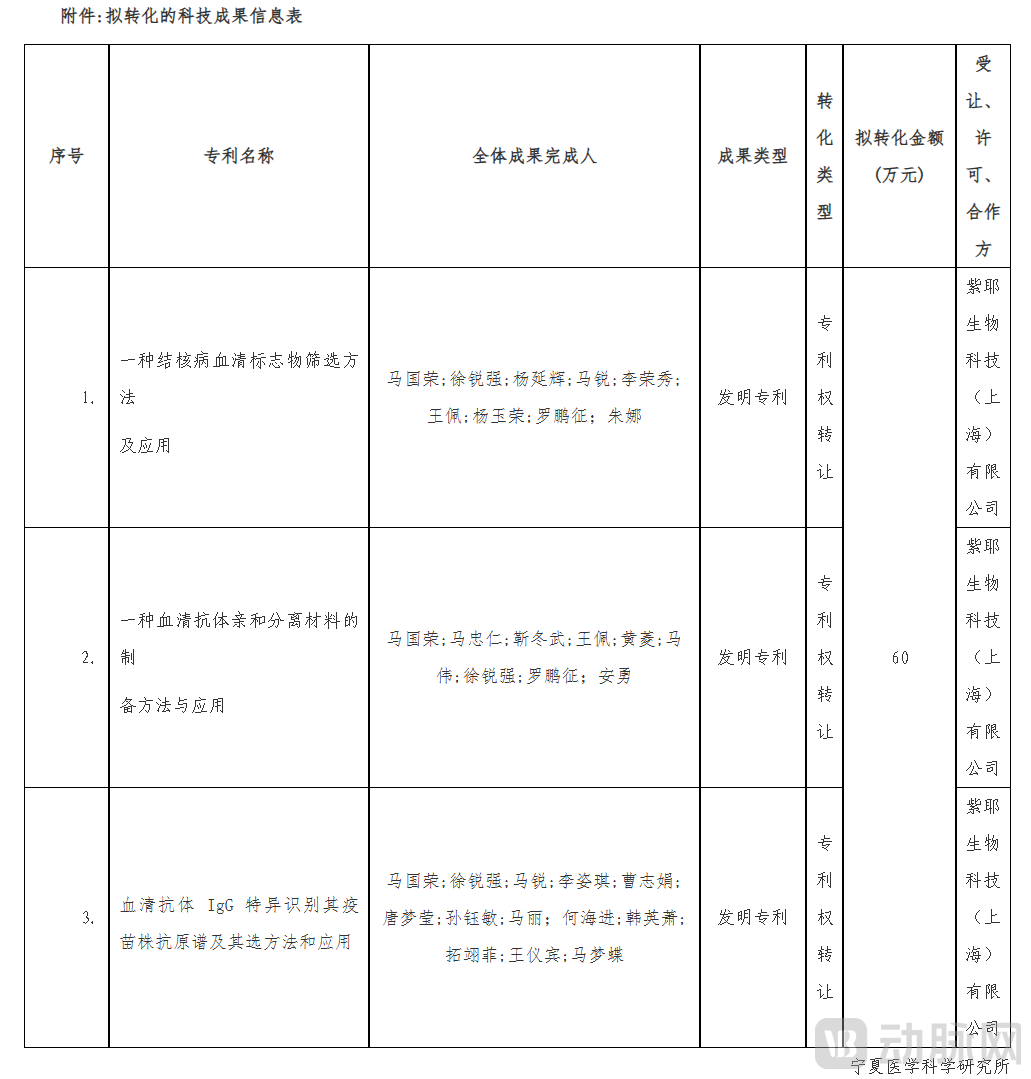
Image source: Official website of the Ningxia Hui Autonomous Region Institute of Medical Sciences
Patent 1“A Method for Screening Serum Biomarkers of Tuberculosis and Its Application”, addressing the issues of high missed detection rates and false positives associated with traditional methods, we employed a combination of biomimetic affinity chromatography, antigen-antibody recognition, mass spectrometry, and bioinformatics to construct a high-throughput, high-specificity screening system. This approach identified 237 initial candidate biomarkers and 111 high-potential proteins. ELISA validation demonstrated sensitivities ranging from 37.12% to 56.96%, with a maximum specificity of 96.67%, significantly improving the diagnostic accuracy for tuberculosis.
Patent Two“Preparation Method and Application of an Affinity Separation Material for Serum Antibodies”, using agarose as the matrix and epoxy-activated coupling with recombinant streptococcal protein G, eliminating the highly toxic cyanogen bromide for enhanced biosafety; it achieves a maximum IgG adsorption capacity of 15.47 ± 1.63 mg/mL, with both purity and recovery rates approaching 90%, thereby providing high-purity antibody raw materials for the previous patent and realizing a closed-loop technology chain from antibody separation to biomarker screening.
Technical Bottlenecks and Clinical Needs in the Screening of Serological Biomarkers for Tuberculosis
Tuberculosis (TB)is caused byMycobacterium tuberculosis (MTB)Tuberculosis, a globally prevalent infectious disease caused by infection, is among the infectious diseases with the highest mortality rate attributable to a single pathogen. Pulmonary tuberculosis accounts for 90% of all cases, posing a severe threat to human health. In clinical practice, early and precise diagnosis is critical to controlling the spread of tuberculosis and improving cure rates; however, existing diagnostic technologies have long faced numerous bottlenecks and fail to adequately meet clinical needs.
Currently, the screening of serological markers for tuberculosis in clinical practice mostly adopts traditional research models, with core reliance onExogenous Host Cell Expression of Mycobacterium tuberculosis Proteins, and then throughSerological TestingTo validate the potential of biomarkers. However, this approach has significant flaws:
1. The exogenous expression system has strong limitations, most Mycobacterium tuberculosis proteins cannot be effectively expressed in host cells such as Escherichia coli, resulting in the omission of a large number of potentially effective biomarkers;
Second, the production efficiency of recombinant proteins is low., not only is the expression and separation/purification process time-consuming and labor-intensive, but most recombinant proteins are difficult to serve as ideal serum biomarkers due to their activity being influenced by host characteristics;
3. Poor specificity of the test, Traditional methods directly use total patient serum for protein identification; however, the complex composition of whole serum proteins leads to widespread non-specific binding, which readily causes false-positive results and compromises diagnostic accuracy.
Meanwhile, as a critical prerequisite step in serological testing,Serum Antibody Isolation TechnologySignificant shortcomings also persist. Existing affinity separation methods based on streptococcal protein G (SPG) require the use of highly toxic cyanogen bromide as a coupling reagent, posing serious safety threats to both operators and the environment. Furthermore, ligand leaching is a prominent issue; shed SPG ligands may trigger inflammation or hypersensitivity immune responses in patients during clinical applications, thereby limiting their use in scenarios such as the purification of therapeutic antibodies.
Furthermore, certain biomimetic affinity or ligand–ligand separation methods suffer from insufficient specificity, making it difficult to efficiently obtain high-purity serum antibodies, which further compromises the precision of subsequent biomarker screening.
In clinical practice, there is an urgent need among physicians and patients for safer, more efficient, and precise diagnostic technologies for tuberculosis. Such technologies must address the limitations of traditional biomarker screening, including protein omission and high false-positive rates, to enable early and accurate identification. Furthermore, they must overcome the safety and purity bottlenecks in serum antibody isolation, thereby providing high-quality raw materials to support diagnosis.
Therefore, there is an urgent need for an integrated set of key technologies for tuberculosis diagnosis to address the clinical pain points associated with traditional diagnostic methods, including missed biomarkers, high false-positive rates, unsafe antibody separation processes, and insufficient raw material purity.
The core technical advantages and innovative value of this patent portfolio are concentrated in theComprehensive Innovation Across the Entire Chain of Tuberculosis Diagnostic Technologies, its academic breakthroughs and technological innovations can be deeply analyzed from the following dimensions:
AtInnovation in Technical PrinciplesLevel, two patentsEstablished a synergistic technical system of “high-purity antibody isolation–high-specificity biomarker screening”, breaking through the fundamental limitations of traditional methods.
ForTuberculosis Serum Biomarker Screening Technology, its core innovation lies in abandoning the traditional approach that relies on exogenous host cells to express Mycobacterium tuberculosis proteins, and innovativelyBiomimetic affinity chromatography, antigen-antibody specific recognition, liquid chromatography-tandem mass spectrometry (LC-MS/MS), and multi-dimensional bioinformatics analysisDeep integration of four major technologies. This method directly adopts*Mycobacterium tuberculosis* Native Culture Filtrate Proteins or Cytoplasmic ProteinsAs an antigen source, it not only circumvents the technical bottleneck that approximately 50% of Mycobacterium tuberculosis proteins cannot be effectively expressed in Escherichia coli, but also maximally preserves the native biological activity and abundance distribution of antigenic proteins, thereby more closely mimicking the natural growth state of the bacteria in vivo.
AtSerum Antibody PretreatmentStep: By constructing chromatography columns using 19 types of small-molecule biomimetic affinity ligands (such as L-theanine, aminopyrine, etc.) or specific affinity ligands (Protein A/G), high purity of serum antibodies was achieved.Over 90%efficient purification, which significantly reduces the interference of non-specific binding in subsequent assays, laying the foundation for high specificity in biomarker screening.
Serum Antibody Affinity Separation Material TechnologyTo address the core deficiencies of traditional affinity separation methods using streptococcal protein G (SPG), a dual technological innovation is proposed: first, by adoptingEpoxide Activation TechnologyBy replacing the highly toxic cyanogen bromide as a coupling reagent, this approach enables direct coupling via epoxy activation of the agarose matrix and ring-opening reaction with the amino groups of recombinant SPG protein, or indirect coupling through amination followed by reaction with cyanuric chloride, thereby thoroughly addressing the poor biosafety concerns associated with traditional methods;
Second, throughCodon Optimization of Recombinant SPG Protein(by eliminating rare codons in Escherichia coli, adjusting GC content, etc.), the expression level of recombinant protein in E. coli BL21(DE3) was increased by approximately 24.3%, with a purity of 91.2 ± 1.72%. Meanwhile, the binding stability between the ligand and the matrix was enhanced, effectively avoiding clinical immune risks caused by ligand leaching. The material’s adsorption capacity for immunoglobulin G (IgG) reached up to 15.47 ± 1.63 mg/mL, with purity and protein recovery rates of 88.92 ± 2.17% and 88.35 ± 5.23%, respectively, providing high-quality raw material support for upstream biomarker screening and establishing a closed-loop technology system.
InPerformance Metrics and Academic ValueAt the level of both technologies, they have been rigorously validated through experiments.Achieved Significant Breakthroughs in Key Indicators. The biomarker screening technology was validated using serum samples from 198 tuberculosis patients and 60 healthy individuals, identifying 237 initial biomarkers and 111 high-potential candidate proteins (including known candidates such as PstS1, FbpB, and EsxA). The detection sensitivity ranged from 37.12 ± 1.31% (for the protein encoded by the Rv3763 gene) to 56.96 ± 2.83% (for the protein encoded by the Rv0577 gene), with a maximum specificity of 96.67% (for the protein encoded by the Rv3248c gene), demonstrating significantly superior diagnostic accuracy compared to traditional methods.
Its innovative adoption ofMultidimensional Screening Criteria(including protein abundance, hydrophobicity, subcellular localization, and immunogenicity), establishing a standardized research paradigm for the screening of serological biomarkers for infectious diseases; the related technologies can be extended to diagnostic research on other infectious diseases.
Serum Antibody Separation MaterialsThe epoxy activation conditions were optimized via orthogonal experiments, yielding an activated matrix with an epoxy group density of 111.42 ± 7.72 μmol/g. The preparation process requires no specialized equipment and operates under mild conditions (e.g., a PBS buffer system at pH 7.4), providing a low-cost and highly safe technical solution for antibody purification in clinical laboratories and the biopharmaceutical industry. These research findings offer important references for the green and efficient development of affinity separation materials.
Market ProspectsIn this regard, the technology combination can be directly applied to the development of rapid diagnostic kits for tuberculosis, meeting the needs of primary healthcare and disease prevention and control in high-incidence areas. Meanwhile, the serum antibody separation materials can be extended to scenarios such as therapeutic antibody preparation and diagnosis of other infectious diseases.
As a country with a high incidence of tuberculosis, China has an urgent need for precise diagnostic technologies. The industrialization of this patent is expected to fill the domestic technological gap, offering significant clinical value, industrial potential, and social significance.
Products and patents competing with this patent portfolio in the current market are mainly concentrated inTechnologies for Tuberculosis Diagnostic Biomarkers and Serum Antibody Isolation MaterialsTwo Major Sectors, with Differentiated Competitive Landscapes in Market Layout and Technological Characteristics:
Beijing Wantai Biological Pharmacy Enterprise Co., Ltd.'s Mycobacterium tuberculosis Antibody Detection Kit, Shanghai Bangyi Biotechnology Co., Ltd.'s TB-Ab KitAs the mainstream serological diagnostic product for tuberculosis in China, it has achieved large-scale clinical application and become a common screening tool for primary healthcare institutions and Centers for Disease Control and Prevention (CDCs). These kits are based on the ELISA principle, featuring a simple testing process and lower costs. Such products are primarily used for initial screening, catering to the needs of large-scale screening at the primary care level and preliminary triage of suspected cases.
WithThermo Fisher’s Proteomics Screening Solutions、Orbitrap Series Mass Spectrometry SystemsGeneral-purpose technological products, represented by these solutions, are the mainstream choice in the field of multi-infectious disease biomarker discovery. Leveraging standardized sample processing workflows, comprehensive proteomics databases, and high-sensitivity mass spectrometry detection technologies, these products are adaptable to biomarker research for various infectious diseases, including tuberculosis and hepatitis. Their strong versatility makes them widely used in basic research settings within scientific laboratories and Centers for Disease Control and Prevention (CDCs).
Clinical ApplicationsGlobally, there is an urgent need for tuberculosis (TB) prevention and control. As a high-incidence country, China has a prominent demand for early and precise diagnostic technologies, particularly in primary care settings and high-prevalence regions. The 111 highly specific biomarkers included in this patent portfolio can support the development of multi-biomarker combination diagnostic kits, addressing the insufficient detection rates of traditional products and catering to both primary screening and the diagnosis of complex cases. Furthermore, the serum antibody separation materials used are free from highly toxic reagents and feature stable ligands, thereby meeting safety and regulatory compliance requirements for clinical applications and reagent manufacturing.
Industrial ValueIn terms of market dynamics, the tuberculosis diagnostics market continues to expand, with robust demand in the serological diagnostics sector, while biological diagnostic technologies are upgrading toward greater precision, safety, and efficiency. The technological closed loop established by this patent portfolio can be extended toClinical Diagnostic Kits, Separation Media for Biopharmaceuticals, Customized Research ServicesThree core product categories, with technology extendable to antibody purification for other infectious diseases, autoimmune disorders, oncology, and more, thereby broadening market coverage.