

From Employee Benefits to Family Coverage: Professor Sun Jie Proposes a New Closed-loop Model for Group Medical Insurance and Health Management
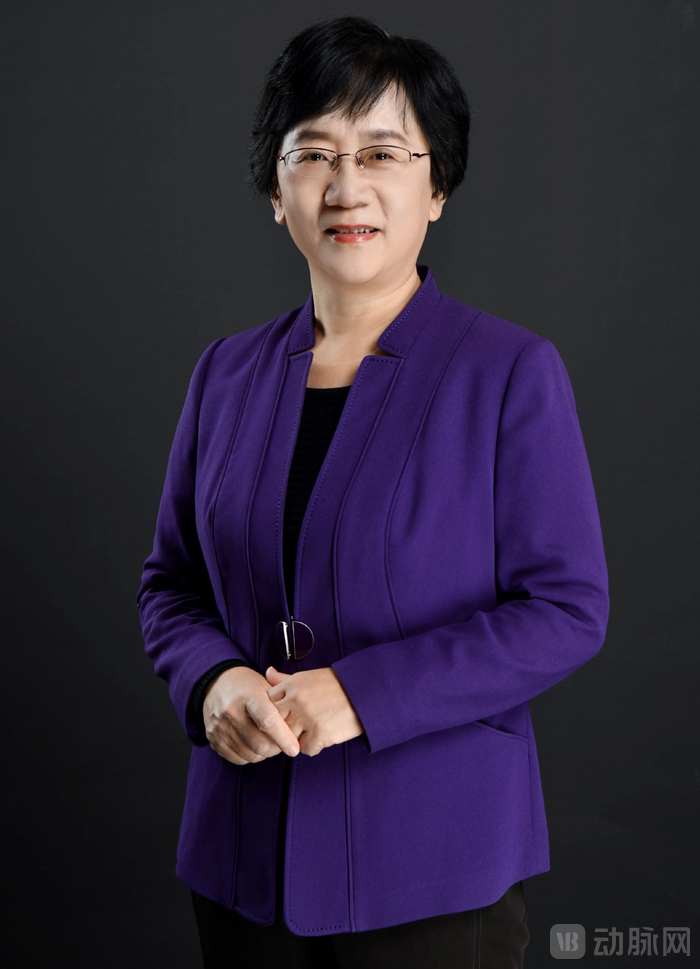
Have you ever considered how much the supplementary medical insurance purchased by your employer can actually help? During the Two Sessions, Sun Jie, a member of the National Committee of the Chinese People's Political Consultative Conference and Deputy Dean of the School of Insurance at the University of International Business and Economics, submitted a proposal closely relevant to hundreds of millions of employees: calling for vigorous development of group medical insurance, extending coverage to include family members, and strengthening supporting health management services to assist employees and their families in better managing their health. Sun Jie believes that expanding the scope of group insurance coverage can alleviate the expenditure pressure on critical illness medical insurance.
This year’s “Government Work Report” also places particular emphasis on safeguarding the interests of employed individuals, proposing to “introduce policies supporting flexible workers and those in new forms of employment to participate in employee insurance” and to “accelerate the development of commercial health insurance.” Within China’s “1+3+N” multi-tiered medical security system, group medical insurance is regarded as a high-quality category of commercial health insurance, characterized by comprehensive low premium rates and strong claims-paying capacity, and is seen as an important means of enhancing protection for the employed population.
For enterprises, purchasing group insurance for employees leverages economies of scale to reduce overall costs, allowing premiums to better cover medications and services outside the national medical insurance catalog, or to procure high-quality health services that improve employee well-being. For society, since group insurance is primarily funded by contributions from employers and employees, expanding its coverage can effectively alleviate the financial burden on critical illness medical insurance expenditures as China enters a phase of moderate aging.
However, Sun Jie’s research revealed that the development of group medical insurance currently faces bottlenecks in supply, distribution channels, and demand, leaving many employees with a limited sense of benefit from this coverage.
First, current mainstream group insurance plans primarily cover inpatient expenses within the scope of basic medical insurance and out-of-pocket costs for outpatient services, resulting in significant overlap with basic medical insurance and insufficient incremental coverage. Furthermore, the claims process is cumbersome, lacking an integrated platform that provides “one-screen visibility.”
Secondly, the supporting health services are inadequate, leading to enterprises' reluctance to renew their insurance policies. Insurance companies often procure health services through multiple layers, resulting in a lengthy supply chain that fails to establish useful employee health records or achieve precise cost control. Surveys show that the group insurance renewal rate for private enterprises is only 30%.
Furthermore, policy bottlenecks have also dampened enthusiasm for insurance enrollment. A large number of public institutions undergoing market-oriented transformation meet the eligibility criteria for insurance coverage, yet regulatory restrictions remain in place. The definition and standards for “supplementary medical insurance” are ambiguous, making it difficult for many commercial supplementary medical insurance products to gain tax recognition, thereby preventing enterprises from enjoying tax incentives. Additionally, employees must pay out-of-pocket to insure their family members, which naturally reduces their willingness to purchase such coverage.
In response to the aforementioned issues, Sun Jie proposed three recommendations, expressing hope for the vigorous development of group insurance.
First, optimize supply to enhance the coverage capabilities and service experience of group insurance products. Support insurers in collaborating with medical health service providers and pharmaceutical companies to design mid-to-high-end group insurance products that provide broader coverage for innovative drugs and mid-to-high-end medical services. Leverage the integration of the “Medical Insurance Code” and “Commercial Insurance Code” to facilitate the implementation of “expedited claims” and “direct billing.” Promote AI-powered health management assistants that integrate health records, health service offerings, and coverage plans, enabling employees to clearly understand their coverage benefits at a glance.
Second, integrate channels to promote the synergistic development of “group insurance providers + intelligent health service solution providers.” Leverage large AI models to connect online services—including medical consultations, medication purchases, and health advice—with wearable devices and electronic health records, thereby empowering employees and their families to better manage their health. This approach aims to create a virtuous cycle of “health improvement – premium optimization – service enhancement – corporate policy renewal.”
Third, improve policies to incentivize enterprises and employees to invest. Pilot the relaxation of insurance restrictions for public institutions, allowing Category II public welfare institutions and similar entities to use non-fiscal funds to purchase insurance coverage for their employees. Jointly develop certification standards for “supplementary medical insurance” by departments including finance, taxation, and financial regulation to ensure full utilization of tax incentives. Pilot the use of surplus balances in individual medical insurance accounts to purchase group insurance for family members, support the inclusion of high-quality group insurance products in individual income tax deductions, effectively reduce the burden on employees, and extend coverage to families.
“With a three-pronged approach of supply optimization, channel integration, and policy support, group medical insurance is poised to improve in quality and expand in coverage, becoming a key pillar of the multi-tiered healthcare security system,” said Sun Jie. For employee families, employer-sponsored insurance will no longer be merely “drawer policies” but will instead provide truly high-quality and accessible health protection.