Zesuining® Prescribed Nationwide: Merck's Evolving BD 'China Strategy' Sets a New Benchmark for Innovation Partnerships

Zelgen
Innovative Drug Research and Development, Manufacturer
On March 14, at the Conference on Frontiers in Thyroidology andZesuning®At the launch event, Andreas Mueller, Managing Director of MSD China, and Sheng Zelin, Chairman and General Manager of Zelgen, sat side by side as they explained to the media the commercial logic and clinical value behind this newly launched drug. Just three days prior, Zesuning®It also issued some of the first prescriptions in China.
Background: In June 2025, the two parties discussed Ze Suning®A cooperation agreement worth RMB 250 million was reached. This deal carries a whiff of “new money”: Merck exchanged upfront and milestone payments for Ze Su Ning.®exclusive promotional rights in mainland China, with Zelgen paying a “double-digit percentage” service fee based on future sales, thereby creating a deeply coupled relationship characterized by shared risks and aligned interests, which breaks away from the traditional buyout model.
This collaboration also reflects the profound transformation of China’s pharmaceutical innovation ecosystem: multinational pharmaceutical companies’ “gold-standard brands” are no longer merely exporters of products but have begun to serve as “ideal partners” for local innovation. In business development (BD) transactions, the role of multinational pharmaceutical companies is evolving from “buyers” to “co-creators,” as they seek their own new ecological niches within China’s biopharmaceutical innovation ecosystem.
Mu Ande also unveiled the five key criteria for Merck’s BD “Best Partner”:First, the product must address unmet clinical needs; second, partners must possess strong scientific research and innovation capabilities; third, it must create synergy with Merck’s existing product pipeline; fourth, the company must sustain its investment in R&D and innovation; fifth, the project must demonstrate commercial viability.
Based on industry developments since 2026, particularly the signals released at the J.P. Morgan Healthcare Conference, the business development (BD) trends of multinational pharmaceutical companies are undergoing a shift. They are moving away from the “broad-spectrum” approach and fully transitioning toward precise strategies that prioritize certainty and capability alignment. According to VCBeat, major pharmaceutical companies are adopting a more focused stance to identify high-quality assets that can fill pipeline gaps and strengthen their technology platforms, addressing their specific strategic voids. In the future, Chinese assets will also center on core value creation, possessing genuine innovative capabilities and aligning with the direction of industrial ecosystem development.
01.
Two-Way Commitment
Zesuning®The value anchor lies in its precise addressing of the long-standing pain points in postoperative management of thyroid cancer in China. As the first non-withdrawal innovative drug in China for precise assessment after surgery for differentiated thyroid cancer, Zesuning®Phase III clinical data showed that, in terms of whole-body radioiodine scanning, its concordance rate with the traditional hormone withdrawal method was 88.2%; in serum stimulationThyroglobulinDuring testing, the concordance rate reached 90.4%; when combined assessment was used, the concordance rate further increased to 93.6%. This means that patients can undergo precise evaluation without discontinuing thyroid hormone therapy, thereby completely avoiding hypothyroid symptoms such as fatigue, depressed mood, and slowed reaction times caused by medication withdrawal.
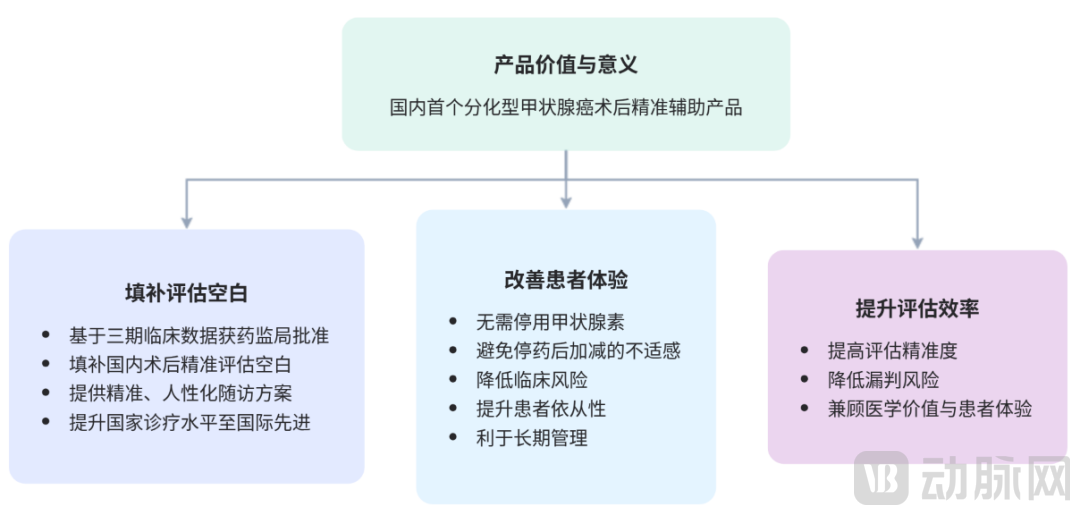
Based on high-quality Phase III clinical trial data, in January 2026, Zesuning®Officially approved by the National Medical Products Administration; on March 11, The First Affiliated Hospital of Zhejiang University School of Medicine and Jiangsu Province People’s Hospital issued their first prescriptions respectively, marking a significant transformation in the postoperative follow-up model for differentiated thyroid cancer in China and ushering in a new era of precision medicine.
Behind this achievement lies a strategic-level business design that both parties completed as early as June 2025.
Why Did Merck Choose Zelgen?The answer lies in Merck’s commercial landscape, shaped by nearly 30 years of deep engagement in China’s thyroid care sector. Both of Merck’s thyroid medications belong to the first-line drug classes recommended by clinical guidelines and have benefited a large population of patients with thyroid disorders. However, prior to this collaboration, its product portfolio was primarily focused on the management of thyroid function, leaving a clear gap in the niche segment of precise postoperative assessment for thyroid cancer.
Zesuning®The emergence of this product perfectly completes the closed-loop management of the entire disease course, from “treatment” to “follow-up.” For Merck, this represents a highly strategic “fill-in-the-gap” opportunity: the product addresses an unmet clinical need, creates synergies with its existing pipeline, and is in the late pre-launch stage with controllable risks, fully aligning with the vision of Merck Group’s CEO.Ge LiheThe screening criteria emphasizing “a focus on mid-sized deals in late-stage clinical development.”
Why Did Zelgen Choose Merck?Dr. Sheng Zelin, Chairman and General Manager of Zelgen, also provided a clear answer to VCBeat: “Thyroid cancer is one of the most prevalent malignant tumors in China. The launch of recombinant human thyroid-stimulating hormone beta for injection will provide an effective postoperative management solution for patients with thyroid cancer, filling a gap in clinical medication in China. Merck has made significant strategic investments in the field of thyroid disease treatment. As an international pharmaceutical company with deep roots in China for many years, it boasts an excellent commercialization team and extensive experience in promoting new drugs. We are delighted to have reached this collaboration with Merck and look forward to accelerating the development of Zesuning through our joint efforts.”®commercialization process, benefiting a broad patient population and meeting clinical needs.”
In fact, amid the widespread challenge of commercializing innovative drugs in China—often referred to as the “last mile” hurdle—Zelgen has made a rational and clear-eyed decision: to forgo building its own promotional team for recombinant human thyroid-stimulating hormone beta (rhTSH-β) for injection, and instead entrust this specialized task to professionals. Post-operative follow-up for thyroid cancer involves multidisciplinary collaboration among nuclear medicine, endocrinology, and head and neck surgery departments, creating exceptionally high barriers to promotion. Merck, with nearly three decades of deep local engagement, has established a mature academic network covering these specialties. On March 14, Zesuning®The successful holding of the Launch Event and Conference on Frontiers in Thyroidology serves as a prime example.
During the interview, VCBeat asked a specific question: “Who reached out to whom first for this collaboration?” Dr. Sheng Zelin smiled and replied, “It was mutual.” This answer may sound simple, yet it reflects the nature of this partnershipis a“Two-Way Commitment”:Merck needs to fill the gap in thyroid diagnostics, while Zelgen requires a deep strategic partner.。
Moreover, Zelgen aims for this partnership to be sustainable, seeking to gradually build a strong relationship of trust between the two parties and pave the way for collaboration on many future products. The company hopes to achieve more extensive, larger-scale, and more meaningful global cooperation with Merck in the future, thereby delivering genuine clinical value to patients worldwide. This trajectory, extending from single-product collaboration to strategic mutual trust, is laying a deeper foundation for Zelgen’s internationalization.
02.
Merck China BD Strategy
2025 was a landmark year for business development (BD) in China, with the aforementioned transaction between Merck and Zelgen standing out as a significant deal among collaborations exceeding $130 billion. The BD boom for Chinese innovative drugs continued into 2026. In January 2026 alone, the potential maximum total value of BD deals for Chinese innovative drugs reached approximately $34.6 billion, representing a year-on-year increase of about 55% compared to the same period in 2025. Behind this growth lies China’sBiotechOverall enhancement of R&D capabilities and multinational pharmaceutical companies' continued optimism about the Chinese market.
In reality, after more than a decade of accumulation, China’s innovative drug industry has transitioned from follow-on innovation (Me-too) to source innovation (First-in-class/Best-in-class). Currently, the number of new drug candidates in development in China accounts for over 30% of the global total, ranking second worldwide. This substantial pipeline is not merely inflated in size but features a significant emergence of high-quality assets. In this year’s Government Work Report, biopharmaceuticals were explicitly listed as a “new emerging pillar industry” at the national level. This marks the first time the Government Work Report has positioned the biopharmaceutical sector as a pillar industry, sending a strong policy signal to accelerate industrial upgrading.
The implementability and verifiability of Chinese products are becoming core weighting factors in the decision-making processes of multinational pharmaceutical companies, as exemplified by the aforementioned Zesuning.®Phase III clinical data, derived entirely from Chinese patients and conducted at research centers in China, have significantly alleviated Merck’s concerns regarding cross-ethnic differences in efficacy, providing robust validation.
Meanwhile, the ongoing reforms in China’s drug regulatory system are also enhancing the predictability of innovative assets—in June 2024, Zesuning®The marketing application was accepted, a partnership was reached in June 2025, approval was granted in January 2026, and the first prescription was issued in March. Behind this tight timeline lies the synergy between improved review and approval efficiency and advanced commercialization readiness. When Chinese innovations can complete the entire process—from R&D and validation to approval—domestically, their appeal as business development (BD) targets is no longer just a concept but a tangible, tradable asset.
As an increasing number of innovative drug assets from China are validated in terms of clinical data, R&D efficiency, and the capability for simultaneous global development, China is gradually becoming an indispensable component of the global innovative drug R&D ecosystem.
Qi Fei, a director at Legend Capital who has long focused on innovative drugs, also pointed out to VCBeat that China’s advantages in clinical development efficiency and production costs have become an important component of global industrial competitiveness. Moreover, this advantage is reflected not only in speed and cost but also in the completeness of the entire industrial ecosystem—from early-stage R&D to clinical development, and from large-scale manufacturing to commercialization readiness—China has formed the most complete biopharmaceutical industry chain in the world.
In this regard, Mu Ande also expressed to VCBeat his optimism about the development of innovative drugs in China. “The pace of innovation in China is impressive, with 30% of global healthcare innovations currently originating from China. We have launchedDual-Engine Innovation Strategy“, on the one hand, we will leverage Merck’s innovative drug R&D capabilities, and on the other hand, maintain a highly open attitude toward collaboration with Chinese enterprises. In the future, we hope to introduce more high-quality products to the Chinese market.”
On March 5, during the earnings conference call, Merck CEO Belén Garijo reaffirmed the Merck Group’s commitment to the Chinese market, discussed collaboration opportunities in innovative drugs, designated China as a “preferred partner,” and announced plans to further increase investment in the country. “As China becomes a global source of innovation, Merck is actively seeking collaborative opportunities with Chinese enterprises in the research and development of new drugs and new technologies.”
The specific selection criteria are the five core standards outlined by Mu Ande to VCBeat.
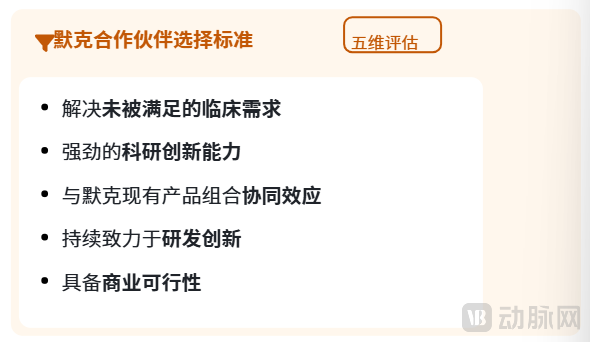
Zesuning®This collaboration exemplifies these five criteria: it fills the domestic gap in precise postoperative assessment for thyroid cancer; Zelgen’s R&D capabilities have been validated by Phase III clinical data; it creates synergy with Merck’s iodine-131 ([¹³¹I]) therapy; Zelgen maintains sustained investment in research and development; and its market prospects are beyond doubt. It is precisely based on such rigorous selection that Merck has agreed to invest in this partnership through a substantial upfront payment and a royalty-sharing model.
The value of this deal extends far beyond channel reuse. For Merck, acquiring Zesuning®commercialization rights, which constitute a crucial piece of its strategic layout in China’s thyroid field. Merck has long been deeply engaged in the treatment of thyroid diseases and boasts a full-chain portfolio of iodine [¹³¹] therapy products; however, there has long been a gap in the area of precise postoperative diagnosis. Zesuning®This integration enables Merck to establish a complete closed-loop ecosystem in the Chinese market, spanning from postoperative diagnosis to adjuvant therapy, thereby providing patients with one-stop solutions.
In an interview, Mu Ande stated that Merck’s primary criterion for seeking partners in China has always been “patients and science first,” aiming to identify collaborators capable of addressing unmet clinical needs with strong scientific innovation capabilities. Zelgen is a prime example of such a partner.
03.
Strategic Layout
An analysis of Merck’s business development (BD) layout in China reveals a profound shift in its mindset from “opportunistic supplementation” to “strategic deployment.”
In 2023, Merck’s global management reached a consensus to prioritize external project collaborations as a key strategy for bolstering its R&D pipeline, and established a dedicated “External Innovation Investment Committee,” thereby accelerating decision-making processes. This institutional arrangement at the organizational level signifies that collaborations with Chinese innovative pharmaceutical companies are no longer sporadic initiatives undertaken by individual teams, but have become an integral component of Merck’s global R&D strategy.
In VCBeat’s 2026 New Year Special on Emerging Pharmaceuticals, Andreas Müller noted that across therapeutic areas ranging from rare cancers and assisted reproduction to thyroid disease, and spanning both therapeutics and diagnostic tools, Merck has built an open, win-win innovation ecosystem by leveraging complementary strengths and deep collaboration with Chinese local enterprises. This approach accelerates the clinical adoption of cutting-edge therapies, benefiting patients in China while contributing “Chinese wisdom” to global pharmaceutical innovation.
In subsequent business development efforts, Mu An’er stated to VCBeat that the company would focus on late-stage research projects in Merck’s core therapeutic areas, including diabetes, cardiovascular diseases, thyroid disorders, reproductive health, oncology (such as colorectal cancer), and rare diseases, with the aim of achieving synergies. When discussing Merck’s product selection criteria, Ge Lihe also clearly defined the boundaries: “A total transaction value between €500 million and €600 million is within our acceptable range.” Rather than seeking to acquire super blockbuster drugs like large pharmaceutical giants, the company will focus on mid-sized assets with controllable risks and promising sales potential.
Multinational pharmaceutical companies have long bid farewell to the “broad-net” deployment model, shifting from “scale-first” to “certainty-first and capability-matching-first.”
At the 2026 JPM Conference, Novo Nordisk acknowledged its capacity to undertake business development (BD) partnerships worth at least $40 billion, provided that the projects are “worthwhile”; meanwhile, Merck & Co. continued to adhere to its principles of “science-driven strategy and strategic synergy.”
At the JPM Conference, BMS CEO Chris Boerner explicitly emphasized that business development (BD) remains the top priority in the company’s 2026 capital allocation strategy. BD opportunities span assets across Phase I, II, and III stages, with preference given to projects capable of delivering growth within a visible timeframe while offering long-term expansion potential. The company remains cautious about therapeutic areas that are “too early” or “too crowded.”
VCBeat’s recent surveys of multinational corporations (MNCs), innovative pharmaceutical companies, and investors have revealed that, although China’s business development (BD) market remains robust, the trend is shifting: MNCs are shortening their “shortlists” for potential deals. Several BD heads at MNCs stated that China has become a gradually maturing yet highly homogeneous market; for them, it has transitioned from a “hunting ground” to an “exam arena” requiring meticulous selection. The unfolding narrative promises to be even more compelling, and VCBeat will continue to monitor developments closely.
- [Invitation] -
2026 Future Healthcare & Pharma Top 100 Conference
Forum on Tackling the “Last Mile” of Value Realization for Innovative Drugs
From Clinic to Market, from Valuation to Value
A Wave of Innovative Drug Launches, Yet “Approval” Does Not Equal “Accessibility.”
National Reimbursement Drug List (NRDL) inclusion, payment bottlenecks, channel barriers... How can clinical value be translated into market value?
Policy Reshaping, Capital on the Sidelines: How Can Enterprises Navigate the Cycle Amid Uncertainty?
Join the “Final Mile” Breakthrough Forum on Realizing the Value of Innovative Drugs, where we discuss not only trends but also solutions.
● Focus on Three Core Chains:Commercialization Strategy, Innovative Payment, Capital Empowerment;
● Dialogue with Leading Experts: Chief Business Officer, Medical Insurance Expert, Commercial Insurance Pioneer, Capital Industry Leader;
● Practical Perspectives on Capital Empowerment: An in-depth exploration of how capital empowers enterprises during the commercialization stage;
● Review of Successful Cases: A comprehensive breakdown of market access strategies, payment design, channel layout, and capital operations;
● Roundtable Debate: How can a value community be built through multi-party collaboration? How can the integration of industry and finance be implemented?
What You Will Gain:
● Identifying Breakout Paths Amidst the Interplay of Policy and Market Forces
● Connecting decision-makers, payers, investors, and channel partners
● Go beyond mere exposure to transform brand visibility into tangible business connections
● Time: May 19, 2026 14:00-17:30
● Location: Shanghai Minhang District Platinum Hanjue Hotel
● Organizer: VCBeat
Add the WeChat account below to register and secure your scarce attendee/guest seat.
Together, let’s bridge the “last mile” for innovative drugs!