

Nicox Advances NCX 470 Toward NDA Submissions in the U.S. and China with Phase 3 Data Showing Up to 10 mmHg IOP Reduction
NicOx
Ophthalmic Pharmaceutical Manufacturer
Recently, French ophthalmic biotechnology company NicOx S.A. (Euronext Paris: FR0013018124, ALCOX, hereinafter referred to as “NicOx”) announced the latest data from its Phase III clinical study of its lead candidate drug, NCX 470, at the American Glaucoma Society Annual Meeting (AGS 2026). The results demonstrated that NCX 470 at a concentration of 0.1% achieved significant and sustained intraocular pressure (IOP) reduction in patients with open-angle glaucoma or ocular hypertension, with a maximum reduction of 10 mmHg compared to baseline. Furthermore, it met the non-inferiority endpoint versus latanoprost at all assessment time points in the pivotal DENALI trial.
Mechanistic Innovation: From Single-Pathway to Dual-Pathway
Glaucoma is a chronic eye disease characterized primarily by optic nerve damage, and elevated intraocular pressure (IOP) is currently the only risk factor proven to be effectively controlled through treatment. Consequently, the core objective of nearly all glaucoma drug development efforts has been focused on a single direction: achieving more effective reduction of intraocular pressure.
Current first-line clinical medications are primarily prostaglandin analogs, such as latanoprost, bimatoprost, and travoprost. These agents lower intraocular pressure by enhancing aqueous humor outflow via the uveoscleral pathway. Owing to advantages including once-daily dosing, consistent efficacy, and a well-established safety profile, prostaglandin analogs have become the standard first-line therapy for glaucoma worldwide.
However, its intraocular pressure (IOP)-lowering efficacy is typically around 25%–30%. For a substantial proportion of patients, this reduction is insufficient to achieve the target IOP, often necessitating the addition of a second or even a third medication. Each additional drug further compromises patient adherence.
The design philosophy of NCX 470 is precisely targeted at this clinical pain point.
This drug is essentially bimatoprost andNitric Oxide Donors(NO-donor) conjugate molecule. After topical ocular administration, the drug is metabolized in ocular tissues to release two active ingredients.
On one hand, bimatoprost partially retains the mechanism of action of traditional prostaglandin analogs by promoting aqueous humor outflow via the uveoscleral pathway; on the other hand, the released nitric oxide relaxes the trabecular meshwork and smooth muscle structures, reducing resistance in Schlemm’s canal, thereby enhancing trabecular outflow.
In other words, NCX 470 acts on both major aqueous humor outflow pathways, achieving so-called “dual-pathway IOP reduction.”
This strategy offers distinct theoretical advantages. Traditional prostaglandin analogs primarily act on the uveoscleral pathway, whereas the main site of impaired aqueous humor outflow in glaucoma patients is often the trabecular meshwork. By mediating trabecular meshwork relaxation via nitric oxide, NCX 470 is expected to further enhance intraocular pressure-lowering efficacy while maintaining a favorable safety profile.
In fact, nitric oxide donor technology is not entirely unfamiliar in the field of ophthalmology. The company’s previously launched product, Vyzulta®employs a similar mechanism. However, in its molecular design, NCX 470 utilizes bimatoprost as the prostaglandin backbone, a choice that offers inherent potential advantages, as bimatoprost is generally considered in clinical practice to have slightly greater intraocular pressure-lowering efficacy than latanoprost.
Therefore, it can be said that the core objective of NCX 470 is clear: to create a monotherapy with superior intraocular pressure-lowering efficacy while maintaining the favorable tolerability profile of prostaglandin analogs.
The maximum reduction in intraocular pressure reached 10 mmHg.
The pivotal Phase III studies of NCX 470 primarily comprise two global, multicenter clinical trials: MONT BLANC and DENALI. These studies directly compare NCX 470 with standard-dose bimatoprost to evaluate its intraocular pressure-lowering efficacy. The enrolled patients mainly had primary open-angle glaucoma or ocular hypertension, which represent the most common patient populations currently treated with intraocular pressure-lowering medications.
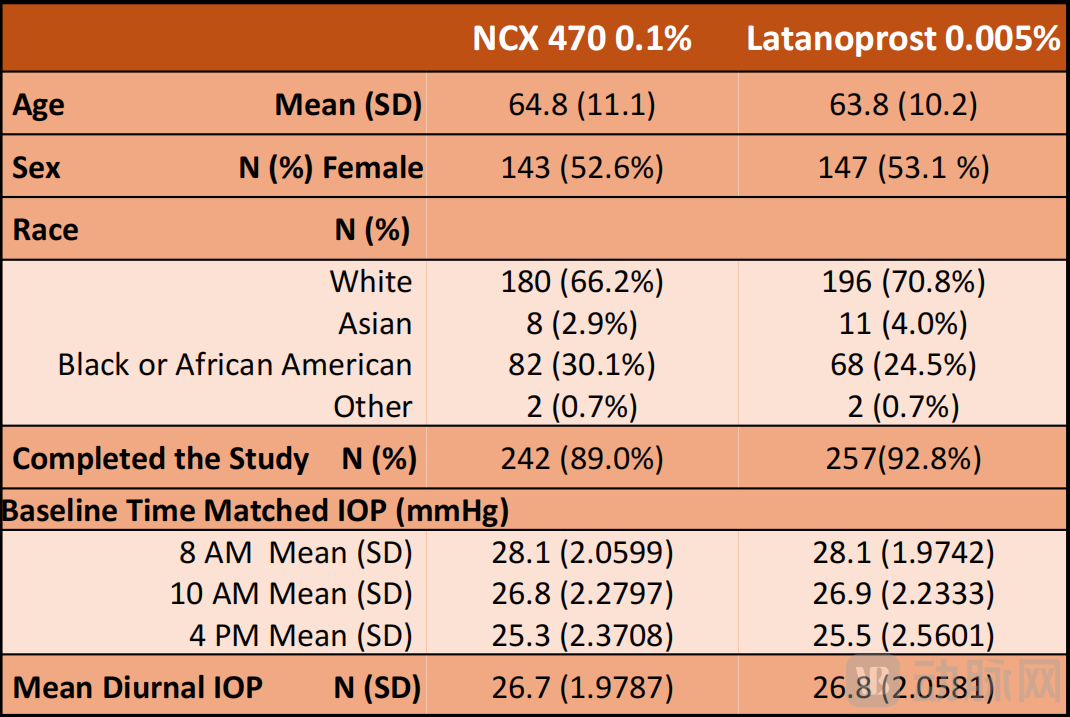
Baseline Demographic and Ocular Characteristics of U.S. Subjects
DENALI is a randomized, double-blind, multicenter Phase III clinical study designed to evaluate the efficacy and safety of NCX 470 in patients with open-angle glaucoma (OAG) or ocular hypertension (OHT). The study was presented at the conference by Dr. Sanjay Asrani from Duke University Medical Center in the United States.
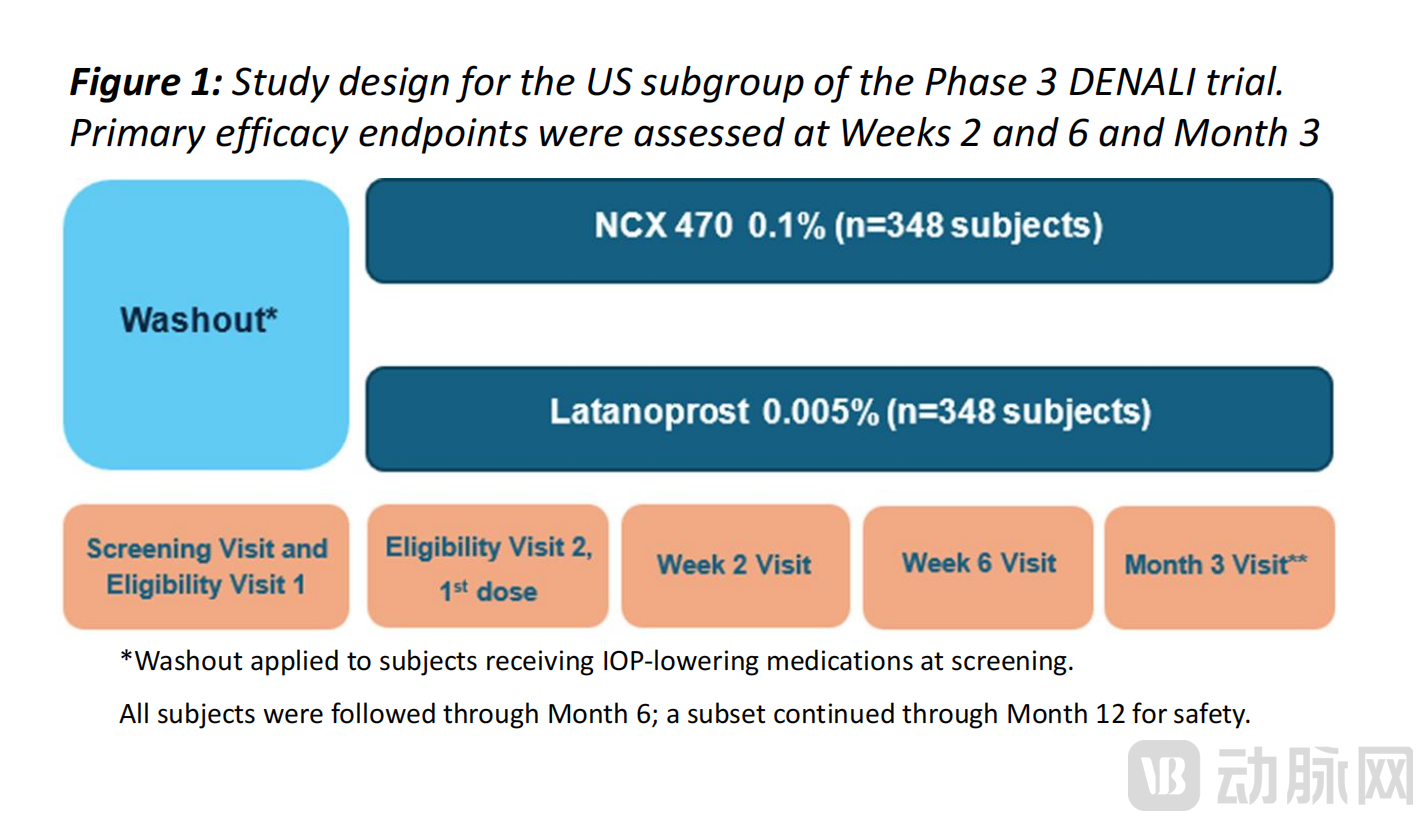
Study Design of the U.S. Subgroup in the Phase III Denali Trial: Primary Efficacy Endpoints Assessed at Week 2, Week 6, and Month 3
The study results demonstrated that 0.1% NCX 470 met the prespecified non-inferiority criteria relative to 0.005% latanoprost at all primary assessment time points. Meanwhile, NCX 470 achieved a statistically significantly greater reduction in intraocular pressure at three of the six time points.
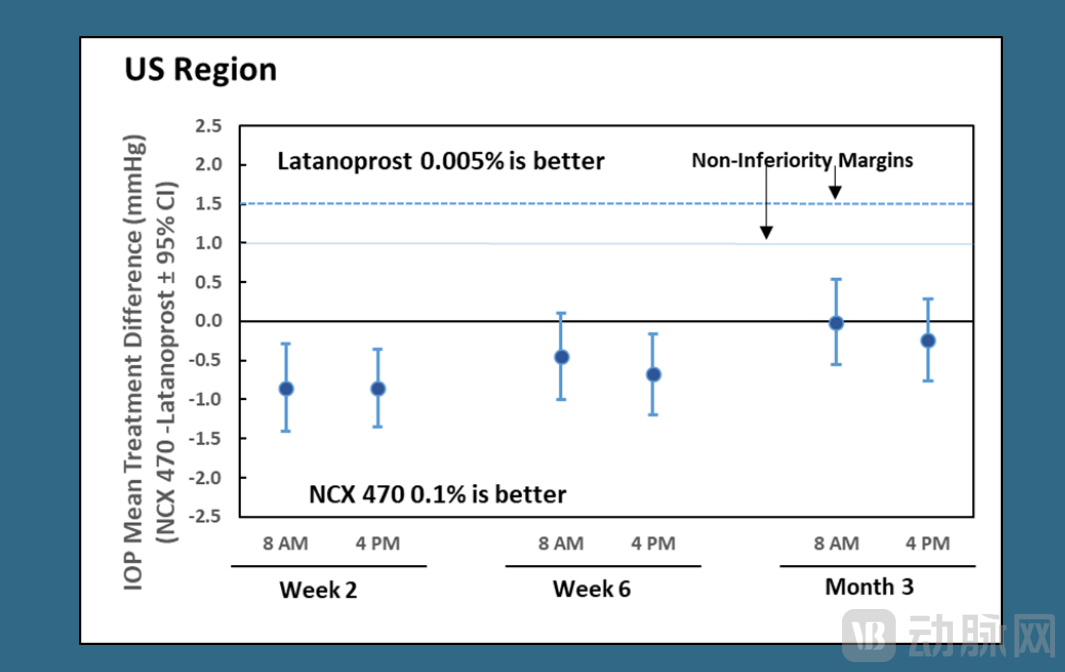
Mean Differences in Intraocular Pressure Reduction Between NCX 470 and Latanoprost at Week 2, Week 6, and Month 3
In terms of overall efficacy, NCX 470 demonstrated a rapid, potent, and sustained intraocular pressure (IOP)-lowering effect throughout the study period. More importantly, it achieved a maximum reduction of 10 mmHg from baseline. This magnitude of IOP reduction is highly competitive among current monotherapy regimens.
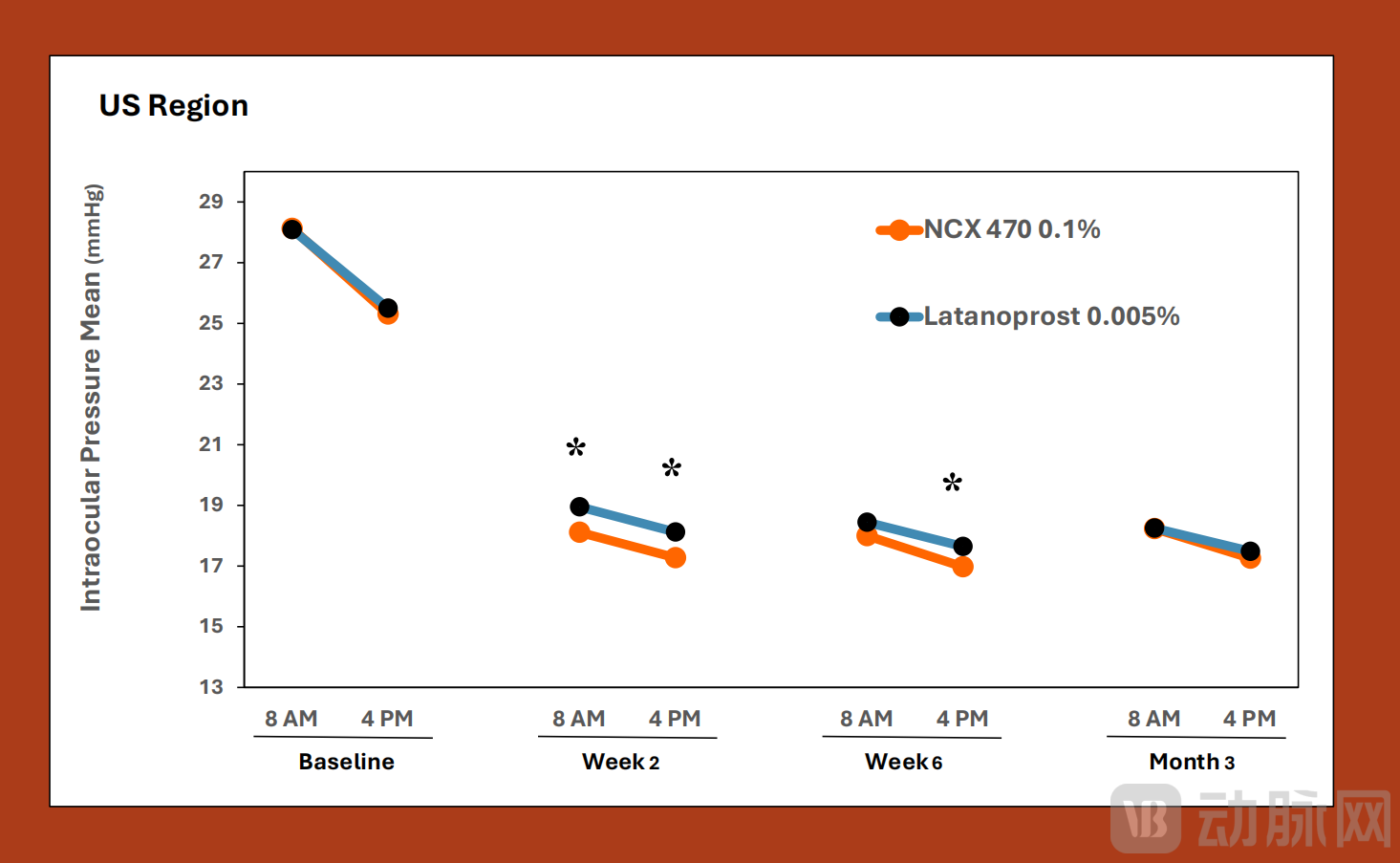
Meaningful Changes in Average Intraocular Pressure Over Time with NCX 470 0.1% versus Latanoprost in US Subjects
In terms of safety, NCX 470 demonstrates overall tolerability comparable to that of prostaglandin analogs. The most common adverse reactions include conjunctival hyperemia and mild ocular irritation, with an overall incidence rate within an acceptable range. In contrast, some drugs with novel mechanisms of action, such as Rho kinase inhibitors, are often associated with a higher incidence of conjunctival hyperemia, which can compromise patient adherence.
From a clinical perspective, this point is particularly important. Glaucoma is a chronic disease that requires long-term or even lifelong medication, and any factor affecting patient compliance will be amplified in the real world.
Therefore, the clinical data for NCX 470 not only demonstrate superior antihypertensive efficacy but also maintain the well-established safety profile of prostaglandin analogs. This“The balance of ‘enhanced efficacy without significant deterioration in safety’,”This is a key factor contributing to the success of improved ophthalmic drugs.
# US-China NDA Submission Imminent; FDA Feedback Generally Positive
In addition to clinical data, NicOx recently disclosed regulatory updates on NCX 470. On February 16, 2026, the company announced that it had completed a pre-NDA meeting with the U.S. FDA.
Based on the written feedback provided by the FDA, the regulatory agency considers that the existing clinical data, as well as the content and format of the New Drug Application (NDA) planned for submission by the company, generally meet the filing requirements. The FDA only recommended supplementing with one set of pharmacokinetic (PK) data, which will be derived from a small-scale clinical study conducted in Japan.
NicOx stated that the supplementary data would not affect the overall submission timeline, and the company still plans to submit the New Drug Application (NDA) for NCX 470 to the FDA in the summer of 2026.
In terms of commercial collaboration, NicOx has licensed the commercialization rights for NCX 470 in major global markets to the Japanese pharmaceutical company Kowa Company. The rights to the product in China and certain Asian regions have been licensed to Ocumension Therapeutics, with Phase III clinical trials currently underway in China. Under the agreement, NicOx is eligible to receive milestone payments and a share of future sales revenue upon successful product launch.
Glaucoma is one of the leading causes of blindness worldwide. Epidemiological studies estimate that the global number of glaucoma patients may exceed 100 million by 2040. This large patient population has sustained a stable market size for intraocular pressure-lowering medications over the long term. Currently, the global market for glaucoma drugs is valued at approximately USD 7–8 billion, with prostaglandin analogs holding the largest market share.
Meanwhile, in this market, a large number of core drugs have had their patents expire, leading to intense competition among generics and generally lower prices. Therefore,For a new drug to achieve commercial success, it often needs to establish a clear differentiation in its clinical positioning, rather than relying solely on a “novel mechanism of action.”
This is precisely the potential positioning of NCX 470. It is unlikely to replace traditional prostaglandin analogs (PGAs) as the preferred initial therapy, but rather serve as an escalation option following monotherapy with conventional prostaglandins.
In the long term, the commercial potential of NCX 470 will primarily depend on whether its blood pressure-lowering effects in real-world settings can consistently outperform those of traditional prostaglandin analogs, as well as on physicians’ willingness to incorporate it into treatment pathways as an “enhanced monotherapy.” If these two conditions are met, NCX 470 is poised to secure a stable share of the glaucoma drug market.
About NicOx
NicOx S.A. is a multinational ophthalmology company headquartered in France, specializing in the development of ophthalmic drugs using its nitric oxide-donor technology to provide innovative solutions for maintaining vision and improving eye health. The company is in the clinical R&D stage, with its core products including NCX 470 for the treatment of glaucoma, as well as the commercialized product VYZULTA.®and ZERVIATE®, the latter of which was approved for marketing in China on September 19, 2024.
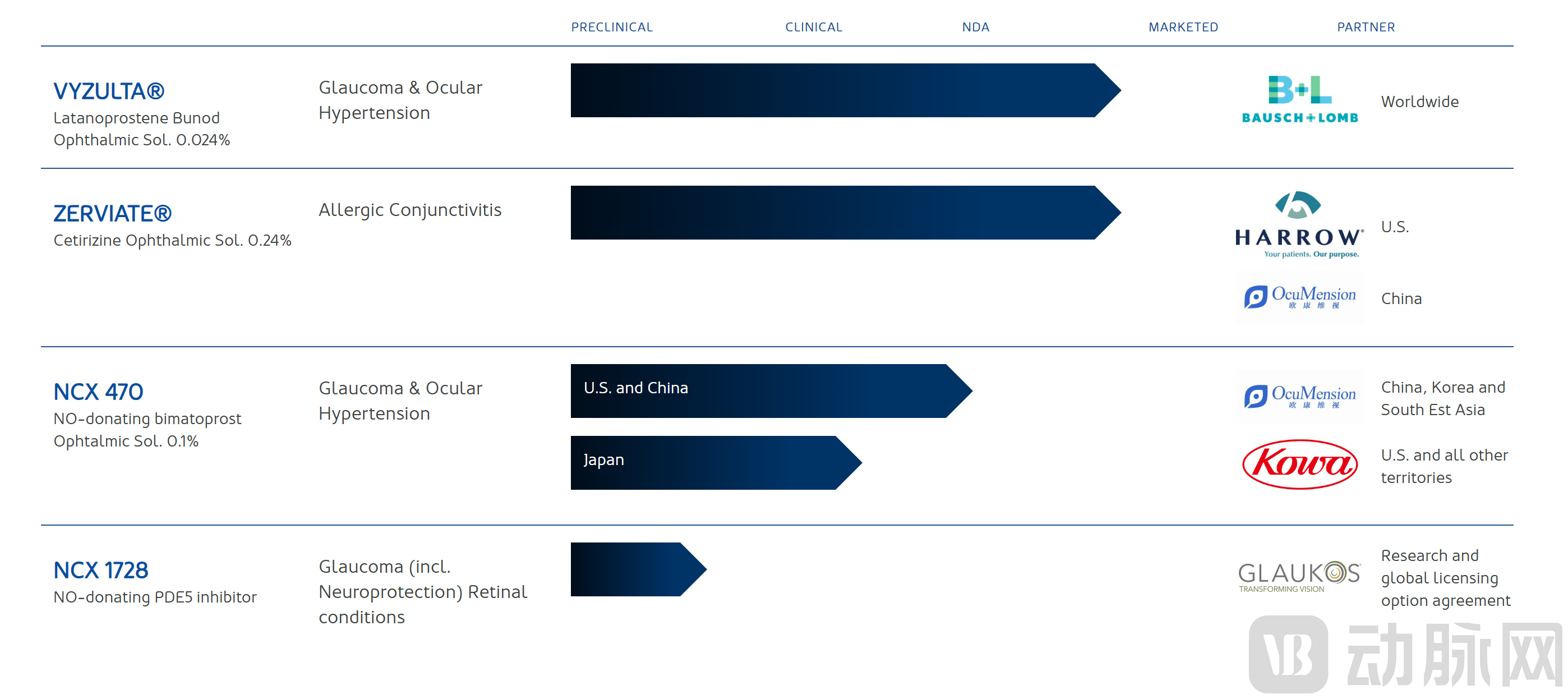
VYZULTA®, 0.024%, is a nitric oxide-donating prostaglandin F2α analog indicated for the reduction of intraocular pressure in patients with open-angle glaucoma or ocular hypertension. The product is exclusively licensed worldwide to Bausch + Lomb, a leading global eye health company. VYZULTA®Commercialization has been completed in more than 15 countries, including the United States, and approvals have been obtained in several other countries. In October 2024, NicOx sold the royalty rights for VYZULTA to Soleus Capital.
ZERVIATE®, 0.24%, is indicated for the treatment of ocular pruritus associated with allergic conjunctivitis, with commercialization in the United States handled by the Company’s partner, Harrow. In China, the product is marketed by Ocumension Therapeutics. The Company has granted Ocumension Therapeutics an exclusive license for ZERVIATE, with Ocumension responsible for the development and commercialization of the product in China and most Southeast Asian markets.
NCX 1728, an investigational candidate in the pipeline, is a novel nitric oxide-donating phosphodiesterase-5 (PDE5) inhibitor currently in the preclinical research stage. Similar to NCX 470, it features a dual mechanism of action: releasing nitric oxide and inhibiting PDE5, thereby enhancing and prolonging intraocular pressure-lowering and neuroprotective effects, with potential for the treatment of glaucoma and retinal diseases.