

Mindtrix (MingShi Brain-Computer Interface) Files IPO Prospectus: Scaling the 'Everest' of Visual Restoration BCI with a Long-Term Innovation Framework
“The industry is pondering how to enable machines to understand the human mind, while we are exploring how to help the brain comprehend machines.”MingShi Brain-Computer Interface(Mindtrix)Dr. Liu Bing, the founder, in2026YearAt the Yabuli ForumThis is how they interpret what they are doing.
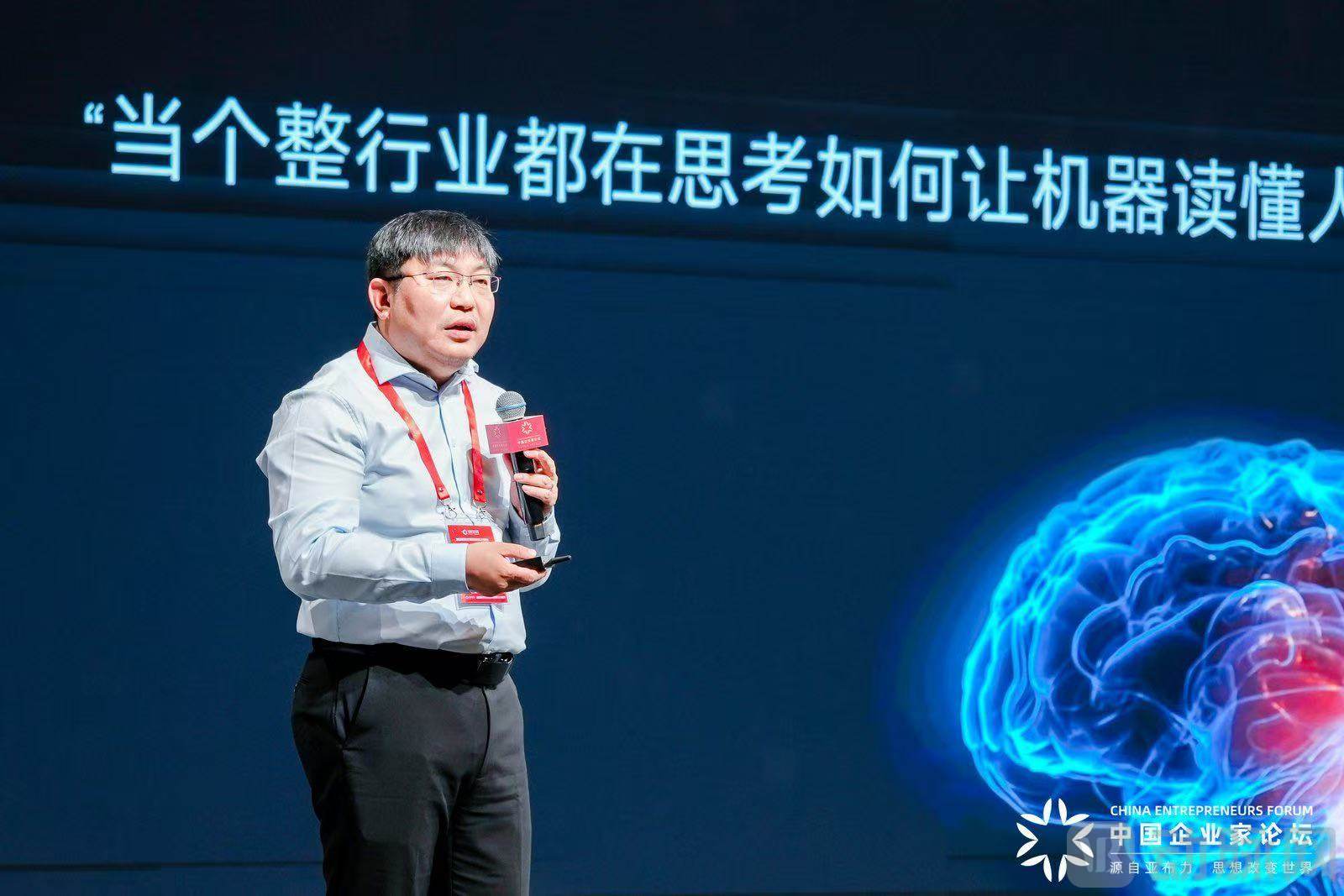
Currently, the global race in brain-computer interfaces (BCIs) is largely focused on “reading” brain signals to enable flashy applications such as mind-controlled devices. In contrast, Mindtrix concentrates on feedback-based motor control grounded in “bidirectional brain-machine learning,” as well as visual reconstruction via closed-loop large-scale stimulation. Dr. Liu Bing defines this approach as “inverse”—they are tackling “write-type” BCIs, aiming to deliver precise electrical signal maps to the visual cortex to restore sight for individuals with complete blindness.
These two directions outline two distinctly different philosophies of innovation. The former pursues iterative optimization along a relatively clear path, while the latter attempts to establish an entirely new foundational communication protocol at the boundary between biology and machines. This is widely recognized in the industry as one of the ultimate challenges in “brain-computer interfaces,” with its difficulty likened to the “Mount Everest” of this field.
Liu Bing stated that this “reverse” selection is, in essence, a recalibration of the “time dimension” of innovation. Mingshi Brain-Computer Interface has proactively embraced the highest level of uncertainty and the longest R&D cycles; its reward is not an immediately tangible product, but rather the pioneering right to define a “root technology.” We are providing a set of understandable and traceable “development consensus” for hard-core innovations that cannot undergo “agile iteration.”
He unveiled a clear timeline: completing the first experimental trial in fully blind subjects in 2026, initiating registration clinical trials in 2028, and targeting product launch around 2030.
Liu Bing candidly stated, “In the realm of hard technology, what is more challenging than achieving technological breakthroughs is managing stakeholders’ expectations and establishing a clear metric for ‘patience.’” This timeline effectively serves as a series of lighthouses for all participants—including investors, partners, and even regulatory bodies—amidst the fog of scientific exploration. It transforms prolonged uncertainty into a series of verifiable, actionable
establish phased objectives for discussion, thereby attempting to build a long-term trust relationship based on rational consensus. This may well be the essential internal capability that all hard-tech companies with long development cycles must cultivate.
Regarding the investment and financing environment in the field of brain-computer interfaces (BCI), Liu Bing also pointed out several shortcomings in the current ecosystem: a lack of sufficiently long-term specialized funds, insufficient tax incentives for investments in frontier technologies, and exit channels that are overly singular and short-term oriented. Liu Bing’s views align with earlier appeals from some hard-tech investors—only when investing in the most cutting-edge and foundational technologies becomes a sustainable endeavor that yields both financial returns and social prestige will social capital systematically flow into these sectors that determine the nation’s future.
“The greatest risk may not be temporary technological setbacks, but rather the loss of systemic resolve in the face of ‘sunk costs’ associated with long-termism.” Liu Bing pinpointed the most profound challenge in hard-tech innovation. Scaling the “Brain-Computer Interface Everest” requires not only the courage of a few pioneers but, more critically, a comprehensive logistical support system capable of sustaining a long-term expedition.

Mindtrix is an implantable brain-computer interface (BCI) technology company founded by Ph.D. holders who returned to China from top overseas BCI laboratories, specializing in solutions such as visual reconstruction. With the vision of “becoming a global leader in implantable BCI technology for disruptive medical applications,” the company provides revolutionary solutions for the treatment of neurological disorders and the development of human potential.
The company is currently focusing on cutting-edge fields such as visual reconstruction and motor control. Leveraging feedback-based motor control grounded in “brain-computer dual learning” and visual reconstruction based on closed-loop large-scale stimulation, the company has achieved breakthroughs in multiple key technologies for implantable brain-computer interfaces.
The company’s founding team hails from world-leading institutions, including the University of California, Berkeley; Duke University; the Salk Institute for Biological Studies; the University of California, Irvine; Johns Hopkins University; the University of Chicago; and the Institute of Automation, Chinese Academy of Sciences. With extensive research expertise and achievements in bidirectional brain-computer interface decoding algorithms, visual reconstruction, flexible neural electrodes, and neuromodulation, the company boasts globally leading technological capabilities.