

JenaValve Announces FDA Approval of Trilogy Transfemoral TAVR System for High-Risk Severe Aortic Regurgitation Patients
Recently, JenaValve announced that its developedTrilogy Transfemoral Aortic Regurgitation (AR)-Specific Interventional Valve System Officially Receives FDA Market Approval, this system is indicated for the treatment of patients with symptomatic severe aortic regurgitation (AR) who are at high or greater risk for surgical intervention. Thus, Trilogy becomesThe first and only one in the United States to receive approval for this specific indicationtranscatheter aortic valve replacement (TAVR) system. Previously, Trilogy received CE certification from the European Union.
1Long-Term Vacuum in AR Interventional Therapy; Traditional TAVR Faces Anatomical Barriers
Today, as transcatheter aortic valve replacement (TAVR) technology has become increasingly mature, patients with aortic stenosis (AS) have access to well-established minimally invasive treatment options. However, patients with pure aortic regurgitation (AR), which is equally prevalent, have long faced a therapeutic “vacuum.”
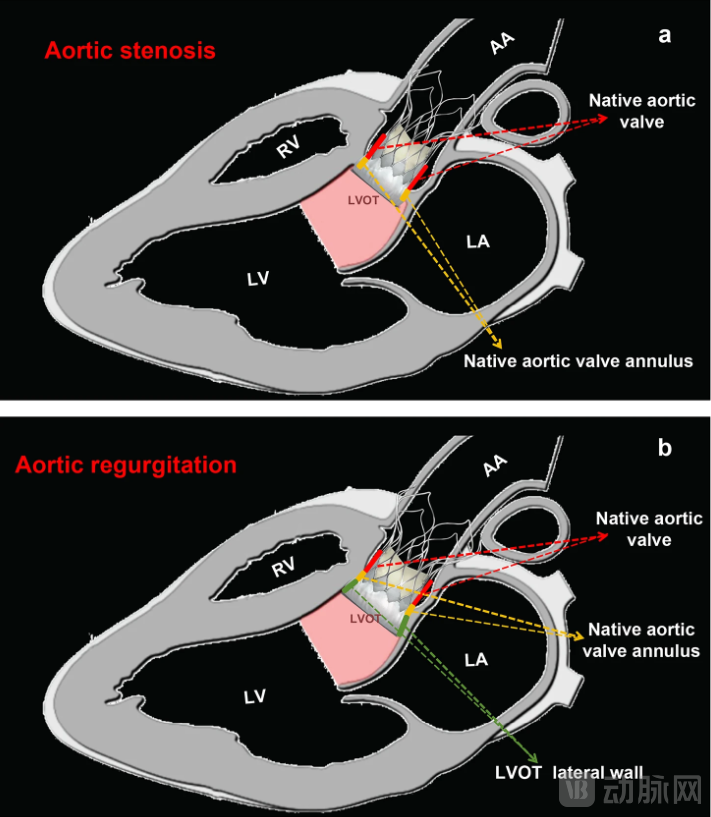
Different Anchoring Mechanisms of Self-Expanding Valves During Transcatheter Aortic Valve Replacement in Patients with AS and AR
From: BMC Cardiovascular Disorders (Springer Nature)
The disease burden of AR cannot be ignored. According to data from UpToDate, the prevalence of AR exceeds 2% in individuals aged over 75 years. The prognosis for patients with severe symptomatic AR who do not receive effective treatment is extremely poor, with a 3-year survival rate of only 28%. Although European and American guidelines recommend surgical valve replacement as the first-line treatment, a significant proportion of patients are unable to tolerate open-heart surgery due to advanced age, frailty, and comorbidities, leaving them reliant on medical therapy alone.
Anatomical challenges are the fundamental reason why AR is difficult to treat with interventional approaches: The valve leaflets in patients with aortic regurgitation (AR) are typically non-calcified and soft, and are often accompanied by dilation of the annulus and aortic root. Traditional TAVR valves, designed for patients with aortic stenosis (AS), rely heavily on radial force for anchoring. When implanted in patients with AR, these valves are highly prone to displacement, paravalvular leak, or even detachment, posing significant risks.
There is an urgent clinical need for a dedicated device capable of actively and securely anchoring to non-calcified anatomical structures. The approval of the Trilogy system precisely addresses this critical clinical challenge, providing patients with severe aortic regurgitation (AR)—particularly those at high surgical risk—with a safe and effective minimally invasive solution.
2World’s First “Positioning Key” Design: Solving the AR Anchoring Challenge at Its Source
The core value of the JenaValve Trilogy system lies in its design, which was engineered from the outset to address the anchoring challenges associated with aortic regurgitation (AR). After five generations of technological iteration, it has evolved from a transapical to a transfemoral approach, establishing itself as a mature and precise interventional platform.
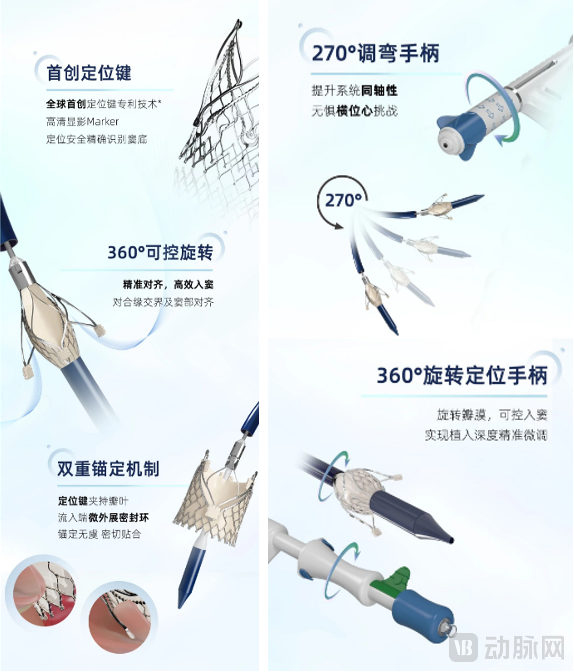
Trilogy System: Highlight Details Diagram | Source: Peijia Medical
Core Technology: Integrated Positioning Key Design for Precise "Leaflet Anchoring"
This represents the most disruptive innovation of the Trilogy system. Three positioning keys actively and precisely capture and clamp the patient’s own non-calcified aortic valve leaflets during deployment. This “leaflet anchoring” mechanism enables the valve to attach to the native leaflets, ensuring effective fixation even in the absence of calcification and resisting displacement toward the ventricle, thereby fundamentally resolving the core challenge of device migration.
The system also features a 270° steerable function, enabling the operator to precisely control the alignment of the positioning tabs with the native leaflets, thereby ensuring accurate and efficient grasping. Meanwhile, the slightly flared sealing ring at the inflow end of the valve conforms closely to the aortic root, effectively reducing reliance on over-expansion and thus helping to lower the risk of postoperative pacemaker implantation.
Furthermore, the integrated positioning keys facilitate precise alignment of the leaflet commissures with the native valve, thereby optimizing hemodynamic performance; the oversized cell design at the outflow end also preserves access for potential future coronary interventions.
3Robust Evidence: Impressive Data from the ALIGN-AR Study
The approval of Trilogy is built onThe Largest Prospective Dataset Dedicated to AR-Specific TAVR to Date — The Pivotal ALIGN-AR Trialon a solid foundation. This prospective, multicenter, single-arm IDE study enrolled 700 patients with high-risk symptomatic severe aortic regurgitation (AR) across 30 centers in the United States, and the study data demonstrated excellent performance:
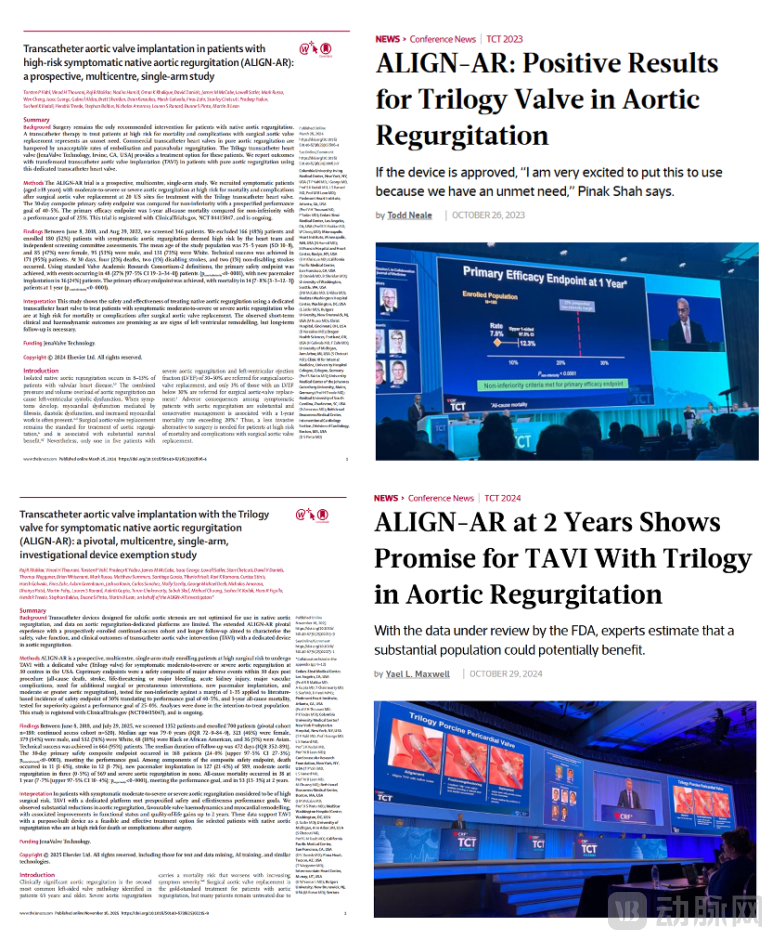
Presentation of Key Trial Results for ALIGN-AR | Source: Peijia Medical
●High Success Rate and Safety: The device success rate reached as high as 95%, with a low incidence of complications, demonstrating a favorable risk-benefit profile.
● Excellent Hemodynamics: The 2-year follow-up results demonstrated low transvalvular pressure gradients, large effective orifice areas, and a low incidence of paravalvular regurgitation, confirming the valve's favorable durability and function.
● Significant Cardiac Remodeling: The patient's left ventricular end-systolic and end-diastolic volumes were significantly reduced, and left ventricular mass decreased, demonstrating marked improvement in reverse cardiac remodeling.
4Future Exploration: Expanding to a Broader Indicated Population
FDA approval has opened the door for the Trilogy system to enter the U.S. market, while JenaValve is exploring the product’s value in a broader patient population through multiple clinical studies. Among these, two key studies warrant attention:
● ARTIST Study: As the first randomized controlled trial in the AR field to conduct a head-to-head comparison of TAVR versus surgical aortic valve replacement (SAVR), this study was launched in July 2025, aiming to expand the evidence base for Trilogy from high-risk populations to a broader cohort of patients eligible for surgery.
●JENA-VAD Registry Study: This study focuses on patients with severe aortic regurgitation (AR) complicated by left ventricular dysfunction, a population that has long lacked targeted therapeutic options due to the complexity of their condition and high surgical risk. The findings will provide preliminary evidence-based support for the application of Trilogy in this specific patient population.
Notably, as Trilogy was approved in the United States, itsThe TaurusTrio system, which utilizes the same patented technology, was the first to receive market approval from China’s National Medical Products Administration (NMPA) in December 2025., with Peijia Medical responsible for development and promotion in the Greater China region.
Currently, the Chinese and U.S. markets are nearly simultaneously witnessing the launch of dedicated transcatheter valves for aortic regurgitation (AR), signaling that this technological approach has entered the phase of global implementation. Consequently, more AR patients facing therapeutic dilemmas will gain access to effective minimally invasive treatment options.