Guangzhou Biopharma: Accelerating Innovation and Global Integration
In recent years, China’s biopharmaceutical industry has been at a critical stage of transformation and development. With the deepening integration of the global healthcare sector, the pace of technological innovation and capital flow has continued to accelerate. The focus of industrial competition has shifted from mere technological breakthroughs to the precise linkage and efficient translation of innovative assets. How to seize the initiative in the new round of industrial restructuring, and how to facilitate mutual attraction between high-quality projects and capital, have become core issues jointly explored by the industry.
As the core of the biopharmaceutical industry in the Guangdong-Hong Kong-Macao Greater Bay Area, Guangzhou is gradually becoming a key hub for the flow of medical innovation assets across China and even globally, leveraging its profound industrial foundation, comprehensive supply chain ecosystem, and vibrant capital landscape. The city not only gathers a cluster of innovative enterprises with core competitiveness but also fosters a unique pattern of synergistic development between state-owned capital and market forces. From R&D to commercialization, and from incubation to global connectivity, the “acceleration” of Guangzhou’s biopharmaceutical industry is drawing increasing attention and discussion.
In this context,On February 28, the 16th session of the “China Innovative Medical Assets Lounge” Transaction Roundtable, co-hosted by VCBeat, Wei Jie Yao, and Shangjun Investment, was held online as scheduled. The roundtable discussion was moderated by Chen Yiqun, Executive Director and General Manager of Shangjun Investment, with the participation of Nie Huiming, Deputy General Manager of Guangzhou Health Industry Investment; Su Jin, Founder of Feichuang Bio; and Zheng Wensi, General Manager of Najin Technology.Centered on the theme “Guangzhou’s Innovative Drugs, Linking to the World: Why Is Guangzhou’s Biopharmaceutical Sector Accelerating?” panelists engaged in an in-depth discussion from the perspectives of corporate practice and investment observation. They explored key issues such as technological evolution, commercialization pace, and industrial ecosystem development in Guangzhou’s biopharmaceutical industry, contributing profound insights to the innovative upgrading of Guangzhou’s broader health industry and jointly building a new engine for industrial growth.
Government-guided, market-operated, park-based, with multi-model synergistic coexistence
In February 2026, the Guangzhou Municipal Committee of the Communist Party of China and the Guangzhou Municipal People’s Government convened a citywide conference on high-quality development, forging consensus on industrial development for the new year. The topic of this roundtable discussion precisely represents the extension and implementation of the spirit of that conference—How Can State-Owned Capital and Social Capital Empower Each Other Under the Synergy of Dual Capital?This is not merely a collaboration at the capital level, but a deep integration of resources and industry. Whether it is state-owned enterprise (SOE) investment platforms shouldering strategic missions, dynamic innovative enterprises, or industrial parks serving as hubs for industry clustering, all will find their respective positioning and focal points within this collaborative mechanism, jointly building a diversified, symbiotic, and mutually beneficial industrial ecosystem.
In this regard, Nie Huiming, Deputy General Manager of Guangzhou Health Industry Investment, attended the meeting as a representative of state-owned assets.Indicates:In terms of leveraging social capital,Guangzhou Financial Holdings leverages a “pyramid + jungle-style” fund structure to mobilize social capital at multiple levels, thereby strengthening the industrial chain:At the top tier are government-guided funds, which serve the functions of policy guidance and risk mitigation; these funds typically have longer tenures and more tolerant fault-tolerance mechanisms. At the middle tier, specialized fund-of-funds for the biopharmaceutical industry are established to vertically supplement and strengthen the industrial chain. At the bottom tier, market-oriented sub-funds and direct investment funds are utilized to achieve efficient implementation and value creation.
In terms of the profit distribution mechanism, a balance is struck between industrial guidance and market-based incentives: state-owned capital receives base returns in proportion to its capital contribution, while excess returns are tilted toward the market-oriented team. This approach not only upholds the responsibility of state-owned enterprises in strengthening and supplementing industrial chains, but also strictly adheres to market-based principles for decision-making, management, and exit, thereby avoiding administrative interference and setting a benchmark for the operation of government guidance funds in Guangzhou and the Greater Bay Area.
From the perspective of an innovative enterprise, Su Jin, founder of Feichuang Bio, shared his insights on aligning clinical needs with capital.China's biopharmaceutical investment is undergoingA Profound Shift from "Technology-Driven" to "Clinically Need-Driven"—In the early market, investors flocked to innovative therapeutic technologies such as CGT, with founders often prioritizing R&D before identifying application scenarios; however, as China’s industrial chain matures, it is now more prudent to first define clinical needs and then integrate suitable technologies.
This shift comes at an opportune moment: the involvement of state-owned capital platforms provides critical support for long-termism in the industry, with their patient capital nature precisely addressing the drawback of excessively long R&D cycles for innovative drugs. Furthermore, state-owned entities possess inherent advantages in aligning with government policies and securing site resources, enabling them to effectively integrate ecosystem elements and steer the industry from a “technology-seeking-market” approach to a “demand-driven technology allocation” model, thereby truly aligning with the development requirements of new quality productive forces.
Zheng Wensi, General Manager of Najin Technology, elaborated on the implementation pathway for the synergistic coordination of dual capital from the perspective of industrial park operations:As an industrial operation platform,The park serves as a bridge for the precise implementation of dual-capital synergy.On one hand, we collaborate with capital partners to identify pre-investment projects, conduct industry assessments, and screen high-quality opportunities, closely aligning with enterprises’ clinical needs and demands for technological breakthroughs. On the other hand, we leverage our intelligent service system to comprehensively track over 1,500 portfolio companies, utilizing big data insights to monitor their development trends and pinpoint critical pain points, thereby enabling precise resource matching in post-investment management.
Currently, Najin Technology has established deep strategic partnerships with Guangzhou Health Industry Investment and the Development Zone Industrial Fund. Through top-level design, we precisely align government policies, clinical resources, and scientific research capabilities with corporate needs. Simultaneously, by leveraging social capital, we match capital and industrial requirements across the entire lifecycle from startup to expansion, thereby forming a comprehensive service system covering “investment, financing, management, and exit.” Our ultimate goal is to tap into the value of Guangzhou’s biopharmaceutical sector through a model characterized by “government guidance, market-driven operations, park-based implementation, and industrial synergy,” thereby gaining global capital recognition for its industrial potential.
Chen Yiqun, Executive Director and General Manager of Shangjun Investment, summarized:Guangzhou’s biopharmaceutical industry is accelerating its growth and integrating global resources, thisIt is inseparable from the multi-party collaboration involving the responsibility of state-owned capital, the vitality of private capital, the implementation of innovative enterprises, and the construction of park carriers.Capital providers should better serve the industry by fully leveraging Guangzhou’s high-quality resources, including Grade-A tertiary hospitals, universities, and research institutes, to uncover more opportunities for synergy among projects, talent, and capital. Through deep collaboration between state-owned and private capital, as well as between industrial parks and enterprises, an industrial ecosystem characterized by shared risks and shared value can be established. This will not only enhance the attraction of non-local capital but also demonstrate to international companies the investment value and development potential of Guangzhou’s biopharmaceutical sector.
Capital Should Not Stop at “Providing Funds,” But Must Proactively “Build Bridges”
From a market-oriented perspective,Chen Yiqun, Executive Director and General Manager of Shangjun InvestmentIt was pointed out that the unique value of Guangzhou-based enterprises is transitioning from isolated technological breakthroughs to comprehensive solutions, which aligns closely with the emphasis on “industry first, manufacturing as the foundation of the city” highlighted at the Guangzhou High-Quality Development Conference. This year, 57 major projects were signed at the conference, with a total agreed investment of RMB 130.5 billion, demonstrating the translation of technology into livelihood-oriented solutions that address pain points in healthcare and the market.
Additionally,From the perspective of post-investment value creation, both state-owned and private capital should not stop at merely “providing funds” but must proactively “build bridges.”Shangjun Investment also plays the role of a “super connector,” linking state-owned capital, industrial parks, innovative enterprises, and industry elements such as CDMOs/CROs, thereby promoting multi-party communication and collaboration. Collaborative advancement across the industrial chain is a key link needed for Guangzhou’s biopharmaceutical sector to accelerate its development.
Based on the advantages of collaborative support across the industrial chain,Su Jin, Founder of Feichuang BioShared Feichuang Biotechnology’s differentiated innovation pathway. In terms of technological R&D, Feichuang Biotechnology starts from clinical needs, focusing on urgent demands such as early diagnosis and precise intervention for pulmonary fibrosis. It avoids the fiercely competitive “me-too” traditional targets in the field of nuclear medicine, discovers original novel targets through bioinformatics, and develops small-molecule, peptide, and antibody-based molecular probes.
Furthermore, antibody-based probes offer high versatility; they can be miniaturized for diagnostic applications or amplified for therapeutic purposes, and can also be integrated into cell and gene therapies such as CAR-T and stem cell treatments, thereby establishing a unique technological platform. Molecular imaging, including molecular probes, is not only an independent technology but also enables visual tracking of drug distribution at lesion sites, reducing R&D risks across the entire biopharmaceutical sector. Guangzhou possesses a comprehensive ecosystem to lead this frontier track, with strengths in clinical capital, policy incentives, and industrial investment.
As a critical component of the industrial ecosystem,Nie Huiming, Deputy General Manager of Guangzhou Health Industry InvestmentFrom the perspective of state-owned capital, this analysis examines the innovative characteristics and shortcomings of Guangzhou’s local biopharmaceutical enterprises and proposes targeted empowerment pathways. He pointed out that Guangzhou-based companies, leveraging abundant local resources, have established a complete “R&D–clinical–industrial” closed loop. With more than 6,400 biopharmaceutical enterprises and a total market capitalization of listed companies exceeding RMB 300 billion, Guangzhou ranks among the top in China. However, significant weaknesses remain: innovations in targets and mechanisms are not truly source-original; capabilities in core reagents, consumables, equipment, and CXO services are weak; and there is a lack of chain-leading enterprises with valuations in the hundreds of billions to drive ecosystem synergy.
To address the aforementioned pain points, state-owned capital empowerment follows two major directions: first, capital empowerment,Build a full-cycle, differentiated fund system covering stages from seed round to Pre-IPO and even strategic placement, to address the financing pain points of enterprises at various stages;Second, industrial empowerment.Deliver full-industry-chain services spanning clinical development, CROs, manufacturing, and industrial park infrastructure to help enterprises overcome bottlenecks from source innovation to commercialization, while intensifying efforts to attract high-end talent and strengthen corporate team support.
Zheng Wensi, General Manager of Najin TechnologyIt elaborates on how the industrial park, as an industry carrier, empowers enterprises across three dimensions: space, technology, and resources. In terms of spatial layout, Najin adopts a strategy of “differentiated development + complementary patterns”: its five major parks in Huangpu focus on biopharmaceuticals, medical devices, and AI empowerment; the Liwan Innovation Center is building a high-end medical device industrial park and co-establishing a simulated medicine industrial park with Zhujiang Hospital, introducing top-tier international enterprises; the Baiyun Park specializes in digital health and testing and inspection for beauty and general health; and the Nansha Park leverages cross-border resources to facilitate the innovative translation of biopharmaceuticals, forming an all-encompassing, integrated spatial carrier that spans from startup incubation and pilot-scale production to headquarters operations and cross-border exhibitions.
At the technical service level, Najin leverages its “One Island, Multiple Parks” framework to facilitate the sharing of policies, branding, and resources. It has established public technology platforms as well as testing and inspection platforms, thereby reducing enterprises’ heavy-asset investment costs. Meanwhile, by connecting with an academician and expert think tank and clinical resources from Grade A tertiary hospitals in Guangzhou, it creates a closed-loop pathway from clinical needs to R&D and production. Furthermore, the park promotes the integration of basic research into industrial innovation by establishing joint R&D centers to tackle core biomedical technologies. It has also built a tripartite linkage mechanism involving “research institutes–park enterprises–medical institutions,” precisely aligning clinical pain points, scientific support, and industrial commercialization to elevate innovative achievements along the value chain.
The Full-Chain Empowerment System of Industry-Medical Integration Is Key to Accelerating Innovative Drug Development in Guangzhou
From “Funding” to “Ecosystem Building”: How State-Owned Capital Integrates Industrial Parks, Clinical Practice, and Scientific Research to Construct a Full-Chain Empowerment System for Industry-Medicine Convergence Has Become a Key Issue in Accelerating the Translation of Biopharmaceutical Innovations in Guangzhou.
In this regard,Nie Huiming, Deputy General Manager of Guangzhou Health Industry InvestmentIt has been pointed out that investment has evolved from the “capital provision” Model 1.0 to Models 2.0 and even 3.0. State-owned capital should serve as the organizer, matchmaker, and backstop, linking research institutions, clinical organizations, and industrial parks. Its core value lies in “transforming academic papers into products, converting clinical needs into R&D directions, and turning technologies into production capacity.”
Specifically,State-owned capital plays three irreplaceable roles in accelerating the transformation of scientific and technological achievements: first, angel investment;State-owned capital can shoulder the critical responsibility of investing in early-stage and small-scale ventures during market downturns, providing initial seed funding;Second, it serves as a compliance bridge.State-owned capital has the capacity to address compliance deficiencies in startups founded by university researchers, ensuring a smooth transition from R&D to commercialization.Third, management empowerment,Provide long-term support for early-stage projects through a rigorous internal control system, talent recruitment, the “three meetings” governance framework, and capitalization pathway planning.
Su Jin, Founder of Feichuang BioFrom the corporate perspective,To address the bottlenecks in aligning clinical needs with corporate R&D, a two-way breakthrough strategy is proposed:Clinical practitioners need to enhance their research awareness,Physicians must devote energy to exploring cutting-edge technologies amidst their busy schedules;Enterprises, on the other hand, should avoid the “technology-driven” approach of working in isolation.Proactively align with genuine clinical needs.
Taking the Lung Transplant Center of the First Affiliated Hospital of Guangzhou Medical University as an example—as one of the top five lung transplant centers globally, the hospital performs over 100 procedures annually, yet the average survival time for transplanted lungs is only six years, with post-operative rejection and fibrosis representing clear clinical pain points. In response to this need, Feichuang Bio has validated the diagnostic and therapeutic value of its proprietary targets in protecting lung function after transplantation. The company hopes that more innovative enterprises will adopt this “clinical-need-driven R&D” model to truly develop technologies and products that meet clinical demands.
Zheng Wensi, General Manager of Najin TechnologyHe shared the practical pathway for building an integrated industry-clinical ecosystem by leveraging Guangzhou’s high-quality clinical resources. Zheng Wensi pointed out that Guangzhou’s density of tertiary Grade A hospitals leads the nation, serving as the core foundation for Najin to construct a closed-loop system encompassing “clinical needs – R&D innovation – pilot-scale validation – regulatory registration – market commercialization – global expansion.” This year, Najin will prioritize deep collaboration between medicine and engineering, precisely translating real-world clinical pain points into corporate R&D directions, while collaborating with capital partners and regulatory authorities to facilitate the implementation of technologies and products. In the future, Najin Technology will continue to establish its roots in Hengqin, deeply integrating into the development framework of the Greater Bay Area. By leveraging the synergistic advantages of the Guangdong-Hong Kong-Macao Greater Bay Area, it will forge strong links with both the Greater Bay Area and international markets, propelling Guangzhou’s innovations onto the national and even global stage.
Chen Yiqun, Executive Director and General Manager of Shangjun InvestmentIn summary, Guangzhou’s integration of medicine and industry is benefiting from multiple favorable factors. The Municipal Science and Technology Bureau, the Municipal Bureau of Industry and Information Technology, and the Health Commission are jointly promoting the translation of early-stage projects, creating a synergistic policy framework that links science and technology, industry, and healthcare. This policy support, combined with the pragmatic “clinical-driven R&D” approach mentioned earlier, will become the core competitiveness driving the accelerated growth of Guangzhou’s biopharmaceutical sector.
From Intra-City Synergy to Global Linkages: Building a Global Hub for Biomedicine
From Intra-City Synergy to Greater Bay Area Integration, and Then to Global Connectivity: How Is Guangzhou Building a Global Hub for Biomedicine?
Faced with this proposition,Nie Huiming, Deputy General Manager of Guangzhou Health Industry Investment, outlined the global layout strategy of state-owned capital platforms from three perspectives. At the level of intra-city coordination,Leveraging its parent-subsidiary fund structure, technology transfer funds from major research institutes and universities, and in-depth collaborations with industrial parks such as Nakin, while integrating resources from listed companies like Daan Gene and Wondfo, and capitalizing on the full-range financial license advantages of its parent company, Guangzhou Financial Holdings Group, Health Industry Investment has established a local industrial ecosystem covering the entire business lifecycle.In terms of collaboration within the Greater Bay Area,It is essential to fully leverage Nansha’s locational and policy advantages to build a “Bay Area Bio-Super Node,” focus on frontier areas of medicine, and construct a model integrating “science parks + tech finance + innovation services” to aggregate regional resources.On international links,Leveraging its position as a gateway to Hong Kong and Macao, the initiative focuses on global talent acquisition, the introduction of high-quality overseas projects, and business development (BD) collaborations for the international expansion of domestic project pipelines, driven by a global investment perspective, overseas strategic layout, and bidirectional empowerment.
Su Jin, Founder of Feichuang BioShared the planning and insights on the company's global expansion strategy.As a first-in-class developer of targets and indications, Phicrea Biosciences initiated its global patent layout at an early stage. After obtaining authorization for a Chinese invention patent in 2024, the company has filed PCT patent applications in developed countries and regions including the European Union, the United States, and Japan. The patents protect not only the ligand structure but also cover the application of the target in neurodegenerative diseases, thereby establishing a barrier based on source innovation. Given the limited distribution radius of radiopharmaceuticals, Phicrea Biosciences plans to adopt a model of “production in China with domestic distribution, and overseas licensing with localized production.” With capital support, the company aims to initiate filings for international multi-center clinical trials, prioritizing Investigational New Drug (IND) applications in developed markets such as the U.S. Food and Drug Administration (FDA) jurisdiction and Australia, thus achieving a full-chain global expansion from patent layout to commercial implementation.
Zheng Wensi, General Manager of Najin TechnologyShared the practical pathways for the park to link global resources and establish Guangzhou’s window into the biopharmaceutical industry.In terms of international services, leveraging platforms such as the RCEP Service Station and Trade Promotion Workstations, we are facilitating the upgrade of enterprises from exporting products to building global brands. Furthermore, Najin has organized visits for park-based enterprises to South America this year to explore overseas market expansion, providing one-stop services including market access, compliance guidance, and pharmaceutical and medical device registration to mitigate risks associated with international expansion. In terms of global resource linkage, Najin leverages its Hong Kong headquarters as a strategic hub to foster technical collaborations and outcome matching between park-based enterprises and multinational pharmaceutical companies.
Furthermore, Najin has partnered with government agencies to create cross-border exhibition and commercialization platforms, promoting the international expansion of technology, products, and brands. Focusing on the Greater Bay Area (GBA), Najin is driving deep integration of regional resources by opening up Guangzhou’s clinical and research assets to serve neighboring cities such as Shenzhen, Zhuhai, and Foshan; facilitating cross-border circulation of pharmaceuticals and medical devices between Guangdong, Hong Kong, and Macao; and establishing strategic collaborations with Zhuhai, Zhongshan, Jiangmen, Zhaoqing, and other cities. This effort aims to build an “front-store, back-factory” industrial layout, forming a synergistic development pattern with headquarters in Guangzhou and manufacturing across the GBA, ultimately enabling collective global expansion.
“Breaking Boundaries” and “Integration”: The Core of Guangzhou’s Biopharmaceutical Industry’s Sustained Acceleration
Finally, focusing on the development opportunities and collaboration needs of Guangzhou’s biopharmaceutical sector over the next 3–5 years, state-owned capital platforms, innovative enterprises, industrial parks, and investment institutions each shared their perspectives. They look forward to working together through mutual engagement to propel Guangzhou’s biopharmaceutical industry to new heights.
Nie Huiming, Deputy General Manager of Guangzhou Health Industry InvestmentIt was stated that local industrial development must avoid blind bandwagoning and frequent shifts in strategic focus, but should instead establish precise positioning based on its own advantages. Drawing on experience from national investment layouts and project screening in recent years, Guangzhou has developed relative advantages in the field of cell and gene therapy—featuring a cluster of leading enterprises such as VectorBuilder (Yunzhou Biotechnology) and RayBiotech (Ruifeng Biotechnology), along with comprehensive elements including talent pipelines, industrial chains, technical support from research institutes and universities, policy incentives, and capital empowerment. The urgent priority is to further strengthen the strategic position of this niche sector, increase investment to rapidly build a global hub, and create a distinctive brand for Guangzhou’s biopharmaceutical industry.
Su Jin, Founder of Feichuang BioAgreeing with Nie Huiming’s perspective, an analysis from a professional standpoint reveals the reasons behind the growing favor for cell and gene therapies: Guangzhou-based enterprises have matured their GMP manufacturing and viral vector preparation processes, rendering safety relatively controllable, with the primary evaluation focus shifting to efficacy. Furthermore, new policies allow for rapid reimbursement once a certain number of cases demonstrate efficacy after Investigational New Drug (IND) approval, providing a robust business model for corporate R&D. Beyond this optimism, the industry must avoid homogeneous clustering and instead seek opportunities through differentiated development. Meanwhile, radiopharmaceuticals represent another significant opportunity. Both Guangdong Province and Guangzhou City have designated radiopharmaceuticals as a key development priority, accelerating supply chain construction. Leveraging Guangzhou’s extensive clinical resources, it is expected that, similar to cell therapy, a reimbursement model can be implemented upon validation of efficacy and entry into Phase I clinical trials, thereby creating a more favorable commercial environment for this niche sector.
Zheng Wensi, General Manager of Najin TechnologyIt was also stated that Guangzhou’s biopharmaceutical industry will usher in dual opportunities in technology and ecosystem over the next 3–5 years. On the technological front, cell and gene therapy has become a representative sector, while radiopharmaceuticals are emerging as a new hotspot; Najin will focus on exploring technical services and the translation of scientific achievements in this field. On the ecosystem front, Guangzhou’s full-lifecycle industrial support system—encompassing policies, capital, clinical resources, and infrastructure—will become more robust, significantly improving the efficiency of innovation factor mobility and injecting new momentum into industrial development.
Finally,Chen Yiqun, Executive Director and General Manager of Shangjun InvestmentIn summary, the core driver for Guangzhou’s biopharmaceutical sector to sustain its accelerated growth over the next three to five years lies in “breaking boundaries” and “integration”—dismantling barriers among hospitals, universities, industry, and capital, while strengthening cross-sector collaboration and financial partnerships. Simultaneously, equal emphasis should be placed on global expansion and introducing external resources. It is essential to fully leverage the differentiated advantages of districts such as Haizhu, Baiyun, and Huangpu, precisely align policy implementation and capital integration with corporate needs, and utilize local resources to achieve maximized investment efficiency. Chen Yiqun calls for deep connectivity across all segments of the biopharmaceutical industry and invites more investment institutions and innovative enterprises to the Greater Bay Area, jointly advancing the national strategies of building a powerhouse in science and technology and in finance. He looks forward to leveraging Guangzhou and the Guangdong-Hong Kong-Macao Greater Bay Area as a hub to enable value fission of global innovation resources, achieving multi-party win-win outcomes through practical development.
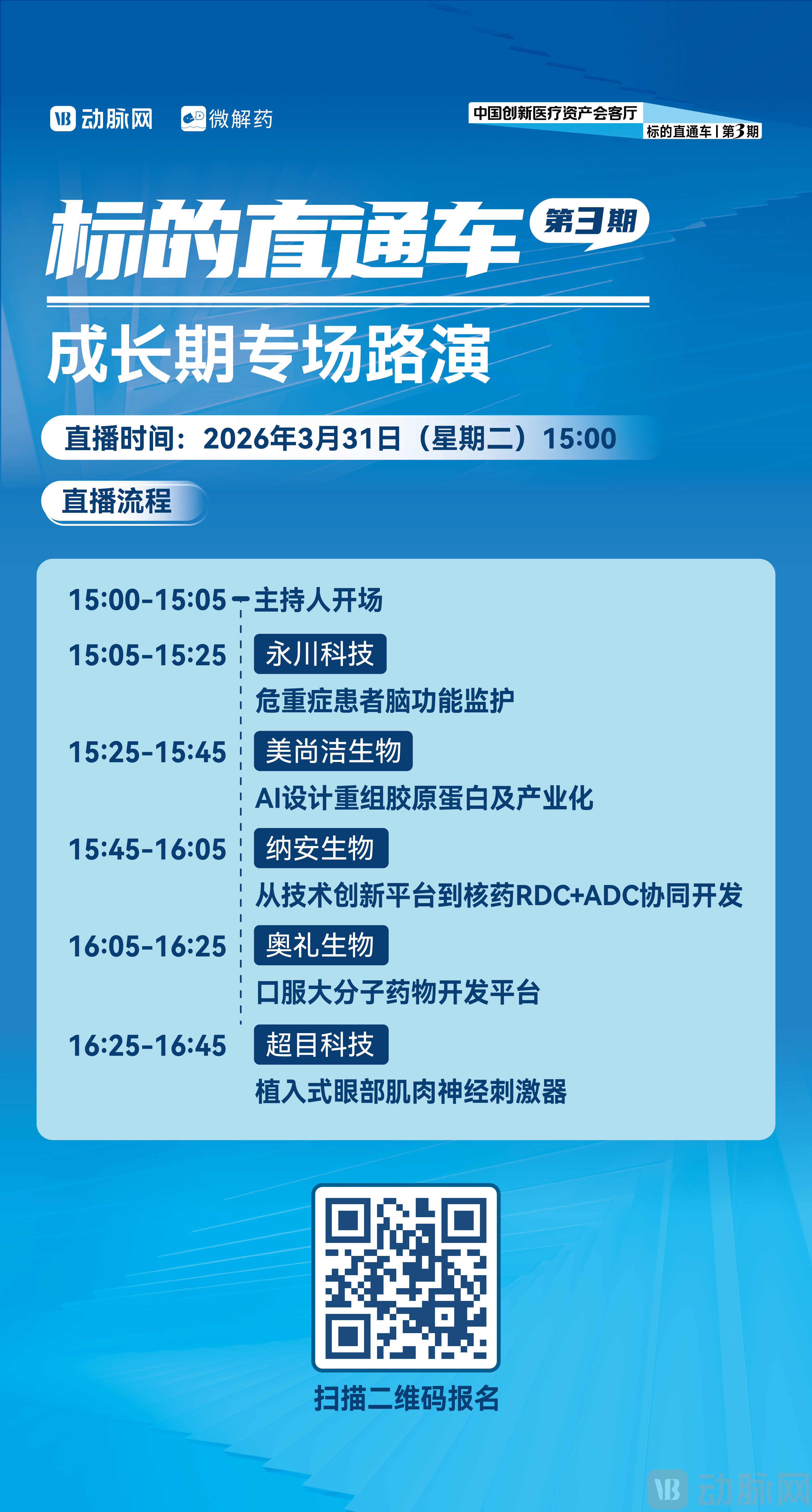
China Innovative Healthcare Assets Lounge – “Target Direct Express” Episode 3: Special Session on Growth-Stage Projects, Covering Brain Science, Recombinant Collagen, Macromolecular Drugs, Radiopharmaceuticals, Ophthalmology, and Other Growth-Stage Projects. Live broadcast starts promptly at 15:00 on Tuesday, March 31. Scan the QR code on the poster to reserve your spot for the live stream or participate in the roadshow!