

Fangzhou Jianke Unlocks the Value of AI+H2H Ecosystem in the Era of Chronic Disease Management 3.0

Fangzhou Pharmaceutical
Chronic Disease Service Platform
In March, listed companies in the healthcare sector intensively released their financial reports. Among them, the 2025 “performance report” of Fangzhou Pharmaceutical, a leading domestic “AI + chronic disease services” platform, was particularly notable. It not only validated the practical value of AI technology in chronic disease management through core metrics but also provided an innovative solution for the Chronic Disease Management 3.0 era, setting a benchmark for the industry. At a time when the sector widely faces challenges in achieving profitable commercialization of “AI + chronic disease management,” Fangzhou Pharmaceutical demonstrated a model characterized by the deep integration of chronic disease services, doctor-patient trust, and AI technology.
Financial report data shows,In 2025, Fangzhou Pharmaceutical’s revenue surged by 30.2% year-on-year to reach RMB 3.53 billion. Its profitability performance was even more impressive, with an adjusted net profit of RMB 20.4 million in 2025, a year-on-year increase of 19%. Notably, after achieving adjusted net profit profitability in 2024, Fangzhou Pharmaceutical further realized full profitability under International Financial Reporting Standards (IFRS) in 2025, with a net profit of approximately RMB 12 million.
As Fangzhou Pharmaceutical further implements its philosophy of “bringing chronic disease management services to your doorstep, with long-term trust as our companion,” and continues to leverage AI technology to enhance service quality, the platform has increasingly demonstrated high user engagement and stickiness. Data shows that in 2025, users actively accessed various services on the Fangzhou Pharmaceutical platform, with the average monthly active users (MAU) surging by 35% year-on-year to reach 13.7 million; moreover, the user repurchase rate stood at an impressive 85%.
While some chronic disease management service platforms still struggle to activate “dormant” users and maintain user relationships, Fangzhou Pharmaceutical is deeply aligning with the development needs of the Chronic Disease Management 3.0 era through its “AI + Chronic Disease Services” model.
In March 2025, the Chinese Research Hospital Association officially released its group standard, the Guidelines for Tiered Diagnosis and Treatment Integrating Medical Care and Prevention for Chronic Diseases, marking a new phase in chronic disease management in China. Unlike the previous model characterized by passive treatment of diseases and proactive health interventions, chronic disease management in the 3.0 era places greater emphasis on the integration of medical care and prevention, the establishment of a full-cycle digital and intelligent management system, and synergistic collaboration among “medicine, public health, technology, and management.” However, China currently faces a substantial gap between the actual management needs of hundreds of millions of patients with chronic diseases and the available service capacity, with multiple contradictions still hindering the realization of chronic disease management 3.0.
On one hand, there is a structural imbalance in the allocation of medical resources in China. It is difficult for high-quality physicians from tertiary Grade A hospitals to extend their services to the grassroots level, while primary healthcare institutions, which serve as the main arena for chronic disease management, face challenges such as insufficient professional capabilities and scarce diagnostic and treatment resources. On the other hand, there are gaps in out-of-hospital management services provided by medical institutions. The core of chronic disease management lies in “long-term adherence and full-cycle follow-up.” However, under the traditional medical model, there is a disconnect in out-of-hospital services for patients. Patients are highly prone to behaviors such as self-adjusting or discontinuing medication due to a lack of guidance, which not only compromises the effectiveness of chronic disease control but also undermines trust between doctors and patients. Furthermore, there is a lack of precision management and personalized services for chronic disease patients. Due to individual differences, patients have varying needs for chronic disease management; however, the industry largely remains at the stage of providing “standardized services,” making it difficult to develop tailored chronic disease management plans.
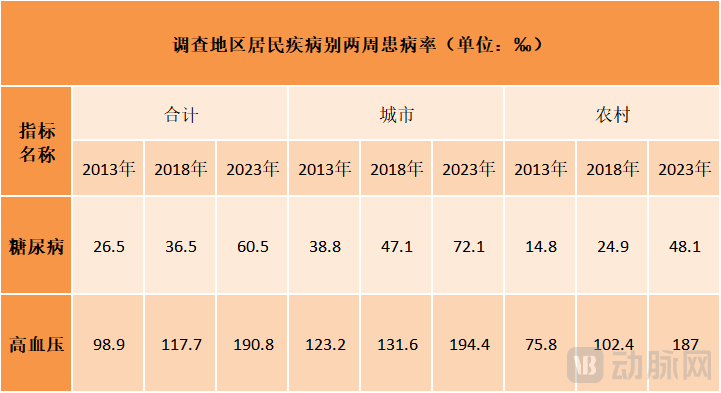
Data source: China Health and Health Statistical Yearbook 2024
Amid the severe landscape of chronic disease prevention and control, the needs of patients with chronic conditions have become increasingly clear: they require not only multidimensional services such as disease consultation, medication guidance, and health monitoring, but also a long-term, professional, and trustworthy “health steward” to provide efficient ongoing support and alleviate anxiety during disease management.
Thus,The organic integration of AI technologies, characterized by high service adaptability and efficiency, into the healthcare services ecosystem has become an inevitable choice for the industry.Fangzhou Pharmaceutical, now on the path to profitability, may have already found a systemic breakthrough solution for the Chronic Disease Management 3.0 era by integrating trust, technology, and services.
Centered on patients’ core needs for trust, technology, and service,Fangzhou Pharmaceutical has long been deeply committed to the chronic disease management sector. Guided by the philosophy of “bringing chronic disease services to your doorstep and fostering long-term trust,” and built upon “familiar doctor-patient relationships,” the company has continuously refined its service model, achieving sustained breakthroughs in both user value and commercial scale. The annual report data undoubtedly serves as the strongest testament to the effectiveness of this model.
From the supply side of medical services, Fangzhou Pharmaceutical continues to strengthen its physician resource layout, building a professional diagnosis and treatment service system for patients and promoting the decentralization of high-quality medical resources. As of the end of 2025, the total number of registered physicians on Fangzhou Pharmaceutical’s platform exceeded 251,000.The platform continues to expand its coverage of key departments with high demand from patients with chronic diseases, such as metabolism and endocrinology, further laying a solid foundation for the expansion of “familiar doctor-patient relationships.”
From the perspective of pharmaceutical services, Fangzhou Pharmaceutical continuously expands its partnerships to ensure a stable drug supply. Currently, Fangzhou Pharmaceutical has established collaborations with over 1,700 suppliers and more than 900 pharmaceutical manufacturers, including many leading companies in the industry. The platform’s drug catalog now comprises over 217,000 SKUs, with prescription medications urgently needed by patients accounting for more than 62% of the total.By efficiently meeting patients' medication needs, Fangzhou Pharmaceutical further enhances user trust in its platform through comprehensive pharmaceutical service capabilities.
The synergy between medical services and pharmaceutical services has further enhanced user experience, strengthened Fangzhou Pharmaceutical’s service capabilities, and bolstered patient trust in the platform, directly driving sustained growth in Fangzhou Pharmaceutical’s user base and improving user stickiness.By the end of 2025, Fangzhou Pharmaceutical had accumulated a total of 56.4 million registered users. Among them, the average monthly active users reached 13.7 million, representing a year-on-year increase of 35%. Driven by strong user recognition, the repurchase rate among paying users on the platform exceeded 85%. These figures not only underscore the value of “familiar doctor-patient relationships” but also demonstrate that a chronic disease management model centered on trust is the right path toward effective chronic disease management.
Underpinning the efficient operation of Fangzhou Pharmaceutical’s chronic disease services and the continuous deepening of familiar doctor-patient relationships is its AI+H2H innovative ecosystem, meticulously refined over many years and highly adapted to the era of Chronic Disease Management 3.0. Within this framework, AI technology is becoming a vital link that connects chronic disease services and strengthens trust between doctors and patients.
It has become an industry consensus that internet healthcare is shifting from “traffic competition” to “service competition.” By deeply integrating AI technology with its H2H platform, Fangzhou Pharmaceutical has achieved a dual improvement in service quality and efficiency. Furthermore, leveraging established physician-patient relationships, it has cultivated unique, hard-to-replicate competitive advantages within the industry.
From a technical foundation perspective, Fangzhou Pharmaceutical has built an AI technology system that is secure, professional, and tailored to chronic disease management scenarios, with the Xingshi Large Language Model as its core infrastructure. Given the unique nature of the healthcare industry, which prioritizes “safety” above all else, Fangzhou Pharmaceutical’s AI technology system addresses multiple dimensions—including service safety, data security, and medication safety. Through robust technical safeguards, it minimizes the “hallucination risks” associated with large medical models, ensuring the professionalism and reliability of AI services. In September 2025, Fangzhou Pharmaceutical’s Xingshi Large Language Model was featured on the front page of *Nature*, a leading international academic journal. Applications powered by the Xingshi Large Language Model, such as the AI Medication Assistant, AI Health Manager, AI Physician Assistant, and AI Academic Assistant, are currently providing targeted services for specific clinical and patient-facing scenarios, including medication guidance, patient education, diagnostic support, and medical literature retrieval.By further alleviating physicians’ administrative burdens and enhancing medical efficiency, this approach enables doctors to devote more time and energy to building deeper connections with patients, thereby fostering the development of familiar, trust-based physician-patient relationships.
From the perspective of platform ecosystem, the H2H (Hospital to Home) platform ecosystem has enabled Fangzhou Pharmaceutical to integrate a comprehensive medical service chain across all scenarios, with the potential to fundamentally address issues such as the fragmentation between medical treatment and prevention, as well as discontinuities in service delivery. By further extending medical services, doctor-patient education, pharmaceutical services, and chronic disease management into patients’ homes, Fangzhou Pharmaceutical has established a full-cycle, closed-loop ecosystem for chronic disease management that spans from in-hospital to out-of-hospital settings, and covers the entire continuum from prevention and follow-up consultations with prescription renewals to post-visit follow-ups. This approach truly brings chronic disease care to patients’ doorsteps and fosters the accumulation of trust throughout the entire lifecycle within this ecosystem.Throughout the full-cycle management process, physicians can provide long-term follow-up and personalized guidance to patients. The doctor-patient relationship is no longer a one-off interaction but rather a long-term service and companionship. This approach further deepens established doctor-patient relationships, strengthening mutual trust, which has become the core competitive advantage distinguishing Fangzhou Pharmaceutical from other platforms.
More importantly, Fangzhou Pharmaceutical is not merely building an AI+H2H ecosystem platform; rather, it is continuously expanding the platform’s capabilities to transition chronic disease services from standardization toward personalization, thereby further solidifying the foundation of trust. Leveraging its extensive accumulated user data, Fangzhou Pharmaceutical constructs comprehensive personalized health profiles to develop exclusive chronic disease management plans for patients, ensuring that services precisely match individual needs. Meanwhile, Fangzhou Pharmaceutical continues to establish strategic partnerships with leading domestic and international pharmaceutical companies, including Gilead Sciences, Novo Nordisk, and Innovent Biologics, driving the upgrade from traditional supply models to digital-intelligent solutions.
Ultimately,Fangzhou Pharmaceutical has achieved a multi-party win-win outcome through a model grounded in familiar doctor-patient relationships, centered on chronic disease management services, linked by AI technology, and connected by trust.: Patients receive professional, long-term, and personalized chronic disease management services; physicians achieve a dual enhancement in medical efficiency and service value; and enterprises steadily advance along the path of commercial profitability.
Currently, policy support in the field of chronic disease management is continuously intensifying. The 2025 "Implementation Opinions on Promoting and Regulating the Application and Development of 'Artificial Intelligence + Healthcare'" emphasizes: "Strengthen standardized management services for residents' chronic diseases. Establish intelligent applications for chronic disease management and personal health profiling, promote the standardized opening of residents' electronic health records to individuals, carry out intelligent services such as chronic disease screening, assessment and stratification, and personalized interventions, support residents in conducting self-health management, and build a new model of intelligent services for primary care chronic disease management."Policy support has ushered in a golden age for AI-driven chronic disease management, while also establishing trust-based chronic disease management services as a new direction for industry development.
From the perspective of market development, the digital chronic disease management market boasts broad prospects. According to CIC forecasts, calculated on a GMV basis, China’s online consumer-facing chronic disease management market is projected to grow from RMB 45.5 billion in 2023 to RMB 600 billion in 2030, representing a compound annual growth rate (CAGR) of 44.5%. The penetration rate of the online consumer-facing chronic disease management market is expected to rise from 2.9% to 16.1%.
Amid vast market opportunities, Fangzhou Pharmaceutical’s explorations and achievements have provided a referenceable path for the development of the Chronic Disease Management 3.0 era. This also indirectly signals that this highly watched sector is undergoing changes, warranting the attention of industry participants.:
First, the industry is shifting from a "traffic-centric" to a "service-centric" model, with chronic disease management evolving toward proactive, end-to-end care and focusing more on specialized verticals such as weight loss and metabolic disorders. Second, the doctor-patient relationship is moving away from traditional one-off interactions toward deeper, long-term trust-based connections akin to those between acquaintances; this approach enhances patient adherence through continuous follow-up and maintenance, thereby ensuring the tangible effectiveness of chronic disease management. Third, the industry will further advance its "patient-centered" orientation by achieving integrated convergence across the entire chain of medical care, pharmaceuticals, and health management, continuously building user trust and realizing high-quality, positive growth.
In the future,As more enterprises enter the field of chronic disease management and embrace the philosophy of “building trust as the foundation and prioritizing service,” a greater number of high-quality, efficient solutions will benefit patients and healthcare providers alike, propelling China’s chronic disease management sector toward a new stage of high-quality development. Moreover, AI-driven chronic disease management, grounded in trust, is poised to usher in a new era of comprehensive industry prosperity.