Beyond Domestic Substitution: Decoding Shenzhen's Innovative Leap in the Pharmaceutical and Medical Device Industry — Roundtable Session No.17
In 2025, the Shenzhen Municipal Development and Reform Commission, in conjunction with three other departments, jointly issued the “Several Measures for Full-Chain Support of Pharmaceutical and Medical Device Development in Shenzhen” (hereinafter referred to as the “Measures”). Focusing on nine key areas—R&D innovation, artificial intelligence applications, clinical trials, registration and approval, manufacturing, promotion and application, global expansion of enterprises, talent and financial empowerment, and investment promotion—the Measures propose 32 specific initiatives. These measures aim to fully leverage Shenzhen’s advantages in technological innovation, advanced manufacturing, and Shenzhen-Hong Kong cooperation, thereby accelerating the city’s development into a leading domestic and world-class hub for the agglomerated growth of the pharmaceutical and medical device industries.
In the transition from “the world’s factory” to “a source of innovation,” a suite of products emblematic of China’s new high-end manufacturing prowess—ranging from surgical robots and advanced medical imaging equipment to intelligent in vitro diagnostic systems—is accelerating its entry into the global healthcare market from Shenzhen. The pharmaceutical and medical device industry ecosystem in Shenzhen has achieved an unprecedented pace of development.
Against this backdrop, VCBeat, Wei Jie Yao, and Shangjun Investment jointly launched“China Innovative Healthcare Asset Reception Room” Trading RoundtableIssue 17, focusing on “"From Catching Up to Leading the Way: How Shenzhen Became a Global Innovation Hub for the Pharmaceutical and Medical Device Industry"This theme brings together national-level industrial capital, local angel fund-of-funds, and representatives of domestic innovative enterprises to focus on“Capital Synergy, Industrial Leapfrogging, Ecosystem Building, Global Linkage”A deep deconstruction of the growth logic of Shenzhen's pharmaceutical and medical device industry from four dimensions.
1Capital Synergy Logic: “Tiered Capital” Relay Successfully Navigates the Full Innovation Cycle
“Shenzhen’s capital ecosystem is highly robust, with ample equity and debt financing channels that are deeply integrated,” said Wang Zhifei, General Manager of Investor Relations and Public Relations at Dymind Biotechnology, articulating a sentiment shared by innovative enterprises in Shenzhen.
Leveraging its solid industrial foundation in hard technology and advanced manufacturing, Shenzhen has developed an industrial ecosystem characterized by the deep integration of tiered capital, cross-industry collaboration, and a global perspective. The pharmaceutical and medical device industry stands out as a highly representative segment within this ecosystem. This mature ecosystem is underpinned by Shenzhen’s tiered capital model, where angel funds take the lead, followed by follow-on investments from industrial and market-oriented capital.
Chen Yiqun, Executive Director and General Manager of Shangjun Investment, provided a clearer and more specific explanation: Angel funds address the courage required for the “0 to 1” stage, industrial capital resolves the resource challenges of the “1 to 10” stage, and market-oriented capital tackles the scalability issues of the “10 to 100” stage. However, this ecosystem did not form naturally; it is the result of long-term collaborative efforts by various stakeholders in Shenzhen’s industry.
In the view of Yang Feng, Deputy General Manager of Guochuang Zhiyuan, the key to balancing the mission of industrial guidance with market-oriented returns lies in identifying “innovations” that truly possess industrial value, while avoiding two dangerous signals of innovation:First, there is “show-off” innovation, which does not align with industry development trends; the industry needs products and technologies that truly meet clinical demands. Second, there is “definitional” innovation, where companies claim to be first by piling on modifiers, but the market does not need such claims.He believes that, after clarifying the direction and bottom line of government guidance, the remaining journey should rely on marketization and trust in the power of capital.
Chen Mo, head of the biomedical group at the Shenzhen Angel Fund of Funds, defines her ecosystem role as a “nurturer.” She pointed out that angel funds focus on source innovation from 0 to 1, adhering to patient capital to accompany enterprises in their common growth.. The core logic of industrial capital lies in strategic synergy and supply chain layout, whereas the core competency of market-oriented PE/VC firms is capital leverage, helping companies rapidly scale up and expand their markets to maximize financial returns within a foreseeable timeframe.. The three have formed a benign relationship of misaligned, complementary relay growth.
Wang Zhifei, General Manager of Investor and Public Relations at Dymind Biotechnology, corroborated the positive feedback loop of this ecosystem from a corporate perspective. Shenzhen is home to a large number of investment institutions and investors, boasting a high degree of marketization. This favorable capital environment has given rise to a substantial cohort of publicly listed companies, including those in the medical device sector. As medical device enterprises reach a certain scale, they inevitably engage in industrial capital, thereby undergoing a role transition, byApplying accumulated industrial resources to the translation of innovative technologies has fostered a deeper integration between capital and industry.。
2The Shenzhen Path to Industrial Leapfrogging: Assessing Technological Value Through Source Innovation and Clinical Needs
Capital is merely the fuel; the true engine is the industry itself. The endogenous drive of the industry still lies in the depth of technology and the sharpness of clinical value.
Assessing whether a target project’s technology holds future value is the most critical capability in early-stage investment. Chen Mo, head of the biomedical division at Shenzhen Angel Fund of Funds, shared her criteria for evaluating target value from an early-stage investment perspective. She pointed out that the authenticity of source innovation and the rigor of its scientific logic are the primary factors in assessment; another key consideration is whether the scientific hypothesis underpinning the technology can withstand validation by top-tier research institutions. The market is more willing to invest in “First-in-Class” or “Best-in-Class” technological approaches that hold promise for addressing unmet clinical needs. EvenEven with globally leading technology, it is essential to identify entry points characterized by clear clinical value, strong willingness to pay, and relatively moderate competition.
Yang Feng, Deputy General Manager of Guochuang Zhiyuan, analyzed the driving forces behind Shenzhen’s medical device industry’s transition from “following” to “leading” from an industrial investment perspective. He noted that Shenzhen has achieved considerable maturity in many areas of complete equipment manufacturing, particularly in in vitro diagnostics (IVD), medical imaging, and vital signs monitoring and support, where it has partially leapfrogged from domestic substitution to global leadership. Breakthroughs have also been made in overcoming bottlenecks related to certain key components. He emphasized that,Enterprises possessing five key traits—deep technological expertise, modern corporate management, high execution efficiency, a global perspective with expansion DNA, and adeptness at leveraging capital—are poised to transition from domestic substitution to global leadership.。
AI applications have long become a standard for corporate development and represent the most significant technological variable.Wang Zhifei, General Manager of Investor and Public Relations at Dymind Biotechnology, illustrated the application trends of AI technology by citing his company’s explorations in the “AI + Laboratory Medicine” sector. He revealed that Dymind had begun its AI strategic layout five years ago and has currently launched three disease models for sepsis, hematologic malignancies, and thalassemia. In the past, hospital test results were merely descriptive reports with unclear disease indications, thereby prolonging the subsequent diagnostic process. Now, with the integration of AI models, physicians can achieve rapid and precise diagnoses, significantly enhancing clinical value.
3The Underlying Logic of Ecosystem Building: Cross-Boundary Integration as an Advantage, with “Patience” and “Culture” Forging Long-Termism
From the technological accumulation formed during the early stages of industrial development, to cross-border integration, and ultimately to global leadership, Shenzhen’s unique advantage lies not only in its medical industry but also in its complete industrial matrix encompassing electronic information, AI, and intelligent manufacturing. This cluster effect constitutes a foundational advantage that is difficult for other cities to replicate, while the sustained development of these industries remains inseparable from a supportive ecosystem.
Chen Mo, Head of the Biomedical Group at the Shenzhen Angel Fund of Funds, shared insights on building a mechanism and system that seamlessly connects basic research, technology transfer, and industrial implementation. She pointed out that despite Shenzhen’s remarkable achievements in its ecosystem, bottlenecks requiring “long-term patience and gradual refinement” still persist: the evaluation mechanisms of universities and research institutions, as well as the pace of patent management, are not yet fully aligned with capital markets; there remains a gap between the number of high-level hospitals in Shenzhen and the needs of innovative pharmaceutical companies; and there is a relative shortage of international business development (BD) talent.Medical innovation is a long marathon that requires the sustained support of patient capital, as well as gradual refinement and facilitation through collaboration among the government, universities, and industry.
When viewed from the broader perspective of China’s industrial highlands, Yang Feng, Deputy General Manager of Guochuang Zhiyuan, distilled Shenzhen’s core differentiated advantages. Shenzhen boasts a highly developed electronic information industry, which serves as the foundation for its medical device sector.In terms of global expansion, it also enjoys unique locational advantages. Shenzhen has long been China’s leading city in medical device exports, providing a platform for enterprises to pursue internationalization.In terms of urban soft power, Shenzhen has gradually cultivated a youthful, inclusive, and vibrant city culture in recent years, allowing returning overseas talents to seamlessly integrate into its entrepreneurial ecosystem.This intangible cultural asset is also key to Shenzhen’s competitiveness.
Wang Zhifei, General Manager of Investor and Public Relations at Dymind Biotechnology, believes thatThe unique competitiveness of Shenzhen’s pharmaceutical and medical device industry lies in the deep integration of electronic information, precision manufacturing, and medical device sectors, a cross-industry ecosystem that delivers technological dividends to enterprises.Shenzhen’s accumulated expertise in precision machining within the consumer electronics sector, particularly in mobile phones and communications, has directly empowered the medical device manufacturing industry. Furthermore, as medical devices become increasingly intelligent, there is a growing demand for customized core components. Currently, the supply chain for Shenzhen’s medical device industry has achieved a high degree of localization, significantly shortening R&D cycles and enabling rapid response to customization needs.
4The Logic of International Development: Going Global Is Standard Practice, with the Strategic Dimension Shifting from “Product Export” to “Capability Export”
Nowadays, going global is no longer a bonus for pharmaceutical and medical device companies; it has become standard practice—an essential step that all Chinese medical device enterprises must take.
The development logic of corporate internationalization has evolved from “product export” to “capability export.”Chen Mo, head of the biomedical division at Shenzhen Angel Fund of Funds, believes that as early-stage capital, investors must not only make accurate investment decisions but also provide substantive support. Capital institutions can empower portfolio companies by facilitating business development (BD) matchmaking, exploring innovative models such as Newco structures, and planning capital pathways for listings in Hong Kong. Currently, an increasing number of Chinese enterprises are choosing to share costs with multinational corporations and collaboratively develop innovative drug markets in Europe and the United States. Through deep synergy and strategic cooperation with industry giants, innovative drug companies gain immersive, systematic learning opportunities regarding global regulatory standards, clinical operations, and commercialization logic, achieving optimal improvement and growth through practical experience.
Yang Feng, Deputy General Manager of Guochuang Zhiyuan, highlighted Shenzhen’s geographic advantage as a neighbor to Hong Kong. As a gateway to internationalization, Hong Kong serves as a premier platform for capital amplification. Capital markets encourage genuinely valuable enterprises to list in Hong Kong, thereby increasing their visibility to international investors and industries and facilitating corresponding overseas collaborations. Furthermore, with the advancement of internationalization, capital institutions can explore establishing foreign-currency funds to cover overseas innovation elements. Through the synergy of internal and external funds, efforts can be made to introduce overseas innovation teams into China. These teams can first enter the more familiar institutional and regulatory environments of Hong Kong and Macao, and then gradually integrate into the Greater Bay Area’s industrial ecosystem as city clusters within the region achieve deeper integration.
Wang Zhifei, General Manager of Investor and Public Relations at Dymind Biotechnology, emphasized the importance of building an internationalized team, which requires the capability to cultivate and manage local professional talent. Furthermore, a brand must be built upon strong product competitiveness. If product competitiveness fails to reach world-class standards, it will not gain recognition from top-tier distribution channels—a process that demands time and accumulation.
At the close of the roundtable, the three panelists offered their outlook on the breakthrough points for Shenzhen’s pharmaceutical and medical device industry over the next 3–5 years.
Chen Mo, head of the biomedical division at Shenzhen Angel Fund of Funds, believes that the next breakthrough in innovation will focus on multi-technology integration, leveraging Shenzhen’s cross-disciplinary advantages in electronic information, artificial intelligence, and algorithm engineering.
Yang Feng, Deputy General Manager of Guochuang Zhiyuan, believes that based on Shenzhen’s robust electronics supply chain and the evolution of AI technology, future opportunities will lie in intelligent personal health management products for out-of-hospital scenarios.
Wang Zhifei, General Manager of Investor and Public Relations at Dymind Biotechnology, shares Yang Feng’s view, believing that many promising and distinctive new projects will emerge in the “AI + medical devices” sector in the future.
5Live Stream Preview
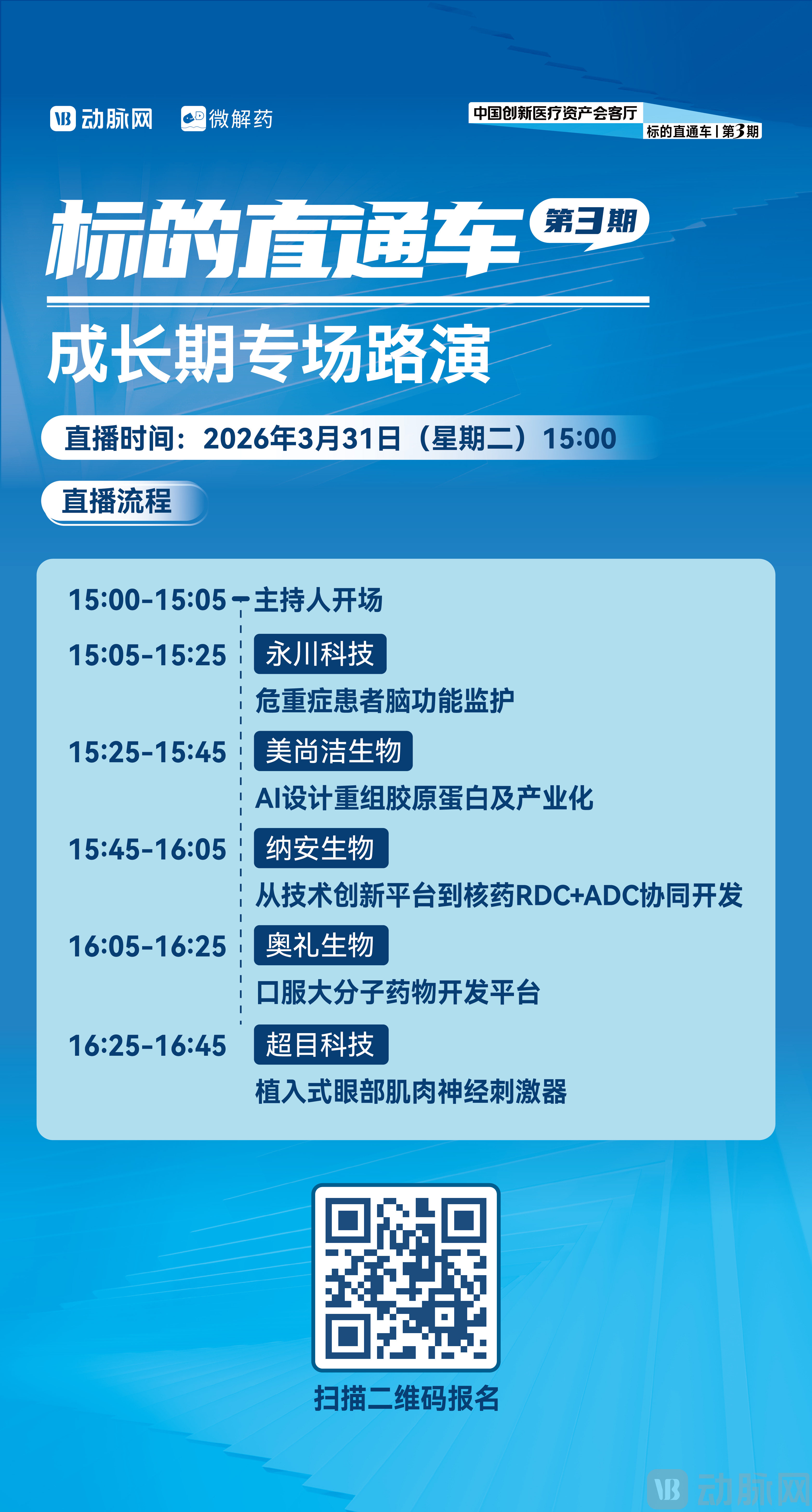
China Innovative Healthcare Asset Lounge – "Target Express" Issue 3: Special Session on Growth-Stage Projects
Coverage: Growth-stage projects in brain science, recombinant collagen, macromolecular drugs, radiopharmaceuticals, ophthalmology, and more.
Tune in live at 15:00 on Tuesday, March 31! Scan the QR code on the poster to reserve your spot for the live stream or join the roadshow.