

Puang Medical Soars 136.56% on BSE Debut, Emerging as a Dark Horse in the Billion-Dollar Medical Device Sector

Promisemed
Medical Device Developer
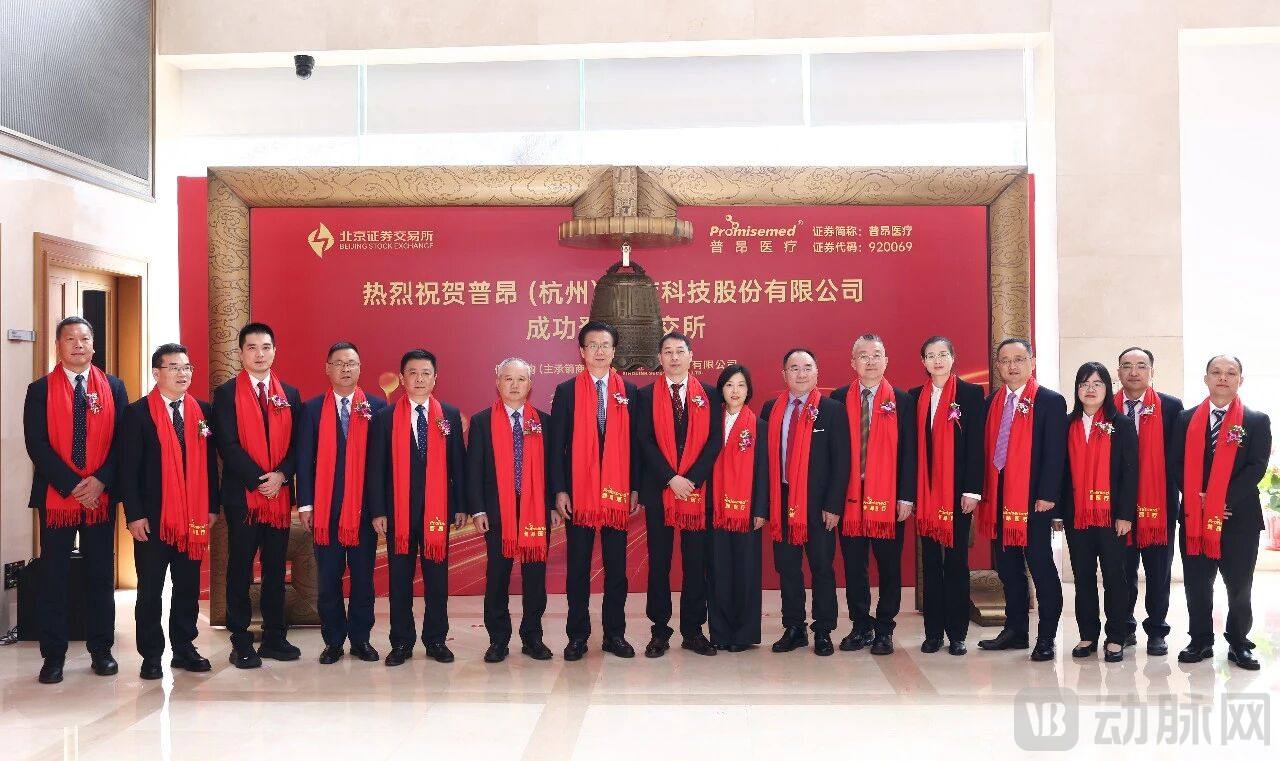
On March 27, 2026, Pouant (Hangzhou) Medical Technology Co., Ltd. (Stock Code: 920069) officially listed on the Beijing Stock Exchange (BSE), ringing the opening bell at an issue price of RMB 18.38 per share. This milestone marked another innovative medical device enterprise from Yuhang District, Hangzhou, entering the capital market. The stock closed at RMB 43.48 on its debut day, surging by 136.56%. Behind the opening bell lies the company’s two-year transformation journey from deepening its expertise in diabetes care consumables to expanding into minimally invasive diagnostic and therapeutic devices. It also represents a strategic imperative for this small and medium-sized medical device enterprise to leverage the BSE for breakthrough growth, amidst the dual backdrop of accelerating import substitution and the normalization of centralized volume-based procurement.
Founded in 2013 with diabetes care products as its starting point, the company has since built three major product portfolios: diabetes care, general drug delivery and infusion, and minimally invasive intervention. Holding the world’s second-largest market share in insulin pen needles, this enterprise has entered the fiercely competitive “specialized, refined, distinctive, and innovative” pharmaceutical and biotechnology sector on the Beijing Stock Exchange. It faces scale barriers from domestic leaders such as Mindray Medical and Micro-Tech Endoscopy ahead, close competition from peers like Kangdelai and Wuzhou Medical behind, while international giants Medtronic and Olympus continue to dominate the high-end market. Promisemed’s capital journey represents both a bold venture by small and medium-sized medical device companies into the trillion-yuan minimally invasive diagnosis and treatment sector, and a reflection of the opportunities and growing pains inherent in the industry’s path toward advanced domestic substitution.
Cast back to 2024, in the R&D laboratories of Promisemed, engineers were repeatedly fine-tuning the safety locking mechanism of biopsy needles. By then, Promisemed had already secured a strong foothold with its insulin pen needle products. In 2024, it ranked second globally in sales volume of insulin pen needles, capturing an 11.78% market share, trailing only the U.S.-based BD Company. Moreover, it was the first domestic enterprise in China to launch safety-engineered, auto-disable needles for injection pens. However, the R&D team recognized that the advantage of a single product line would be insufficient to withstand industry transformations. Against the backdrop of advancing tiered diagnosis and treatment systems and surging demand in primary healthcare, minimally invasive diagnostic and therapeutic devices emerged as a trillion-yuan blue-ocean market. The company’s accumulated technological reserves in puncture and infusion fields provided a natural foundation for entering this competitive arena.
In August 2024, Promisemed formally filed its first utility model patent for an ablation needle in the field of minimally invasive diagnosis and treatment, marking the starting point for its strategic leap. Over the following 16 months, the R&D team secured patents at an average rate of one every two months, completing a technological layout that spans from biopsy devices and ultrasound-guided biopsy needles to endoscopes and biofluorescence imaging illumination systems. As of February 2026, the company holds eight granted patents, including four invention patents and four utility model patents, covering four core product areas: drainage catheters, endoscopes, biopsy devices, and ablation needles.
These R&D efforts are far from aimless. Amid the wave of domestic substitution for medical devices, the minimally invasive diagnostic and therapeutic device industry is experiencing rapid growth at a compound annual growth rate (CAGR) of 12.5%, with its market size projected to exceed RMB 85 billion by 2030. However, the technological landscape within this sector has long been stratified: international giants such as Olympus and Karl Storz dominate the high-end endoscopy market, while domestic leaders like Micro-Tech Medical and Sonoscape have established advantages in minimally invasive devices for gastroenterology and pulmonology. Meanwhile, small and medium-sized enterprises are clustered in the low- to mid-range consumables market. Promisemed has chosen “primary healthcare institutions + private medical facilities” as its entry point, leveraging its technological expertise in puncture procedures to expand into minimally invasive diagnostic and therapeutic devices. By achieving product differentiation through “micro-innovations,” this strategic decision has become the core rationale behind its IPO push, enabling it to carve out a distinct technological niche amidst homogeneous competition.
For this enterprise, which reported revenue of RMB 318 million and net profit of RMB 64.879 million in 2024, the Beijing Stock Exchange (BSE) capital platform signifies a dual boost of “R&D funding + brand endorsement.” Currently, the pharmaceutical and biotechnology sector on the BSE has gathered 21 specialized, refined, distinctive, and innovative (“Little Giant”) enterprises, including seven medical device companies. The sector’s market capitalization surged by 130.47% in 2025, making it a hot track for capital attention. Furthermore, the BSE’s positioning as a platform “serving innovative small and medium-sized enterprises” aligns precisely with Promisemed’s characteristics of “medium scale + high growth.”
However, choosing to list on the Beijing Stock Exchange (BSE) also means confronting higher market risks. Companies listed on the BSE generally exhibit characteristics of high operational risk and unstable performance. Furthermore, the medical device industry is characterized by substantial R&D investment and lengthy product certification cycles. Although Promisemed’s R&D expenditure reached RMB 73.5592 million in 2024, there remains a significant gap in scale compared with industry leaders such as Mindray Medical and MicroPort Scientific. More importantly, the competitive landscape of the industry has become “tiered.” The first tier comprises international giants such as Medtronic and Olympus, which hold over 70% of the high-end market share and possess pricing power due to their technological advantages. The second tier consists of domestic leaders like Mindray Medical, MicroPort Scientific, and Sonoscape Medical, all of which reported revenues exceeding RMB 2 billion in 2024, dominating the market through comprehensive product portfolios and nationwide distribution channels. The third tier includes small and medium-sized enterprises such as Promisemed, Wuzhou Medical, and Huahong Technology, with revenues concentrated in the RMB 300–500 million range, focusing on niche segments to seek breakthroughs. Promisemed’s current listing aims to leverage capital markets to advance from the third tier to the second. However, it faces the dual challenges of scale pressure from leading enterprises and intense head-to-head competition from peers.
Promisemed raised approximately RMB 194 million on the Beijing Stock Exchange. The prospectus clearly states that the funds will be allocated across three key areas: “consolidating core business advantages, accelerating the implementation of strategic transformation, and optimizing capital structure.” A major portion of the proceeds will be invested in the construction of an intelligent manufacturing production line for puncture and interventional medical devices. This new production line will focus on expanding capacity and upgrading processes for core products such as insulin pen needles and safety syringes, thereby alleviating production capacity constraints for these key items. Another portion of the funds will be specifically dedicated to the R&D and industrialization of minimally invasive interventional medical devices, representing a critical step in the company’s transformation from a “leading provider of diabetes care consumables” to a “multi-segment medical device enterprise.”
In January 2026, at the bid-opening session for the national centralized procurement of high-value medical consumables in Tianjin, surgical consumables for urinary stone procedures were included in the centralized procurement for the first time. A total of 454 products from 195 companies were submitted for bidding, with price reductions reaching up to 70%. At that time, the company was advancing the commercialization of its minimally invasive diagnostic and therapeutic devices. However, the comprehensive expansion of centralized procurement has continued to compress profit margins across the entire industry. The pricing pressure resulting from centralized procurement represents an inevitable industry reality that the company must confront as it expands from diabetes care consumables into the field of minimally invasive diagnostic and therapeutic devices.
Within Promisemed’s product portfolio, both its core insulin pen needles and its newly introduced biopsy and ablation needles have become key categories covered by centralized volume-based procurement (VBP). As essential consumables for diabetes care, insulin pen needles have been included in provincial-level VBP programs across multiple provinces, with price reductions ranging from 30% to 50%. Meanwhile, minimally invasive diagnostic and therapeutic consumables such as biopsy and ablation needles are priority categories in the sixth round of national VBP, where average product prices have dropped by more than 60% post-procurement. For Promisemed, which has entered the market focusing on the mid-to-low-end segment, this means its products must not only navigate the trade-off of “exchanging price for volume” but also achieve extreme cost control. Compared with peers, Promisemed’s advantage lies in the high gross margin of its insulin pen needles. However, as a new business line, its minimally invasive diagnostic and therapeutic devices have yet to achieve economies of scale. The pricing pressure resulting from VBP may directly impact the profitability of this emerging business.
Homogenized competition within the industry has become increasingly intense, particularly in the field of diabetes care consumables, where there are numerous close competitors. Promisemed is attempting to break through by adopting a dual-track strategy of “diabetes care + minimally invasive diagnosis and treatment.”
The opening bell of the Beijing Stock Exchange on March 27, 2026, marked merely the starting point for Promisemed in the capital markets. Its future stock performance and corporate development will hinge on two core questions: Can its patented technologies be rapidly translated into commercialized products to achieve economies of scale? And can it safeguard profits and achieve market breakthroughs amid the dual pressures of centralized volume-based procurement and intensifying competition?
From a technical perspective, all eight patents held by Promisemed have been granted, establishing a foundation for product commercialization. Its products, such as modular endoscopes and anti-clogging drainage catheters, precisely align with the needs of primary healthcare institutions. However, the journey of medical device products from R&D to clinical application involves multiple stages, including regulatory registration and certification, clinical trials, and channel promotion, typically spanning a cycle of 1–3 years.
Currently, the company’s minimally invasive diagnostic and therapeutic product portfolio is still dominated by mid- to low-end consumables such as biopsy needles and ablation needles. Its high-value-added endoscopic products have not yet completed regulatory registration and certification. By leveraging fundraising proceeds to accelerate product registration and clinical trials, and being the first to bring differentiated products to market, the company is poised to secure a first-mover advantage in this niche segment.
From a market perspective, primary healthcare institutions and private medical facilities constitute the core target markets for Promisemed. This segment is characterized by “price sensitivity and fragmented demand,” imposing stringent requirements on a company’s channel distribution capabilities and cost control. If Promisemed can secure inclusion in local volume-based procurement (VBP) catalogs, it will rapidly achieve deeper market penetration into lower-tier regions. However, against the backdrop of price reductions driven by VBP, maintaining profitability has become a central challenge. More importantly, although its flagship product, insulin pen needles, holds an 11.78% global market share, the ability to defend this core business amid VBP-induced price cuts and competition from international giants such as BD will determine its future financial performance.
Going public is not the finish line, but a new starting point for technology implementation and commercialization. In the cutthroat competition of the RMB 100 billion minimally invasive diagnostic and therapeutic device market, companies can only secure their position in the industry landscape by translating technological innovation into tangible performance growth and safeguarding profit margins under the dual pressures of centralized procurement and intense competition. This is precisely the critical industry question that all small and medium-sized medical device enterprises listed on the Beijing Stock Exchange must answer: Amidst the wave of domestic substitution, how can SMEs break through via micro-innovation, and how can they leverage capital support to leap from “niche champions” to “industry mainstays.”