

Yijia Capital Liu Pengcheng's 'Anti-Involution' Investment Philosophy: Focusing on a Few Verticals to Help One Company Become #1
This article is republished with authorization from Brain Friends Circle.
Guest of This Issue: Liu Pengcheng
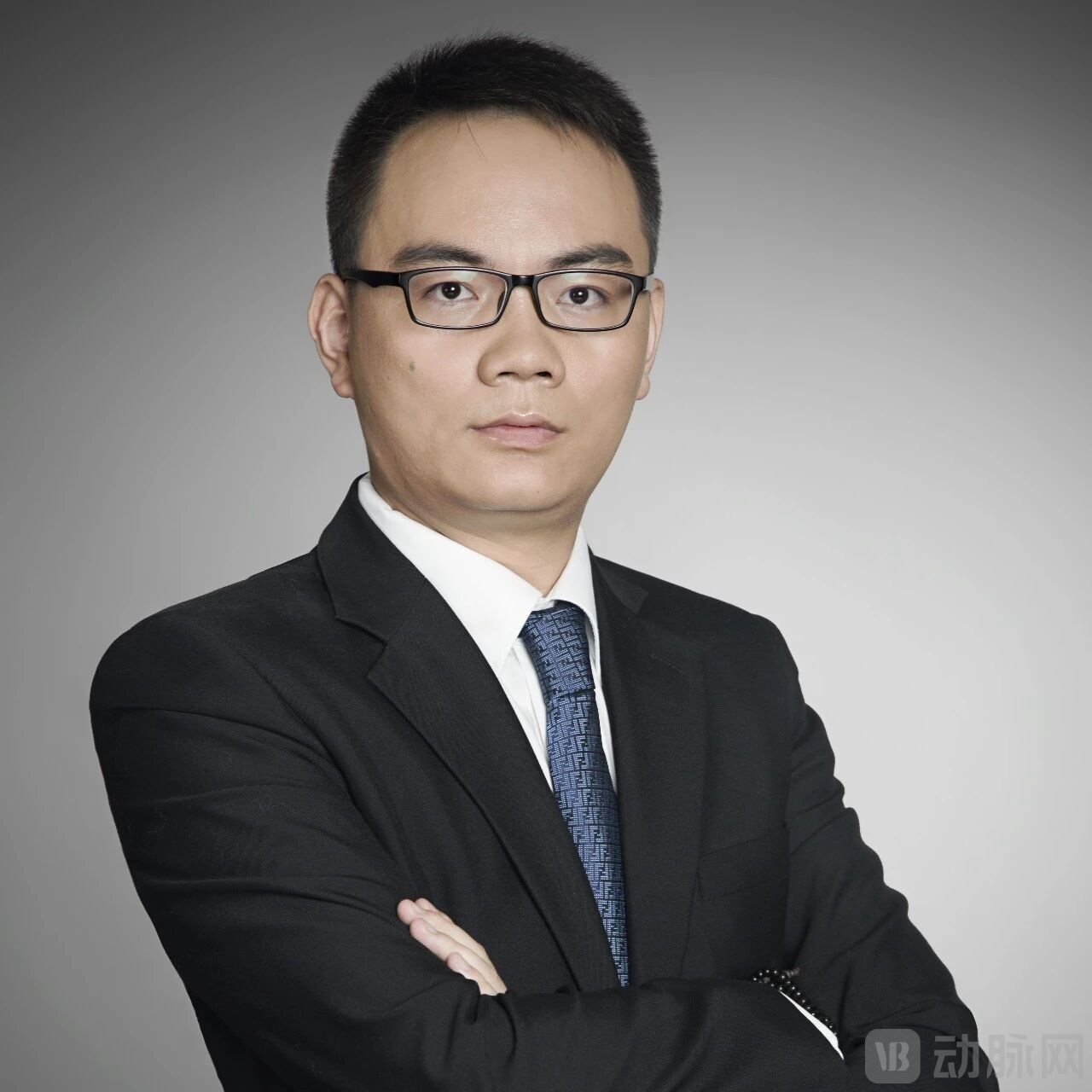
Founding Partner and CEO of Yijia Capital
Dual Bachelor’s Degrees in Management and Literature from Nankai University
Former Executive President of Tianheng Medical Group, Chief Strategy and Capital Operations Officer of Tongrentang Health, Head of Healthcare at Haneng Investment Group, Deputy General Manager of Zhejiang Starry Pharmaceutical Co., Ltd., Investment Director at Hejun Capital, and Senior Auditor at KPMG
Brain Bro: Hello, Mr. Liu. Welcome to Brain Friends Circle. First, could you please introduce your professional background and career experience?
Liu Pengcheng:I was born in Xinjiang and am a true “third-generation Xinjiang resident.” My paternal grandparents and maternal grandparents were all among the first generation of builders who responded to the national call in the 1950s by joining the Xinjiang Production and Construction Corps to reclaim wasteland in Xinjiang. With their youth and sweat, they laid the foundation for the development of northwest China, standing as the most unassuming pioneers of that era.Perhaps it is precisely this family background that has naturally instilled in my character a resilience marked by an unyielding spirit in the face of hardship and a courage to pioneer.During the college entrance examination years, a slogan circulated in our school: “Break out of ‘Xin-Xi-Lan’,” referring to Xinjiang, Xi’an, and Lanzhou. It embodied a shared obsession among students of our generation: to leave the vast Northwest behind and explore the wider world.
Later, I was admitted to Nankai University as I had hoped, traveling from Xinjiang to Tianjin and gaining a broader perspective of the world.Nankai University’s motto, “Dedication to Public Spirit and Competence, Constant Renewal,” has profoundly shaped the character of its alumni: pragmatic, understated, and uninterested in hollow fame.After graduation, my first job was as an auditor at KPMG. The intense workload at the Big Four accounting firms is well known; several years of such high-pressure experience are sufficient to forge a solid professional foundation and provide systematic training in technical expertise. At the time, there was a shortage of professionals skilled in financial due diligence within the VC/PE investment sector, leading many firms to preferentially recruit from the Big Four. It was through this circumstance that I inadvertently entered the primary market investment industry.
I joined Hejun Capital, where I initially focused on the consumer sector before participating in the establishment of the healthcare team, becoming its first employee.Under the guidance of Mr. Li Wenming, we invested in very few projects during the first one or two years, focusing instead on “training and target practice.” We delved deeply into multiple sectors, laying a solid foundation of both capability and mindset to enhance the accuracy of our future investments. After leaving Hejun Consulting, I joined a publicly listed company as Vice President, overseeing investment, mergers and acquisitions, and securities operations. Later, when Haneng Investment Group was preparing to establish its healthcare division, I joined the team.Looking back on this journey, I am deeply grateful for my experiences at Hejun and Hanneng, which respectively built my professional capabilities, philosophy, and foundational skills in the fields of investment and investment banking.It has also consolidated the work style guided by Nankai University’s spirit of “Public Spirit, Ability, and Innovation.”
When it comes to personality, I am actually quite introverted. I enjoy spending long periods alone and focusing intently on a single task. I only bring out my “extroverted” side when necessary. Due to a severe alcohol allergy, I cannot drink at all. As a result, I rarely attend social gatherings involving alcohol. It puts me in an awkward position: if I go and sit down, not drinking makes me appear aloof or pretentious, while even a small amount of alcohol causes an immediate adverse reaction, which is extremely uncomfortable. Therefore, I have relied on my professional expertise for my livelihood over the years. I pursue many opportunities with the mindset that “gaining them is my fortune, losing them is my fate.”It is precisely this kind of personality that has led me to work across foreign enterprises, private companies, buy-side and sell-side firms, as well as in both primary and secondary markets. The books I’ve read, the paths I’ve traveled, and the pitfalls I’ve encountered have all accelerated my growth.Sometimes, I find it hard to believe myself; the so-called twists and turns of life can indeed be quite miraculous.

Nao Ge: You have now founded Yijia Capital. What is the company’s primary positioning, and what are its main business activities?
Liu Pengcheng:Yijia Capital: “Yi” is derived from the Ili River, which flows deep in my memories as I was born in Xinjiang; “Jia” comes from the Jialing River, where my ancestors have lived for generations. These two river systems converge to form today’s Yijia Capital.As stated in the Tao Te Ching: “Water, as a substance, is both the softest and the hardest; it benefits all things without contention.”This resilience and inclusiveness have always been the foundational values I uphold.
Yijia’s positioning is to serve as an external, strategic-level CFO for frontier medical technology enterprises.The mature application of innovative technologies requires not only capital injection, but also long-term strategic partnership and financial stewardship. Leveraging our professional insights and comprehensive service capabilities, we empower partner companies to build sustainable, long-term value.
Specifically, this is primarily reflected in four key business areas: investment banking services for healthcare technology and innovation enterprises, market capitalization management and M&A advisory services for listed companies, strategic consulting and IPO advisory services, and corporate and government public affairs services.These four business pillars are interconnected and mutually reinforcing, extending from traditional finance to professional service empowerment and industrial resource enablement. In alignment with the natural progression of industry development, we serve as a long-term companion to enterprises—particularly their founders—throughout every stage of corporate growth. We are neither a typical investment bank, nor a traditional consulting firm, nor a so-called investment/incubation institution. Instead, we leverage diverse tools tailored to each stage of enterprise development to provide strategic clarity and resources for the growth of both companies and their founders. Thus, we function more akin to an external “C-level” financial expert.
In our collaborations with enterprises, while we may not delve as deeply into technology as founders do, we have accumulated substantial breadth in our understanding of the industry.We have witnessed countless companies rise from obscurity to the pinnacle of their industries, as well as seen former stars plummet to rock bottom. It is precisely because we have seen so much that we have learned to approach our work with greater reverence and caution. Therefore, we never spread ourselves too thin; at each stage, we focus exclusively on a specific niche sector. For instance, in the early days of AI-powered medical imaging, we thoroughly mapped out nearly the entire industry before ultimately serving its leading enterprises. When it came to surgical robots, we systematically studied various procedures, technologies, and patents, and engaged with the vast majority of players in this space before truly developing a keen “feel” for the market.
Brain Bro: What was the catalyst that made you determined to start your own business, and what are your expectations for Yijia Capital in the future?
Liu Pengcheng: At my core, I am someone who deeply values professionalism, advocating for communication and problem-solving through a professional lens, which gives me a sense of stability and fulfillment.In my view, given this mode of operation and prevailing practices, engaging third-party institutions to deliver specialized services represents the most suitable approach. Particularly in the current market environment, companies urgently require competent and well-suited Chief Financial Officers (CFOs) to facilitate technology commercialization and asset integration. A truly outstanding CFO must be capable of addressing practical challenges, with a core focus on cash flow, resources, and strategy.
Our decision to launch a startup stems from our aspiration to systematically integrate these elements into a comprehensive strategic framework, providing long-term services to companies that are already or have the potential to become industry leaders in niche sectors we favor. This is an endeavor worthy of sustained commitment.I prefer to play the role of a “sniper” in the industry, not out of an obsession with building a large-scale enterprise, but rather to delve deeply and thoroughly into what I am passionate about. Only by staying in the industry long enough and carefully observing a sufficient number of companies can one truly understand market cycles and accurately judge which founders are more likely to succeed and deliver results.
Having navigated the corporate world for so many years, I have led my team through numerous “zero-to-one” initiatives and know all too well what it means to endure the grind.This perseverance is not blind persistence, but stems from a thorough self-awareness—clearly recognizing where potential issues may arise, whether they can be controlled, and understanding what one can and cannot do. In my view, this point is crucial: only through extensive experience can individuals gain clear self-awareness and thus discern what to pursue and what to avoid. It is precisely for this reason that our team, while deeply committed to the healthcare sector, rarely ventures beyond its boundaries.
I believe that for a capital firm to ultimately succeed, it does not need to invest in a large number of projects; rather, it suffices to cultivate deep expertise around a select few.We do not chase rankings; instead, we aim to accompany a select few companies in niche sectors as they grow into industry leaders. Whether partnering with them from their inception or joining forces midway, simply standing by their side throughout the journey is reward enough. I believe in letting professionals focus on what they do best, and ultimately, our team will receive the commensurate value in return. This path may lack fanfare, but to me, it is precisely the one most worth pursuing.

Brother Nao: Having worked in the financial sector for so many years, how do you currently view and understand investment?
Liu Pengcheng:To be honest, Mr. Wang Mingfu, the founder of Hejun Consulting, had already thoroughly dissected this proposition in the early years. At that time, he explained to us how to understand strategy and investment, with the core viewpoint being:Strategy is not about engaging in financial activities for their own sake; rather, it requires deep integration into an enterprise’s organizational planning and core resources to systematically address all challenges it faces, ultimately translating into cash flow.A company’s core value lies in its cash flow. No matter how impressive a company appears or how high its valuation may be, shareholder value is untenable without positive cash flow. Therefore, the fundamental responsibility of a CFO is to establish a closed-loop cash flow system, starting from the source and integrating strategy, business operations, and finance.
My personal perspective is: Industry as the foundation, finance as the lifeline.In medicine, pulses are categorized into venous and arterial, representing stillness and motion, yin and yang. From a financial perspective, whether in investment or investment banking, the essence of our work is to “take the pulse” of industries.
Therefore, investment, investment banking, and consulting are inextricably linked, serving as an external strategic CFO for enterprises.The core consists of two things:Credit Plus and Cash Flow Management leverage professional services to amplify one’s own creditworthiness, thereby continuously adding value.This is Yijia CapitalDirection to Uphold: Commit to building trust and credibility, with the core aim of ensuring that partners are neither disappointed nor disadvantaged.
Brain Bro: When evaluating potential partner teams and projects, could you share your approach and methodology?
Liu Pengcheng:In the field of investment, risk is unavoidable, inherently involving significant uncertainty in professional judgment. It is quite possible that after investing in a company, it will show no noticeable improvement for an extended period. Beyond evaluating a company from dimensions such as its industry sector and technological products, our core focus lies in understanding the founding team—particularly the founder as the primary leader—and the underlying team culture. Often, such judgments rely on sixth sense or intuition. This is especially true across different stages of corporate development, particularly in the healthcare industry:Technology is merely the stepping stone, clinical registration is the threshold, and commercialization capability is the validation; yet at its core lies the founder’s cognition and vision.including the following aspects:
1. The courage and ability to engage in self-reform and self-criticism.For instance, when reflecting on specific behaviors, we have observed that some founding teams, when encountering difficulties, will say, “My capabilities are limited, and I made mistakes.” However, you will never hear them earnestly share with partners and their team exactly which specific actions were erroneous. It is precisely for this reason that they remain unable to courageously confront reality.
2. Confidence and methods in managing team members.This is the art of management. It requires the boldness to engage in self-reflection, pursue improvement, and tolerate others’ shortcomings; the wisdom to tailor approaches to individuals and leverage their strengths; an unwavering belief in the company’s mission and vision; and, above all, the ability to weigh pros and cons, screen and refine talent, and unite the team throughout the company’s development. Founders who embody these qualities are rare, so encountering one is truly a stroke of luck.
3. The ability to clearly articulate an enterprise’s core competencies and confidently present them to external audiences through effective communication.For most innovative enterprises, financing and public relations capabilities are critical, as the industrialization of innovative technologies often requires trading time for space. These companies either inherently possess such temperament and capabilities or know how to leverage management teams or third-party professional agencies that do.
Overall, the growth trajectory of an innovative enterprise is often wave-like.Initially, the concept exploded in popularity, attracting a massive influx of capital. Subsequently, skepticism emerged in the capital markets, plunging companies into a trough. Amidst uncertainty and consolidation, a large number of enterprises failed. Later, driven by supportive policies or breakthrough technologies within the field, the long tail was weeded out, allowing the surviving companies to gradually grow and thrive. Therefore, our role is largely one of patience and companionship, empowering our partner companies with professionalism and expertise. We believe that true value is often cultivated over time.
Therefore, we do not take on projects lightly; instead, we devote considerable time to project screening. However, once a project is selected, we commit ourselves fully to it.We firmly believe that the companies we partner with will become industry leaders in their respective niches. For an investment firm, this entails significant opportunity costs. Therefore, I consistently emphasize the importance of “selecting the right people.” On top of thorough evaluations of technology and products, it is essential to choose teams whose values align with ours, who share a long-term orientation, and with whom communication flows smoothly, so that we can walk together on this journey.
Of course, disagreements between entrepreneurs and investors on certain matters or business directions are inevitable during the course of collaboration. Whenever this occurs, I always emphasize two key points to my team: First, maintain a professional attitude. It is crucial to remain neutral and professional, ensuring that neither the company nor the investors perceive any bias. Second, adhere to a fact-based approach. We are committed to acting based on facts and providing recommendations grounded in reality.Our core values can be summarized in eight Chinese characters: “Cheng Ren Da Ji, Shui Dao Qu Cheng.”Uphold long-termism, engage only in shared endeavors with like-minded individuals, and discover one’s authentic self along the way. Not driven solely by profit, not merely surviving in the world, and never to be deceived by rigid formulas—this is precisely the set of values and methodology we consistently practice.