

China's First AI-Powered Rational Medication Large Model 'Qingzhi' Officially Launched
Recently, the 2026 CMDC 16th China Healthcare Data Conference and the Global Healthcare Technology BEST100 International Selection Forum were grandly held. The forum showcased innovative achievements in global healthcare technology and built a bridge for innovative cooperation in the global healthcare industry.
Dou Dejing, Chief Scientist at Beidian Digital Intelligence and Distinguished Professor at Fudan University, attended the event as an expert representative in the field of AI-empowered industrial practices. He delivered a speech sharing the application potential and practical achievements of artificial intelligence in areas such as primary healthcare and smart pharmacy.
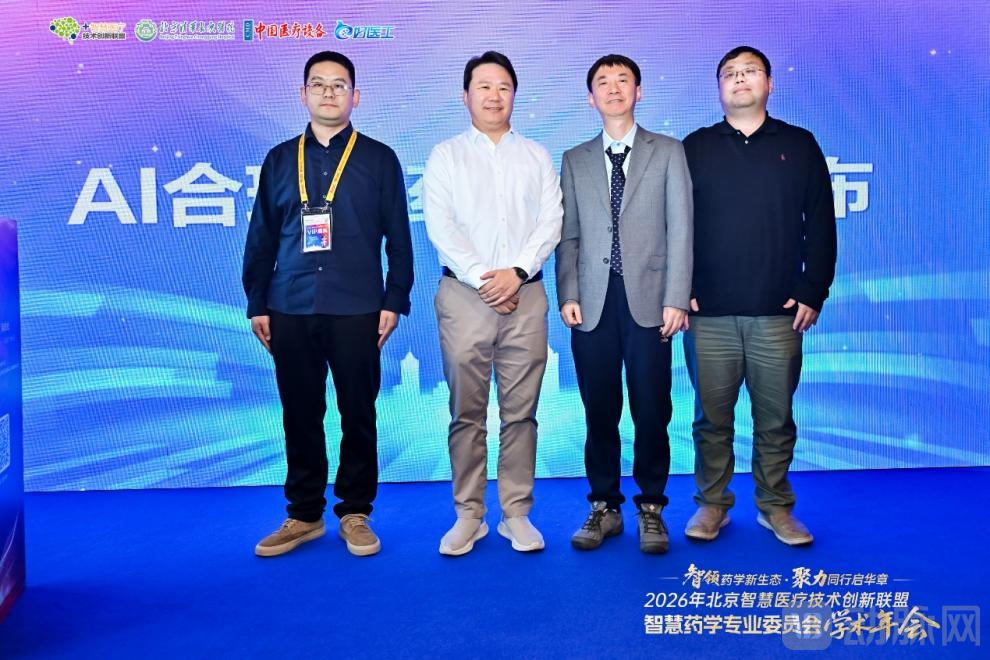
At the forum, Beidian Digital Intelligence and Beijing Tsinghua Changgung Hospital jointly unveiled China’s first large AI model for rational drug use—the Qingzhi AI Rational Drug Use Large Model. Nie Guangmeng, Assistant to the President of Beijing Tsinghua Changgung Hospital; Ji Zhaoshuai, Deputy Director of the Department of Pharmacy; Dou Dejing, Chief Scientist at Beidian Digital Intelligence; and Wu Yue, Head of Industrial Ecosystem at Beidian Digital Intelligence, all attended the launch ceremony.
With the continuous advancement of modern medicine, clinical medication scenarios are becoming increasingly complex, and patient demands for personalized diagnosis and treatment are rising. Traditional pharmaceutical review models can no longer meet the practical requirements of high-quality healthcare services. Fixed, logic-code-based prescription review models are struggling to address diverse medication needs and complex clinical conditions, creating an urgent need for more intelligent and comprehensive technical solutions to achieve breakthroughs.
Qingzhi AI Rational Drug Use Large Model breaks through the limitations of traditional rule-based prescription review systems. Built on the “Pharmaceutical Trusted Space” jointly established by Beidian Digital Intelligence and Beijing Tsinghua Changgung Hospital as its “data foundation,” and driven by the dual engines of “large model technology + intelligent agents,” it constructs an intelligent prescription review pipeline featuring “retrieval–reasoning–generation–traceability.” By integrating prescription data with the latest medical knowledge, the system delivers precise responses to highly complex scenarios such as polypharmacy and multimorbidity. It provides safe, efficient, evidence-based intelligent prescription review recommendations and personalized dosing regimens, creating a precise and reliable “Pharmaceutical Brain” for pharmacists, physicians, and patients alike.
“Qingzhi·AI Rational Drug Use Large Model” derives its leadership from its unique “Smart Triangle” technical architecture, which transforms vast amounts of medical knowledge into actionable decision-making intelligence:
1. Trusted Pharmaceutical Data Space (Data Foundation): As a “National Drug Clinical Trial Institution” approved by the National Medical Products Administration, Beijing Tsinghua Changgung Hospital has obtained qualifications to conduct drug clinical trials in 30 specialties, covering multiple key disease areas including oncology, cardiovascular diseases, neurology, endocrinology, and hepatobiliary and pancreatic disorders. It deeply integrates heterogeneous clinical data such as patient medical records, laboratory test results, and surgical history, and incorporates drug package inserts, pharmacopoeias, clinical guidelines, and expert consensus statements. This provides a secure and trustworthy “data foundation” for model training, ensuring that every recommendation is “evidence-based and guideline-compliant.”
2. Large Models + Agents (Dual-Engine Drive): Built upon a "data foundation," this approach dynamically injects private-domain knowledge and integrates technologies such as Retrieval-Augmented Generation (RAG) and instruction fine-tuning to drive the fused innovation of "large model technology + agents." This constructs a precise and reliable pharmacy-specific large language model. The model can accurately understand free-text clinical data, such as medical records and progress notes, perform deep reasoning, accurately uncover implicit associations, scientifically identify drug incompatibilities, and assess the rationality of medication administration. Ultimately, it generates evidence-based recommendations and personalized treatment plans that are reliable, interpretable, and balance high accuracy with strong generalizability.
Currently, the Qingzhi AI Rational Drug Use Large Model has taken the lead in clinical application within hospitals, marking a paradigm shift in pharmaceutical prescription review from mechanical “rule-based judgment” to profound “cognitive reasoning.” This advancement will drive the transition of medication practices from a “one-size-fits-all” approach to personalized regimens tailored to individual patients, steering pharmaceutical services from experience-driven practices toward a new era of data intelligence.
“The Qingzhi AI Rational Drug Use Large Model” has enabled a shift from traditional “mechanical comparison” to “intelligent reasoning,” overcoming the efficiency bottlenecks of manual review through “clinical thinking.” It assists pharmacists in efficient prescription review, empowers physicians with precise decision-making, and guides patients in safe medication use, thereby creating a comprehensive “Pharmaceutical Brain” by leveraging “High Compatibility, High Security, and High Compliance"Three Major Dimensions, Reshaping the Baseline of Medical Safety:"
1. High Compatibility: Breaking Through "Clinical Blind Spots".Qingzhi AI Rational Drug Use Large Model leverages robust cognitive reasoning capabilities to adapt to complex scenarios such as polypharmacy and special populations, effectively addressing clinical blind spots. For high-risk groups—including patients with severe preeclampsia, elderly individuals with chronic diseases, and post-renal transplant recipients—the model precisely identifies contraindications in drug combinations and formulates safe regimens under highly complex conditions. It manages high-complexity clinical scenarios involving concurrent use of multiple medications and comorbidities, which traditional systems cannot handle, thereby accurately identifying potential medication risks.
2. High Safety: Achieving “Personalized Formulas for Each Individual”Unlike traditional audits that focus solely on individual prescriptions—often leading to safety risks such as overlooked contraindications and inappropriate dosing—the Qingzhi AI Rational Medication Large Model achieves comprehensive, intelligent decision-making by integrating multidimensional information, including patient diagnoses, physiological indicators, and drug characteristics. This ensures high safety and precision in medication use. Tailored to personalized treatment needs, the model elevates medication safety by shifting from isolated prescription reviews to a holistic assessment of patients’ functional indicators, diagnostic results, and medication instructions, thereby automatically avoiding contraindications and precisely adjusting dosages. From real-time interception of inappropriate prescriptions to proactive alerts for expired medications, it provides all-around protection for patient safety.
3. HighCompliance: Adhere to the "policy red lines"Qingzhi AI Rational Drug Use Large Model has established a rigorous proactive compliance system, achieving pre-screening and real-time interception of risks to fortify the baseline of medical safety. The model can automatically conduct pre-screening for health insurance violations and medication hazards, covering the tiered management requirements for antibiotics and antineoplastic drugs. By transforming post-event supervision into pre-event risk prevention, it effectively prevents medication errors and medical disputes, thereby safeguarding medical safety.
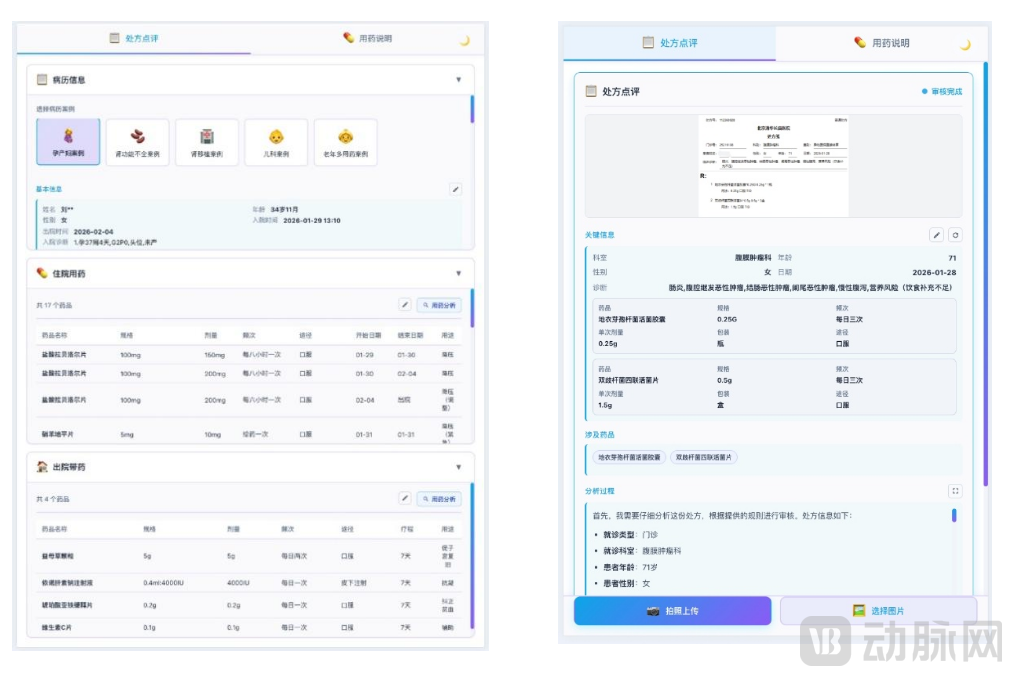
The successful launch and practical implementation of the “Qingzhi AI Rational Drug Use Large Model” has validated the practical capabilities of AI technology in the specialized field of pharmacy. Furthermore, by demonstrating exceptional performance in high-complexity scenario reasoning, multi-dimensional safety assessment, and proactive compliance management, it has broken down the “walls” of hospitals’ reliance solely on expert experience, transforming such expertise into replicable and scalable digital assets.
The Chief Scientist of Beidian Digital Intelligence stated, “In the future, we will drive the expansion of ‘Qingzhi’ into lower-tier markets. Whether in rural clinics in remote areas or in home-based scenarios for chronic disease management, the ‘Pharmaceutical Brain’ will be readily accessible.” This vision is helping China’s healthcare services advance into a new era characterized by intelligence, precision, and inclusivity, ensuring that every individual can benefit from the precise care enabled by data intelligence.