

Zhifu Traditional Chinese Medicine Inheritance and Innovation: Triple Play of AI-Driven Clinical Enhancement, Digital Twin-Based Expert Experience Transmission, and Intelligent Research Transformation
[Editor’s Note] This article is from China Traditional Chinese Medicine News, and VCBeat has been authorized to republish it.
From empowering clinical medical services to enhance quality and efficiency, to leveraging digital twins for the dynamic inheritance of renowned physicians’ expertise, and further to AI-driven breakthroughs in research paradigms, traditional Chinese medicine is accelerating its transition from experience-based practice to wisdom-driven innovation—
On March 17, a symposium themed “Artificial Intelligence + Digital Inheritance of the Clinical Experience of Renowned Traditional Chinese Medicine (TCM) Experts” was held in Beijing. The event was hosted by China Traditional Chinese Medicine News Co., Ltd., organized by Chuanshen Suwen (Wuhan) Digital Intelligence Technology Co., Ltd., and co-organized by Beijing Mingyi Online Intelligent Technology Co., Ltd. Experts and scholars from TCM digitalization research institutions, multiple Grade A tertiary TCM medical facilities, and enterprises specializing in TCM digital-intelligence research discussed the inheritance of renowned physicians’ expertise from perspectives including technical pathways, clinical applications, and ethical frameworks. They reached a core consensus that “digital twins represent a key pathway for transforming the wisdom of renowned TCM practitioners from static archives into living inheritance,” thereby providing clear technical anchors and implementation routes to advance “AI + TCM” from policy discussion to industry practice.
Boosting the Efficiency of Traditional Chinese Medicine Diagnosis and Treatment Services
At the symposium, participants demonstrated from multiple dimensions—ranging from the restructuring of diagnostic and treatment workflows, support for precision diagnosis, breakthroughs in specialized diseases, and integrated physical and mental care, to the optimization of end-to-end services—how artificial intelligence (AI) technology has brought transformative improvements to Traditional Chinese Medicine (TCM) medical services. By leveraging digital tools, the clinical expertise of renowned veteran TCM practitioners is being converted into practical, scalable clinical service capabilities. This advancement not only enhances diagnostic and treatment efficiency, optimizes patient experience, and ensures diagnostic accuracy, but also injects new vitality into traditional TCM in the era of intelligence.
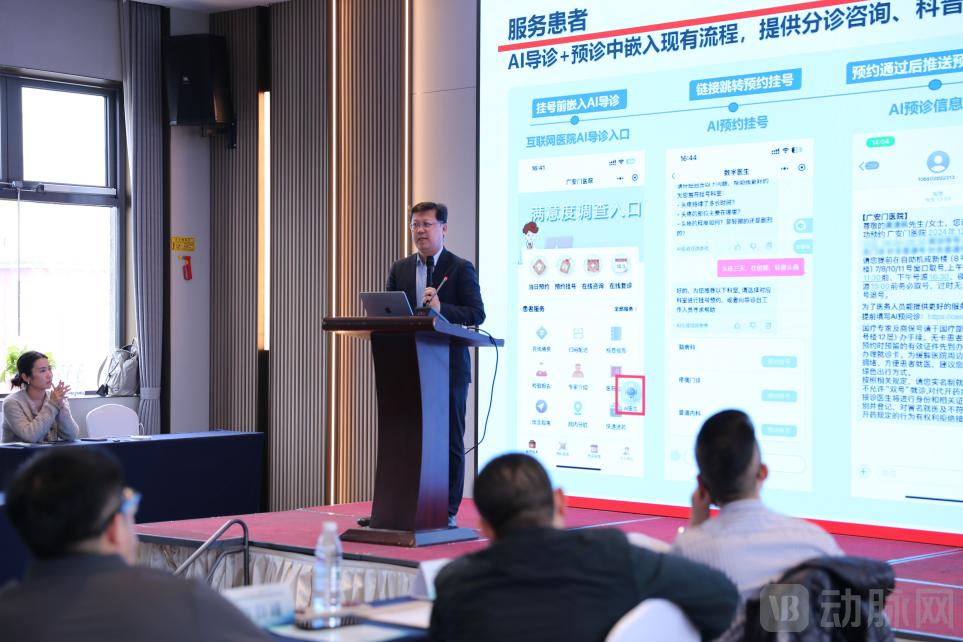
Liu Zhen, Party Secretary of Guang’anmen Hospital, China Academy of Chinese Medical Sciences, introduces the “Guangyi Qizhi” Large Model 2.0.
At the heart of this AI-driven transformation of traditional Chinese medicine (TCM) medical services is the liberation of physicians from tedious, repetitive tasks, the breaking down of temporal and spatial barriers to access high-quality TCM resources, and the revitalization of vast knowledge dormant in ancient classics to serve frontline clinical practice. Liu Zhen, Party Secretary of Guang’anmen Hospital of the China Academy of Chinese Medical Sciences, provided the most intuitive proof with a set of data: The “Guangyi Qizhi” Large Model 2.0 transforms the holistic perspective of inspection, auscultation and olfaction, inquiry, and pulse-taking into a computable and deducible intelligent framework, enabling AI to deeply understand the intrinsic logic among “syndrome patterns–therapeutic principles–formulas and medicinals.” Physicians’ time spent on medical record documentation has been reduced by 75%, with average record generation time shortened to 2–3 seconds; the accuracy of recognizing the four diagnostic information elements in TCM has increased by 30%, and the accuracy of TCM syndrome differentiation and decision-making has improved by 20%. This leap in efficiency stems from the hospital’s more than decade-long accumulation and advancement in informatization construction.
As one of only three traditional Chinese medicine (TCM) hospitals nationwide to achieve Level 6 in the Functional Application Grading Evaluation of Electronic Medical Record Systems, Guang’anmen Hospital of the China Academy of Chinese Medical Sciences began exploring TCM-assisted diagnosis and treatment systems in 2015. Today, built upon a foundation of millions of medical records and over ten million clinical data points, the locally deployed “Guangyi Qizhi” large language model has established a full-stack TCM AI solution featuring a three-tier architecture encompassing the data layer, model layer, and agent layer.
The practices at Guang’anmen Hospital of the China Academy of Chinese Medical Sciences demonstrate how AI can optimize diagnostic and treatment processes. Meanwhile, the “Yiyuan” large language model, developed by the Institute of Information on Traditional Chinese Medicine of the China Academy of Chinese Medical Sciences, reveals how AI can truly bring traditional Chinese medicine (TCM) knowledge bases to life. As an integrated institution combining library and research functions, the Institute enjoys unique advantages: its collection accounts for more than 60% of all extant ancient TCM texts, including over 3,000 digitized ancient books, 880,000 images, more than 10 million characters of text, and 500,000 medical case records from both ancient and modern times. These vast, high-quality knowledge resources form the foundational support for the “Yiyuan” large language model.
Director Li Haiyan shared an interesting detail: she once queried both “Yiyuan” and another general-purpose large language model about the origin of the traditional Chinese medicine formula “Yupingfeng San.” “Yiyuan” stated that it originated from a medical text of the Southern Song Dynasty, while the latter attributed it to the Yuan Dynasty. Verification by experts in ancient medical texts confirmed that “Yiyuan’s” answer was more accurate, predating the other by over 100 years. “This benefits from the precision of our underlying data knowledge,” said Li Haiyan.
In the specialized field of orthopedics and traumatology, Feng Minshan, Chief Physician at Wangjing Hospital of the China Academy of Chinese Medical Sciences, shared a series of research achievements on the digitalization and intelligentization of traditional Chinese medicine (TCM) diagnosis and treatment for cervical spondylosis. Relying on the profound expertise accumulated by Academician Zhu Liguo’s team in the prevention and treatment of cervical spondylosis, the project integrates real-world clinical data from outpatient and inpatient medical records as well as handwritten case notes. By employing data mining techniques to construct a structured knowledge database, it reveals the underlying patterns of syndrome differentiation and treatment employed by renowned senior TCM practitioners.
Building on this foundation, the hospital’s team introduced large language model (LLM) technology and, through domain knowledge injection and supervised fine-tuning, developed an intelligent clinical decision support platform for cervical spondylosis based on a “One Center, Three Systems” architecture. This platform encompasses three major systems: TCM-assisted diagnosis and treatment, patient health management, and manual therapy training management, achieving end-to-end coverage from diagnostic decision support to post-consultation follow-up, rehabilitation guidance, and remote training in manual therapy skills. Currently, the platform has been piloted in multiple healthcare institutions, charting a viable path for the digital representation, intelligent inheritance, and scalable application of the orthopedic and traumatology expertise of renowned senior TCM practitioners.
At Dongfang Hospital of Beijing University of Chinese Medicine, AI applications span multiple domains, from the diagnosis and treatment of pulmonary nodules to emotional health management, demonstrating the diverse potential of AI-enabled specialized care. The radiology team at the hospital has developed a full-process auxiliary diagnostic and therapeutic system for pulmonary nodules, upgrading the approach from simple “screening” to comprehensive lifecycle “management.” While traditional manual image interpretation is prone to missed detections, AI assistance significantly improves both detection rates and reading efficiency. Meanwhile, the automated analysis system can identify typical malignant features and provide a probability percentage of benign versus malignant outcomes, while the intelligent follow-up system automatically compares changes in parameters such as volume and density across patients’ serial images.
Zhao Haibin, Vice President of the Dongfang Hospital of Beijing University of Chinese Medicine, stated that multiple CT scanners across the hospital’s three campuses have been integrated into this platform. Since 2024, it has processed more than 74,000 cases, with a positive diagnosis rate exceeding 80%. This system has transformed pulmonary nodule management from mere “detection” to “proactive identification and tracking,” providing a precise basis for subsequent treatment.
At Beijing Traditional Chinese Medicine Hospital, Capital Medical University, a health-focused digital intelligence avatar named “Kuan Xiaoming” is reshaping the patient experience from the user end. Wang Hongbing, Deputy Director of the hospital, introduced that this AI medical assistant is patient-centric, integrating the entire process before, during, and after consultation, thereby shifting services from “patients actively searching for information” to “the system proactively pushing information.” After appointment registration, the system pushes traffic suggestions and nearby parking information; during ticket collection, it supports online retrieval of medical insurance tickets; and at check-in, patients can check in with one click via geofencing, while the system proactively pushes queue waiting information.
What benefits patients the most is the precise push notifications during the traditional Chinese medicine (TCM) dispensing process. TCM formula dispensing is time-consuming; in the past, patients were only vaguely informed to “come back in two to three hours.” Now, “Kuan Xiaoming” provides precise updates at every stage—from prescription submission and medication preparation to completion—allowing patients to receive real-time reminders. “Precise push notifications can significantly reduce patients’ waiting time,” said Wang Hongbing.
Empowering the "Living" Inheritance of Renowned Physicians' Expertise
The academic thoughts and clinical experience of renowned veteran practitioners of Traditional Chinese Medicine (TCM) constitute the core resources for the inheritance and development of TCM. However, systematically, structurally, and intelligently transmitting this valuable tacit knowledge has long been a significant challenge facing the industry. Today, the rapid advancement of artificial intelligence technologies, particularly the emergence of large language models, digital twins, and knowledge graphs, offers novel approaches to addressing this complex issue.
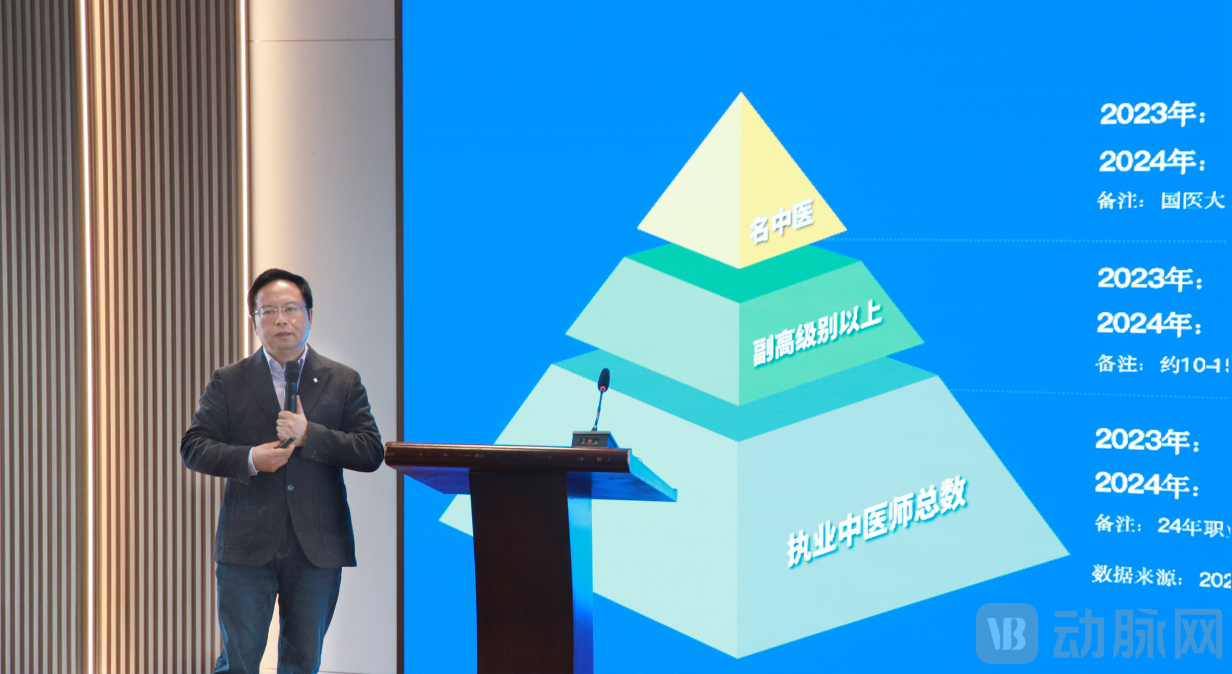
He Enpei, Chairman of Chuanshen Suwen (Wuhan) Digital Intelligence Technology Co., Ltd., introduces Chuanshen Suwen’s “Famous Doctor Twin.”
“The clinical experience of renowned veteran TCM practitioners is a treasure of traditional Chinese medicine. However, in the traditional apprenticeship model, masters have limited energy and mentor only a few disciples, making it difficult for grassroots physicians to learn top-tier expertise firsthand, resulting in a highly uneven distribution of high-quality TCM talent resources,” said He Enpei, Chairman of Transn Suwen (Wuhan) Digital Intelligence Technology Co., Ltd. “We focus on the living inheritance of the experiences of National Medical Masters and renowned veteran TCM practitioners by creating digital twins of these famous doctors, providing a replicable solution for the digital preservation and transmission of traditional Chinese medicine.”
He Enpei candidly stated that the greatest challenge in inheriting Traditional Chinese Medicine (TCM) lies not only in the scarcity of data but also in the lack of systematic medical records. The clinical intuition developed by renowned veteran TCM practitioners over decades is contextualized and dynamically generated; once detached from specific diagnostic and treatment scenarios, it retains only its skeletal framework, losing its essence. While traditional apprenticeship can approximate the thinking process, it operates like a “craft workshop,” making it difficult for a single master to benefit a broader audience throughout their lifetime. Chuan Shen Su Wen abandons the traditional “formula-memorization model” and employs progressive training techniques to “reproduce” the masters’ intellectual frameworks, allowing their modes of thinking to continue evolving in the digital world and achieving “digital twin” status.
He Enpei stated that the Chuanshen Suwen Famous Doctor Digital Twin Model possesses diagnostic and therapeutic reasoning capabilities akin to those of the renowned physicians themselves, primarily manifested in three aspects: First, its syndrome differentiation and treatment capability enables it to recognize tongue and pulse manifestations, summarize symptoms, and provide reference prescriptions along with drug dosages and corresponding efficacies based on diagnostic results; it can not only modify existing formulas but also generate new, symptom-specific prescriptions aligned with the physician’s clinical reasoning. Second, its proactive intelligent interaction capability allows it to automatically identify gaps in critical information and initiate questions to enhance diagnostic accuracy, while clearly expressing uncertainty when evidence is insufficient to mitigate the risk of misleading guidance. Third, its health assessment capability supports self-testing of multi-dimensional indicators such as tongue appearance, pulse conditions, and heart rate, as well as self-screening for systemic symptoms, thereby assisting users in self-identifying their health status, generating structured diagnostic reports, identifying potential health risks, and matching personalized wellness regimens.
“Traditional Chinese Medicine (TCM) is an indigenous traditional medical system of China, and our large language model is also an original technological achievement from China. This represents a ‘connection between roots.’ In the future, we hope to share the wisdom and essence of TCM with the world,” said He Enpei.
“I believe that digital twins essentially facilitate the inheritance of our clinical experience and academic perspectives in Traditional Chinese Medicine (TCM) at the level of intangible cultural heritage. The digital twin-enabled smart consultation room we have developed achieves multi-dimensional data acquisition through intelligent collection devices, consultation records, and holographic case files. Relying on a secure data interaction framework based on digital twin technology, it enables the collection and exchange of medical data from renowned TCM practitioners, facilitates intelligent remote diagnosis and treatment, and provides clinical decision support for physicians. This represents the core application of scenario-based implementation,” stated Pang Bo, Vice President of Xiyuan Hospital of the China Academy of Chinese Medical Sciences, during the discussion session.
According to the introduction, the Ye Tianshi Large Language Model for Assisted Diagnosis and Treatment of Blood Syndromes integrates core concepts extracted from Ye Tianshi’s theories on blood disorders—including diseases, etiology and pathogenesis, syndrome manifestations, tongue features, pulse conditions, and herbal formulas—along with their complex interrelationships, thereby forming the foundation for the model’s intelligent reasoning. Meanwhile, it visually illustrates the logical framework underlying Ye Tianshi’s pattern differentiation and treatment of blood syndromes.
Upon inputting core patient symptoms, tongue and pulse characteristics, and other relevant information, the large language model performs syndrome differentiation by simulating the clinical reasoning of renowned physicians, grounded in Ye Tianshi’s academic theories. Based on the differentiation results, the model intelligently recommends classic prescriptions or modified formulations that align with Ye Tianshi’s medication principles, while providing insights into the formulation rationale and interpretations of the core herbs’ efficacies to facilitate physicians’ understanding and reference.
“The future development of artificial intelligence and data models in traditional Chinese medicine (TCM) must begin with the calibration, correction, and precise dissemination of training data to clarify issues related to the attenuation and misrepresentation of TCM knowledge. This constitutes the core and foundation of the digital inheritance of TCM,” stated Pang Bo. Xiyuan Hospital will continue to optimize its digital twin intelligent consultation rooms, promote the digital inheritance of experiences from classical medical schools, and inject technological momentum into the development of TCM talent.
“Traditional apprenticeship models in Traditional Chinese Medicine (TCM) face challenges such as low transmission efficiency, difficulties in converting tacit knowledge, and an incomplete universal knowledge system. This is particularly evident in the diagnostic reasoning and clinical experience within specialized fields, where information attenuation is highly prone to occur.” Tang Mengying, a representative from the Eye Hospital of the China Academy of Chinese Medical Sciences, stated during the discussion session that cultivating high-level TCM talent is key to inheritance and innovation, while digital and intelligent research serves as the core pathway to overcome bottlenecks in specialized knowledge transmission.
According to reports, the Eye Hospital of the China Academy of Chinese Medical Sciences, leveraging the High-Level Traditional Chinese Medicine (TCM) Hospital Project and the 2026 Key Research Project of the Capital Health Development Scientific Research Special Fund, has undertaken specialized research focused on primary open-angle glaucoma. The team integrated multimodal clinical data from over 400 patients to establish a standardized disease-specific database. By employing intelligent technologies to organize medical records and form a structured knowledge system, and utilizing AI to mine diagnostic and treatment patterns and extract core prescriptions, they have developed an integrated, multimodal, disease-specific diagnosis and treatment model that combines diagnosis, visual field analysis, TCM syndrome differentiation, and treatment recommendation.
This achievement has bridged the gap between the traditional “oral instruction and personal mentoring” of renowned physicians’ expertise and its “digital inheritance,” objectifying and standardizing tacit diagnostic and therapeutic knowledge. It not only provides young physicians with an efficient learning platform but also offers scientific support for precise clinical diagnosis and treatment. “We are reconstructing the inheritance model of TCM specialties through scientific research methods. In the future, we will continue to iterate the model to establish a replicable and scalable system for inheriting TCM specialty expertise, thereby strengthening the foundational future of TCM inheritance through scientific and technological innovation,” said Tang Mengying.
Driving Innovation in Traditional Chinese Medicine to Break Through and Achieve Breakout Success
“Primary-level TCM services face pain points such as uneven resource distribution, fragmented diagnosis and treatment processes, and insufficient service capacity, while digital-intelligent research integration is the key to solving these problems.” Wang Qian introduced that Beijing Mingyi Online focuses on AI scientific research innovation, creates a future digital TCM clinic, and builds a full-chain TCM digital-intelligent service system.
Centered on the core framework of “Large Language Models + Skills + TCM Consultation Rooms,” this scenario integrates five key modules: AI Four-Examination Device, AI Agent, AI Micro-Clinic, AI Renowned Physician, and AI Cloud HIS. The AI Four-Examination Device intelligently collects four-diagnostic data—including tongue, facial complexion, and pulse characteristics—and generates constitution reports. The AI Agent enables full-cycle health management, medication guidance, and intelligent follow-up for patients. Leveraging digital twin technology of renowned physicians, the AI Renowned Physician module allows primary-care patients to access diagnostic and treatment services from national TCM masters without leaving home. The AI Cloud HIS facilitates integrated intelligent scheduling of clinical care, research, and management, establishing a closed-loop process encompassing “pre-consultation triage, precise diagnosis and treatment during consultation, and post-consultation rehabilitation management.”
“Future Digital TCM Clinics deeply integrate multiple digital-intelligence research achievements, enabling high-quality traditional Chinese medicine (TCM) resources to transcend geographical barriers and empower primary healthcare at scale through ‘algorithm-driven efficiency and decentralized data deployment,’ said Wang Qian. This model has completed scenario validation and will be gradually rolled out in primary care settings to build an inclusive, intelligent, and efficient ecosystem for future TCM services.”
“Driving the TCM industry to genuinely leverage AI technology and effectively digitize the inheritance of renowned physicians’ clinical experience is the core mission and original aspiration behind our initiative,” said Fan Jiping, Chief Expert at Mingyi Online Digital Intelligence Internet Hospital. How digital intelligence technologies can bring the expertise of esteemed senior TCM practitioners “to life and ensure its transmission” emerged as one of the central topics of this symposium.
Fan Jiping introduced that Chuanshen Suwen has successfully replicated the diagnostic and treatment expertise of National Masters of Traditional Chinese Medicine (TCM), achieving precise preservation of their academic experience through digital twin technology. Meanwhile, the Future Digital TCM Clinic, developed by Mingyi Online, has achieved breakthroughs in technology integration and practical application, with plans to commence operations in the near term. “These technologies can comprehensively preserve the academic expertise of top-tier experts, making it accessible and applicable for future generations, which holds milestone significance for the inheritance of TCM.”
While acknowledging the achievements, Fan Jiping also directly addressed the industry’s pain points. He pointed out that the current development of digital and intelligent Traditional Chinese Medicine (TCM) still faces challenges such as supportive policies, data sharing, and practical application implementation, with uneven progress among different stakeholders. However, as the capital region, Beijing’s concentrated display of exploratory achievements will undoubtedly serve as a model and drive the development of digital and intelligent TCM across China.
In the future, with the continuous iteration of technologies such as digital twins, large language models, and knowledge graphs, and with the collaborative efforts of more medical institutions and enterprises, the digital and intelligent inheritance of Traditional Chinese Medicine (TCM) will achieve higher-quality development, contributing greater strength to safeguarding public health and promoting the global reach of TCM.