

Photon counting CT battle royale

Siemens Healthineers
Integrated Healthcare Service Provider

Neusoft
Comprehensive Solution Provider for Clinical Diagnosis and Treatment

United Imaging
High-end Medical Device Developer
Two years ago, photon-counting CT was still unique, but this year it has filled the entire CMEF venue.
A total of five photon-counting CT devices were publicly displayed across the entire CMEF exhibition area, including Siemens Healthineers' NAEOTOM Alpha.Pro and NAEOTOM Alpha.Prime, Neusoft's NeuViz P10, United Imaging's uCT Ultima, and Vital Materials' VITA Genesis.
GE Healthcare also brought the Photonova Spectra under the deep silicon pathway, but it requires a confidentiality agreement to visit; Canon Medical's TSX-501R obtained FDA clearance in the United States as early as June 2025, yet it has not been premiered in the Chinese market so far.
With just over three months passed in 2026, Siemens Healthineers has already sold at least three NAEOTOM Alpha units in the Chinese market, with an average price of approximately 43.5 million RMB per unit, continuing the strong performance from last year.
The main changes this year compared to last year are twofold. First, the single-source NAEOTOM Alpha.Prime may obtain registration certification in the short term, for use in inpatient, outpatient, and emergency room examinations, opening up more hospital markets at a lower price and further impacting the traditional ultra-high-end CT market share.
Second, Siemens Healthineers announced that the production of two photon-counting CT models in China is expected to officially commence in the first half of this year. Amid fierce competition from domestic manufacturers, Siemens Healthineers' strategy has shifted from "prioritizing the supply of complete systems to the Chinese market" to "directly producing domestically-made complete systems," demonstrating a strong determination to reshape the competitive landscape of China's ultra-high-end CT market.
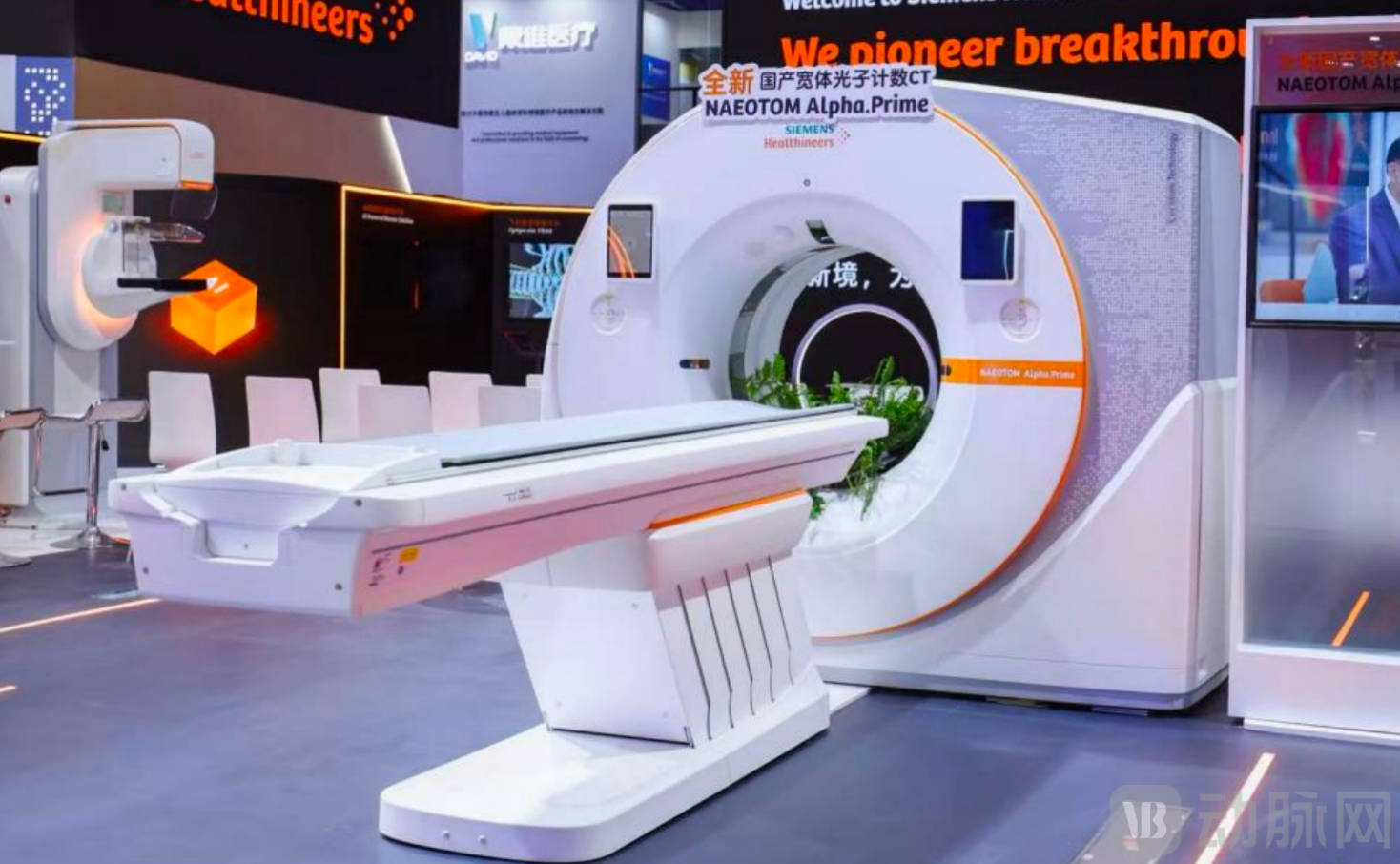
Siemens Healthineers New Product Single-Source NAEOTOM Alpha.Prime
Neusoft Medical's NeuViz P10 continues to take center stage at the exhibition, with an 8cm wide-body detector and a spatial resolution of 50 lp/cm, both of which are top-tier parameters in the photon-counting field. Additionally, Neusoft Medical has a relatively stable supply of semiconductor CZT from Redlen and is capable of achieving stable mass production after market validation.
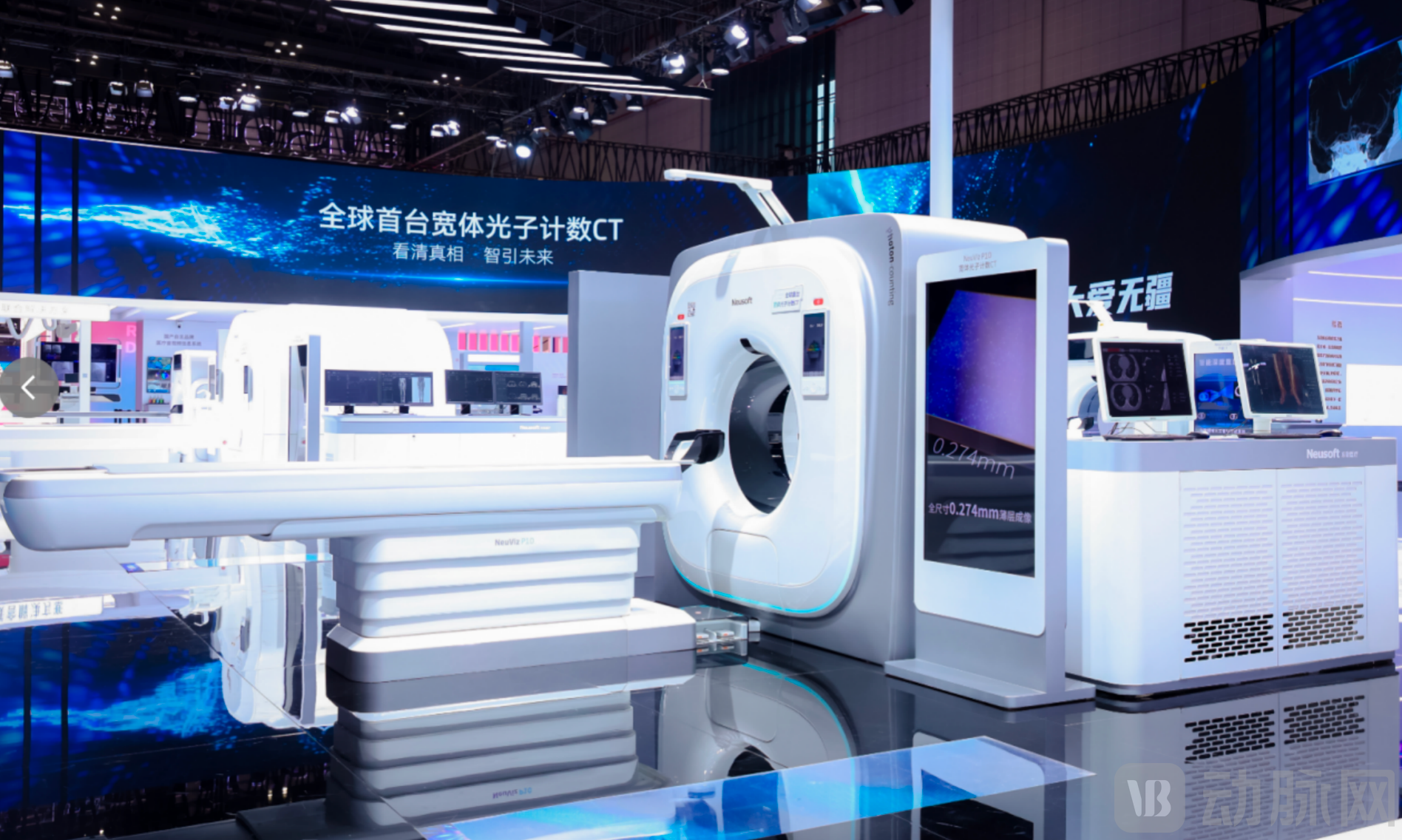
Neusoft Medical 8cm Wide-body Photon Counting CT NeuViz P10
United Imaging has showcased more imaging information from uCT Ultima at its booth this year, combined with unique rendering technology, which indeed elevates imaging and performance to a new level. In terms of commercialization, uCT Ultima has been installed and officially put into clinical use at West China Xiamen Hospital, Sichuan University, and Huaxi Xiamen Hospital. Regarding clinical validation, the on-site staff stated that more than 4,000 clinical scans have been completed in total.
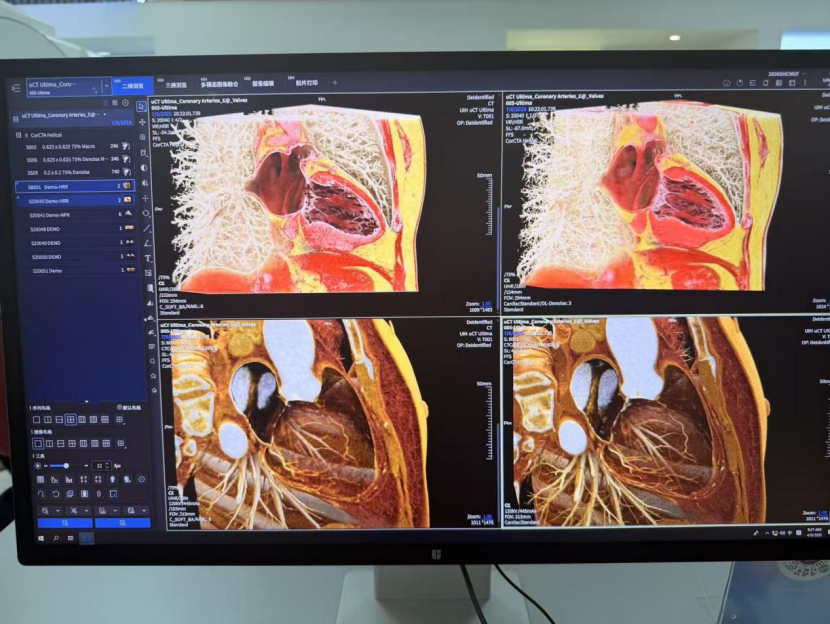
Comparison of Coronary Artery Scans Displayed at the United Imaging Healthcare Exhibition Area
Vital Materials' VITA Genesis was present at the booth, but not much equipment information was disclosed. Compared with other equipment manufacturers, Vital Materials' advantage lies in its parent company, Vital Group, which has a semiconductor background and over 30 years of R&D experience. It is currently the only enterprise in China capable of mass-producing CZT single crystals, and is expected to quickly gain market share through the cost advantage of core components once the equipment is approved next year.
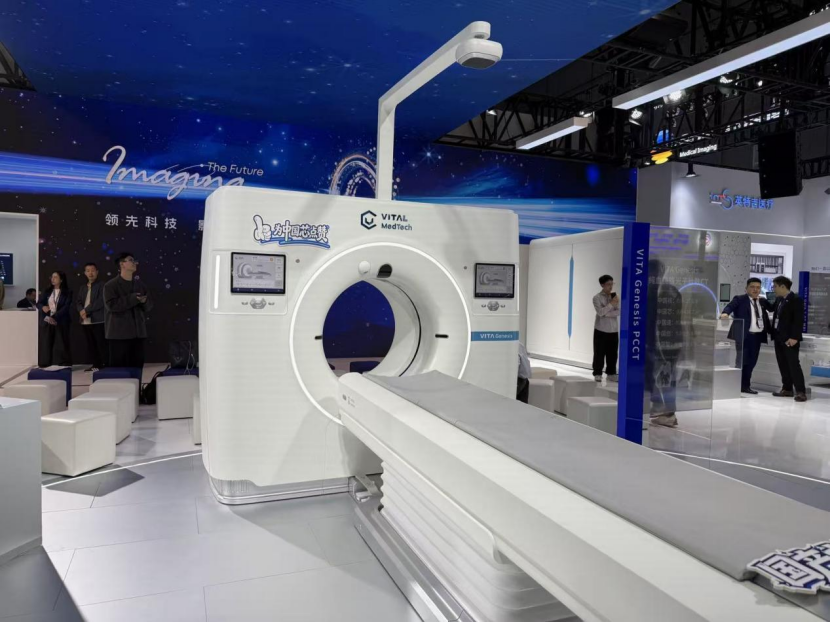
Vital Materials' VITA Genesis
In addition to the proliferation of photon-counting device models, we also saw at the exhibition area that many companies have initiated the competition in upstream core components of photon-counting CT.
For example, Dunlee's core product this year is a new generation of ultra-small focal spot tube product portfolio tailored for photon-counting CT and ultra-high resolution energy-integrating detectors (UHR-CT).
The ultra-small focal spot tubes exhibited on-site mainly include three types: 0.4×0.5mm/0.4×0.6mm/0.5×0.6mm, and their advantages can be summarized into the following three points:
1. Achieving a balance between power and overheating, a small focal spot customized for maintaining high power (kW) output. The high anode rotation speed of 180 Hz supports high power operation even with a small focal spot. (Typically, extremely high focal track speed is ensured by using a large-diameter anode or high rotation speed.)
2. Intelligent Thermal Management – No overheating, no scan pause or interruption. The proprietary Liquid Metal Bearing (LMB) technology ensures smooth operation and efficient heat dissipation, supporting fast and uninterrupted scanning, thereby achieving extremely high scan throughput. An intelligent simulation mechanism ("Tube Temperature Thermal Simulation TTS") enhances heat dissipation performance. A unipolar tube design combined with a water-cooling system improves thermal conductivity. Water has a thermal conductivity approximately 10 times that of oil, eliminating the need for oil as an insulating medium. The rhenium-tungsten anode target can withstand extremely high thermal stress.
3. High image quality achieved through focus stability. The tube structure designed for gantry speeds of up to 250 rpm ensures high resolution and reduces blurring. The design of the tube components ensures that the focal spot size remains stable even under extreme thermal and rotational stress, with key design features including: double-end supported bearings, advanced electromagnetic quadrupole lens calibration technology, flat filaments, and an overall robust tube mechanical structure.
Relying on the above-mentioned technological innovations, the Dunlee ultra-small focal spot tube solution can better support the high-quality imaging needs of PCCT and UHR-CT in clinical scenarios such as cardiology, oncology, neurology, pulmonary diseases, and orthopedics, further unleashing the performance potential of high-end CT systems in fine structure display, motion control, and complex lesion evaluation.
In terms of detector materials, Vital Materials directly brought CZT crystals to the exhibition area. At this stage, Canon Medical, Neusoft Medical, and United Imaging are all following the CZT detector path, relying on overseas companies for CZT supply. Vital Materials has broken the bottleneck dilemma of photon-counting CT, gaining a strong advantage.
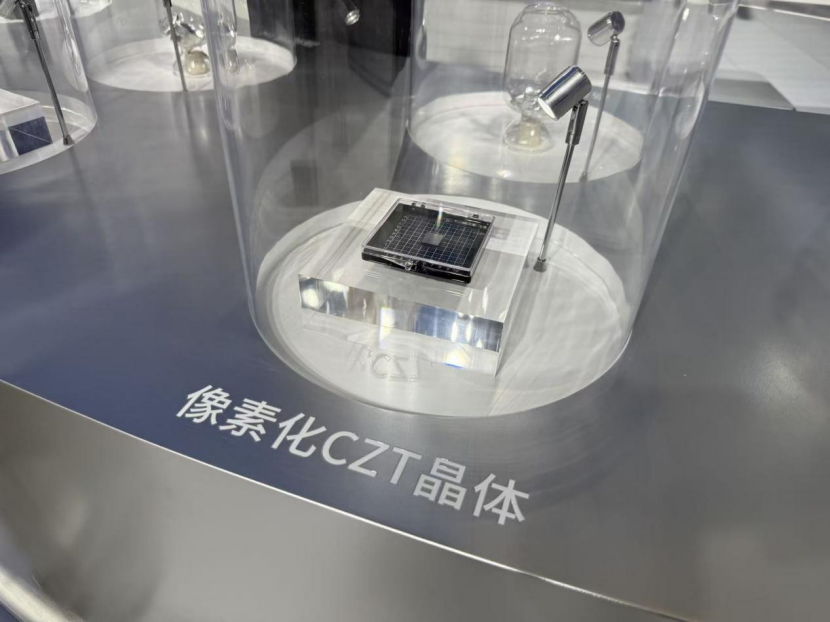
Vital Materials Pixel CZT Crystal
After gaining the upper hand, there are three paths ahead for Vital Materials: independently developing a photon-counting CT system; focusing on being an upstream supplier by directly selling CZT crystals to equipment manufacturers; or pursuing both paths simultaneously.
Currently, Vital Materials' strategy is to leverage its semiconductor advantages to independently develop photon-counting CT, gradually building the entire machine supply chain on its own.
This approach is quite risky, but the potential rewards are substantial. After all, a leading position in a single core component does not necessarily translate into an overall advantage for the entire machine. However, if they can overcome the challenges, Vital Materials might secure a key position in the landscape of imaging equipment in China and even globally in the future.
While photon-counting CT systems are engaging in fierce competition to capture the spotlight in the ultra-high-end imaging market, the magnetic resonance field has also reached a critical point of capability transformation.
In October 2025, Philips Healthcare's MR7700 obtained the first approval in China for its multi-nuclear seamless integration technology, which can simultaneously capture subtle changes in various atomic nuclei such as hydrogen, phosphorus, and sodium. This innovation marks a transformation from traditional structural and functional imaging to molecular imaging, ushering in a new era of more comprehensive and precise multi-nuclear magnetic resonance.
At this year's CMEF, Philips Healthcare has integrated the Innovation AI Superbrain Platform into its existing MR capabilities: embedding AI throughout the entire magnetic resonance imaging process—from patient positioning, scan parameter optimization, and image reconstruction to post-processing analysis—achieving synergy among the "graphic brain," "data brain," and "collaborative brain." This advancement effectively moves forward the diagnosis of metabolic diseases such as Alzheimer's and Parkinson's.
Also targeting "multi-nucleus" is United Imaging. In terms of technology itself, there is little difference between the two "multi-nucleus" (with slight differences in nuclide coverage), and the core difference lies in the equipment configuration.
Prior to this, United Imaging's 5T whole-body MRI faced skepticism from some industry experts due to factors such as pricing and application scenarios. However, with its whole-body imaging now combined with metabolic detection, it may potentially replicate some capabilities of PET/CT in the future.
Recently, under the influence of geopolitical factors, the market demand for liquid helium-free MR has risen rapidly.
During this CMEF, vendors such as United Imaging, Philips Healthcare, Siemens Healthineers, Wandong Medical, and Xingaoyi showcased their latest liquid helium-free MRI systems, mainly applied to 1.5T/3T series products, covering two technical routes: 100% liquid helium-free and micro-liquid helium closed-loop.
United Imaging showcased a 1.5T liquid-helium-free superconducting MRI prototype. This model employs fully solid-state conduction cooling technology, achieving 100% liquid-helium-free, zero evaporation, and lifelong helium-free replenishment. It integrates with United Imaging's multi-nuclear imaging and AI intelligent scanning technologies, targeting high-end clinical and research scenarios.
Philips introduced BlueSeal 3.0T zero-liquid-helium MRI, featuring fully sealed magnet and DryCool technology, eliminating the need for liquid helium refills, suitable for grassroots and mobile scenarios, as an internationally established high-end zero-liquid-helium model.
Xingaoyi's newly released BroadScan-3.0T is the first 3.0T liquid helium-free MRI in China. It adopts all-solid-state direct conduction cooling and zero liquid helium sealing in the magnet, belonging to the latter path, breaking the international 3.0T liquid helium-free monopoly.
As field strength and rotational speed approach physical limits, medical device manufacturers are beginning to reassess the value of AI. As seen at this year's CMEF, AI has once again become a core strategy for major manufacturers to capture the imaging market. Deeply integrated with ultra-high-end CT and MR, it is no longer just an auxiliary tool but an essential component of the equipment's core performance.
Based on application capabilities, we can roughly divide AI at the scene into three categories, all of which deeply serve the performance upgrades and scenario implementation of high-end imaging equipment, injecting new momentum into the competition in CT and MR.
The first category is various types of intelligent agents. These agents are widely used, and the vast majority exist in the form of plugins (they will gradually integrate with devices in the future), providing services such as structured case generation and image quality control to doctors after imaging. This effectively enhances the clinical application efficiency of photon-counting CT and high-end MR, while lowering the operational threshold for doctors.
The second category is image enhancement AI, which is mostly native AI independently developed by imaging equipment companies. For example, Philips Healthcare's Innovation AI Brain Platform and GE Healthcare's True Definition DL play indispensable roles in the imaging process of ultra-high-end imaging equipment, directly determining the imaging quality and diagnostic accuracy of photon-counting CT and high-end MR.
GE Healthcare's True Definition DL Ultra-High-Definition Imaging Engine is the industry's first imaging platform to achieve ultra-thin slices and ultra-high spatial resolution through AI deep learning data mining technology. It reaches the same spatial resolution level as photon-counting CT, clearly revealing more details, and becomes a key support for GE in competing with Siemens Healthineers, Neusoft, and United Imaging in the high-end CT market.
Canon Medical at CMEF showcases Vantage Galan 3T MRI with "deep learning reconstruction (DLR)" technology: integration of software and hardware enables 3.0T MRI system to achieve ultra-high-resolution imaging, approaching the performance of ultra-high-field MRI, further strengthening its competitiveness in the MR sector.
The third category is an integrated imaging AI overall solution, emphasizing integrated empowerment and deep integration into clinical workflows, which aligns closely with the clinical implementation needs of photon-counting CT and MR.
Deepwise Medical has launched the first multi-modal, full-process, software and hardware integrated AI diagnosis, treatment, and management intelligent solution for breast diseases in China. It covers all dimensions from screening and assessment, diagnosis and treatment, to research and management. The solution can deeply collaborate with high-end CT and MR equipment, intuitively demonstrating the leapfrog upgrade of AI technology from single-point tool empowerment to full-process system empowerment, and from technical display to scenario-based value implementation. It also provides a new pathway for realizing the clinical value of high-end imaging equipment.
Overall, the evolution of medical AI's own capabilities has pushed it to a new position. As the potential of photon-counting CT and the physical architecture of magnetic resonance imaging approach its limit, the outcome of the competition in software intelligence will determine who can occupy the new high ground and reshape the competitive landscape of the entire high-end imaging equipment industry.