

Boundless Intelligence, Seven Years of Dedication: Hanfeng Healthcare Empowers High-Quality Medical Development through Data Interconnectivity and AI Applications
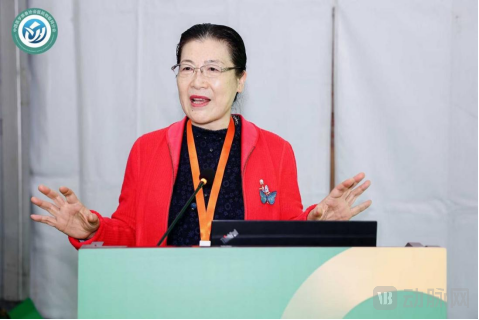
Recently, Professor Lu Zhaoxia, Chairwoman and CEO of Hanfeng Medical, granted an interview to VCBeat. She provided a comprehensive interpretation of Hanfeng Medical’s core pathway to empowering high-quality hospital development, centered on the philosophy of “Boundless Intelligent Connectivity.” The discussion covered the company’s developmental achievements, strategic layout of core technologies, solutions to industry pain points, and future directions for innovation, showcasing the robust capabilities and growth potential accumulated over seven years of operation.
Hanfeng Medical has consistently focused on innovating smart healthcare scenarios, deeply integrating AI and IoT technologies. Seizing the opportunities presented by the era of high-quality development in the healthcare industry, the company has evolved from building technological foundations to implementing scenario-based applications, and from achieving breakthroughs in individual technologies to constructing a full-stack ecosystem. Gradually emerging as a leading innovative enterprise in the medical IoT sector, Hanfeng Medical leverages its technological prowess to safeguard medical safety, optimize healthcare services, and enhance industry efficiency.
Currently, as digital healthcare advances in depth, critical infrastructure has become a primary target for cyberattacks. Meanwhile, the deep integration of AI technology into the medical field has brought multiple challenges, including data security, cybersecurity, and technological self-reliance and controllability. Professor Lu Zhaoxia pointed out that, given the current domestic and international landscape, establishing secure information technology application innovation (Xinchuang) and autonomous, controllable technical systems has become a crucial task for the high-quality development of the healthcare industry.
After years of technological breakthroughs, Hanfeng Medical has innovatively built a full-stack information technology application innovation (Xinchuang) architecture encompassing “device-edge-cloud-security.” By leveraging the synergy between “HarmonyOS terminals + Xinchuang IoT platforms” and domestic computing power infrastructure, it has established a fully autonomous and controllable medical technology foundation, ensuring hospitals maintain stable operations with “no paralysis despite supply disruptions, no interruptions despite network outages.” This ultimately achieves comprehensive controllability across five dimensions—devices, systems, computing power, data, and AI—fortifying the healthcare security defense line with independent innovative technologies.
As a core component of the national health strategy, healthcare interoperability is a key lever for facilitating convenient medical access and enabling the sharing of high-quality medical resources; however, it currently faces multiple obstacles. Professor Lu Zhaoxia stated, “Healthcare interoperability encounters technical pain points such as inconsistent device protocols, disparate data standards, and pervasive data silos. The state has clearly set a goal to achieve mutual recognition of more than 300 provincial-level medical items by 2027, making the promotion of interoperability an inevitable trend in the industry. Centered on the patient timeline, we have established a comprehensive, multi-modal data storage system, unified underlying device access standards and data-sharing specifications, and continue to optimize our healthcare data integration platform.”
Hanfeng Medical has achieved efficient connectivity for over 800 types of medical devices and terminals, covering all scenarios of smart hospitals, including clinical diagnosis and treatment and refined operations. This transforms dispersed medical data into high-quality, reusable, analyzable, and empowering data assets, driving quality improvement and efficiency enhancement in medical services through data-driven intelligent connectivity.
Standing at a new starting point in its seventh year, Hanfeng Medical continues to advance product innovation and iteration. The company unveiled its new product, the “Rui TCM Agent,” at the 2026 Medical Equipment Conference, where it became a focal point of attention thanks to its unique advantages in technological integration, injecting strong new momentum into the intelligent transformation of traditional Chinese medicine.
“Rui TCM Agent” deeply integrates the essence of traditional Chinese medicine (TCM) diagnosis and treatment with modern Internet of Things (IoT) and artificial intelligence (AI) technologies. Leveraging core technologies such as multimodal IoT sensing, multi-agent collaboration, a professional TCM knowledge base, and Retrieval-Augmented Generation (RAG), it employs a data-driven innovative model to precisely replicate the core diagnostic wisdom of TCM’s “inspection, listening/smelling, inquiry, and pulse-taking,” achieving a perfect fusion of traditional Chinese medicine and digital technology.
As an innovative enterprise that has grown out of Neusoft Group’s decades of accumulation in medical business and technology, Hanfeng Medical has gained high recognition from the industry. Professor Lu Zhaoxia stated that, standing at the new starting point of its seventh anniversary, Hanfeng Medical will remain true to its original aspiration, continue to deepen its expertise, uphold the core philosophy of “empowering the high-quality development of hospitals through data-driven intelligence and AI applications,” and steadily advance its subsequent development strategy.
Looking ahead, Hanfeng Medical will continue to advance the iterative upgrades of its core products, including AI agent systems, while continuously optimizing its full-stack Xinchuang (information technology application innovation) architecture and data intelligence connectivity framework. The company will further expand application scenarios for the Medical Internet of Things (MIoT). Upholding an open and win-win ecosystem philosophy, Hanfeng Medical is committed to supporting the high-quality development of the MIoT industry and injecting sustained innovative momentum into the construction of a comprehensive, full-lifecycle new ecosystem for medical health—connecting health through technology and safeguarding lives through innovation.