

2026 Top 100 Healthcare Conference | Over 50 Speakers and Hidden Brain-Computer Interface Projects Await
Brain-Computer Interfaces Are Accelerating from the Lab to the Clinic. Globally, invasive brain-computer interfaces (BCIs) have achieved breakthrough progress in areas such as visual reconstruction and motor function replacement, while non-invasive technologies are rapidly penetrating fields like neuromodulation and rehabilitative medicine. The year 2026 is regarded by the industry as a critical window for the large-scale application of BCIs, characterized by the opening of policy windows, sustained capital inflow, and significantly accelerated collaboration across the industrial chain.VCBeat, Guotai Haitong Policy and Industry Research Institute, Mingshi Brain-Computer Interface, Qifeng Capital, Sinan Brain-Computer Intelligence Super Incubator, China Academy of Information and Communications Technology, Shanghai State-owned Capital Investment Research Institute, four thematic forums were launched during the 2026 Top 100 Future Healthcare and Pharmaceuticals Conference, systematically presenting key trends and Chinese opportunities in the brain-computer interface industry—from policy interpretation to clinical inflection points, and from technological pathways to business logic.

This forum is not merely a discussion of isolated topics, but a high-density convergence of resources spanning the entire brain-computer interface (BCI) industry chain. The core resources that have been prioritized for invitation and networking cover four key sectors: scientific research, clinical practice, industry, and capital.
Policy and ResearchIt has engaged national-level research institutions and authoritative experts, including the China National Medical Products Administration Research Society, the Center for Excellence in Brain Science and Intelligence Technology of the Chinese Academy of Sciences, the Institute of Brain Cognition and Brain Disease at the Shenzhen Institutes of Advanced Technology, and the Beike Brain-Computer Intelligence Research Center.
Clinical and Hospital SettingsCovering top domestic neurosurgery and brain-computer interface clinical teams, including those at the Chinese PLA General Hospital, Huashan Hospital Affiliated to Fudan University, Beijing Tiantan Hospital Affiliated to Capital Medical University, Tongji Hospital Affiliated to Tongji Medical College of Huazhong University of Science and Technology, and Sanbo Brain Hospital.
Industry and Enterprise SectorCovering MingShi Brain-Computer Interface, Zhiran Medical, Xiangyu Medical, Shuli Innovation, Jieti Medical, NuCera, Kongshan Ci Technology, Xinyun Medical, SynSense, Ningju Technology, Chaonao Medical Technology, Huichuang Medical, Aoyi Technology, BrainGamma Technology, Hangzhou Xuzhishi Technology,Responsive Brain Science, AnalysisMang Healthcareand other representative enterprises.
Capital and EcosystemCovering Legend Capital, Sinovest Capital, Qifeng Capital, Honghui Fund, CAS Star, Heying Capital, Shanghai Lingyi, Sequoia China, Proxima Investment, Shenzhen Angel FOF, Delian Bojian Neuroscience Fund, and Yuanhe Yuandian,Zheshang Health Investment, Yuanming Capitaland other active institutions.
“China’s Brain-Computer Interface Innovative Enterprises Directory” Released
The brain-computer interface (BCI) industry is entering a critical period of structural reshaping—characterized by the rapid emergence of enterprises, divergence in technological pathways, and iteration of valuation logics. Who are the true drivers of innovation? Who is leading the race? Whose commercialization is closest to realization? VCBeat, in collaboration with authoritative industry institutions, has launched the "Directory of Innovative BCI Enterprises in China." This report systematically maps out representative high-quality assets across the upstream, midstream, and downstream segments of the industrial chain. By examining multiple dimensions—including technological pathways, clinical progress, commercialization capabilities, and financing ecosystems—and optimizing evaluation criteria, it provides an objective and clear panoramic view of innovative BCI enterprises in China. This is not merely a list; it serves as a benchmark for industry understanding and a core reference for industrial collaboration and investment decision-making.
“2026 Brain-Computer Interface Commercialization Prospects Exploration Report” Released
In 2026, the commercialization imperative for brain-computer interfaces (BCIs) has shifted from “whether it can be achieved” to “how to accelerate it.” The VCBeat research team, after several months of in-depth investigations across industry stakeholders, has released the *2026 Report on Exploring the Commercial Prospects of Brain-Computer Interfaces*, focusing on three core questions:
① Why is now the right time to explore the commercialization of brain-computer interfaces? — The triple resonance of policy windows, technological maturity, and capital landscape is creating a rare structural opportunity.
② What are the potential commercialization pathways for different technical approaches (invasive, interventional, and non-invasive)? What are the core variables influencing the selection of product development pathways?—Systematically deconstruct the differentiated logical frameworks of each approach, ranging from indication selection and payment systems to regulatory approval.
③ How to Accelerate the Commercialization of Brain-Computer Interfaces?—How to Break Through Clinical Access Barriers? What Is the Reimbursement Pathway? Where Are the Levers for Industrial Synergy? The report will provide evidence-based judgments and strategic recommendations grounded in primary research.
Agenda Overview (Continuously Updated)
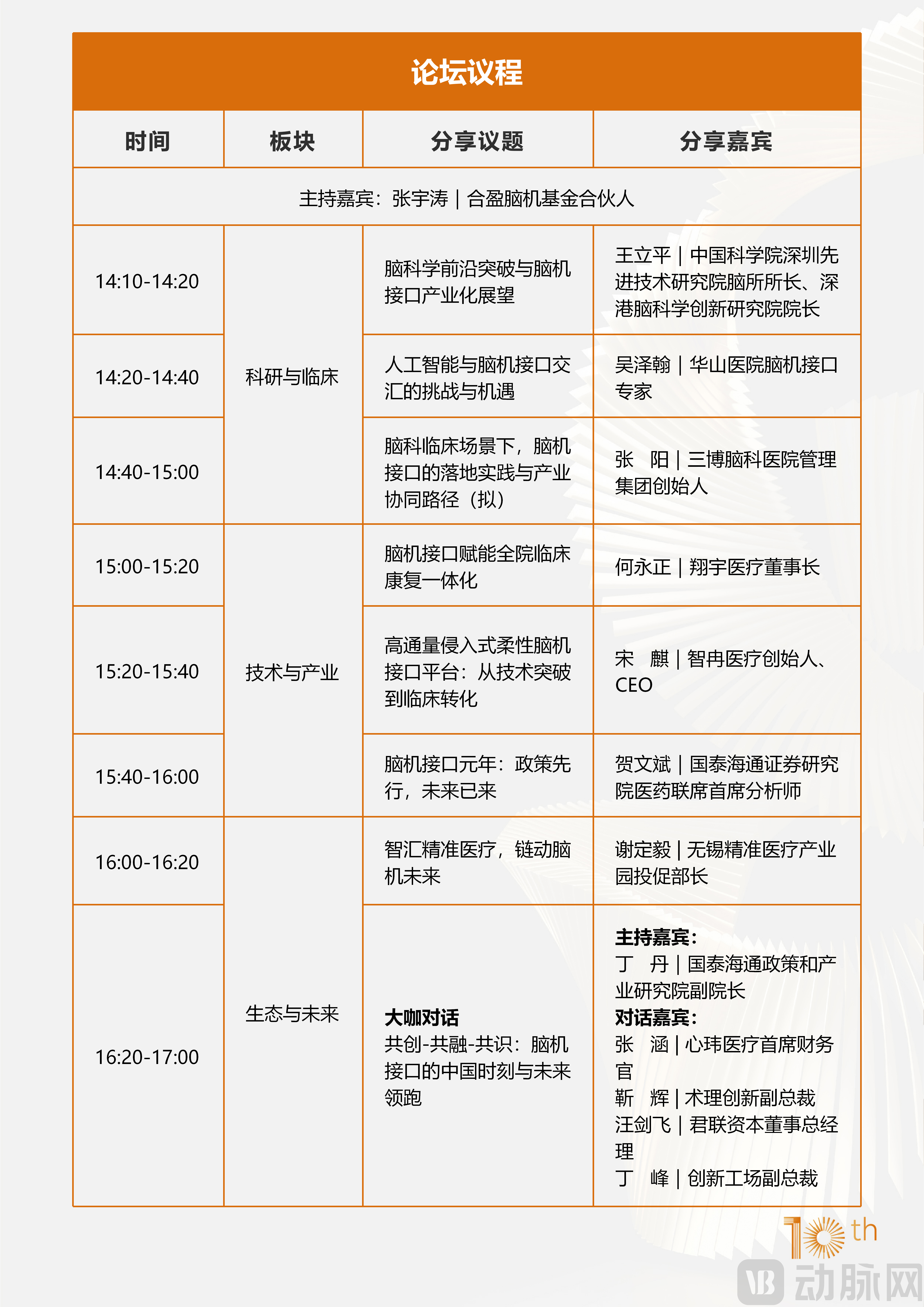
Forum 1 | Brain-Computer Interface Industry Innovation and Investment Forum – Focusing on Holistic Vision and Ecosystem Building
Co-organized by:Guotai Haitong Policy and Industry Research Institute
Supporting Organizations: Heying Capital, Wuxi Precision Medicine Industrial Park
May 19, 14:00–17:00
Centered on the core theme of “Ecosystem Building,” this session systematically examines the key variables and Chinese opportunities in the development of the brain-computer interface (BCI) industry, spanning research frontiers, clinical applications, industrial synergy, and capital perspectives.
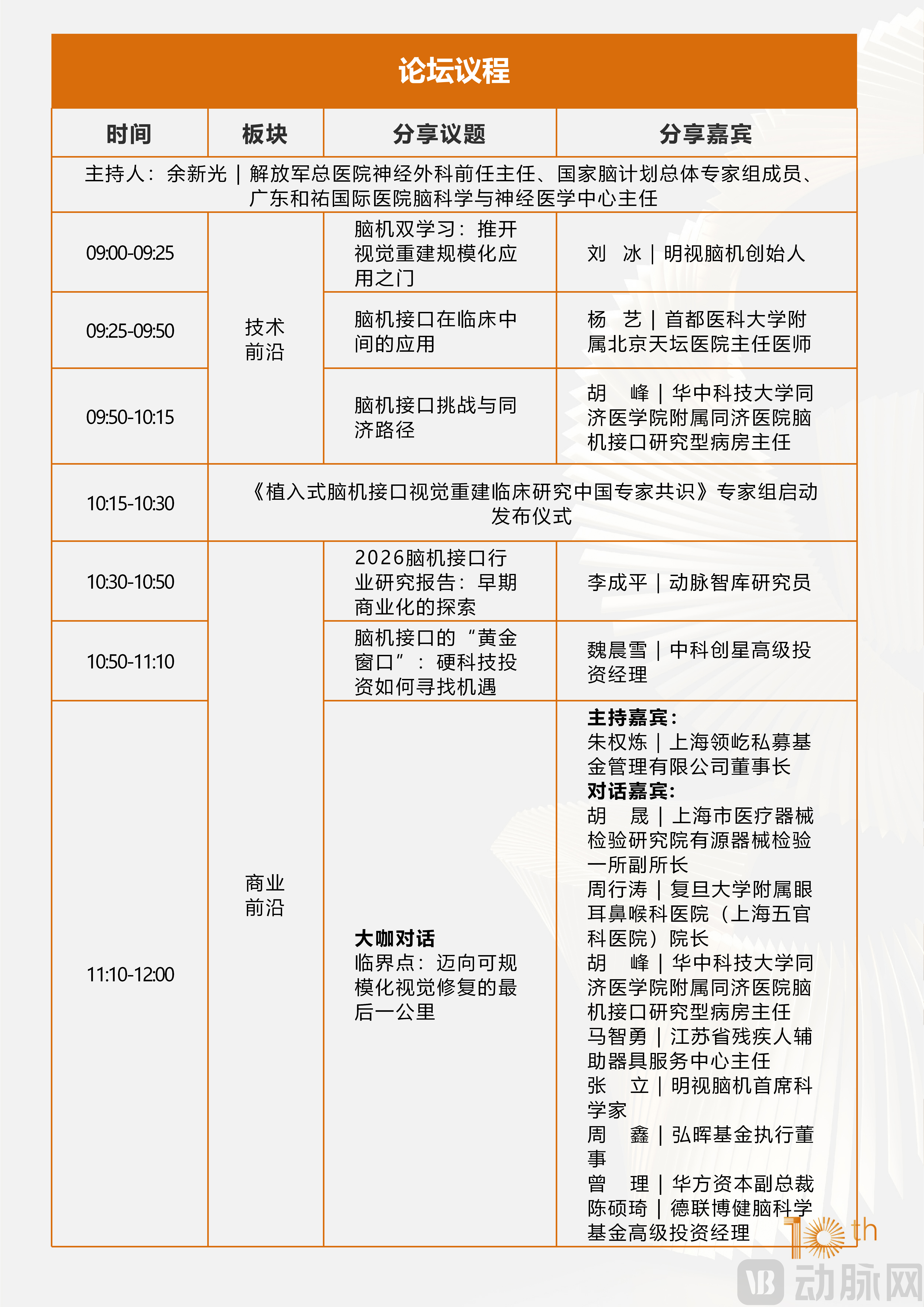
Forum II | Brain-Computer Interface Industry Innovation and Investment Forum — A New Era of Vision: The Clinical Tipping Point and Industrial Launch of Implantable Brain-Computer Interfaces
Co-organized by: Mingshi Brain-Computer Interface
Co-organized by: Shanghai State Investment Research Institute
5May 20, 09:00–12:00
Focusing on the clinical “tipping point” and accelerated industrialization of implantable brain-computer interfaces (BCIs) in the field of visual restoration, the event will also feature the launch of the Expert Consensus Group for the Chinese Expert Consensus on Clinical Research of Implantable Brain-Computer Interfaces for Visual Restoration, along with interactive experiences of BCI products.
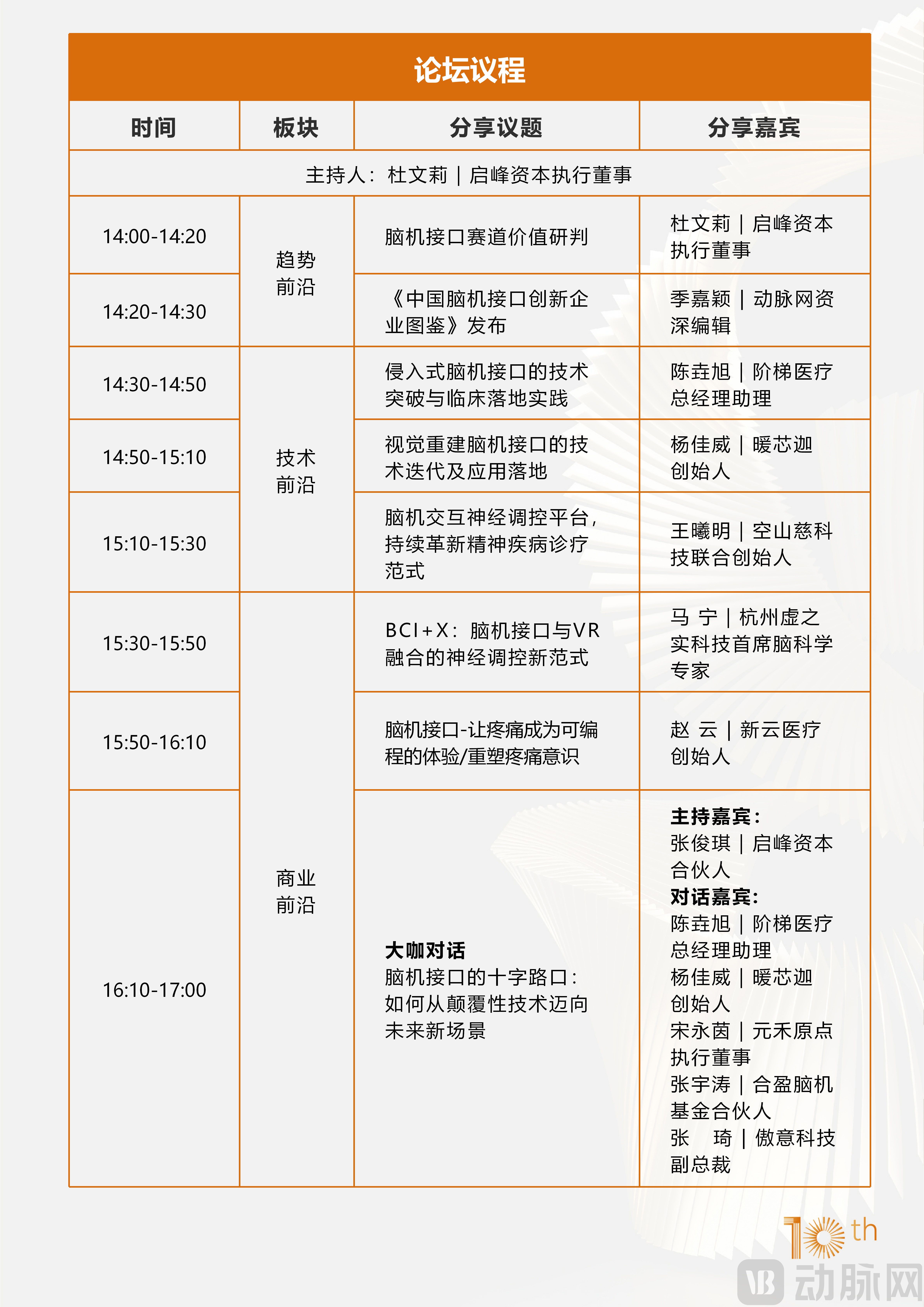
Forum 3 | Brain-Computer Interface Industry Innovation and Investment Forum — Focusing on Technological Breakthroughs and Commercialization Pathways
Co-organized by: Qifeng Capital
May 20, 14:00-17:00
Focusing on the Debate Over Technical Routes and Choices in Commercialization Pathways: From Invasive to Non-Invasive, from Visual Reconstruction to Neuromodulation, Presenting Real Progress and Investment Judgments in Niche Sectors.
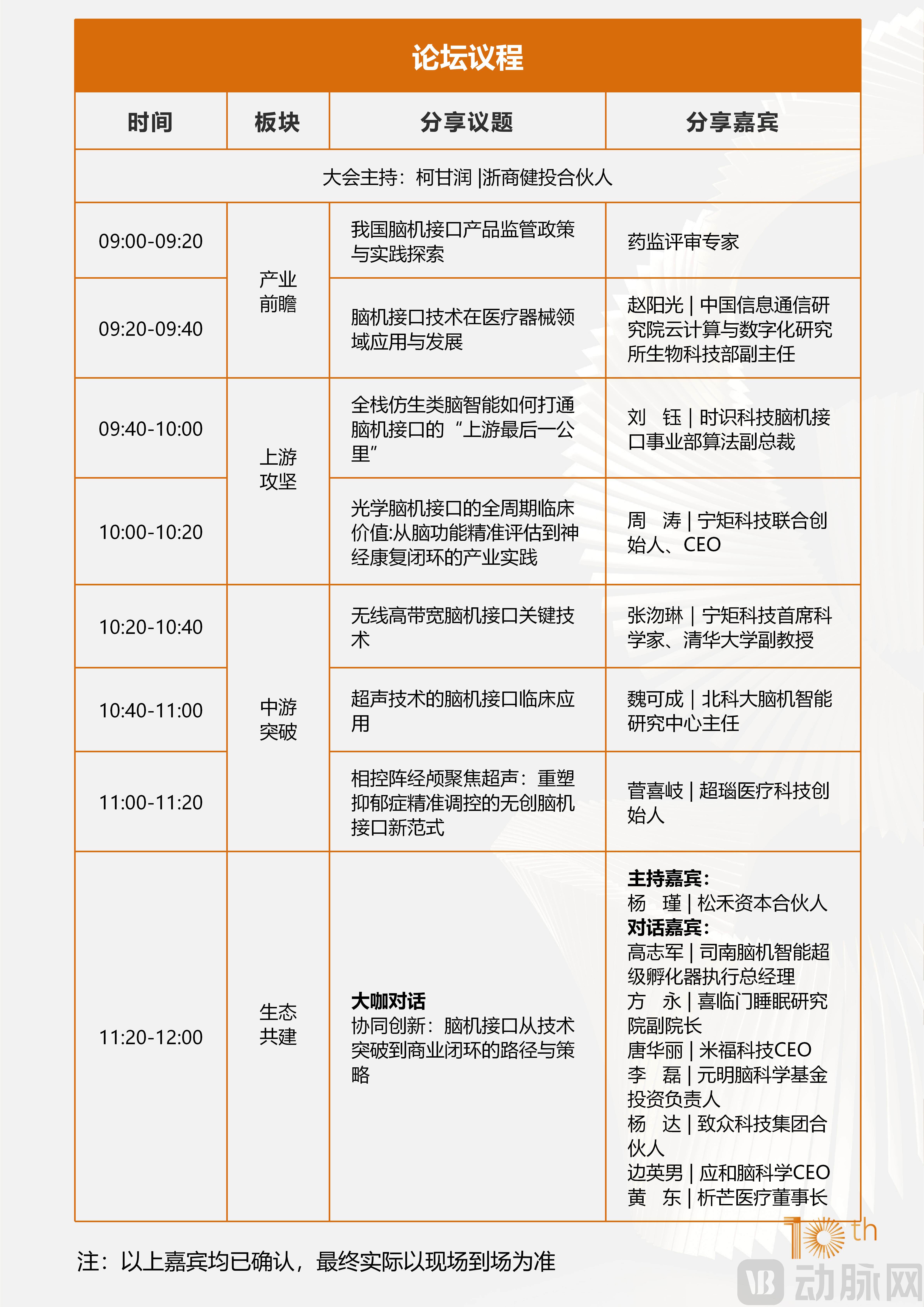
Forum 4 | Brain-Computer Interface Industry Innovation and Investment Forum—Focusing on Supply Chain Collaboration
Co-organized by: Sinan Brain-Computer Intelligence Super Incubator
Co-organized by: China Academy of Information and Communications Technology
Co-organizer: Ferryman Supply Chain Management Club
Supporting Organization: Heying Capital
May 21, 09:00-12:00
From upstream chips and algorithms to midstream system integration, and further to downstream clinical applications and evaluation systems, this work focuses on the “breakpoints” and “solutions” in the process of standardizing the implementation of brain-computer interface technologies.
Notably, in addition to the more than 50 distinguished guests who took the forum stage to share their insights, the event also showcased over 100 highly promising “under-the-radar” brain-computer interface (BCI) projects, originating from:
Institute of Brain Cognition and Brain Diseases, Shenzhen Institute of Advanced Technology, Chinese Academy of Sciences
Institute of Brain-Computer Interface, Huazhong University of Science and Technology
Tsinghua University Laboratory for Brain and Intelligence
Huashan Hospital, Fudan University Brain-Computer Interface Team
Beijing Institute for Brain Science and Brain-Inspired Intelligence
Shanghai Jiao Tong University Brain-like Intelligence Center
Tianjin University Haihe Laboratory of Brain-Computer Interaction
Center for Brain Science and Brain-Inspired Intelligence, Harbin Institute of Technology
Tianjin Key Laboratory of Interventional Brain-Computer Interface and Intelligent Rehabilitation, Nankai University
Hainan University Brain-Computer Interface Chip Neuroengineering Team
Nanjing University Brain-Computer Interface Research Institute
...and other top-tier universities and research institutions, covering diverse sectors such as invasive interfaces, non-invasive interfaces, neuromodulation, brain-computer interface (BCI)-based rehabilitation, and EEG acquisition. With clear technological roadmaps and solid clinical translation capabilities, they are highly valuable assets in the industry.Early-Stage Innovators and Potential Collaboration Targets。
Register now to attend the conference and engage in in-depth, face-to-face discussions with project leaders and core R&D teams in this field. Seize early opportunities for collaboration and investment, and join hands to accelerate the translation of brain-computer interface (BCI) technology from the laboratory to large-scale clinical applications and industrial implementation.

Scan the QR code now to attend the conference.
What Can You Gain Here?
Whether you are a corporate executive, clinical principal investigator (PI), investor, entrepreneur, or policymaker, these four forums are worth your attention:
Observe the Trend Policy Trends, Clinical “Tipping Points,” Technical Pathways, and Business Models—Helping You Build a Comprehensive Cognitive Framework for Brain-Computer Interfaces.
Seeking PartnershipsThe event brings together four key groups—academics, clinicians, industry professionals, and investors—for in-depth, face-to-face discussions to uncover genuine collaboration opportunities.
Listen UpDelivered by PI-level experts from leading institutions, presenting the world’s most cutting-edge clinical research advancements without media reinterpretation.
View Full PictureFrom upstream chips to downstream applications, from technical pathways to business logic, and from investment theses to regulatory priorities—the most comprehensive dialogue on China’s brain-computer interface industry chain.
Find AssetsFrom innovative startups to mature products, from core technologies to practical applications, the event brings together China’s most dynamic brain-computer interface (BCI) asset portfolio, helping you quickly identify high-value targets.
Seeking CapitalPartners from top-tier institutions, including Sequoia China, Legend Capital, CAS Star, Heying Brain-Computer Interface Fund, Sinopharm Capital, and Qifeng Capital, attended the event in person, seeking high-quality investment targets while also refining their industry insights.
The Tipping Point for Brain-Computer Interfaces Has Arrived. From May 19 to 21, at the Platinum Hanjue Hotel in Minhang, Shanghai, four forums will feature nearly 100 distinguished guests. We are not discussing “what brain-computer interfaces are,” but rather exploring on-site “how to develop, invest in, and implement brain-computer interfaces.” Register now to attend; spaces are limited and available on a first-come, first-served basis.
Industry Collaboration Inquiry: Ms. Wei / 18523659972

Scan the QR code to join now