

When Metabolic CT Meets Novel Poly-Amino Acid Contrast Agent: Oscillare and Philips Join Hands to Define a New Paradigm in Imaging Diagnosis

ultra-theranostics
Developer of Novel Imaging Contrast Agents and High-End Theranostic Drugs
The history of medical imaging is, in essence, a history of humanity's attempt to "understand" itself.
Among these advancements, every breakthrough in CT technology has significantly enhanced humanity's ability to "understand itself." However, as we move toward the era of precision diagnosis and treatment, clinical practice still faces critical bottlenecks that need to be addressed: traditional CT can only present "black-and-white photographs" of anatomical structures, unable to accurately identify the chemical composition and metabolic state of tissues. There is an urgent clinical need for an innovative CT that can transition from "structural imaging" to "metabolic imaging." The emergence of Philips Meta CT (the world's first metabolic CT) has evolved CT from being a "photographer of anatomical structures" to a "decoder of metabolic activities," enabling doctors to see through abnormalities and changes in metabolic pathways. This advancement also elevates the early detection, precise intervention, and therapeutic assessment of diseases to new levels and heights.
However, the breakthrough in hardware is only one step. The true clinical value of metabolic CT cannot be realized without the cooperation of novel metabolic contrast agents. Traditional CT contrast agents, mainly iodine compounds, face limitations such as significant side effects, a short examination time window, and lack of tumor targeting. Novel poly-amino acid contrast agents containing specific elements demonstrate clear advantages in imaging performance, targeting ability, safety, and multi-modal applications.
Novel poly-amino acid contrast agents, leveraging high atomic number elements, can achieve superior X-ray attenuation capabilities, providing significantly higher imaging contrast than traditional iodine agents at the same concentration. They also extend blood circulation time and, through functional modifications such as ligands, achieve targeting to enhance imaging specificity and sensitivity. In terms of safety, poly-amino acid contrast agents are biodegradable and metabolized via the hepatobiliary system, making them more suitable for patients with renal insufficiency. Additionally, these contrast agents possess multi-modal imaging capabilities, compatible with various imaging methods such as CT, MRI, and fluorescence, and are deeply integrated with advanced CT equipment like Meta CT, enabling medical imaging to leap from "structural imaging" to "metabolic imaging."
Based on industry pain points and clinical needs,On April 10, 2026, at the 93rd China International Medical Equipment Fair (CMEF), Hangzhou Aosaierui Biomedical Technology Co., Ltd. ("Aosaierui" for short) and Philips Healthcare officially reached a strategic cooperation to jointly promote the clinical application of new poly-amino acid contrast agents in metabolic CT. One is an innovative pioneer in medical imaging contrast agents, and the other is a global leader in CT technology. The collaboration between the two parties marks the formation of a global metabolic CT ecosystem model featuring "equipment + contrast agent" collaborative innovation, ushering medical imaging into a new era of precise metabolic imaging.
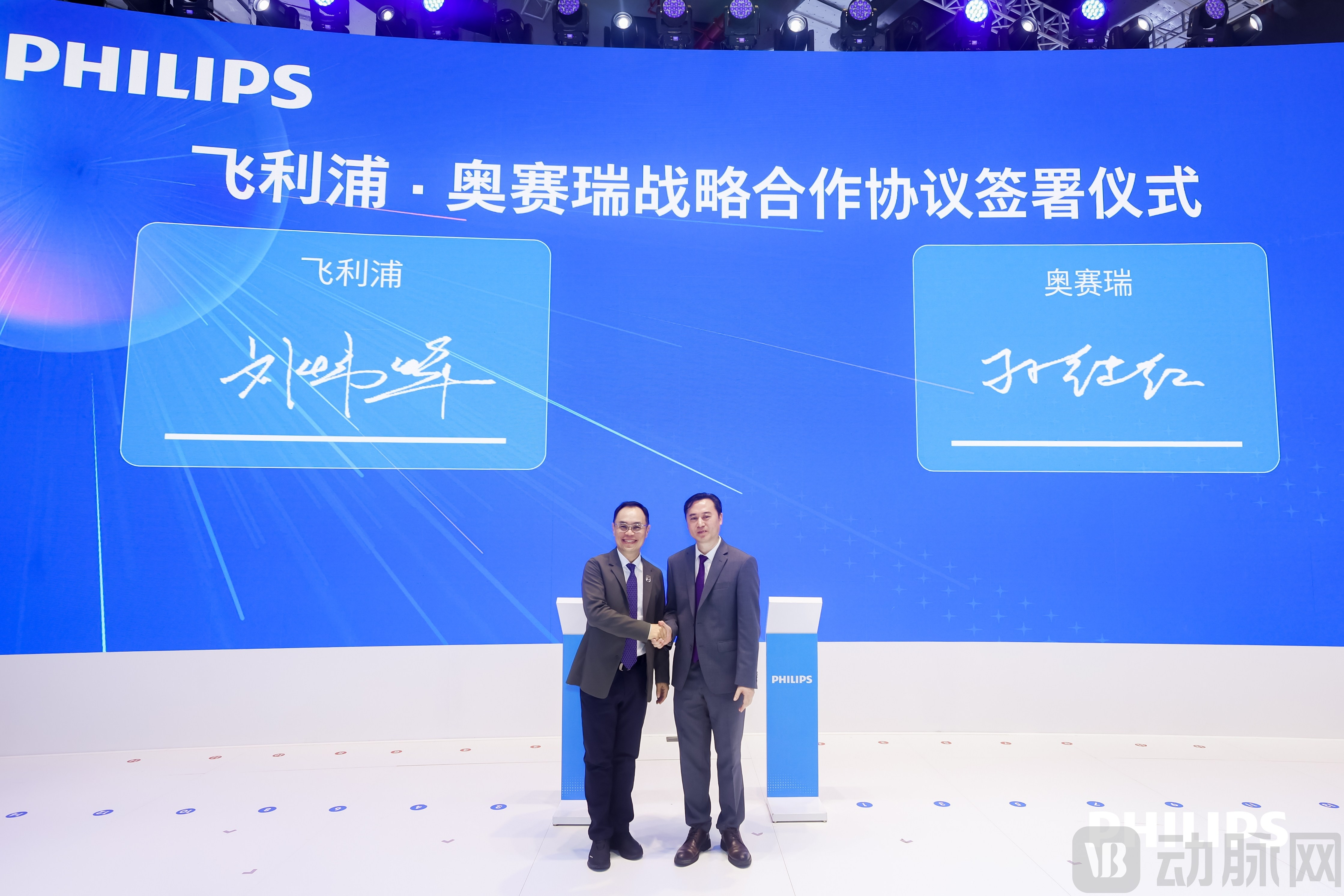
Signing Ceremony of Strategic Cooperation Agreement, Image Source: Philips
Independently Established Poly-Amino Acid Carrier Platform, Gaining Favor from Leading Hospitals, Radiopharmaceutical Companies, and Equipment Giants
At the 93rd CMEF Imaging Equipment Exhibition Area, crowds gathered, and advanced CT scanners represented by Meta CT became one of the hottest topics this year.
Prof. Sun Jihong, Member of the Molecular Imaging Group of the Radiology Society of the Chinese Medical Association, Chief Physician of the Radiology Department of Sir Run Run Shaw Hospital, Zhejiang University School of Medicine, and Founder & Chief Scientist of OscineVCBeat was told, "In response to the actual needs of clinical imaging diagnosis in different scenarios globally, the industry currently urgently requires a contrast agent that can perfectly match metabolic CT. This contrast agent should possess higher specificity, better biosafety, and targeted delivery capabilities, allowing CT to evolve from 'viewing structure' to 'viewing metabolism.'"
As the industrial carrier of Professor Sun's technology transfer, Aosairui has independently established a poly-amino acid diagnosis-treatment integrated carrier platform centered around real clinical needs. Polysarcosine is a type of polypeptide composed of sarcosine, a bio-derived amino acid, as the repeating unit. It exhibits hydrophilicity and stealth effects similar to polyethylene glycol (PEG) but offers better biocompatibility, lower immunogenicity, and higher targeting efficiency compared to PEG. More importantly, it can be metabolized through biodegradation, avoiding the common issue of in vivo accumulation associated with PEG-based drugs, making it more advantageous in oncology treatment and repeated dosing scenarios. Based on the poly-amino acid diagnosis-treatment integrated carrier platform, Aosairui has independently developed a series of novel polysarcosine contrast agents and diagnosis-treatment integrated drug pipelines.
In the self-developed pipeline sector, Aosaierui's (ASR) first pipeline product, the novel MR contrast agent ASR001, has largely completed preclinical studies and is expected to file for IND in both China and the U.S. in the second half of 2026.This contrast agent innovatively uses iron ions, which can be absorbed and utilized by the human body, as a substitute for the traditional heavy metal gadolinium. Preclinical results show that ASR001 has excellent biosafety, a long half-life allowing for whole-body scanning with a single injection, clearer vascular imaging compared to traditional gadolinium-based agents, and the ability to target tumor imaging. Another self-developed poly-amino acid lymphatic contrast agent by Aosaierui, ASR001-L, is also quite distinctive. This is because there is currently no specialized lymphatic contrast agent available in the industry. When performing lymphatic-related imaging examinations, clinicians can only use traditional contrast agents for in-situ injection into lymph nodes, which is difficult to perform, time-consuming, offers short detection times, and is invasive. With specific surface modifications, ASR001-L requires only a single subcutaneous or intramuscular injection to provide prolonged and high-quality lymphatic imaging.
In the co-development pipeline sector, Aosairui has successively gained the favor of top-tier tertiary hospitals, radiopharmaceutical innovation companies, and global equipment leaders.In terms of hospital cooperation, Aosairui and the Department of Neurosurgery at Sir Run Run Shaw Hospital, Zhejiang University School of Medicine, are targeting the clinical needs of integrated glioblastoma diagnosis and treatment. They are currently collaborating on advancing a multimodal contrast agent. Through cooperation with Zhejiang University, this project has been selected for Zhejiang Province’s 2025 "Pioneer Leadership + X" R&D initiative plan and is expected to enter the IIT phase shortly. In terms of radiopharmaceutical innovation enterprise cooperation, Aosairui and Hangzhou Jingjia Hang Biomedical Technology Co., Ltd. are collaborating on developing an integrated diagnostic and therapeutic radiopharmaceutical pipeline, which is currently in the early validation stage. Regarding cooperation with leading enterprises, a strategic partnership was reached with Philips at the exhibition site during this event.
At this CMEF exhibition, the core product of the cooperation between Oseri and Philips, Bi@POS (bismuth-loaded polyamino acid contrast agent), attracted significant attention from industry professionals. In terms of physical properties, compared with traditional iodine contrast agents, Bi@POS has a greater energy separation and can perfectly match with Philips Meta CT to achieve more precise material separation and quantitative analysis. According to preclinical data, the CT contrast imaging efficiency of Bi@POS is about three times that of iohexol, with a nanoscale size of approximately 20nm, enabling targeted delivery. More importantly, Bi@POS is metabolized through the hepatobiliary system, making it more suitable for patients with renal insufficiency and effectively avoiding the nephrotoxicity issues associated with traditional iodine contrast agents.
Professor Sun emphasized, "This is not just an upgrade of contrast agents, but a shift in imaging paradigm. Combined with Philips' Meta CT, Bi@POS can achieve material separation, quantitative analysis, and multi-channel metabolic imaging, allowing doctors to see the metabolic state of tissues for the first time, not just the anatomical structure."
In addition, Aosairui is also actively expanding the sales scale of polycitrate materials in the biomedicine field to achieve "self-sufficiency." "The value of polycitrate is not limited to contrast agents," revealed Sun Qiuyue, General Manager of Aosairui. "As an excellent new material, polycitrate also has broad application prospects in areas such as small nucleic acid drug delivery and new medical aesthetics materials. We have already received raw material procurement requests from several biotech companies and are actively laying out these new tracks."
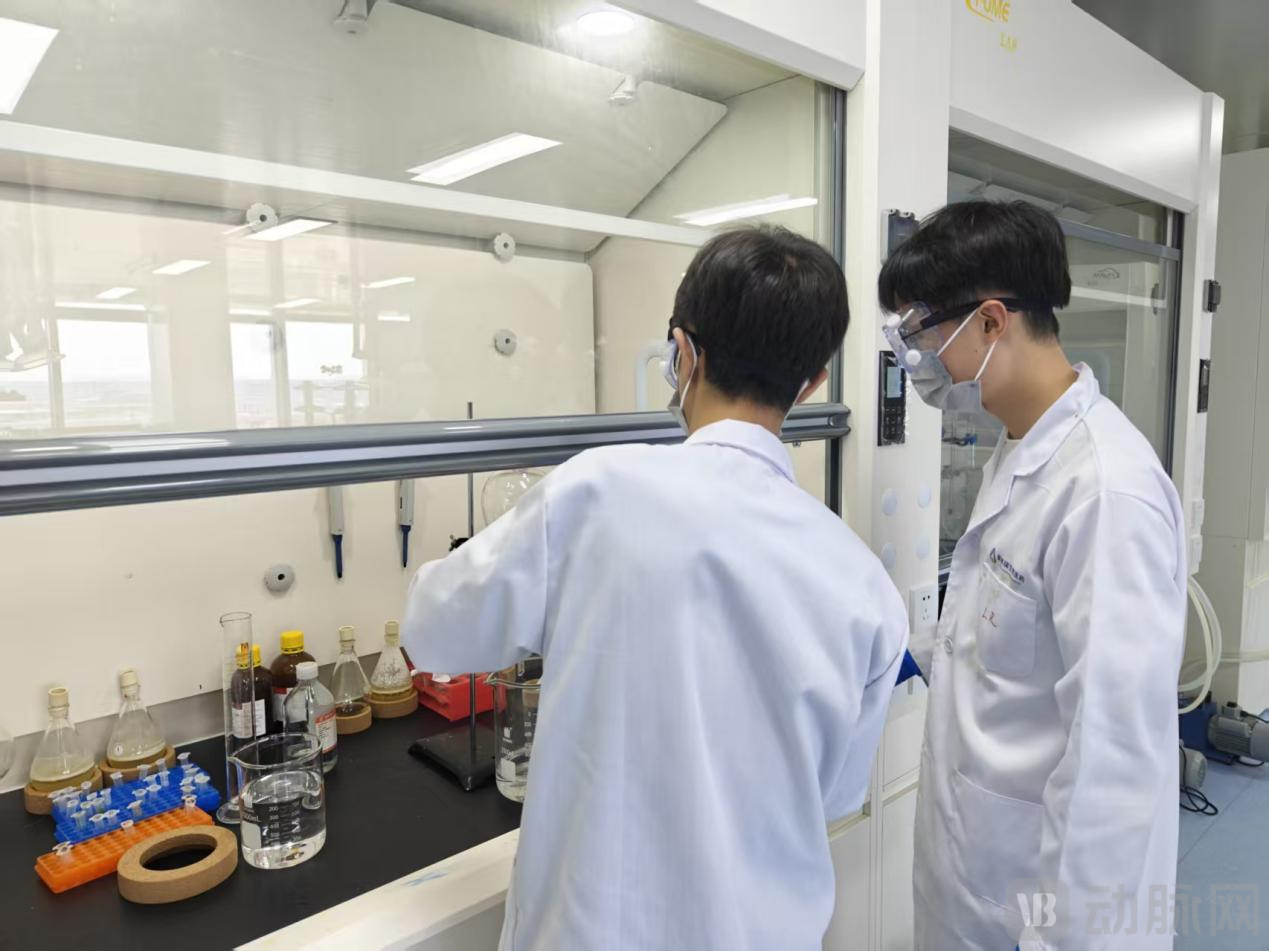
Osray Lab R&D Staff, Image Source: Osray
Imaging Equipment Manufacturers + Contrast Agent Pharmaceutical Companies: Leading the Industry from Single-point Innovation to Ecosystem Synergy
At the signing ceremony held at the CMEF venue, the strategic cooperation between Oscary and Philips attracted many industry professionals to stop and take notice.Why can a newly established local innovative enterprise gain the favor of the global imaging leader? The reason lies in the four core capabilities possessed by Aosaierui:
First, a mature and proven vector platform.Aosirui's polyamino acid carrier platform has been fully validated on ASR001, demonstrating the maturity and reliability of the technical route.Second, super strong R&D capabilities.After effective initial communication between the two parties, the Aosairui team quickly synthesized new polyamino acid contrast agents loaded with bismuth (Bi@POS) and tantalum (Ta@POS), demonstrating strong R&D responsiveness.Third, precise clinical insight.Founder Professor Sun Jihong, as a senior expert in the field of imaging, can accurately grasp clinical needs and provide scientific validation solutions.Fourth, perfect technical compatibility.Aosirui's polyamino acid material system, combined with metal elements, is highly compatible with Philips Meta CT's dual-layer optical pressure sensing detector technology, achieving optimal imaging results.
"Collaborating with industry leaders is the best way to validate technology and endorse a brand," Sun Qiuye frankly stated. "Philips' recognition not only indirectly boosts the confidence of medical institutions and investors in OscillRay's technology, allowing the company to secure funding smoothly, but more importantly, it provides a platform for clinical validation, experience in registration applications, and access to global market channels." This is the deeper strategic value of OscillRay's collaboration with Philips.
In addition, Sun Qiuye also observed, "Currently, there is limited cooperation between imaging equipment manufacturers and contrast agent pharmaceutical companies. Equipment manufacturers are mainly focused on collaborating with AI companies. Oseri and Philips have pioneered an excellent new paradigm. The future industry ecosystem will definitely emphasize a complete solution of 'equipment + contrast agents + AI,' rather than single-point innovation."
This judgment is highly consistent with the industry's development trends. According to Kings Research, the global market size for CT and MRI contrast agents has grown from USD 59.8 billion in 2023 to USD 64.7 billion in 2024 and is expected to reach USD 115.9 billion by 2031, with an annual compound growth rate of 8.70%. With the popularization of next-generation equipment such as metabolic CT, the demand for matching contrast agents will become even more urgent. Improved safety, long circulation, targeted delivery, and multimodal imaging are becoming the core directions of innovation in contrast agents.
Based on industry trends, OscarRay and Philips will rapidly complete the preclinical validation of Bi@POS on Meta CT, confirm its synergistic effects, and optimize imaging capabilities; orderly advance clinical trials to verify the safety and efficacy of Bi@POS, and accumulate clinical evidence; until the product is approved for marketing, jointly build a global metabolic CT ecosystem, and promote the popularization of metabolic imaging technology.
Regarding the future, Sun Qiuyue stated, "In the short term, we will focus on the IND application and Phase I clinical trial of our core product ASR001, while simultaneously advancing the project pipeline in collaboration with Philips and Jingjia Hang, as well as expanding the sales scale of poly-sarcosine materials in the biopharmaceutical field to achieve 'self-sufficiency.' In the long term, we aim to grow into a global leader in the field of medical imaging contrast agents, with products covering all imaging modalities such as CT, MR, ultrasound, and radionuclides. We also plan to transition from diagnostics to therapeutics, achieving breakthroughs in integrated diagnosis and treatment."
As the company grows, Aosairui is currently advancing a new round of financing, primarily to accelerate the clinical translation of its core pipeline and the scaled production of its materials platform. At the same time, Aosairui is actively seeking industrial partnerships with more Biotech, medical aesthetics, and daily chemical enterprises to expand the application scenarios of poly-sarcosine raw materials.
From black and white to color, from structure to metabolism, from diagnosis to treatment — every leap in medical imaging has been accompanied by collaborative innovations in underlying technologies. The partnership between Aosaierui and Philips is a prime example of such collaboration: when a new type of poly-amino acid contrast agent meets metabolic CT, when local innovation meets a global platform, a new era of metabolic imaging is quietly emerging.