

Neusoft Ruixin's City-Level Smart Wellness Platform: Scaling from Dalian to Nationwide
At 7:00 a.m., Ms. Zhou, a resident of Dalian Dahua Jinxiu Huacheng, opened the “Dalian Smart Health and Elderly Care” mini-program to schedule a bathing assistance service for her father, who has partial disability. After 10:00 a.m., professional bathing aides arrived on time with equipment. During more than two hours of standardized service, the elderly man completed his weekly comfortable bath.
This seemingly simple scenario is not an isolated case; it is the daily routine replicated across China every day by the “City-Level Smart Health and Elderly Care Service Platform.”
From Family Dilemmas to Platform Breakthroughs: The Answer to a Trillion-Yuan Challenge
By the end of 2025, China’s population aged 60 and above reached 320 million, with over 40 million elderly individuals suffering from disabilities or partial disabilities. The phrase “one person disabled, the whole family unbalanced” has become a true reflection of the reality for tens of millions of households. The rigid demand for home-based elderly care is shifting from “a challenge for individual families” to “an issue that society as a whole must address.”
Previously, the Ministry of Civil Affairs had explicitly called for advancing the construction of a three-tier elderly care service network at the county, township, and village levels, and for promoting integrated coordination among home-based, community-based, and institutional care models. On April 9, 2026, the Liaoning Provincial Department of Civil Affairs proposed the goals of “urban quality improvement, rural coverage expansion, urban-rural integrated planning, and precise safety-net provision.”But to bring the blueprint to life, a key player is needed: who will link the scattered meal assistance sites, service providers, and community hospitals into a “service network”?
The answer is the city-level smart health and elderly care service platform, which integrates resources within the 15-minute service circle.Elderly individuals or their family members can access the mini-program or call the hotline to request “Six Assistance” services with a single click—meal assistance, cleaning assistance, bathing assistance, medical assistance, emergency assistance, and mobility assistance.
The platform’s value extends far beyond “on-demand services.” It serves as a bridge connecting three key stakeholders: the government, service providers, and families.To the government, serves as an "accelerator" for policy implementation, enabling comprehensive regulatory oversight on a single screen;To service providers,It is the “incremental entry point” and “quality benchmark”;For the Family, meaning “choice” and “security,” making it as easy to find services as ordering food delivery.
Driving all of this is the city-level smart elderly care service platform built by Neusoft Ruixin Technology Group, which launched its strategic transformation in 2024 and made a comprehensive entry into the fields of elderly care technology and integrated medical-elderly care services. The platform is positioned as urban elderly care"New Infrastructure", create"Government–Institution–Community–Household" Four-Tier Integrated Digital Foundation.
From Dalian to the Rest of China: “New Infrastructure” for Elderly Care in 20 Cities
Currently, the city-level smart health and elderly care service platform has gone live in Shenyang, Dalian, and Nanning, and has expanded across China.Over 20 Cities, basically forming a nationwide layout. In the already launched "Shenyang Shengqing Health and Elderly Care" and "Dalian Smart Health and Elderly Care" platforms, it coversCategory 30Core Elderly Care Scenarios and Service UsersOver 70,000 people, Gathering High-Quality Service ProvidersOver 1,950Launch of Age-Friendly Products and ServicesNearly 10,000 items.
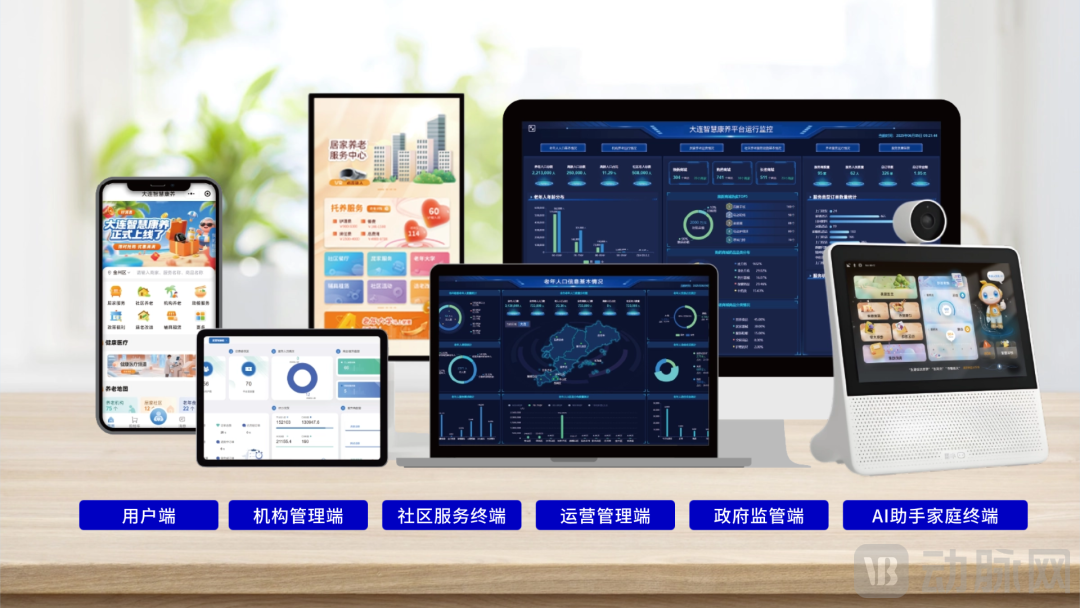
These figures signify that when Ms. Zhou from Dalian placed an order for assisted bathing services on the platform, it was supported by a standardized system encompassing service provider accreditation, automated order dispatching, process traceability, and evaluation feedback.This is a powerful testament to Neusoft Ruixin’s “Technology + Healthcare and Elderly Care” dual-wheel drive strategy moving from blueprint to reality.
The platform’s ability to rapidly replicate its model across China hinges on a clear operational roadmap.Neusoft Ruixin adopts a synergistic online-offline strategy: Online, it focuses on enhancing platform transactions and operational capabilities by continuously optimizing dispatch algorithms, service evaluation systems, and government regulatory dashboards, making the system behind “one-click ordering” increasingly intelligent and efficient. Offline, it establishes talent training and elderly education centers to consistently supply professional personnel for elderly care services, while simultaneously activating the sense of social participation among the silver-haired population through elderly education.
Building on this foundation, Neusoft Ruixin has integrated ecosystem partners by bringing service providers, medical institutions, community facilities, and other stakeholders into a unified system, thereby creating a standardized and replicable operational model. Since 2025, Neusoft Ruixin has successively launched initiatives inShenyang, Dalian, Shanghai, Fuzhou, NanningEstablished in Five RegionsJoint Venture Company,Leveraging the resource advantages of Neusoft and local state-owned enterprises, we will promote the localized operation of elderly care technology businesses and rapidly replicate the standardized system of the “City-Level Smart Elderly Care Service Platform.”
This model has established a business layout featuring “one platform and two centers.” Driven by the dual engines of localized joint operations and standardized output, Neusoft Ruixin is upgrading urban platforms into new elderly care infrastructure that can be promoted nationwide, striving to become a trusted digital partner for governments in elderly care.
The Future Is Here: Turning Blueprints into Daily Reality
The city platform is not an isolated software system; behind it lies aAn Integrated Physical Network for Education, Healthcare, and Elderly Care, which is closely tied to Neusoft Ruixin’s multi-sector deep synergy strategy of “education supporting healthcare and elderly care, healthcare transitioning into and supplementing elderly care, elderly care entrusting healthcare and supplementing education.”
On the Elderly Care Service Side: Neusoft Phoenix Academy has established a nationwide elderly education network comprising “3 branch schools + 8 subsidiary colleges,” with over 2,000 offline paid enrollments in 2025. Ruikang Home Elderly Care Facility was rated as a “Level-5 Elderly Care Institution in Liaoning Province” (the highest level), achieving an occupancy rate of 93%, among which 96% of residents are aged 80 or above. The facility has fully deployed the “Ruixintong” integrated medical-care-nursing SaaS system, serving as a showcase and validation center for smart elderly care solutions.
On the medical service provider side: Ruikang Cardiovascular Hospital undertook the National High-Risk Cardiovascular Screening Project, becoming the sole designated examination institution in Liaoning Province. In 2025, its outpatient and emergency visits totaled nearly 58,000. Ruikang Stomatological Hospital was awarded the title of “Age-Friendly Medical Institution in Liaoning Province,” with annual outpatient visits exceeding 23,000. These medical resources have formed a virtuous synergistic mechanism of “medical-to-care transition and medical-supported education” with elderly care services, providing robust service delivery capabilities for the urban platform.
The “15-Minute Elderly Care Service Circle” is a service network established by the Ministry of Civil Affairs, with its core content being the “Six-Assistance Services.”City-level Smart Health and Elderly Care Service Platform is like an engine, driving the efficient operation of the “Six Assistance” services within the “15-minute service circle.”
Leveraging “AI + Big Data,” the platform integrates scenarios such as bed searching, service procurement, policy inquiries, and subsidy applications into a unified system, breaking down information barriers between supply and demand sides and weaving originally fragmented services into a tightly interconnected network. It enables unified resource allocation and seamless service integration across home-based, community-based, and institutional care models, aligning with the Ministry of Civil Affairs’ requirement for “integrated coordination.”
Returning to Ms. Zhou’s daily life. She said that she used to feel the four characters “aging in place” carried a heavy weight, but now this matter is gradually becoming easier—It is not because her family has suddenly become more powerful, but rather because a trustworthy “safety net” of elderly care services is gradually being woven.
From Dalian to Shenyang, and from Nanning to Shanghai, Neusoft Ruixin Technology Group is leveraging a combined strategy of city-level smart health and elderly care service platforms, localized joint ventures, and integrated medical-elderly care physical networks. This approach is expanding the network from individual cities to a national scale, turning the “blueprint” into a nationwide coverage across Chinese cities, with tens of thousands of users engaging with it daily.Daily Services.
Let platforms connect resources, let technology empower the ecosystem, and let data drive services. The challenges of elderly care will ultimately be resolved, replaced by a secure safety net upheld collectively by society.