

Tianwu Tech Launches MatwingsVenus™: A Shared Lab for AI-Driven Protein Design
April 24, Tianwu Technology ReleasesConversational Protein R&D Agent MatwingsVenus™ (Xiaowu™). Users on the platformConduct industry research, retrieve data from tag databases, design proteins, perform automated experimental validation, and facilitate online expert collaboration through conversational agents.and other related tasks, to achieve“Design as Verification, Verification as Iteration”” intelligent R&D model.
Under this model, individual users can independently access Tianwu Technology’s services on the MatwingsVenus™ platform.AI Design Capabilities, Automated Wet Lab Platforms, completing the closed loop from model inference to experimental validation and then to iterative optimization through natural language dialogue. In addition, users can alsoInitiate Expert Consultation Anytime, providing authoritative insights for the design proposal.
Demo Access:https://matvenus.com/
Agent-Centric Integration of the Complete Research Workflow: Computation, Wet-Lab Experiments, and Expert Interaction
Over the past decade, AI capabilities have progressively expanded from perception and recognition to content generation, and further to reasoning, collaboration, task decomposition, and tool invocation. The significance of MatwingsVenus™ lies in extending intelligence from the digital world further into the physical world.
MatwingsVenus™ Builds an Agent-Centric, One-Stop R&D Platform for Proteins, supportRetrieval of Protein Data with Authentic Labels at the Scale of Tens of Billions, integrate200+Protein Design Tools,50+Platform-certified experts, and30+ Optimized by Experts in Various Fields skills, users need only input task objectives in natural language, and the system will automatically decompose the tasks, orchestrating corresponding capabilities in design, prediction, analysis, and screening to accomplish deep research, enzyme mining, directed evolution, de novo design, and automated wet-lab collaboration.
Unlike traditional tool platforms, MatwingsVenus™ does not merely aggregate features; instead, itAutomatically organize workflows around task objectives and seamlessly integrate the results into automated shared laboratories for execution, thereby establishing an actionable, feedback-driven, and iterative closed-loop system for protein design and R&D.。
The key to this closed loop lies in the deep synergy between cloud-based design and physical experimentation.. Upon completion of the design by the Agent, the platform can import the results into the plasmid ordering and experimental orchestration workflow via its self-built communication mechanism, automatically linking subsequent experimental tasks and driving robots to complete sample preparation, protein purification, and functional assays, ultimately feeding the experimental results back into the next round of AI-driven design, thereby formingIterative “Conversational Dry-Wet Closed Loop” Driven by Computation-Guided Wet-Lab Experiments and Wet-Lab Feedback to Computation。
From Closed-Loop to Implementation: The Platform Has Been Validated in Real-World Projects
Currently, the MatwingsVenus™ platform has completed multiple cases in the fields of innovative drug development and synthetic biology, demonstrating its practical capabilities as an integrated AI design and automated validation platform.
AI De Novo Design and Validation of Immune Regulatory Receptor Targets
Immunomodulatory receptors are key targets in the development of innovative biologics, with broad applications in oncology, autoimmune diseases, and inflammatory disorders, holding significant clinical value and market potential.
InDe Novo Design Project Targeting an Immunomodulatory ReceptorIn China, Tianwu Technology successfully obtained dozens of novel binder molecules with in vitro cell-blocking activity based on its independently developed MatwingsVenus™ platform, completing the full-process validation of de novo binder design and demonstrating its AI-driven capabilities in innovative protein drug research and development.
This achievement was not easily attained.. The novelty of the target, the lack of reference molecules from similar drugs, and the predominance of polar regions on the target surface with an absence of typical high-druggability binding hotspots have increased the difficulty of designing stably and tightly binding proteins. Meanwhile, the naturally occurring ligand already exhibits nanomolar (nM)-level high affinity, which further raises the challenge for candidate molecules to achieve effective blockade.
Leveraging the MatwingsVenus™ platform, Tianwu Technology uses target structure and functional requirements as inputs, with Agents automatically performing comprehensive computational tasks including scaffold screening, interface design, sequence optimization, and druggability prediction. This approach rapidly generates high-quality binder design sequences, significantly enhancing design efficiency and success rates. Subsequently, binder samples prepared via an automated experimental platform demonstrated outstanding performance in in vitro cellular activity assays.Dozens of molecules demonstrate clear cell-blocking activity, combining functional inhibition with high-affinity potential.
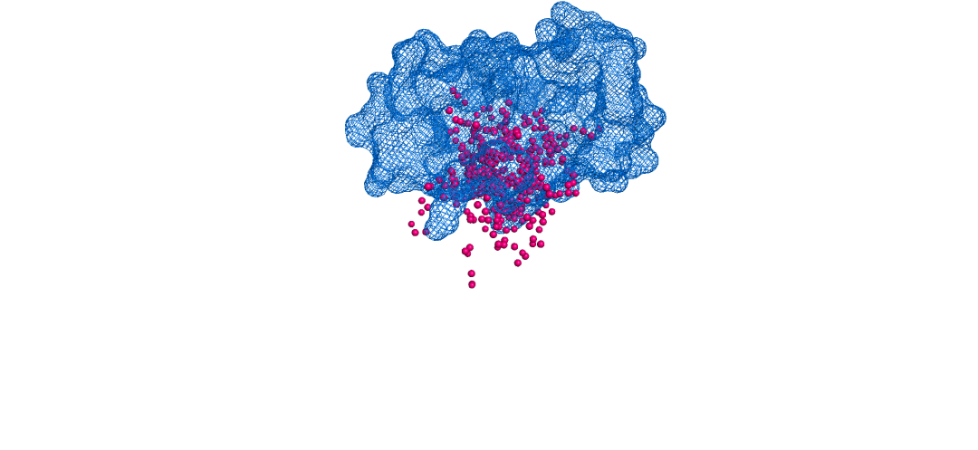
De Novo Antibody Design Based on Target-Specific Epitopes
Site-Specific Mutagenesis Engineering of the Sweet Protein Monellin Enhances Sweetness by Over Tenfold
Monellin is a classic protein-based sweetener. Its natural form typically consists of two chains held together by non-covalent interactions to maintain activity, but it exhibits relatively poor stability and is susceptible to changes in pH, temperature, ionic strength, and long-term storage conditions. For such proteins, the key challenge in development lies not only in enhancing sweetness but also in ensuring structural stability.
MatwingsVenus™ adopts the strategy of “Agent design – automated experimentation – AI feedback – Agent redesign,” progressively narrowing the search space and optimizing the candidate set in iterative rounds. Ultimately, through continuous iterative optimization, 24 representative candidate sets were generated, yielding multiple candidate variants with superior performance. Automated experimental results show thatMultiple samples exhibited a sweetness level more than ten times higher than that of the wild type, while maintaining high heat stability in the range of approximately 75°C.
From de novo design based on real targets to multi-round optimization of complex proteins, MatwingsVenus™ has successfully integrated the entire workflow of AI-driven design, experimental validation, and result iteration across multiple real-world projects, which means thatThe platform has moved beyond the conceptual stage, truly transforming conversational dry-wet closed-loop systems into practical R&D capabilities.
Conclusion
When AI’s predictive capabilities are deeply integrated with automated execution, MatwingsVenus™ represents not merely an iterative upgrade of a tool, but the transformation of R&D capabilities—once accessible only to large enterprises and major research institutions—into infrastructure that individuals can also leverage.Driving protein R&D from “large-platform-driven” to “personally accessible.”In the future, MatwingsVenus™ will continue to promote the democratization of protein R&D capabilities, enabling more individuals and small teams to leverage shared scientific research resources through conversational AI agents. This will facilitate the rapid transformation of ideas into tangible products with proven efficacy, empowering everyone to develop the proteins they desire.
Scan the QR code to add our customer service on WeChat
AI-Driven Full-Stack Protein R&D Platform
Tianwu Technology is aAI-Driven Full-Stack Protein R&D Platform CompanyBy constructing an ultra-large-scale protein sequence dataset/label library with unique, proprietary content, and leveraging it as the foundation to develop a general-purpose large model for protein design, we have achieved precise design of functional proteins directly aligned with industrial needs.
Powered by its proprietary large protein model as the core engine, Tianwu Technology has developed scientific research agents and automated experimental devices, creating a full-stack AI platform for protein R&D.: From market, literature, and patent research to molecular design, small-scale validation, pilot-scale process optimization, and ultimately production scale-up. By fully integrating AI into industrial application scenarios, we transcend the cognitive boundaries of current human experts, enabling faster and better development of diverse protein-based bioproducts—such as innovative drugs, general health products, agricultural solutions, functional foods, and bio-based materials.
The company has successively received numerous prestigious titles, including National High-Tech Enterprise, Shanghai Specialized and Sophisticated SME, and Minhang District Emerging Enterprise. It has also won the First Prize in the AIGC Special Category of the “Maker China” Competition, the Second Prize in the Corporate Group of the “Maker China” Competition, been listed among the first batch of typical AI application cases in biomanufacturing by the Ministry of Industry and Information Technology, and received the Bronze Award at the 5th “Haiju Yingcai” Global Innovation and Entrepreneurship Competition. To date, the company has completed four rounds of financing, with investors including CNPC Kunlun Capital, Yonghua Investment, Shanghai Future Industry Fund, Qiming Venture Partners, Bencao Capital, GSR Ventures, and other renowned investment firms.