

Quanzhentong Files IPO Prospectus: Building Self-Operational AI Neural Networks for Hospitals with Domain-Specific Large Models

Trizen Medical
Digital One-Stop Solution Provider
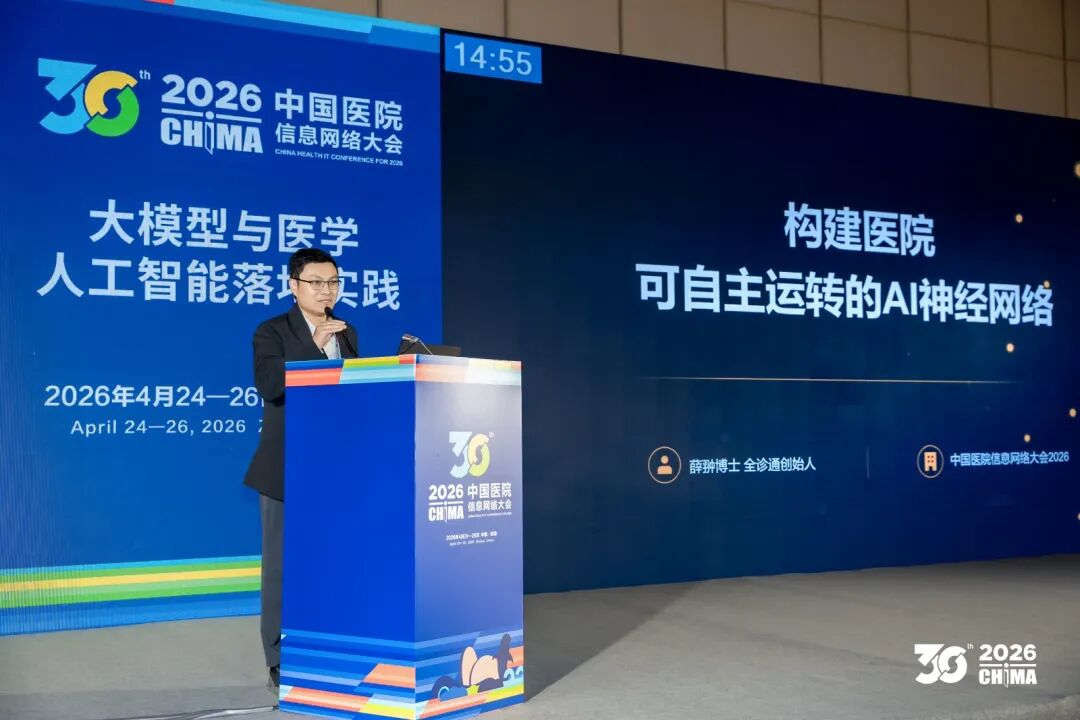
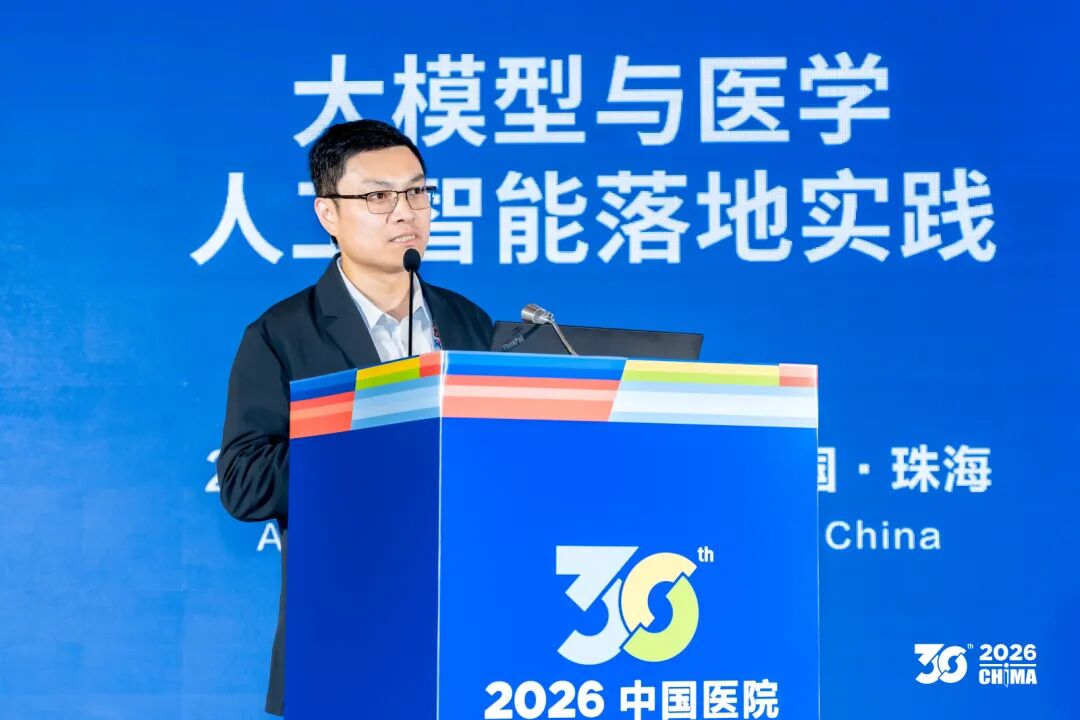
At the recently concluded 30th China Hospital Information Network Conference (CHIMA 2026), the forum on “Practical Implementation of Large Language Models and Medical AI” was packed to capacity. Dr. Xue Chong, Founder of All-In-One Clinic, was invited to deliver a keynote address, systematically presenting for the first time the forward-looking concept of “Building an Autonomous AI Neural Network for Hospitals.” Starting from the current pain points in the implementation of value-based medical AI, and combining the large-scale application practices of the All-In-One Clinic Doctor Assistant across 117 hospitals nationwide, as well as breakthrough explorations in areas such as the AI Application Generation Platform, the HIS Claw seamless integration solution, and the automated data synthesis and annotation platform, he outlined a feasible path for the industry to transition from “pilot exploration” to “large-scale deployment.” The following content is compiled based on Dr. Xue Chong’s speech.
At the outset of his speech, Dr. Xue Chong directly addressed the industry’s pain points, drawing on his keen insights into the current state of large AI models in healthcare:Current large medical AI models in hospitals are at a critical turning point, transitioning from “pilot exploration” to “large-scale deployment.”Although there are numerous AI products on the market, very few have actually been piloted in hospitals, with a large number remaining stuck in the proof-of-concept (POC) stage for extended periods. Many early AI applications were essentially advanced search engines that failed to integrate seamlessly into physicians’ daily clinical workflows, thereby delivering limited tangible clinical value.
In response to the soul-searching question, “Has valuable medical AI truly been implemented?” Dr. Xue Chong provided an affirmative answer through the vivid practices of All-In-One Clinic.
All-In-One Clinic’s “Physician Assistant” and “Digital Doctor” have achieved deep integration into clinical workflows and patient services. Their clinical value has been validated in 117 hospitals across more than 20 provinces and municipalities in China, with deployments ranging from provincial-level tertiary Grade A hospitals to county-level general hospitals. The system performs over 300,000 daily calls for medical record documentation and clinical decision support.
Dr. Xue revealed that the All-In-One Clinic Doctor Assistant, which closely aligns with clinical needs, was launched as early as 2023 and has now been upgraded toVersion 4.0, encompassing five core capabilities: Documentation Assistant, Clinical Diagnosis and Treatment Assistant, Learning Assistant, Research Assistant, and Medical Insurance Assistant,More than 60,000 physicians are already using the platform, with its reach extending even to healthcare professionals in overseas countries such as Colombia. In addition, All-In-One Clinic has subscribed to Elsevier’s journal database, enabling it to help physicians rapidly generate clinical research reports tailored to specific cases.
On the patient-facing client, All-In-One Clinic not only providesDigital Doctor Avatar Service Covering the Entire Patient Care Journey,will alsoLarge Model Capabilities Successfully Deployed on Embodied RobotsChina, it has already successfully “started work” at the First People's Hospital of Changzhou to serve patients.
As AI becomes more deeply integrated into hospital operations, a new divide has emerged: hospitals of different tiers and specialties constitute unique ecosystems, creating a significant mismatch between their personalized needs and the standardized module delivery offered by AI companies. To avoid falling into the trap of labor-intensive custom development that has plagued the traditional healthcare IT industry,All-In-One Clinic has innovatively launched an AI application generation platform and an agent production platform,It has completely revolutionized the past “manual stitching” development model, enabling clinical staff without a technical background to generate complete specialty-specific AI applications and agents with a single click through natural language conversations.
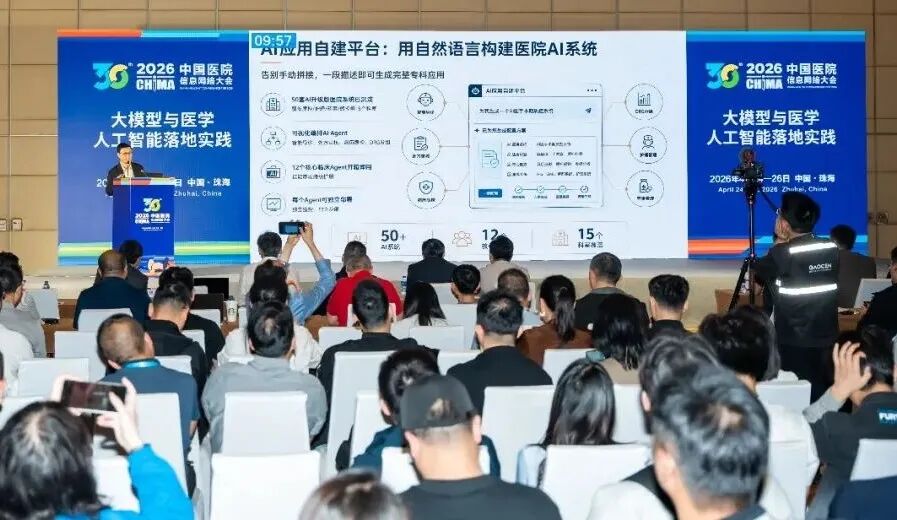
Currently, All-In-One Clinic has accumulated 50 out-of-the-box AI-enhanced hospital system templates. Dr. Xue stated that, leveraging this platform, All-In-One Clinic is working closely with institutions such as the Sichuan Provincial Hospital of Traditional Chinese Medicine and the Shandong Provincial Hospital of Traditional Chinese Medicine.A bespoke “AI Avatar of Renowned Physicians” tailored for experts.
After addressing the challenge of rapid agent development, computational power requirements have emerged as a practical barrier for hospitals. Local deployment of full-scale large language models with hundreds of billions of parameters demands prohibitively high hardware investments, which clearly exceeds the IT budget allocations of most hospitals. In response, All-In-One Clinic has successfully compressed hundred-billion-parameter models down to the ten-billion parameter range using advanced model compression techniques.
While ensuring the continuous evolution of the model's specialized capabilities,Hospitals need to deploy only a minimal number of GPUs for smooth operation.This privatized deployment model not only significantly reduces the cost of computational dimensionality reduction but also fundamentally ensures that core medical data “never leaves the hospital,” perfectly aligning with the security and compliance requirements of Level 3 Classified Protection.
Even with models and computing power in place, API integration remains the “last mile” challenge in AI implementation. Due to the multitude of Hospital Information System (HIS) vendors across hospitals and the lack of unified interface standards, traditional system integration often requires months of communication, coordination, and cumbersome interface joint debugging.
To break this industry deadlock, All-In-One Clinic independently developed the “HIS Claw” seamless integration solution.This solution requires no modification to the hospital’s existing core information systems or underlying interfaces, nor does it demand extensive cooperation from vendors; AI-generated medical record content can be directly and seamlessly written into the Hospital Information System (HIS). At the conference, Dr. Xue shared a representative case: at Shaoxing People’s Hospital, integration tasks that had remained incomplete for three months using traditional methods were fully adapted and deployed within just a few days after adopting HIS Claw technology, achieving efficient interoperability between systems.
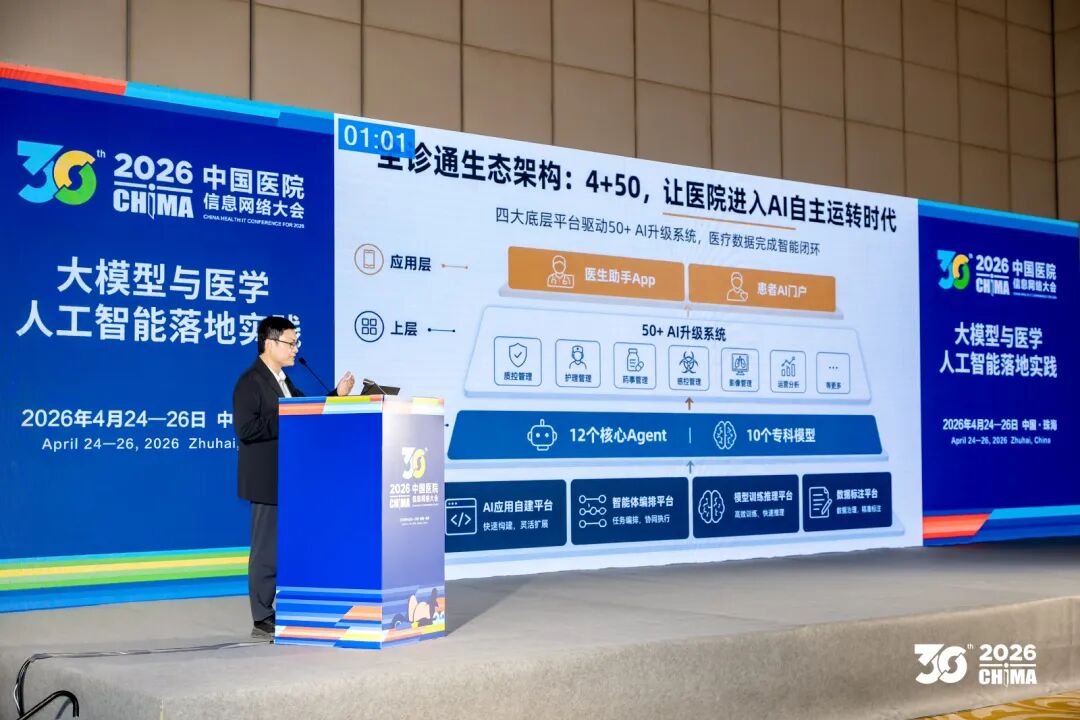
The key to imbuing AI systems with true vitality lies in the continuous feedback of data and the self-iteration of models.
All-In-One Clinic made a major showcase at this conferenceAutomated Data Synthesis and Annotation Platform, Medical Model Training and Inference Platform,Transform dormant historical medical records in hospitals into high-quality fuel to drive model evolution. Taking psychiatry, a field with extremely challenging data annotation requirements, as an example, Dr. Xue successfully helped Hangzhou Seventh People’s Hospital achieve a fully automated closed loop for data processing and model fine-tuning by delivering this integrated annotation and training-inference platform to the hospital. Meanwhile, to promote standardized development within the industry, All-In-One Clinic, in collaboration with multiple leading clinical experts in China, has constructedThe First Quality Evaluation System for Chinese Ambient Digital Scribing (ADS)The system’s automated evaluation results demonstrated a 97.6% concordance rate with assessments by senior experts. Related core papers have been submitted to the prestigious international academic journal IEEE. This not only defines what constitutes high-quality AI-generated medical records but also provides a rigorous and objective scientific benchmark for the standardized evaluation of general-purpose large language models in healthcare.
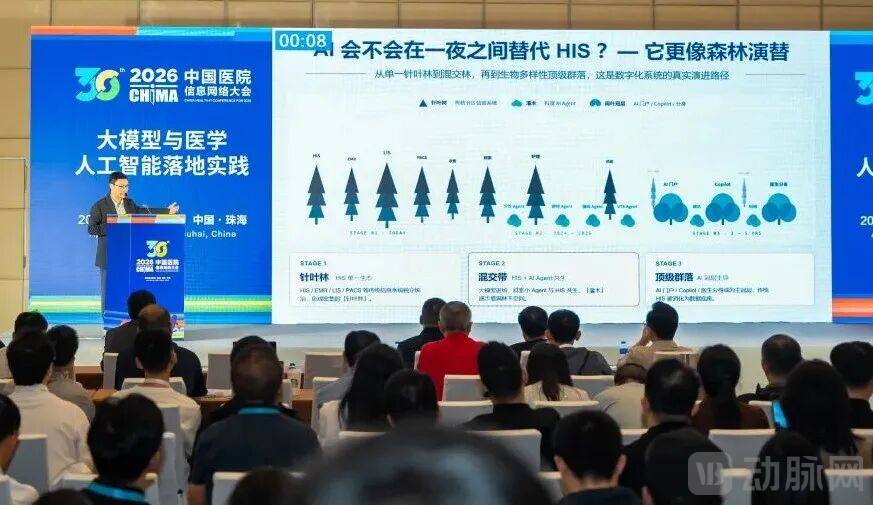
At the conclusion of his speech, Dr. Xue Chong outlined the future of healthcare digitalization through a vivid and grand ecological metaphor. He mentioned,AI will not abruptly replace traditional HIS systems overnight; its evolution is more akin to the natural process of forest succession.From the early “coniferous forest” ecosystem dominated exclusively by standalone HIS systems, to today’s “mixed forest” era where large language models have entered the scene and various Agents coexist with HIS, the landscape will ultimately evolve into a “climax community” led by AI portals or physicians’ digital twins as the canopy, with traditional HIS steadily receding into the role of an underlying data foundation. Just as pine forests in nature are eventually replaced by lush broadleaf forests, All-In-One Clinic is leveraging its robust, innovative technological foundation and keen, pragmatic clinical insights to foster the rooting and growth of sophisticated, practical AI applications within the hospital environment.
In this irreversible evolution of medical digitalization, All-In-One Clinic is committed to partnering with healthcare institutions to cultivate their own intelligent AI neural networks.