

Three Signals Decoding the New Shifts in Life Sciences Real Estate
In 2025, China’s life sciences industry experienced rapid development, with the biopharmaceutical market size surpassing RMB 3.5 trillion by year-end. The 2026 Government Work Report listed biopharmaceuticals as an “emerging pillar industry” for the first time, signaling that proactive national and local policies in recent years will not only continue but may even be intensified. Driven by this new round of in-depth policy support, the industry is poised not only for further expansion in scale but also for enhanced innovation and R&D capabilities, a more robust industrial chain, and a more mature commercial ecosystem, thereby boosting the attractiveness and competitiveness of Chinese life sciences enterprises in the global market.
Under the goal of leapfrog development, Chinese life sciences companies are unleashing unprecedented demand for innovation-driven growth, international cooperation, and industrial chain cluster development, sending “new signals” to the corporate real estate market, including office and industrial park segments.
Driven by continuous industrial upgrading, the R&D capabilities of Chinese life sciences companies have significantly strengthened. In the innovative drug market, China ranked first globally in 2025 with 4,751 innovative drugs under development, accounting for 33.7% of the global total. The total value of overseas licensing transactions in business development (BD) for Chinese innovative drugs reached approximately USD 138.8 billion, representing nearly 50% of the global share, both setting historical highs. Propelled by this momentum, the market size of China’s innovative drugs grew by 34.5% year-on-year to RMB 740 billion in 2025. It is projected to surpass RMB 2 trillion by 2030, with a compound annual growth rate (CAGR) of 24.1%.
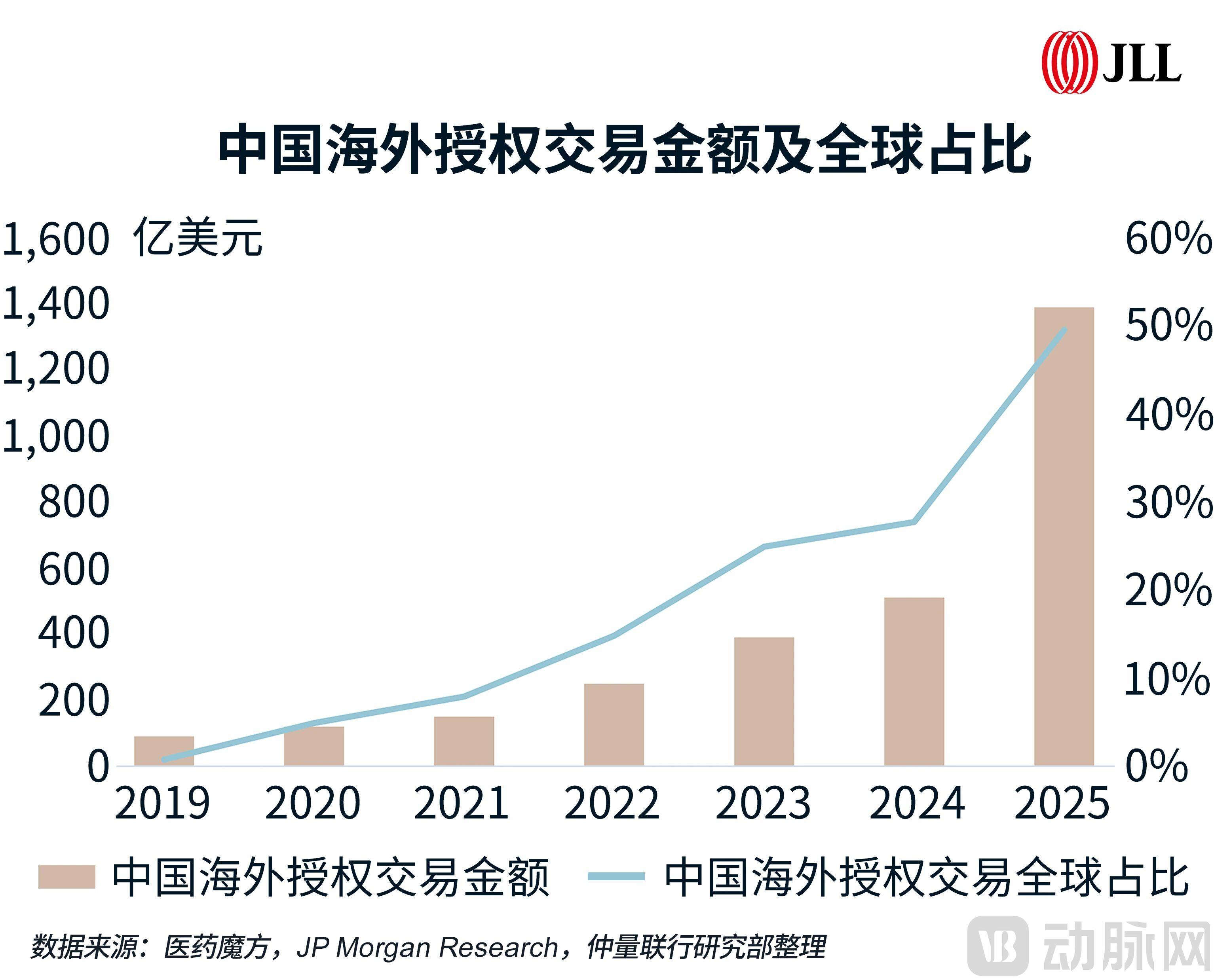
This dividend cycle, driven by policy and innovation, has severely tested the comprehensive competitiveness of enterprises. On one hand, it has shifted the development model of innovative drugs from relying solely on financing to a multi-pronged approach driven by “product commercialization + overseas R&D licensing + financing.” On the other hand, it has propelled Chinese life sciences companies to transition from generic drugs to innovative therapies, while encouraging primary biotech firms to upgrade and evolve or explore paths toward becoming Biopharma or Big Pharma entities, thereby “scaling up and strengthening their market position.”
As a critical operational platform for life sciences companies, the real estate sector serves as a flexible barometer of industry development. In Shanghai’s Grade A office and premium industrial park markets, leasing demand from life sciences enterprises has shown signs of recovery, with a significant increase in inquiries from this sector.
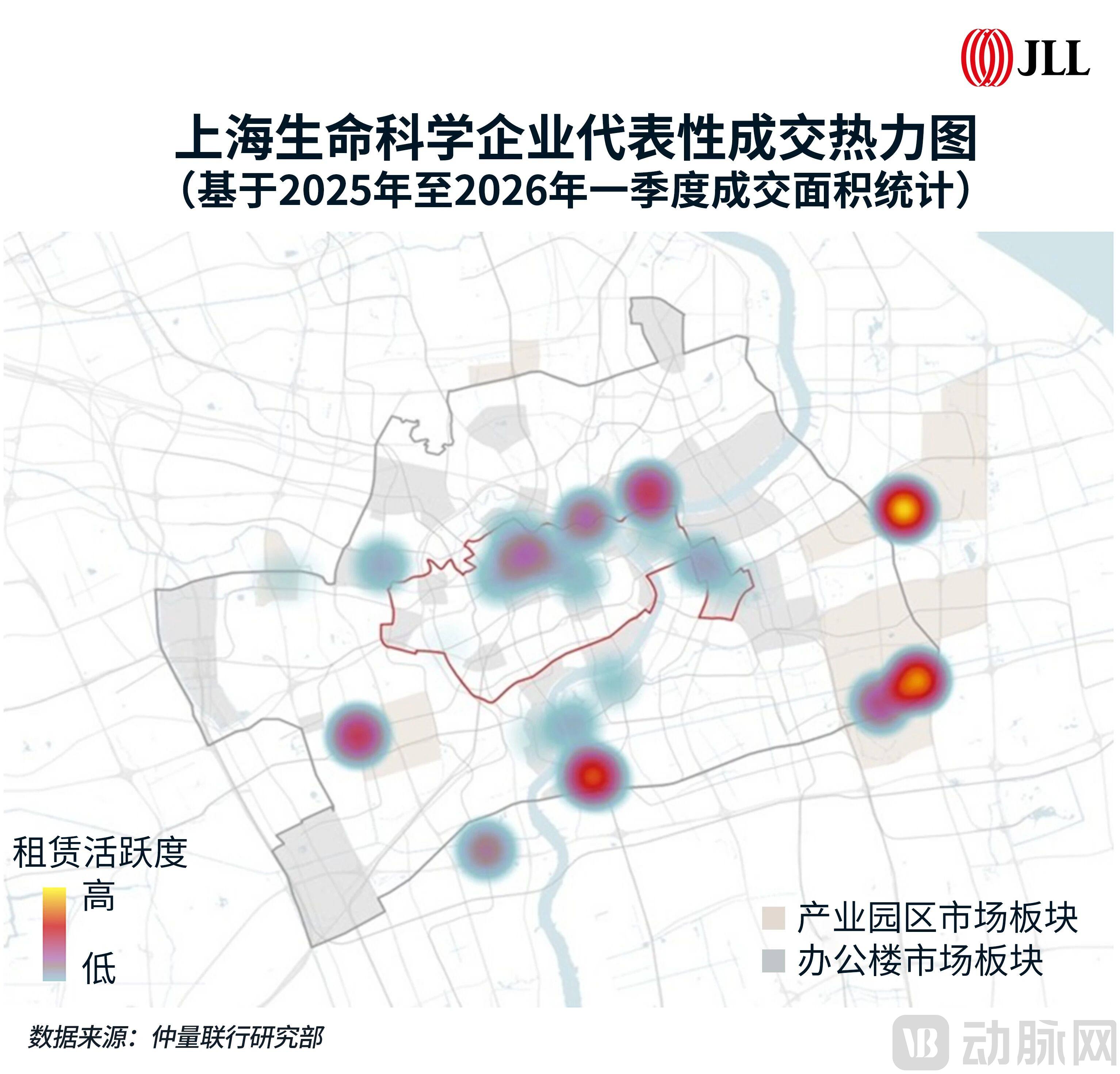

China’s pharmaceutical innovation achievements are being continuously commercialized, significantly enhancing its appeal to international pharmaceutical companies. In 2024, the value of mergers and acquisitions in China’s healthcare sector reached RMB 75 billion, a year-on-year increase of 82%. As the country embarks on its 15th Five-Year Plan in 2026 with intensified efforts, global industry leaders such as Novartis and Eli Lilly have successively announced investment plans to deepen their development in China. Consequently, multinational corporations are adopting more diversified spatial strategies in China, with practices such as leasing office spaces, acquiring industrial parks, and investing in base construction becoming increasingly common.
Taking Shanghai’s Qiantan Business District as an example, more than 70 domestic and foreign biopharmaceutical and medical device companies have established a presence there, with leading multinational corporations such as Roche Diagnostics, Siemens Healthineers, and Novo Nordisk leasing office spaces for their regional headquarters, operational centers, and other functions.
Notably, since 2026, large-scale transactions involving Chinese innovative drug assets have become frequent, with collaboration models evolving from single licensing agreements to more diversified forms. The “NewCo” model, characterized by hybrid “equity + licensing” deals, has gradually gained prominence. This approach helps companies strengthen international cooperation on their core pipelines and may potentially unlock new demand for real estate.
The “NewCo” (Newly Created Company) model refers to a structure in which a Chinese innovative drug company licenses the overseas rights of a specific asset pipeline to an overseas investor, with both parties jointly capitalizing a newly established entity (the NewCo). The investor typically holds more than 50% of the equity and leads subsequent clinical development, regulatory filings, and exit strategies such as commercial launch or mergers and acquisitions.
Life sciences enterprises exhibit strong industrial clustering characteristics. Whether establishing new operations or relocating, they consistently gravitate toward regions with high talent density, well-developed upstream and downstream supply chains, and robust transportation infrastructure. Today, prominent life sciences “industry hubs” in China’s innovative drug landscape—such as Shanghai Zhangjiang, Suzhou BioBay, Beijing Yizhuang, Chengdu Medical City, and Guangdong Bio Island—all possess the essential conditions for one-stop industrial clusters encompassing R&D, clinical development, manufacturing, and distribution. Spaces that provide an efficient environment for innovation will demonstrate more stable and stronger competitiveness in the real estate market.
Taking Shanghai Zhangjiang as an example, the park, which has gathered more than 22,000 enterprises, is also evolving. In terms of hardware, it is building a “comprehensive industrial community” that integrates office buildings, customized life sciences laboratories, living amenities, retail, hotels, and other business formats. In terms of software, it provides a full suite of services covering funding, talent, technology, and policy support. This enables the region not only to incubate high-value-added research enterprises but also to develop various low-value-added outsourcing services, thereby meeting the development needs of companies across the entire upstream and downstream industry chain and forming a complete “life sciences industrial community.” These are the core factors contributing to the “strong stickiness” many life sciences enterprise tenants feel toward Shanghai Zhangjiang. Represented by Insilico Medicine, the “first AI drug discovery stock,” which started in an 80-square-meter office and continuously expanded its leased space in Zhangjiang, culminating in the establishment of its largest global R&D center there in 2025, Zhangjiang’s advanced industrial ecosystem serves as the greatest “magnet.”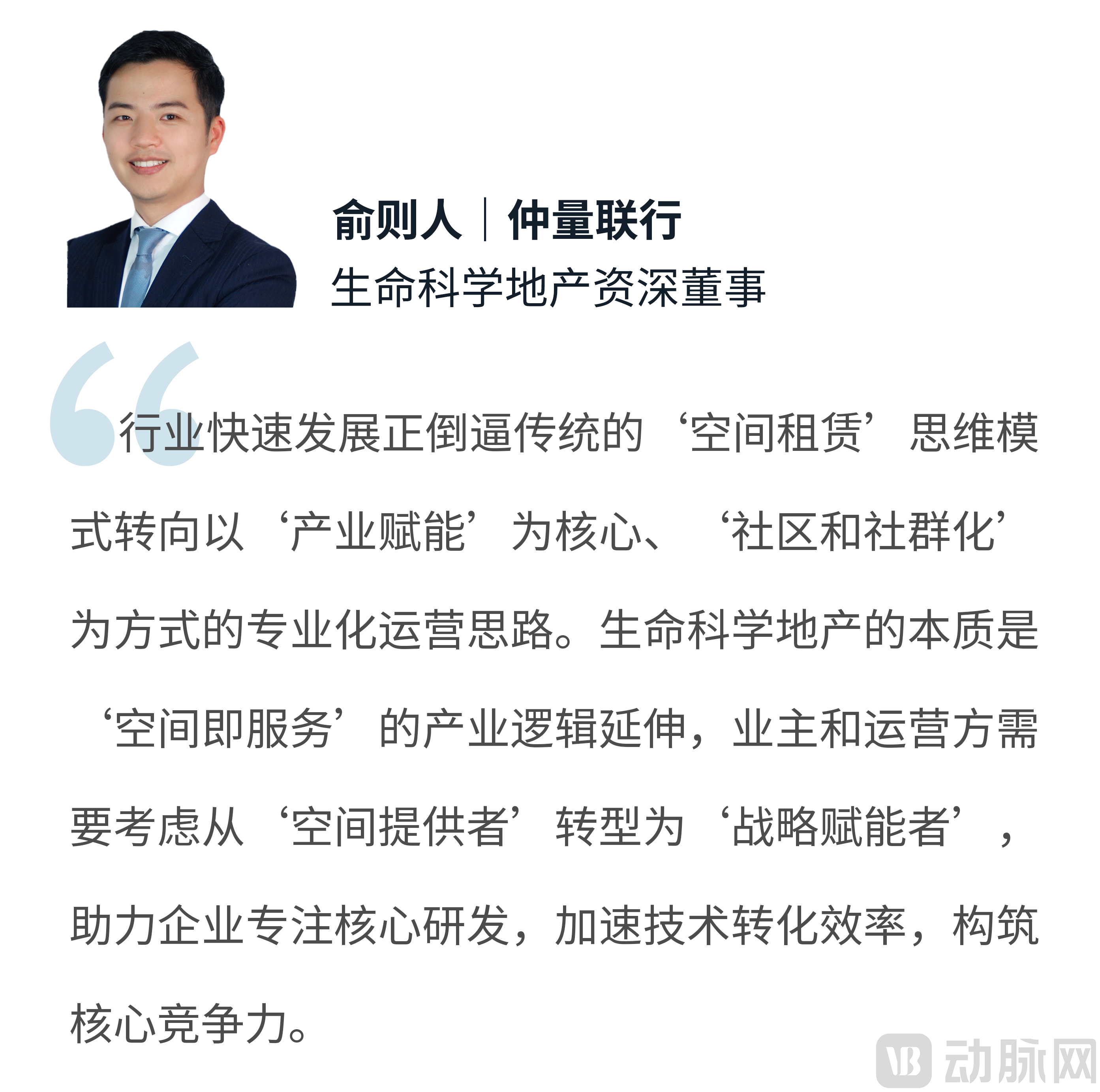
About JLL
JLL has long tracked frontier trends in the life sciences sector, providing government agencies, industrial park platforms, innovative enterprises, and investors with professional, customized strategic insights and solutions. Our expertise spans multiple asset classes relevant to life sciences companies, including offices, R&D centers, laboratories, manufacturing plants, and logistics facilities. Our comprehensive service offerings cover the entire value chain, ranging from planning for emerging industry segments and industrial park development to market research, promotional and operational consulting, and integrated project management. Leveraging in-depth market research and a forward-looking perspective, our team of experts has established robust and productive partnerships with governments at all levels, platform companies, and life sciences industrial parks. Whether you require research on cutting-edge sectors within life sciences, real estate investment and leasing services, or operational management support, JLL delivers tailored real estate strategic consulting and solutions. By facilitating more effective communication and accurately capturing client needs, we help enterprises realize their business visions.
For more information, please click:JLL Business Consulting