

China's First Sequential-Administration Herbal Compound Receives IND Approval for Phase II/III Clinical Trials in Adults with Type 2 Diabetes
On April 21, 2026, Dihuang Baoyuan Granules (Clinical Trial Approval Notice Nos.: 2026LP01221, 2026LP01222) and Fuling Yunhua Granules (Clinical Trial Approval Notice No.: 2026LP01223), two Category 1.1 innovative traditional Chinese medicine (TCM) drugs independently developed by Jingyihe Shengyiyao (Guangdong Hengqin Guangdong-Macao In-Depth Cooperation Zone) Co., Ltd. and Beijing Jingyihe Shengyiyao Technology Co., Ltd., were officially approved by the National Medical Products Administration (NMPA). The NMPA authorized the combined clinical trials of these two drugs for the treatment of adult type 2 diabetes mellitus, to be conducted sequentially through Phase II and Phase III. In the realm of new TCM drug development, this marks the first TCM compound formulation approved for clinical trials using a sequential administration regimen. This approval not only implements the provision in the Special Provisions for TCM Registration Management that "encourages exploration of sequential combination therapy based on clinical treatment protocols," but also represents a significant exploration of clinical evaluation models for innovative TCM drugs.
The traditional Chinese medicine (TCM) treatment for diabetes, involving the sequential administration of Fuling Yunhua Granules and Dihuang Baoyuan Granules to address both root causes and symptoms, originates from clinical practice. This approach has been explored and validated over more than a decade, with multiple clinical observations demonstrating its ability to lower glycated hemoglobin (HbA1c), the "gold standard" indicator for blood glucose control in type 2 diabetes. Some patients who achieved good glycemic control with this treatment have maintained normal blood glucose levels even after discontinuation. In recognition of its clinical value, and with strong support from the Administrative Committee of the Guangdong-Macao In-Depth Cooperation Zone in Hengqin and the Hengqin Traditional Chinese Medicine Industry Park, "Fuling Yunhua Granules and Dihuang Baoyuan Granules" were included as a key variety (No.: ZDP Z20250001) by the Greater Bay Area Branch of the Center for Drug Evaluation and Inspection, National Medical Products Administration, on March 7, 2025, formally accelerating the project's pathway toward new drug application.
Dr. Hu Tianbao, the inventor of the sequential "Biao-Ben" (symptom-root) treatment protocol, has been modifying classic formulas such as Fuling Zexie Tang and Baihe Dihuang Tang since 2012 for the treatment of type 2 diabetes. Through long-term clinical observation and feedback on therapeutic efficacy, he gradually refined and optimized a sequential medication regimen comprising Fuling Yunhua Granules (the "Biao" formula for symptom management) and Dihuang Baoyuan Granules (the "Ben" formula for root-cause treatment). This approach, based on the Traditional Chinese Medicine principle of alternating treatment between symptoms and root causes, has demonstrated favorable therapeutic outcomes in clinical practice.
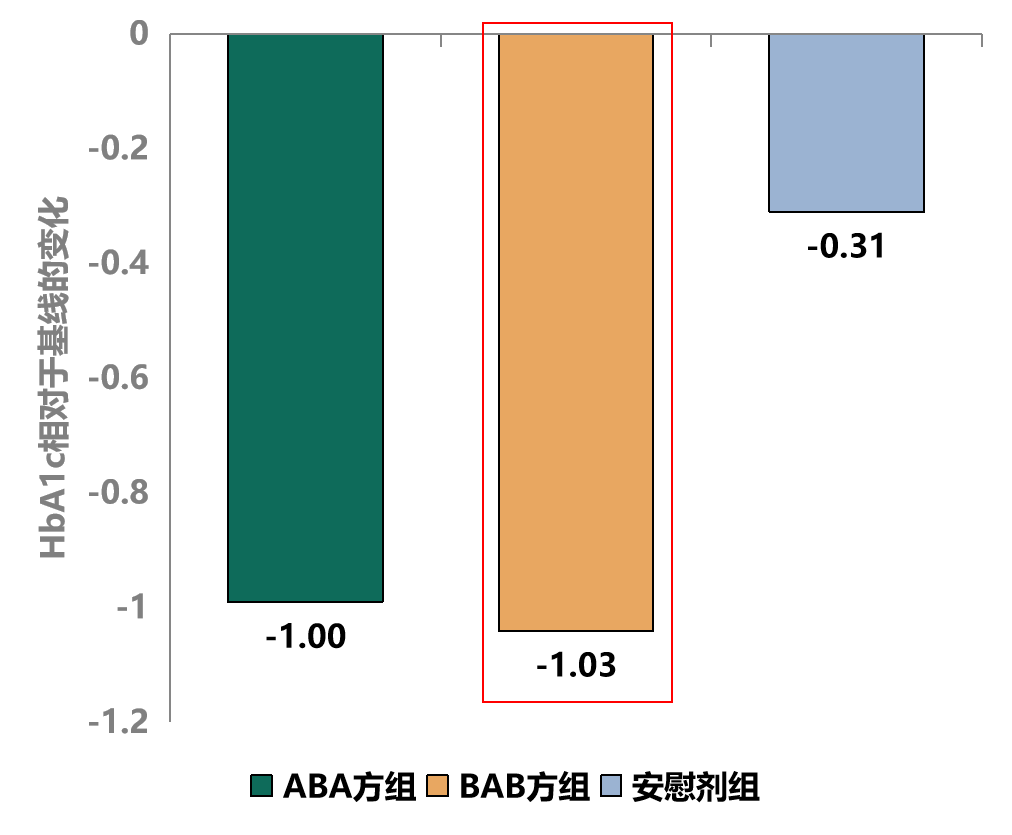
Both Dihuang Baoyuan Granules and Fuling Yunhua Granules have obtained filing approval as traditional Chinese medicine preparations for medical institutions in Beijing (Beijing Drug Preparation Nos. Z20240001001 and Z20240002000). Pharmacodynamic studies have been completed using various diabetes models, including ZDF rats, STZ-induced diabetic models, and insulin resistance models. Additionally, pharmacodynamic and toxicological evaluations of both single-agent continuous administration and sequential alternating administration have been conducted. Furthermore, a real-world retrospective analysis of human use experience involving 400 cases, a multicenter retrospective clinical study with 117 cases, and a 95-patient randomized, double-blind, placebo-controlled proof-of-concept investigator-initiated trial (IIT) spanning 16 GCP clinical research institutions across China, with Professor Ji Linong from Peking University People’s Hospital serving as the principal investigator, have all been completed. The primary efficacy endpoint results of the IIT showed that after 12 weeks of treatment, the least squares mean (LSM) reductions from baseline in HbA1c were greater in both the BAB regimen group and the ABA regimen group compared to the placebo group (1.03% vs. 1.00% vs. 0.31%). The LSM differences in HbA1c reduction compared to the placebo group were -0.72% (95% CI: -1.16, -0.28) and -0.69% (95% CI: -1.14, -0.23), respectively. These differences demonstrated clear clinical significance, providing a robust evidence base for advancing this regimen into registrational clinical trials.
Diabetes mellitus represents a major public health challenge in China. According to data from the International Diabetes Federation (IDF Diabetes Atlas, 11th Edition), the number of adults with diabetes in China reached 148 million in 2024, corresponding to a prevalence rate of 13.79%. The sequential treatment regimen comprising Dihuang Baoyuan Granules and Fuling Yunhua Granules holds promise as a novel therapeutic option for patients with type 2 diabetes.
In accordance with the requirements of the National Medical Products Administration, Professor Ji Linong from Peking University People’s Hospital will serve as the Principal Investigator. Starting in 2026, this protocol will be rigorously and standardizedly implemented across qualified Good Clinical Practice (GCP) hospitals nationwide to conduct registration clinical trials. As required by the Clinical Trial Notification, the study will focus on key issues such as characterizing the beneficiary population, exploring dosing regimens and doses, and comparing the efficacy and safety of monotherapy versus sequential administration. Innovatively, the trial designates “glucose-lowering” and “clinical remission” as primary and secondary endpoints, respectively, to comprehensively validate the efficacy and safety of the specimen-based sequential regimen for treating type 2 diabetes in both treatment-naïve and previously treated patients. Through rigorous and scientific clinical trials, we aim to develop a “Chinese Treatment Protocol” with distinct Traditional Chinese Medicine characteristics and significant clinical value for patients with type 2 diabetes in China.