

Exclusive Interview with He Mingke: AI Subtraction and Scenario Multiplication – How Ping An Good Doctor Is Breaking the Internet Healthcare Impasse

PINGAN GOOD DOCTOR
Internet Medical Health Platform
Internet healthcare in China has evolved over the past decade, progressing from light consultations to pharmaceutical e-commerce, and from traffic-driven narratives to monetization anxieties. Most players have had to confront challenges such as low user frequency and difficulties in generating revenue. However, PINGAN GOOD DOCTOR, the healthcare platform backed by Ping An Group, has instilled greater market confidence following its 2025 annual results and its recently released first-quarter report for 2026. The company reported rapid growth in its B-side corporate health management business, significant improvements in service efficiency driven by AI, and a continued narrowing of losses. This seems to confirm one thing: the “slow-moving” healthcare industry requires not traffic bombardment, but deep cultivation of specific scenarios.
Amid an industry-wide rush to develop large language models, popularize medical knowledge, and compete for consumer traffic, PINGAN GOOD DOCTOR has chosen a “counterintuitive” path: eschewing pan-entertainment content and all-encompassing offerings, it instead focuses on three core paid scenarios—insurance, enterprise services, and home-based elderly care—using AI to streamline operations and leveraging services to multiply value. He Mingke, the “pragmatist” who joined PINGAN GOOD DOCTOR last October, is now driving this strategy into deeper waters.
“We are not aiming to replace doctors; rather, we leverage AI to handle tedious and repetitive tasks, enabling physicians to focus on work of genuine value.” In an interview with VCBeat, He Mingke repeatedly emphasized the need to clearly define AI’s role. In his view, AI is not the protagonist of the story—medical services are. Indeed, what sets PINGAN GOOD DOCTOR apart is that it was never conceived as a pure internet company from the outset, but rather as a “connector”—linking insurance with healthcare, corporate employees with health management, and elderly individuals living at home with safety assurance.
In this exclusive interview, we attempt to reconstruct He Mingke’s perspective on PINGAN GOOD DOCTOR: a pragmatic player who deconstructs its business model amid “unique challenges,” maintains clear-headedness amidst the AI hype, and remains steadfast in its commitment to “serving payers” during industry upheavals.
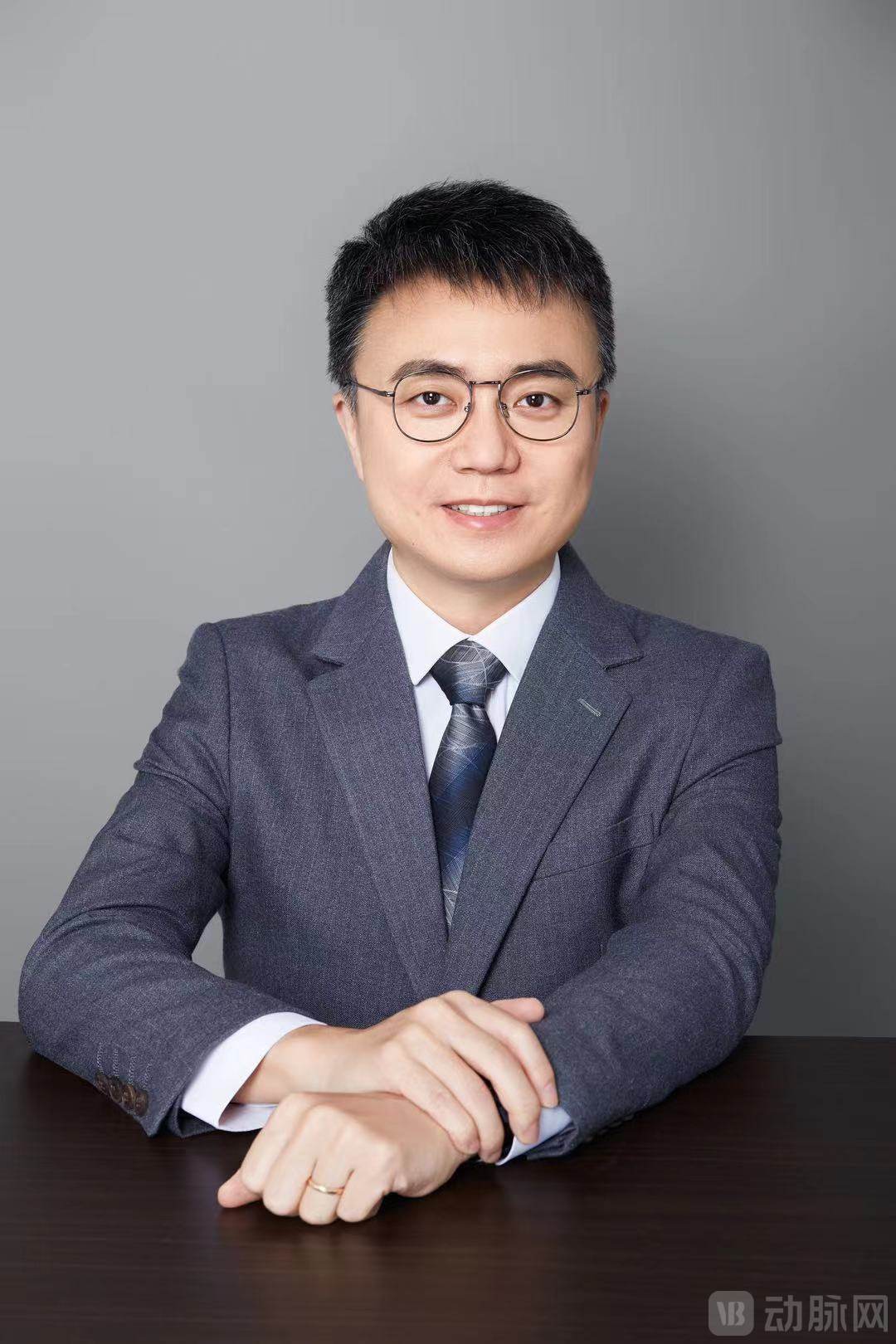
In the slow-moving healthcare industry, most internet healthcare companies face the same challenge: high customer acquisition costs, low user stickiness, and difficulties in monetization. However, He Mingke believes that PINGAN GOOD DOCTOR’s “challenge” is different. “We are not starting from scratch to acquire individual consumers; instead, we leverage Ping An Group’s base of over 200 million insurance customers, who are naturally health-conscious. Our real challenge lies in converting these insurance customers into frequent users of medical and health services, rather than letting them merely hold an insurance policy.”
“Service only begins after the insurance policy is sold.” He Mingke cited a common saying within Ping An. PINGAN GOOD DOCTOR’s B2B corporate health management business is a typical embodiment of this logic. Unlike traditional corporate physical examination services—where employees undergo an annual check-up and leave with zero follow-up interaction—PINGAN GOOD DOCTOR provides continuous services, including daily health management, chronic disease intervention, and psychological counseling, to corporate employees through an “AI + human physician” model.
Taking a large central state-owned enterprise as an example, He Mingke noted that PINGAN GOOD DOCTOR established online health records for its tens of thousands of employees. The AI system automatically pushes health recommendations based on physical examination data, with human doctors intervening to manage high-risk individuals. As a result, employees’ health indicators improved, complaints from corporate HR departments decreased, and employee satisfaction increased.
He Mingke candidly stated that this business is a systematic endeavor requiring long-term investment and tailored solutions for each enterprise. “The Enterprise Health business is not about selling software or health checkup packages; it is about genuinely helping companies address their employees’ health issues. This not only tests the platform’s ability to integrate medical resources but also necessitates building deep trust with both enterprises and employees.” He cited an example where some companies initially purchased the service as an “employee benefit,” but later came to truly appreciate its value when they discovered that the AI system could provide early warnings of chronic disease risks, thereby helping reduce absenteeism and boost productivity.
In the field of home-based elderly care, PINGAN GOOD DOCTOR has also adopted an unconventional strategy. He Mingke revealed that PINGAN GOOD DOCTOR’s home-based elderly care services focus not on generalized entertainment or learning, but on professional “safety care.” Specifically, the company equips customers with smart speakers to connect them with lifestyle managers and physician managers, while installing millimeter-wave radar or LiDAR devices in their homes to monitor accidents such as falls among the elderly in real time.
“The golden window for rescue after an elderly person falls is critical, and technology addresses this genuine pain point,” said He Mingke. Meanwhile, the “AI + human concierge” model provides essential emotional connection—seniors can chat with their concierge or request medical services at any time via smart speakers. He even envisions that elderly-care robots and embodied AI robots will play a significant role in this field in the future.
Another “challenge” repeatedly highlighted by He Mingke is meeting the needs of pharmaceutical companies. Against the backdrop of increasingly stringent compliance regulations in the pharmaceutical industry, the traditional pharma-physician channel has been obstructed, creating an urgent need for pharmaceutical companies to have a compliant and transparent platform to promote innovative drugs and manage patients. PINGAN GOOD DOCTOR is well-positioned to address this demand. “We are not helping pharmaceutical companies sell drugs; rather, we are facilitating precise connections between pharmaceutical companies and users. This is a multi-party win-win model: pharmaceutical companies improve their service reach, while users gain comprehensive, full-cycle health protection,” he pointed out, noting that Ping An’s industry synergy value as a third-party platform will continue to grow.
“Many people assume that PINGAN GOOD DOCTOR is in the business of internet healthcare, but in reality, we are in the service business,” summarized He Mingke. “The internet is merely a tool; service is the essence. The challenge of our service lies in simultaneously meeting the diverse needs of users, enterprises, pharmaceutical companies, and insurance providers, while ensuring compliance, transparency, and scalability.” This “unique difficulty” constitutes the competitive moat that distinguishes PINGAN GOOD DOCTOR from other internet healthcare companies.
He Mingke frankly stated that his attitude toward AI is “pragmatism” rather than “fanaticism.” “We believe in technology, but technology is a tool, not an end in itself. Especially in the medical field, the value of human beings is irreplaceable. PINGAN GOOD DOCTOR’s AI strategy is clear: let AI handle tedious, repetitive, and data-driven tasks, thereby freeing doctors to focus on high-value work that requires empathetic communication.”
Take “ZhiXiang JiaYi,” which is set to launch nationwide in May, as an example. The front end features AI-powered consultations, while the back end seamlessly connects to human physicians. When users input their symptoms, the AI conducts an initial assessment and recommends appropriate medical departments and diagnostic tests. If the condition is complex or the user exhibits anxiety, the system automatically transfers the consultation to a human doctor.
“Our data shows that AI can handle more than 70% of consultations for common and chronic diseases very well. However, the remaining 30%, particularly those involving emotional support and complex clinical judgments, must be handled by physicians,” said He Mingke.
As the medical adage goes, “To cure sometimes, to relieve often, to comfort always,” he views this as the core reason why AI cannot replace doctors. “Human physicians offer unique value in providing emotional support; even if their words are identical to those generated by AI, the human touch conveyed through video, audio, and tone is distinctly different.”
In the field of diagnostic imaging, PINGAN GOOD DOCTOR’s AI system can perform initial screening and preliminary review of CT scans, X-rays, and other images by flagging suspicious areas, which are then subject to final verification by radiologists. “We have calculated that AI can save doctors more than 50% of their image interpretation time, allowing them to focus on identifying complex features and rare cases,” said He Mingke. Nevertheless, the final diagnosis must still be signed off by a physician, as healthcare is a high-risk industry where AI can serve as an aid but cannot replace human clinicians.
Another interesting application is sports health management. He Mingke introduced that PINGAN GOOD DOCTOR developed a “Sports Rewards Program” for a large enterprise, which uses AI technology to score employees’ physical activities, such as stair climbing, running, and jump rope, with points redeemable for prizes. “This may seem like a minor feature, but it has proven highly effective. Employees compete with one another and share their scores on social media, instantly boosting the company’s fitness culture.” He Mingke joked, “In this context, AI is not about showing off technical prowess, but rather about providing motivation.”
However, He Mingke also clearly recognizes the “low-frequency” dilemma facing AI in internet healthcare. “Healthcare is inherently a low-frequency need; no one gets sick every day. No matter how powerful AI becomes, it cannot change this fundamental nature,” he said. PINGAN GOOD DOCTOR’s solution is to transform low-frequency medical services into high-frequency touchpoints through proactive health management.
“We have consistently applied Bian Que’s concept of ‘treating disease before it arises.’ For instance, by leveraging AI to analyze users’ health examination data, we provide early warnings for chronic disease risks and deliver personalized dietary and exercise recommendations. Users can interact with our system without being ill. This is known as proactive health, which represents the future direction.” He Mingke revealed that PINGAN GOOD DOCTOR is exploring more scenario-based products for proactive health, actively responding to the national “Healthy China 2030” plan.
“Ultimately, AI is a tool that helps us improve efficiency and user experience,” summarized He Mingke. “Technological power can provide new dimensions for resolving the trade-off between cost and experience, much like building bridges or tunneling through mountains to break through two-dimensional limitations and achieve balance.” PINGAN GOOD DOCTOR does not adopt AI for its own sake; its decision-making logic is always grounded in practical questions: Can this technology solve real-world problems? Can it benefit users? Can it reduce costs? If the answer is yes, it is deployed; if not, even the most advanced technology is merely a gimmick. This pragmatic understanding of AI may well be the key to PINGAN GOOD DOCTOR’s clarity amidst the hype.
He Mingke has repeatedly emphasized a core viewpoint: the essence of PINGAN GOOD DOCTOR is “serving the payers.” This stands in stark contrast to his previous experience at internet companies. “In the past, when developing internet products, the focus was on how to offer free access to users and how to monetize traffic. At Ping An, however, we must consider the interests of three parties—insurance companies, enterprises, and individuals—focusing on how to balance cost and user experience, and how to ensure clients’ funds are spent effectively. This shift in perspective defines the entire business logic of PINGAN GOOD DOCTOR.”
From He Mingke’s perspective, China’s healthcare security system can be summarized as a “three-pillar” model: the first pillar is state-sponsored medical insurance (comprising employee basic medical insurance and urban-rural resident basic medical insurance), the second pillar is employer-sponsored commercial health insurance, and the third pillar is individual commercial health insurance (with an annual contribution limit of RMB 12,000). “We can play a significant role in both the second and third pillars.”
He Mingke cited corporate commercial insurance as an example in his analysis for VCBeat, stating that PINGAN GOOD DOCTOR can customize health management solutions for enterprises, helping them provide the most cost-effective medical services to employees within limited budgets. “We do not offer the most expensive or the cheapest options; instead, we strive for a balance between cost and experience.”
This equilibrium stems from PINGAN GOOD DOCTOR’s years of exploration. He Mingke candidly stated, “We have made numerous attempts, with some succeeding and others failing. Ultimately, we came to understand a key principle: in the healthcare sector, standalone online consultations have inherent limitations, and integrating them with offline services and payers is one of the critical approaches to addressing these challenges.” Consequently, PINGAN GOOD DOCTOR has established a comprehensive service ecosystem encompassing online consultations, seamless coordination with offline medical care, and rehabilitation management. “Our goal is to ensure that users receive continuous support throughout their entire health journey—from the initial onset of discomfort through diagnosis, treatment, and recovery.”
Taking home-based elderly care services as an example, He Mingke revealed that PINGAN GOOD DOCTOR is exploring a collaborative model involving the government, commercial insurance, and technology. “The state provides long-term care insurance and community kitchens as basic safeguards. PINGAN GOOD DOCTOR offers home care services to policyholders, including smart speakers, lifestyle concierge, and physician concierge services. In terms of technology, we utilize millimeter-wave radar and LiDAR to ensure safety. More smart devices will be integrated into this system in the future. This is not something a single company can achieve; it requires collaboration across the entire ecosystem.”
In response to VCBeat’s question, “What is the greatest change PINGAN GOOD DOCTOR can bring to society in the next three years?” He Mingke stated, “Two aspects: one is technology, and the other is payment. We will deeply integrate AI into healthcare and medical services to enhance service quality and efficiency. Meanwhile, through corporate health management and commercial insurance, we aim to improve overall health outcomes, enabling people to get sick less often and at a later stage in life.”
He Mingke specifically highlighted that China’s healthcare challenges can be addressed through extreme digitalization, intelligence-driven innovation, and advanced logistics and express delivery systems. By establishing a tiered healthcare system based on digital infrastructure and instant retail, patients can consult with “Zhixiang Family Doctors” from home, thereby alleviating hospital congestion and improving the efficiency of medical resource utilization.
“As payment capacity improves and technology advances, platforms will become increasingly important. PINGAN GOOD DOCTOR is such a platform; we represent both payers and users, and our mission is to facilitate a more equitable and efficient allocation of medical resources.” He Mingke believes that PINGAN GOOD DOCTOR does not aim to disrupt hospitals or replace doctors, but rather serves as an adjunct to the national healthcare system, an applier of technology, and a representative of payers. “Our role is clear: leverage technology to solve more problems, ensure cost-effectiveness, and benefit the general public.”
This strategic focus on “serving payers” may well be the fundamental reason why PINGAN GOOD DOCTOR has remained calm and continued to move forward amidst the clamor of the internet healthcare industry.