

China's Innovative Drugs Accelerate Value Creation: Insights from the 6th Asia Healthcare Forum in Hong Kong
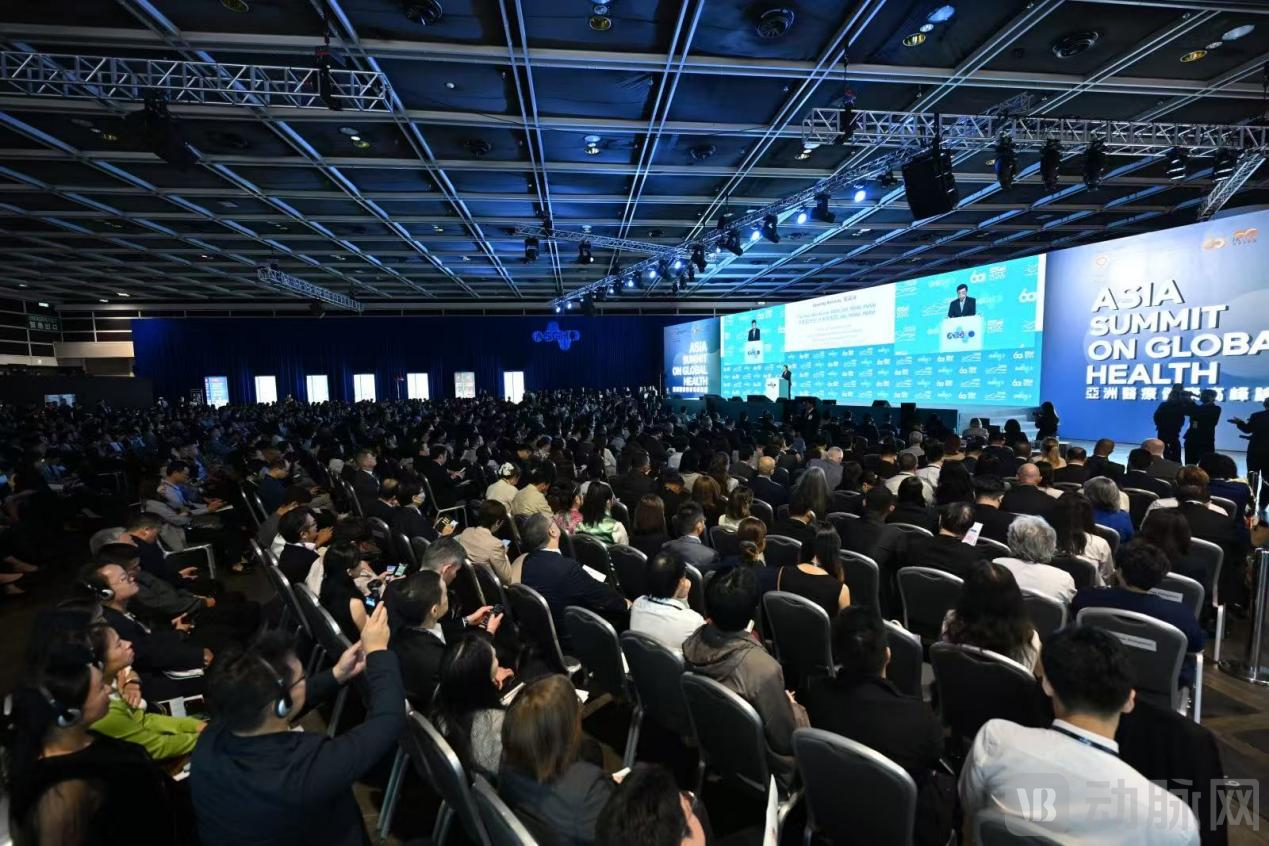
The 6th Asia Health and Healthcare Summit was held in Hong Kong on May 11–12, 2026. With Shanghai Industrial Holdings Limited as the strategic partner, this year’s summit focused on core themes including biopharmaceutical innovation, smart healthcare, cross-border collaboration, and the integration of industry, academia, and research. Industry leaders, top scholars, and representatives from investment institutions from around the world attended the conference.
Accelerating Value Creation in China’s Innovative Drugs
“At the outset of the 15th Five-Year Plan period, the strategic positioning of China’s healthcare industry is undergoing a comprehensive upgrade. For the first time, the Government Work Report delivered at the Two Sessions listed biopharmaceuticals as a national emerging pillar industry, alongside integrated circuits and aerospace. The Proposal for the 15th Five-Year Plan explicitly calls for ‘accelerating the building of a Healthy China’ and ‘supporting the development of innovative drugs and medical devices,’ signaling that biopharmaceuticals have entered the core track of national strategy.”
Performance on the industrial front is more tangible. Data from the National Medical Products Administration (NMPA) shows that 76 innovative drugs were approved for marketing in China in 2025, a year-on-year increase of 58.3%. For the first time, domestically produced innovative drugs accounted for a larger share than imported new drugs among chemical drugs and biological products. In the first quarter of 2026, the total value of business development (BD) licensing-out deals for Chinese innovative drugs exceeded USD 60 billion, approaching half of the full-year total for 2025. According to a research report by Huatai Securities, the number of BD projects involving domestically produced innovative drugs increased by 73% year-on-year since the beginning of 2026, while the total disclosed transaction amount rose by 135% year-on-year. Bispecific antibodies, antibody-drug conjugates (ADCs), and GLP-1 therapies have emerged as the three leading therapeutic areas driving overseas expansion.
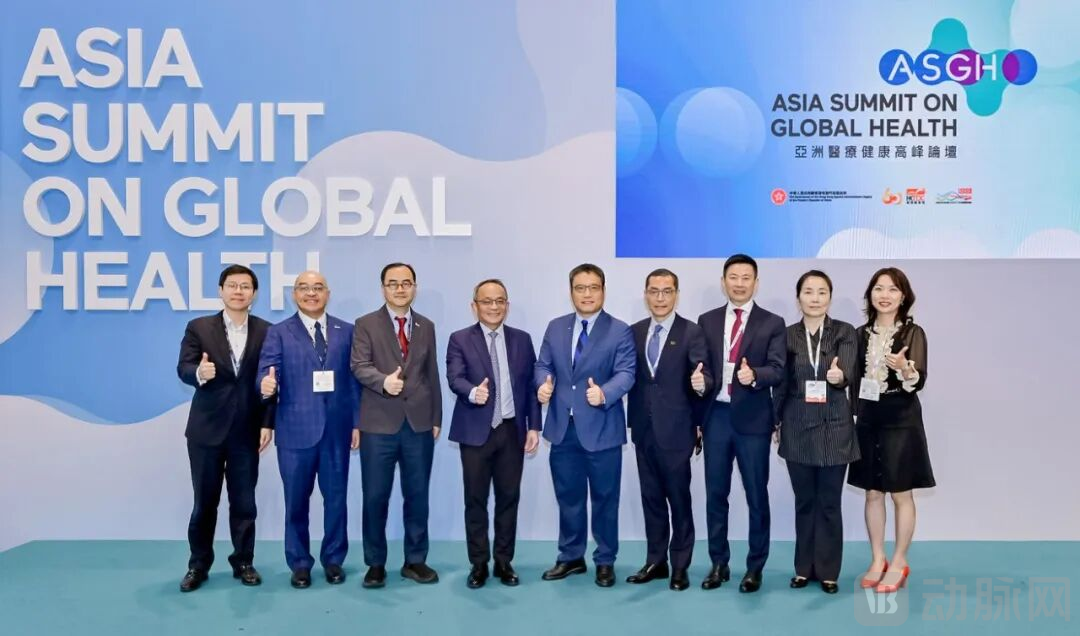
Liu Dawei, Executive Director of SIIC Capital and General Manager of SIIC Capital (Hong Kong), was invited to attend the 6th Asia Healthcare Summit and deliver a speech. He stated that in recent years, China’s competitiveness in pharmaceutical innovation has significantly strengthened. Supported by comprehensive factors including policy, talent, technology, industry, and capital, a resilient and advantageous ecosystem for Chinese pharmaceutical innovation is accelerating its formation. SIIC Capital actively leverages its dual role as a “capital engine” and “industry partner,” promoting the synergistic development of “technology + finance + industry.” The firm has established a multi-currency, full-stage fund matrix and is deeply involved in the R&D and commercialization processes of multiple innovative drugs and medical devices. Looking ahead, SIIC Capital will continue to prioritize Shanghai-Hong Kong collaboration and the integration of industry and finance, working with partners across all sectors to facilitate high-quality breakthroughs in China’s innovative pharmaceutical sector.
From Approval Acceleration to Commercial Realization
Changes in the industry are reflected not only in the explosive growth of out-licensing deal values, but also in multiple other aspects, including improved regulatory approval efficiency and a rebound in capital markets.
In 2025, the National Medical Products Administration (NMPA) approved a total of 289 new drug marketing applications throughout the year. Among these, 76 were Class 1 innovative drugs and 88 were Class 2 improved new drugs receiving their first-ever approval, with a primary focus on the field of oncology. Lan Gongtao, Deputy Director of the Department of Drug Registration Management under the NMPA, stated that while accelerating the review process, the agency has consistently upheld rigorous standards and maintained alignment with international practices. These innovative drugs have been launched in China either as a global first or simultaneously with other markets, enabling patients to access cutting-edge biomedical therapies at an earlier stage. This development marks China’s emergence as a significant force in the global landscape of biomedical innovation.
At the commercialization level, innovative pharmaceutical companies are entering a period of concentrated performance realization. Wind data shows that by the end of March 2026, 39 innovative drug companies had released their 2025 preliminary earnings reports, with many achieving growth in net profit attributable to shareholders, and five companies turning losses into profits. In terms of investment and financing, China's comprehensive biomedical investment and financing scale reached RMB 94.67 billion in 2025, showing a clear trend of recovery in capital market financing. Gu Feng, Chief Financial and Investment Officer of Shanghai Industrial Holdings (Group) Co., Ltd. and President of Shanghai Industrial Capital, believes that Chinese enterprises are accelerating their global expansion, particularly in the field of innovative drug research and development, where Chinese companies have already developed the capability to provide products and services on a global scale.
Operational Practices of the Hong Kong Biotechnology Fund
Efficiently translating cutting-edge scientific research achievements into industrialization and clinical applications is a common challenge for global healthcare innovation. The Hong Kong Biotech Fund, jointly established by the Hong Kong University of Science and Technology and SIIC Capital, provides a reference model for promoting industry-academia-research collaboration.
Prof. Zheng Guangting, Vice President of HKUSTAt the 6th Asia Health & Medical Summit, a systematic overview was presented of HKUST’s explorations and achievements in promoting the translation of scientific research outcomes and building a collaborative innovation ecosystem integrating industry, academia, and research. Special emphasis was placed on the Hong Kong Biotechnology Fund, jointly established with Shanghai Industrial Capital, which is dedicated to supporting HKUST’s biotech start-ups in translating their technological achievements. President Zheng expressed strong endorsement of the partnership and looked forward to its continued deepening. He pointed out that adopting a platform-oriented approach to break down barriers between basic research and industrial application is a key and viable pathway for accelerating the implementation of innovations in the life and health sectors.
Traditional translation of scientific research outcomes often gets stuck in the "valley of death"—lacking early-stage financial support and commercialization capabilities. A collaborative industry-academia-research system built on platform thinking can significantly shorten the cycle from technological breakthroughs to clinical implementation. Industry experts believe that “the future of healthcare belongs to those who can truly break down the boundaries between research, education, and industry.” The Hong Kong Special Administrative Region Government’s 2026–2027 fiscal budget explicitly proposes the establishment of an “International Clinical Trials Academy” to continuously serve the national biomedical technology strategy of “bringing in” and “going global.” The industry-academia-research collaboration model between the Hong Kong University of Science and Technology (HKUST) and SIIC Capital is a strong attempt to align with Hong Kong’s overall strategy to develop into an international hub for medical innovation.
Conclusion
In the inaugural year of the 15th Five-Year Plan, as top-level strategic design, industrial innovation realization, and cross-border ecosystem closure converge, Asia’s strategic position in the global landscape of healthcare innovation is being redefined.