

From Roche Executive to Pioneer of Domestic Sequencing: Hui Tian and Axbio's Decade-Long Technological Breakthrough

Axbio
Gene Sequencing and Diagnostic Equipment Developer
In April 2025, a Class II medical device registration approval announcement issued by the Jiangsu Medical Products Administration sent ripples through the molecular diagnostics community—Axbio’s flagship product, the AxiLona EL-100, received official approval, becoming one of only two electrochemical multiplex PCR microarray instruments for EL-NGS available in China. At that time, nearly a decade had passed since CEO Tian Hui returned to China to launch his startup, driven by a cross-disciplinary vision bridging semiconductor technology and biotechnology.
In May 2026, Axbio formally submitted its IPO prospectus to the Hong Kong Stock Exchange, not only lifting the veil on this “Sino-American” biotechnology company but also outlining a breakout strategy in the gene sequencing and molecular diagnostics sectors—dominated by industry giants—by wielding electrochemical technology as its spear and deploying a full-industry-chain layout as its shield. With multinational giants such as Illumina and Thermo Fisher controlling over 80% of the global high-throughput gene sequencing market, and the domestic molecular diagnostics market dominated by traditional fluorescence technology, what survival logic and future uncertainties lie hidden in Axbio’s path forward?
Dr. Tian Hui, founder of Axbio, after obtaining his Ph.D. in 2000,Semiconductorworked in the field, developing CMOS image sensors. However, as CMOS technology replaced CCDs and the wave of smartphones supplanting cameras took hold, the industry largely completed its transition, leaving little room for further challenge. In 2013, Dr. Tian Hui joinedGeniaThe company was responsible for the R&D and mass production of high-throughput, high-sensitivity gene sequencing chips, revealing broad application prospects in the life sciences sector. One year later, Genia was acquired by Roche, and Tian Hui served as Vice President of the Sequencing Division. During his tenure at Roche, Tian Hui further enhanced his biological expertise through cross-departmental collaboration and gained a deeper understanding of the pain points in the life sciences field.
Influenced by the entrepreneurial spirit of Silicon Valley, Dr. Tian Hui and Igor Ivanov hit it off after a long conversation in 2016, giving birth to the initial concept of Axbio. At that time, Dr. Tian, who held dual bachelor’s degrees from Tsinghua University and a Ph.D. from Stanford University, had already spent nearly 20 years working at the intersection of semiconductors and biotechnology, previously leading sequencing operations at Roche. He had witnessed firsthand how foreign giants like Illumina monopolized the global sequencing market, leaving domestic companies trapped in fierce competition within the low-end segment while high-end equipment remained entirely dependent on imports. “Sequencing technology should not be monopolized by a few; domestically produced high-end equipment will surely break down these barriers,” Dr. Tian stated at an industry forum, revealing his original motivation for entrepreneurship. That same year, he and Ivanov founded Angstrom Centro Holdings, LLC, the predecessor of Axbio, in the United States. In 2017, the company established its presence in Shenzhen and was named Axbio, officially embarking on the challenging journey of developing domestic electrochemical sequencing technologies as a life sciences company founded in the U.S. and developed in China.
01
Betting on the “No Man’s Land”—EL-NGS’s Lone and Courageous Choice
“The future of gene sequencing lies not in replicating existing technologies, but in addressing unmet needs.” Tian Hui once reflected on his key decisions in this manner during a public interview. In 2019, while most domestic biotechnology companies were flocking to the traditional NGS (Next-Generation Sequencing) sector, Axbio quietly unveiled the engineering prototype of the AxiLona AXP-100 Gene Sequencer—a device hailed as “the world’s first EL-NGS gene sequencer.” Subsequently, in 2020, it released the engineering prototype of the AxiLona EL-100 Electrochemical Platform for Molecular Diagnostics.
This appears to be a risky bet. The growing market demand for multiplexed, rapid, cost-effective, and integrated testing solutions has endowed molecular diagnostic products with significant market potential. At that time, molecular diagnostic solutions already launched or under development primarily relied on non-sequencing detection methods, covering technologies such as fluorescence in situ hybridization (FISH), polymerase chain reaction (PCR), and gene chips. Traditional PCR products are typically limited to simultaneously detecting a small number of targets and require multiple processing steps and specialized infrastructure. In the field of gene sequencing, although next-generation sequencing (NGS) technology is mature and comprehensive, it is often costly and time-consuming, with limited read lengths. These unmet needs are becoming increasingly urgent in areas such as oncology diagnostics and genetic disease screening, where high timeliness is required, thereby creating market opportunities for developing innovative products with multiplexing capabilities, lower costs, and accelerated turnaround times. Tian Hui keenly identified this gap and decided to combine his expertise in semiconductor technology with biochemistry and microfluidics to create a novel EL-NGS (electrochemical long-read next-generation sequencing) platform.
The prospectus indicates that the most significant breakthrough of EL-NGS technology lies in its “optics-free” design—eliminating the complex and expensive optical components of traditional NGS by adopting electrochemical detection principles combined with a proprietary Bio-CMOS chip, thereby achieving multiple advantages including long read lengths, high accuracy, low cost, and rapid sequencing. The AxiLona EL-100 is a molecular diagnostic product based on electrochemical, multi-target, rapid, low-cost, and integrated biomolecule detection, primarily applied to nucleic acid and protein testing. Its core competencies are as follows: a single test can simultaneously analyze up to 54 targets; the limit of detection is as low as 100 copies/mL; specificity reaches 99.5%; the complete workflow can be completed within two hours; the instrument cost is only one-third to one-half that of traditional real-time quantitative PCR instruments; and reagent costs are merely half those of fluorescence-based detection reagents.
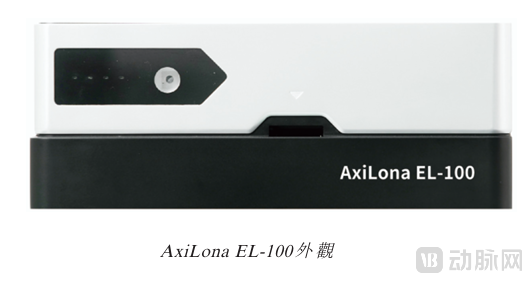
In completed clinical trials, the AxiLona EL-100 demonstrated high concordance with the comparator system (a commercially available real-time fluorescent quantitative PCR instrument and respiratory pathogen nucleic acid detection kit). Clinical trial results showed that the positive percent agreement between the AxiLona EL-100 as the test system and the comparator system was 100.00%, the negative percent agreement was 100.00%, and the overall percent agreement was 100.00%. The Kappa value was 1.0000 (>0.75), indicating a high level of agreement between the test system and the comparator system.
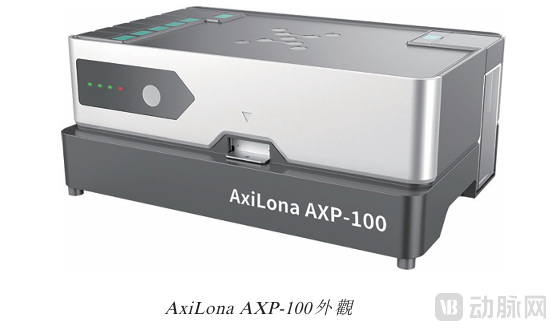
The AxiLona AXP-100 EL-NGS Gene Sequencer is the world’s first sequencer based on the EL-NGS platform, achieving an optimal balance across four key metrics: accuracy (>99%), read length (utilizing single-molecule sequencing-by-synthesis technology), cost (significantly reducing the cost per gigabase of data), and speed (generating up to 1 million reads simultaneously). The AxiLona AXP-100 meets both clinical application needs, such as cancer and infectious disease diagnostics, and research requirements, including structural variant studies and monogenic disease investigations.
Behind this decision lies the collaborative support of Axbio’s four R&D centers: the Silicon Valley R&D center focuses on chip and artificial intelligence technologies, while the centers in Shenzhen, Tianjin, and Wuxi emphasize biochemistry and clinical applications. This effort is driven by 68 cross-disciplinary R&D professionals specializing in semiconductors, biotechnology, and artificial intelligence, over 70% of whom hold master’s or doctoral degrees. As of the latest practicable date in the prospectus, the company’s founders have secured nearly 100 authorized patents worldwide, with additional patents pending, thereby establishing a robust barrier for this technological breakthrough.
But questions remain: Can this “world’s first” EL-NGS device pass rigorous clinical validation? Can it break the technological monopoly held by multinational giants and seize a first-mover advantage in the yet-to-be-commercialized EL-NGS sector?
02
2025: The Leap from “Lab” to “Clinical Practice”
2025 marked Axbio’s “first year of commercialization.” In addition to receiving registration approval for the AxiLona EL-100 from the Jiangsu Medical Products Administration, the company obtained a medical device manufacturing license for the product and initiated large-scale production at its 4,100-square-meter manufacturing facility in Wuxi. The three production lines have an annual designed capacity of 1,000 instruments and 100,000 test kits.
The launch of this core product has validated Tian Hui’s earlier assessment: the differentiated advantages of electrochemical technology in the field of molecular diagnostics.
“Our products are designed to address the ‘pain points’ in clinical practice—primary care hospitals cannot afford expensive equipment, and patients with acute and critical conditions cannot wait for lengthy test results,” emphasized Tian Hui in an interview. According to prospectus data, the global market size for electrochemical multiplex PCR microarray testing was only $397.6 million in 2024 and is projected to grow to $1.0278 billion by 2033, representing a compound annual growth rate (CAGR) of 11.1%. Meanwhile, the CAGR in the Chinese market is as high as 43.6%, with the market size increasing from $2.2 million in 2024 to $56.4 million in 2033.
In terms of commercialization strategy, Axbio adopts a dual-drive model of "direct sales + distribution," with a focus on penetrating hospitals and research institutions.
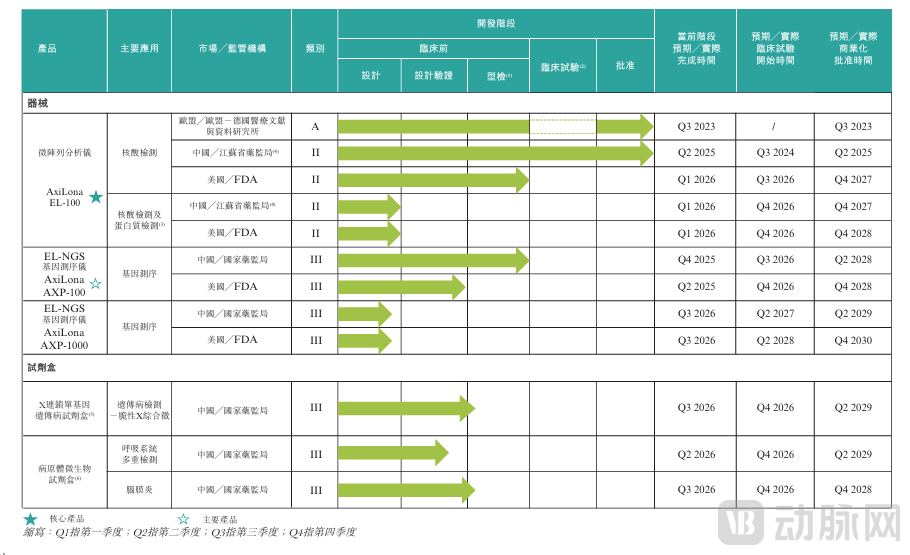
Meanwhile, the company’s R&D pipeline is also accelerating. As disclosed in the prospectus, AxiLona EL-100 completed preclinical type testing in the United States in March 2026, with U.S. clinical trials scheduled to commence in the third quarter. AxiLona AXP-100 completed type testing in China in December 2025, and clinical trials are planned for the third quarter of 2026. The upgraded AxiLona EL-100 (covering nucleic acid and protein detection), AxiLona AXP-1000 (with a throughput ten times that of AXP-100, with design completion expected in the third quarter of 2026), as well as multiple test kits for genetic diseases and pathogen detection, are all progressing as planned, with commercial approvals expected to be obtained sequentially starting from 2027.
03
Axbio’s Path to “Differentiated Survival”
Axbio’s path to going public has been marked by intense industry competition and structural challenges. The prospectus clearly outlines the competitive landscape in two core sectors:
In the field of non-sequencing molecular diagnostics, the global market is highly fragmented, yet leading companies hold distinct advantages. In 2024, the top five companies in China’s non-sequencing molecular diagnostics market collectively accounted for over 50% of the market share, with the largest player holding a 13.2% share. Within the niche segment of electrochemical multiplex PCR microarray testing, only two products had received regulatory approval in China as of December 31, 2025. Axbio’s AxiLona EL-100 is one of them, directly competing with Da An Gene’s DA9100.
However, the two products differ significantly in their market positioning. According to a comparison of their prospectuses, the DA9100 is designed for centralized, high-throughput testing. It is relatively large (840 mm × 545 mm × 665 mm) and weighs 60 kg, making it primarily suitable for third-party laboratories. In contrast, the AxiLona EL-100 is a compact, portable device (370 mm × 242 mm × 148 mm, weighing 6.15 kg) that accommodates both centralized and decentralized testing scenarios, making it better suited for primary care hospitals, emergency departments, and similar settings. “We do not seek direct competition with our rivals; instead, we aim to fill market gaps they have yet to address,” stated Tian Hui in an interview.
In the field of high-throughput gene sequencing, competition is even more intense. In 2024, the top five companies in China's high-throughput gene sequencing market collectively held a 95.8% share, with Illumina alone accounting for 47% of the market (Illumina’s global share reached 71.8%). Meanwhile, the EL-NGS sector remains in the pre-commercialization stage, with all currently available instruments designated for research use only. If Axbio’s AxiLona AXP-100 successfully completes clinical validation and obtains regulatory approval, it will become the first commercially available EL-NGS device in China, securing a first-mover advantage.
Industry data shows that the global market size for EL-NGS testing was only $1.4 million in 2024 and is projected to grow to $501 million by 2033, representing a compound annual growth rate (CAGR) of 91.8%. Within this, the Chinese market is expected to achieve a CAGR of 77.0%, growing from $1.4 million to $243.9 million. This indicates that although the sector in which Axbio operates is currently small in scale, it holds immense growth potential. The key to seizing this opportunity lies in commercialization capabilities and the speed of clinical implementation.
04
Profitability Challenges Post-Commercialization
The financial data disclosed in the prospectus reveals the biotech company’s typical profile of “high R&D spending, low revenue.” Below are the core standardized financial figures (in millions of USD):
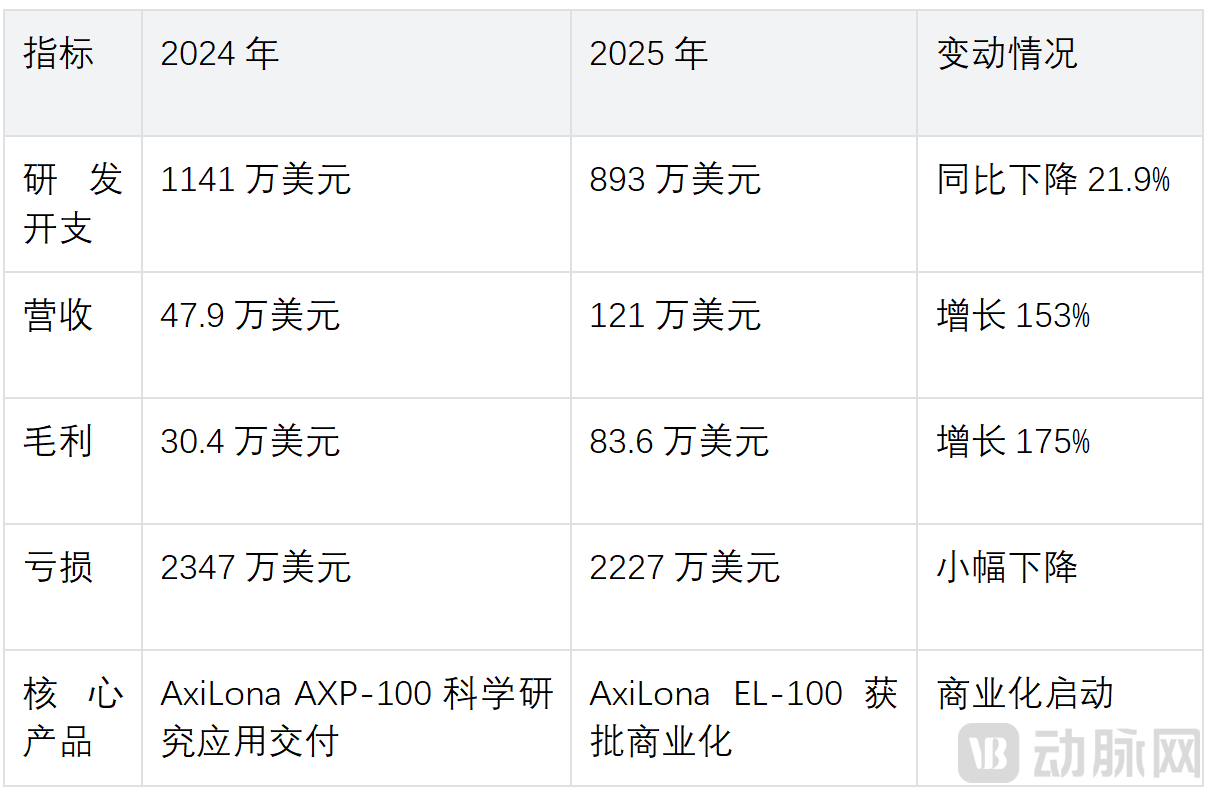
It is evident from the scale of R&D investment that the company remains in the research and development phase. From 2024 to 2025, R&D expenditures remained consistently high, with core investments focused on the development of the EL-NGS platform, kit development, and clinical validation. In an interview, Tian Hui candidly stated, “The growth of biotechnology companies requires patience. Our current core mission is to refine our technology and commercialize our products; profitability will follow naturally.”
Among these, the most critical uncertainties are: whether AxiLona EL-100 can be rapidly deployed in primary healthcare institutions, whether AxiLona AXP-100 can complete clinical trials and obtain regulatory approval as scheduled, and whether EL-NGS technology will be widely accepted by the clinical market. These key milestones will directly impact the company’s future development.
05
Future Uncertainty: Can the “Game Changer” in the EL-NGS Arena Go Further?
Standing at a critical juncture for its initial public offering, Axbio’s future is filled with both uncertainty and potential. From an industry trend perspective, the molecular diagnostics and gene sequencing markets hold immense growth potential: the global non-sequencing molecular testing market reached $9.8 billion in 2024 and is projected to grow to $22.5 billion by 2033; the global high-throughput gene sequencing market stood at $7.1 billion and is expected to reach $21.9 billion by 2033. As an emerging sector, EL-NGS is poised to become the next major growth explosion point.
Axbio’s core strength lies in “technological differentiation”—breaking the monopoly of traditional fluorescence-based technologies with electrochemical methods, filling the market gap for long-read sequencing with EL-NGS, and possessing independent R&D and manufacturing capabilities across the entire industry chain. However, to achieve a true breakthrough, three key challenges must be addressed: first, accelerating the clinical development of products under research to drive the commercialization of core offerings such as EL-100 and AXP-100; second, expanding the customer base to increase revenue scale; and third, continuously increasing R&D investment to cope with the challenges of technological iteration and market competition.
Tian Hui once stated in an interview, “What we are doing is not merely product innovation, but a revolution in technological platforms.” For Axbio, going public is only the beginning of a challenging journey. In a sector dominated by industry giants, can this Sino-US biotech company break through with its EL-NGS technology and emerge as a new force in global molecular diagnostics and gene sequencing? Can the AxiLona AXP-100 secure clinical approval as scheduled, ushering in a new chapter in the commercialization of EL-NGS? These uncertainties will determine the future growth trajectory of Axbio.
After all, in the biotechnology sector, while technological breakthroughs are important, the true test lies in translating technology into market-accepted products and achieving sustainable profitability. Axbio’s battle to break through is still ongoing.