

The Unspoken Challenge in Postpartum Rehabilitation: A Small Hospital Takes It Seriously
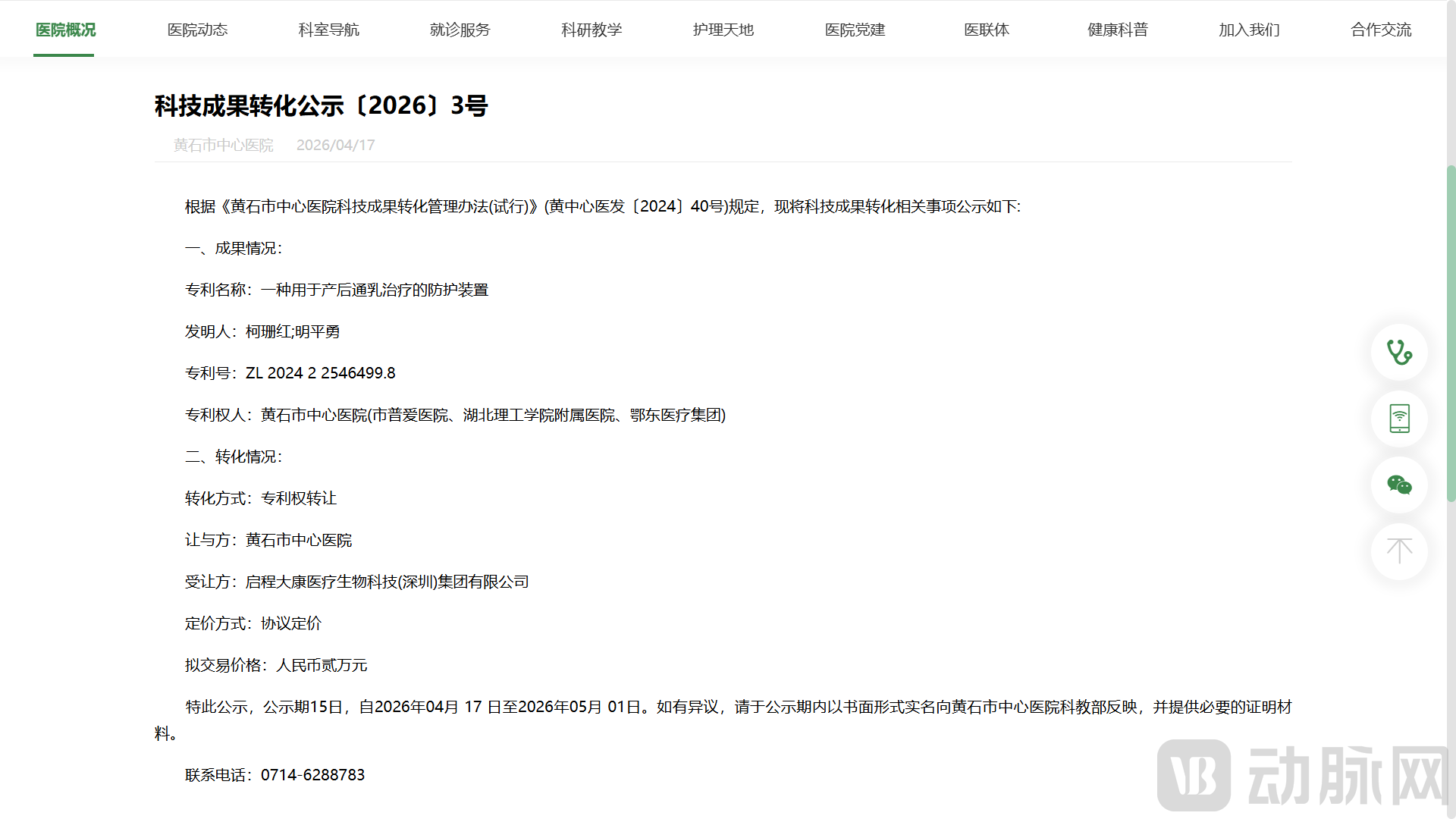
Image from the official website of Huangshi Central Hospital
Advances in modern medicine have brought new solutions to many diseases.However, in certain areas, unresolved issues are not due to technological accessibility but rather stem from a long-standing lack of serious engagement with these questions.
For example, in obstetrics and gynecology, parturients lie on treatment tables while nurses or rehabilitation therapists perform lactation massage—a process that requires the patient to expose her upper body. Everyone goes through this, yet no one considers it a problem worth addressing.
Ke ShanhongHe/She is an attending physician in the Department of Rehabilitation Medicine at Huangshi Central Hospital and has been specializing in postpartum rehabilitation since 2019.
Postpartum milk stasis is a common issue, and lactation support is a core component of postpartum recovery.In addition to physical discomfort, parturients are also required to expose their upper bodies for treatment, resulting in equally severe psychological distress.
But for a long time,“Exposure” seems to be tacitly accepted as a “necessary cost.”— It’s just part of the diagnostic and treatment process; you just have to endure it. However, for new mothers who have just given birth, whose bodies have not yet fully recovered and whose hormone levels are still fluctuating dramatically, the psychological discomfort caused by this “necessary exposure” is often harder to speak about than physical pain.
Ke Shanhong and her colleague Ming Pingyong designed a postpartum lactation protection device,The core structure is simple to describe:Protective cover with retractable legs, operation ports, transparent top panel, and a privacy shield.
During treatment, the privacy shield is raised to create an enclosed private space—the mother’s chest is obscured, but the transparent top panel allows the therapist to maintain visibility of the operational area. The protective cover prevents milk splatter throughout the procedure, while built-in latex sleeves at the access ports ensure a secure yet flexible seal.
The leg supports are retractable and adjustable, accommodating parturients of different body types and various scenarios.
This technology is intended toRMB 20,000The patent was transferred at a price to Qicheng Dakang Medical Biotechnology Group, which was established in 2015 and specializes in targeted precision care for female reproductive health.
In the field of postpartum recovery, many manufacturers focus on addressing lactation issues in new mothers, offering solutions beyond standard breast pumps, such as Haibo Kuo’s electrical stimulation devices for lactation induction and various other rehabilitation products. However, there appears to be a gap in the market when it comes to humanistic care. The patent transfer valued at 20,000 yuan may not significantly alter the industry landscape, but it makes one fact visible:Neglected Needs Are Still Needs.