

9th Hillhouse HCare Global Life Sciences Innovation Summit: From Single-Point Breakthroughs to Full-Chain Integration
On May 15, 2026, the 9th Hillhouse HCare Global Life Sciences Industry Innovation Summit was held in Shanghai. Centered on the theme “Accelerating the Entire Industry Chain and Creating Global Value,” the summit brought together scientists, clinical experts, executives from multinational pharmaceutical companies, biotech entrepreneurs, industry chain partners, and investors from around the world. Participants engaged in in-depth discussions on key topics including global collaboration, early-stage clinical development, industrialization and supply chain synergy, and the translation of AI and emerging therapies.
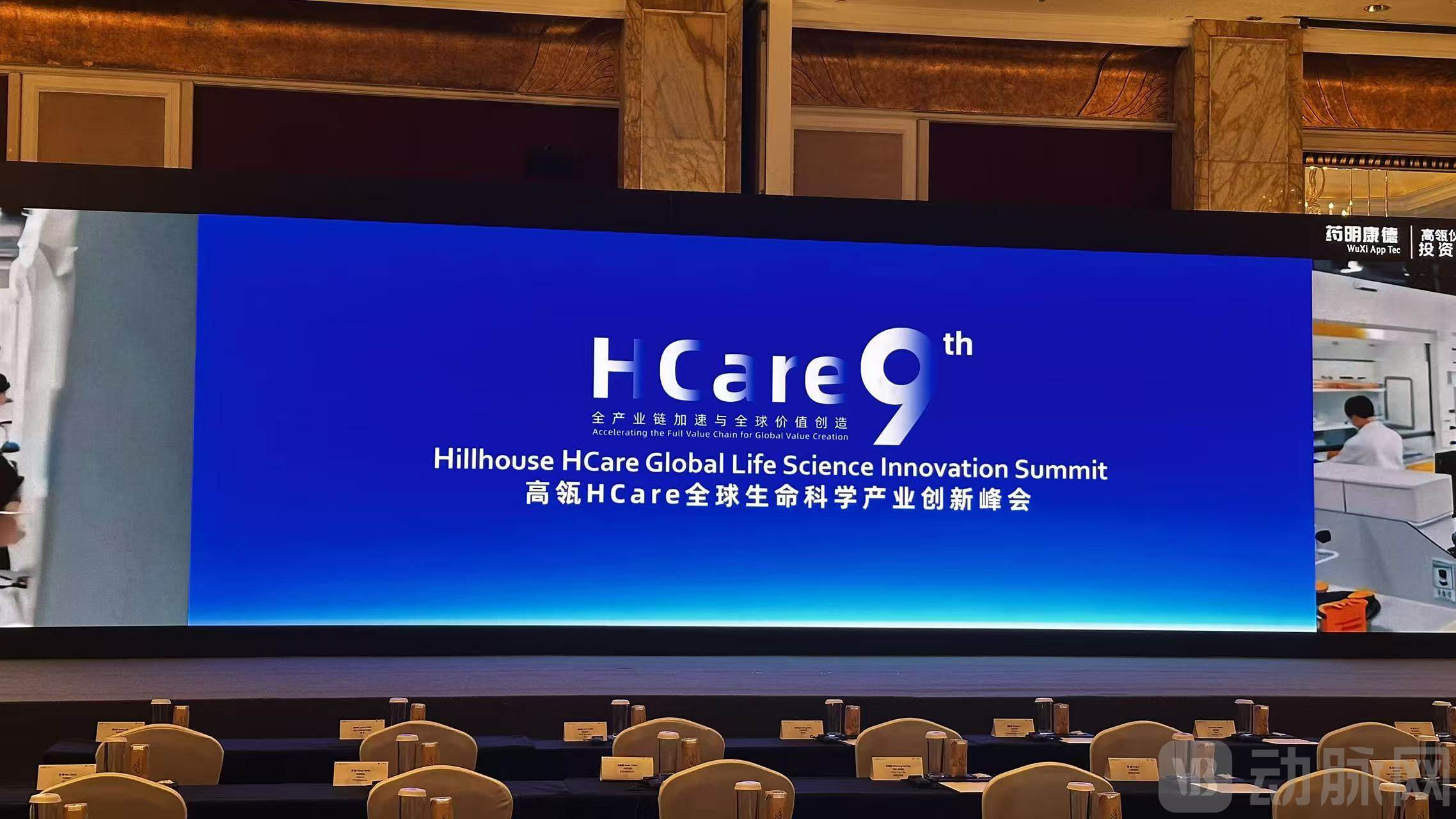
Against the backdrop of global life sciences innovation entering a new phase, industry focus is shifting from isolated breakthroughs and pipeline transactions toward more systematic capacity-building for innovation. The central theme of the HCare Main Forum this year is how to accelerate, stabilize, and enhance the quality of clinical validation, industrial translation, and global accessibility for truly valuable scientific discoveries.
In his opening remarks, Yi Nuoqing, Founding Partner and Co-Chief Investment Officer of Hillhouse, stated that as the HCare Summit enters its ninth edition, it has gradually evolved into a platform where diverse stakeholders across the life sciences industry value chain can connect, exchange ideas, and build trust. The life sciences sector is unique in that it demands both cutting-edge scientific breakthroughs and rigorous clinical validation; it requires not only long-term capital and industrial patience but also global collaboration and high-quality execution.
“Entering the Industry20Over the years, I have come to realize more profoundly that truly cycle-resilient innovation never emerges in isolation, but is born from high-quality industrial synergy..” Yi Nuoqing stated that today, the competitiveness of the life sciences industry no longer stems merely from isolated breakthroughs at single points, but rather from a more comprehensive, in-depth, and high-quality integration of ecosystems.
He further pointed out that the “Accelerating the Full Industry Chain and Creating Global Value”, it is not merely about pursuing speed, nor is it a one-dimensional "going global." True acceleration lies in reducing friction within the industrial chain and enhancing collaborative efficiency across different segments, all built upon international standards, compliance frameworks, and high-quality execution. True global value creation, meanwhile, fosters more open, professional, and long-term cooperation and integration among diverse regions, capabilities, and ecosystems.
In the keynote dialogue that opened the main forum, Yinuo Qing andPresident and Chief Executive Officer of Takeda Pharmaceutical CompanyChristophe WeberCentered on the theme “Going Global: How Chinese Biopharmaceutical Companies Can Grow into World Leaders,” participants engaged in discussions. As a key leader instrumental in propelling Takeda Pharmaceutical Company to become a globally leading pharmaceutical enterprise, Weber drew upon Takeda’s experience in global transformation to point out that for a company to truly go global, it must first exercise sufficient prudence and clarity in assessing the quality of its pipeline; second, it needs to establish a leadership team and organizational structure capable of supporting global operations; meanwhile, the board of directors, management, and shareholders must align on long-term capital allocation and strategic direction.
Weber believes that the transition from a biotech to a pharma company is both critical and challenging. In the biotech stage, the market focuses more on pipelines and scientific potential; however, as a company evolves into a pharma enterprise, capital markets and industry partners simultaneously scrutinize profitability, earnings per share (EPS), R&D investment, and future pipeline assets. This necessitates that companies effectively manage both commercialization capabilities and innovation capacities. For Chinese innovative pharmaceutical companies with global ambitions, clarifying strategic intent, understanding the U.S. and European market environments, and establishing appropriate partnership and commercialization pathways will be key to long-term growth.
On the Development of Early-Stage Clinical Research on Innovative Drugs in China,Professor Zhou Caicun, Shanghai East Hospital, Tongji UniversityIn his keynote address, he reviewed the evolving role of early-stage clinical research in China’s anti-tumor drug development, particularly in the field of lung cancer. He noted that in the past, China primarily contributed patient cases to global clinical trials conducted by multinational pharmaceutical companies, with limited involvement in protocol design and core decision-making. In recent years, however, with the rise of domestic biotech firms and a continuously expanding pipeline of innovative drugs, Chinese experts have been gaining increasing influence in clinical trial design, international multicenter studies, and global academic exchanges.
Professor Zhou Caicun pointed out that lung cancer serves as an important model for precision medicine. China has established a unique foundation in clinical research capabilities, investigator collaboration, and the supply of innovative drugs, driving a wave of source innovations and clinical studies into top-tier international journals and conferences. In the future, how to promote early signal verification, indication selection, combination therapy strategies, and global clinical development under higher standards will continue to shape the global landscape of lung cancer treatment.
WuXi Biologics CEO Chen Zhisheng in the keynote speech, he shared insights on the industrial support for next-generation biopharmaceutical R&D and manufacturing from the perspectives of CMC and CRDMO platform capabilities. He stated that for innovative drugs to truly go global, it is not only essential to have promising molecules and robust clinical data, but also indispensable to establish high-quality, high-efficiency, and scalable CMC and manufacturing systems. Particularly against the backdrop of the rapid development of innovative modalities such as bispecific antibodies, multispecific antibodies, and antibody-drug conjugates (ADCs), industry service platforms need to build systematic capabilities that balance R&D, process development, manufacturing, quality, and cost, thereby helping innovative pharmaceutical companies accelerate their transition from early-stage development to clinical trials and commercialization.
Dr. John Maraganore, Founding CEO of Alnylam Pharmaceuticals and CEO of JMM Innovations, shared the journey of RNAi therapeutics from a “counterintuitive” scientific concept to an industrial reality. Citing the development of RNAi drugs as an example, he pointed out that the emergence of breakthrough therapies often requires long-term scientific conviction, continuous technological iteration, patient capital, and high-quality collaboration with regulatory bodies, clinical partners, and industry stakeholders. For life sciences innovation, the true challenge lies not in a single technological breakthrough, but in validating and gaining acceptance for the technology within complex systems, ultimately delivering it to patients.
During the main forum, BioAdvantage, Hillhouse’s integrated clinical development collaboration platform, was officially launched. Zhen Ling, CEO of BioAdvantage, introduced that the platform aims to provide end-to-end integrated solutions from Preclinical Candidate (PCC) to Proof of Concept (POC). By connecting Hillhouse’s life sciences service ecosystem partners—including CROs, CDMOs, SMOs, clinical supply chain providers, and hospital networks—and leveraging the platform’s professional expertise in medical affairs, regulatory registration, development strategy, and project management, BioAdvantage helps global pharmaceutical and biotech companies more efficiently utilize high-quality R&D and clinical development infrastructure in the Asia-Pacific region, thereby facilitating faster, more standardized, and higher-quality clinical validation for early-stage projects.
Subsequently, BioAdvantage, together with core ecosystem partners including the Shanghai Institute for Clinical Innovation and Translation, WuXi Biologics, Emerald Clinical, Jingshi Pharmaceutical, and Gaobo Medical Group, jointly launched the “PCC to POC Early Clinical Alliance.” This alliance will address key bottlenecks in the transition from early-stage R&D to clinical proof of concept (POC), fostering more efficient collaboration across preclinical research, chemistry, manufacturing, and controls (CMC), clinical operations, regulatory strategy, hospital networks, and industry resources, thereby providing global innovative pharmaceutical companies with new options for early-stage development pathways.
From the global pharmaceutical industry’s transformation experience to the upgrading of China’s clinical research capabilities; from biologic drug R&D and manufacturing platforms to the long-term validation of emerging therapies such as RNAi; and further to the launch of BioAdvantage and the PCC-to-POC Early Clinical Alliance, the main forum of this year’s HCare conveyed a unified message:Life sciences innovation is shifting from isolated breakthroughs to end-to-end integration. Future global competitiveness will depend not merely on a single pipeline, technology, or transaction, but on the ability to foster high-quality synergy among science, clinical development, industry, capital, and global collaboration.。
As Yi Nuoqing stated in his address, the ultimate competition in life sciences innovation lies not merely in the breakthroughs themselves, but in the systemic capability to ensure these breakthroughs truly reach patients. Looking ahead, Hillhouse HCare will continue to serve as an open platform for industrial collaboration, connecting partners across different segments, regions, and areas of expertise, to drive high-quality development in life sciences innovation and jointly advance the well-being of patients worldwide.