

International Medical Journals and Clinical AI Convergence Salon Held in Hangzhou with Participation from JAMA, BMJ, and Elsevier

AliHealth
Medical and Health Services Network Service Provider
On the afternoon of May 13, 2026, the “Salon on the Integration of International Medical Journals and Clinical AI,” hosted by the Zhejiang Health Service Promotion Association and co-organized by AliHealth, was held in Hangzhou. Core representatives from several leading international medical journals and publishing groups, including JAMA, BMJ, and Elsevier, attended the event and engaged in discussions with more than 80 clinicians from across China. Observers noted that this gathering marked a rare occasion in recent years where top-tier international medical journals and publishers convened in China.
Shentu Zhengrong, President of the Zhejiang Health Service Promotion Association, stated at the event that, as a representative of a social organization under the supervision of the Provincial Health Commission, he positioned this salon as “a dialogue oriented toward the future, and even more so, an exploration grounded in the present.” Leveraging AliHealth’s advantages in the field of digital health, the aim is to jointly build a sustainable and reliable communication model based on AI and designed for physicians.
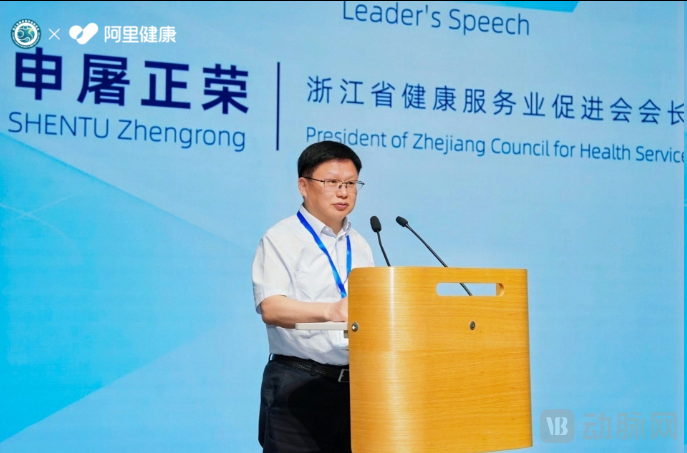
Shentu Zhengrong, President of the Zhejiang Health Service Industry Promotion Association
Professor Xiang Peng, Director of the Department of Artificial Intelligence and Informatics at The Second Affiliated Hospital, Zhejiang University School of Medicine, then took the stage to introduce the National Medical Artificial Intelligence Pilot Scale Test Base. Its core mission is to bridge the entire chain from “research papers” to “industrial pilot-scale testing” and finally to “industry applications.”
Regarding specific capacity building, Xiang Peng elaborated on four dimensions: “computing power, data, models, and evaluation.” On behalf of the base, he issued a global call for participation, inviting innovation and entrepreneurship teams to join its validation, evaluation, and promotion ecosystem.
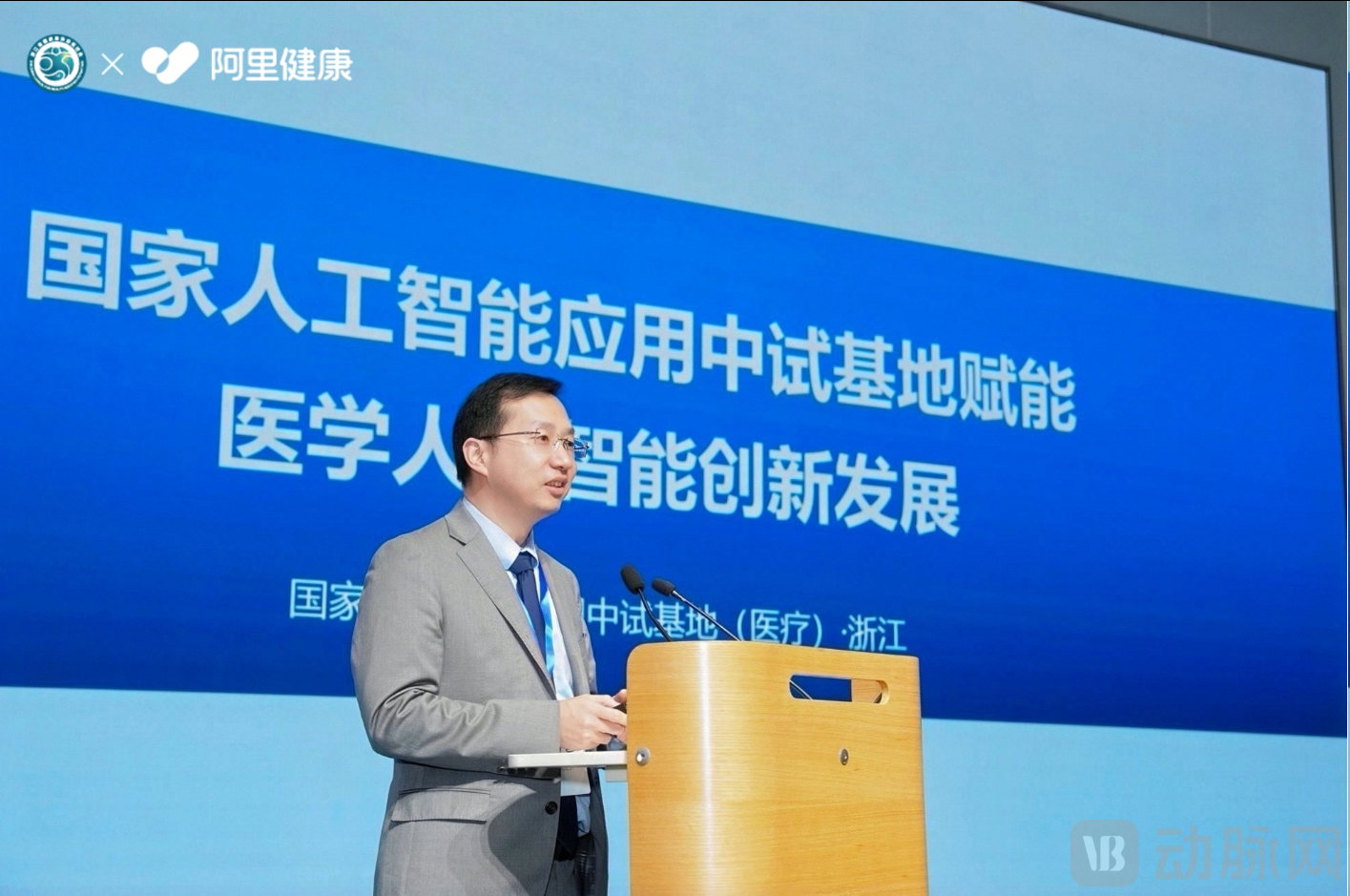
Xiang Peng, Director of the Department of Artificial Intelligence and Informatics, The Second Affiliated Hospital, Zhejiang University School of Medicine
The event then moved to the highly anticipated roundtable forum, moderated by Yin Jie, Head of Marketing and Ecosystem for AliHealth’s Medical Large Language Model. Themed “Encountering International Journals: Listening to the Voices of Chinese Physicians,” the session brought together representatives from three major international medical journals and publishing groups—JAMA, BMJ, and Elsevier—as well as Chinese clinical experts. Participants engaged in discussions on core topics such as “How Top-Tier Journals Select Research in the AI Era.”

Dr. Kirsten Bibbins-Domingo, Editor-in-Chief of the Journal of the American Medical Association (JAMA), first revealed the selection mechanisms of top-tier medical journals. She disclosed that JAMA receives tens of thousands of submissions annually, with an ultimate acceptance rate of only about 4%, noting that “very difficult decisions are made every day.” In her view, the core criterion for a clinical study worthy of global visibility is its ability to “change physicians’ thinking and behavior,” or even reshape research paradigms within a given field. She also clarified common misconceptions about premier journals: approximately half of the papers published in JAMA are clinical trials, while the other half are observational studies. She stated that her team has given considerable thought to how to balance the proportion of these two types of studies, as well as how to better advance evidence-based medicine and support physicians’ decision-making and clinical practice.

Dr. Kirsten Bibbins-Domingo, Editor-in-Chief of the Journal of the American Medical Association (JAMA)
Professor Li Yuxi, Deputy Director of the Information Center and Associate Chief Physician in the Department of Cardiology at Peking University First Hospital, posed a sharp question: Should randomized controlled trials (RCTs) remain the sole benchmark for evaluating research on AI involvement in clinical decision-making? AI is expected to drive paradigmatic innovations. Dr. Bibbins-Domingo responded that while RCTs generally remain the gold standard, she acknowledged that “seven-year follow-up studies” are impractical in the face of rapidly iterating technologies such as large language models. The true challenge lies in leveraging technology to refine and integrate diverse types of evidence-based data, enabling more efficient synergy among randomized trials, real-world data, and algorithmic models, thereby serving patient health and streamlining clinical practice.

Professor Li Yuxi, Deputy Director of the Information Center and Associate Chief Physician in the Department of Cardiology at Peking University First Hospital
Ashley McKimm, Director of Partnership Development at the BMJ Group and Editor-in-Chief of BMJ Innovations, drew on publishing history to draw an analogy with the adaptation process journals underwent during the era of the typewriter’s invention. He pointed out that technological innovations have historically placed immense pressure on journals, but have also compelled them to improve quality. From the perspective of journal development, he emphasized the need to continuously adapt to challenges posed by new technologies, actively pursue innovation, and uphold the reliability and accuracy of journals.

Ashley McKimm, Director of Partnership Development at BMJ Group and Editor-in-Chief of BMJ Innovations
There was strong consensus among the panelists regarding the boundaries of AI integration in research. Dr. Bibbins-Domingo emphasized that, regardless of technological advancements, the paramount principle of medical publishing remains “grounded in human judgment.” She explicitly opposed listing ChatGPT as an author, as machines cannot make good-faith commitments to the truthfulness and accuracy of content. She further pointed out that even if a machine generates fabricated citations, accountability still rests with the human authors submitting the manuscript; clear attribution of responsibility is one of the cornerstones for the robust development of such systems.
Ashley McKimm added that while AI does provide a “shortcut,” it is impossible to prevent people from using it; instead, we should recognize the positive aspects of AI development, namely its ability to help improve research accuracy. He pointed out that AI is helping non-native English-speaking researchers overcome language barriers and publish high-quality work that would have previously been rejected due to linguistic obstacles. He revealed that BMJ has already deployed a suite of AI agents in internal experiments, with these agents assuming the roles of researcher, author, editor, and peer reviewer to generate original research based on unpublished data, thereby addressing the challenges of integrating AI into the research workflow.
Professor Li Yuxi followed up by asking whether JAMA would follow BMJ’s lead in requiring researchers to provide raw data and statistical code. Dr. Kirsten Bibbins-Domingo responded that while JAMA recognizes the infrastructural value of data sharing and appreciates BMJ’s exploratory efforts, it has not yet reached a consensus position. She explained that general medical journals face a dual challenge: first, they lack an internal team to systematically reanalyze shared data; second, current data-sharing models cannot yet provide all the information researchers need when evaluating emerging areas such as AI-generated models. Furthermore, given JAMA’s multidisciplinary scope, traditions and needs regarding data sharing vary across fields, making it difficult to implement uniform mandatory rules. Therefore, more flexible, multidisciplinary standards are required.
Esra Erkal, Executive Vice President of Global Communications at Elsevier, pointed out from a global communications perspective that the scalability of AI is particularly critical for researchers in low- and middle-income countries—it enables teams with limited resources to accomplish more with less investment. AI makes knowledge and technical methodologies more accessible, thereby promoting greater equity in a broad sense. At the same time, she emphasized the challenges of maintaining credibility and the increasing complexity of decision-making.

Esra Erkal, Executive Vice President of Global Communications at Elsevier
Dr. Bibbins-Domingo concluded that the ideal scenario involves research teams collaborating with technology companies to uphold a vision of high-quality development while enhancing equity. She expressed optimism about the emerging new type of partnership and ecosystem division of labor.
Lei Lei, Associate Chief Physician in the Department of Medical Oncology (Breast) at Zhejiang Cancer Hospital, steered the discussion toward a practical dilemma faced by clinicians: As an increasing number of journals establish dedicated sections for AI research, how should clinicians define the scope of their own studies and formulate appropriate submission strategies?

Lei Lei, Associate Chief Physician, Department of Medical Oncology (Breast), Zhejiang Cancer Hospital
Ashley McKimm responded that the BMJ already has vertical journals dedicated to quality and safety, and it is not ruled out that specialized journals focusing on AI development and quality assessment may emerge in the future. However, he further predicted that as AI permeates all areas of medicine, the prevailing trend will be for “all journals to have AI columns.” AI will not be confined to any single specific journal but will become a standard feature across all medical publications.
Dr. Kirsten Bibbins-Domingo added that the key lies in avoiding an excessive separation between AI research and traditional clinical content. Physicians need to understand the implications of technology for clinical practice, while journals’ selection criteria remain anchored in clinical value—whether concerning the algorithm itself or its application scenarios, the ultimate question is always whether it enhances patient health and improves physician decision-making.
As the roundtable drew to a close, the panelists unanimously pointed to the reality of information overload. Li Yuxi noted that 150 years ago, physicians could still read journal articles one by one, whereas today it is impossible for cardiologists to exhaustively review all relevant literature. Dr. Bibbins-Domingo recalled that during her doctoral studies, her mentor required her to keep up with email updates from five top-tier journals; now, however, related publications are scattered across dozens of journals. “The power of AI lies in helping me locate all the literature I wish to read,” she admitted. Ashley McKimm also described her habit of having AI deliver daily literature recommendations—a task that would have required spending hours in the library just ten years ago.
During the subsequent Q&A session, clinicians and researchers in attendance shifted the discussion from macro-level ethics to specific pain points: How can AI hallucinations be avoided? How can real-world studies conducted in China gain acceptance in top-tier international journals? What are journals’ requirements for algorithms used in AI-assisted writing? The panelists’ responses reflected an ongoing tension between technological optimism and professional prudence.
One audience member raised the dilemma of AI-induced “hallucinations and delusions” in literature searches, which lead to distorted citations. Dr. Kirsten Bibbins-Domingo anchored her response in “citation authenticity.” For her, regardless of how AI synthesizes and collects information, the ultimate baseline criterion for determining whether an AI tool is worthy of use in clinical practice is its ability to provide verifiable, authentic citations. Esra Erkal added a publisher’s perspective, noting that the key to reducing hallucinations lies in the quality of the underlying datasets: “Focus on higher-quality and more reliable journal data,” while also emphasizing the necessity of human expert verification rather than leaving selection entirely to the model. Ashley McKimm stated that she is not overly concerned about hallucinations, as their occurrence is well recognized; therefore, multiple layers of checks and validation are required.
Chinese experts have offered cautious recommendations based on the unique characteristics of the healthcare industry. Li Yuxi cautioned that medicine is a field where errors are unacceptable; while technical solutions exist to mitigate AI hallucinations, a more significant concern lies in the potential for future AI-generated data to contaminate training datasets through feedback loops. He emphasized that “holding the bottom line” is more critical than pursuing efficiency. Lei Lei, drawing from her personal experience, acknowledged that AI hallucinations are generally improving, but warned that physicians must not become complacent. “My relationship with AI is one of integration: I learn from it, and it learns from me,” she stated.
An oncologist’s question shifted the focus to a pressing concern for Chinese researchers: How do journal reviewers assess the value of real-world studies from China? And how can non-randomized controlled trials improve their acceptance rates?
Dr. Bibbins-Domingo revealed that approximately half of the papers published in JAMA are non-randomized controlled studies, urging researchers to consult existing guidelines for reporting causal inference and strive to improve research standards. Ashley McKimm offered advice from another perspective: publication itself should not be the goal. Instead, researchers should ask, “From the reader’s standpoint, what is most current? What is most appropriate?” Only studies capable of changing clinical practice and improving doctor–patient relationships possess the core value required for acceptance by international journals. He also noted that BMJ has launched a China-specific special issue, encouraging Chinese researchers to leverage their advantages in population size and databases to conduct cohort studies.
Citing the Lancet’s first global commission on the burden of hepatocellular carcinoma led by Chinese experts, Esra Erkal pointed out that international publishers’ focus has shifted from “enabling Chinese scientists to access the global frontier” to “bringing China’s outstanding scientific advancements to the global stage.” In her view, China’s accumulation of real-world research and evidence-based medical data now rivals that of the United States.
Lei Lei offered a one-sentence encouragement to her Chinese peers: “Although real-world studies may be positioned lower than randomized controlled trials (RCTs), they address gaps that RCTs fail to cover; have confidence in your research.”
An audience member steered the discussion toward more practical considerations: As AI evolves from a retrieval tool into an assistant for writing and statistical analysis, do journals impose strict requirements on underlying models and algorithms? Dr. Kirsten Bibbins-Domingo acknowledged that AI penetration across various industries is an established reality. While she admitted there is no “clear-cut standard answer,” she emphasized that the entire ecosystem—including AI platforms, journals, the scientific community, and the healthcare sector—must take content authenticity seriously to ensure that technological applications remain aligned with their intended goals. Ashley McKimm added that AI is fundamentally an auxiliary tool, and its effectiveness depends on the quality of its training and the way questions are posed. Physicians need to learn how to ask the right questions within the context of specific diseases and maintain a critical stance toward AI-generated outputs.
In response to whether journals will change the way information is presented due to AI, Dr. Bibbins-Domingo candidly acknowledged that, in the face of an explosive growth in literature, “readers may not wish to read through all the methodology sections, even for high-quality articles.” JAMA is experimenting with podcasts, editorial columns, one-page concise reports, and even video abstracts, aiming to adapt to readers’ new habits of information acquisition while safeguarding authors’ intellectual property rights.
At the conclusion of the roundtable discussion, Dr. Bibbins-Domingo joked, “Please read JAMA more often,” reiterating the importance of reliability and platform collaboration. Esra Erkal stated that Elsevier aspires to be a partner connecting Chinese science with the global community. Ashley McKimm reminded attendees that “publication does not equate to impact,” urging researchers to consider how to deliver value on a global scale. Li Yuxi offered a philosophical summary: “Embrace AI, but do not forget who we are.” Lei Lei concluded by focusing on the product level: “I hope we can have a Chinese version of OpenEvidence.”
This unelaborated expectation leaves an open footnote for “Hydrogen Ion,” released this morning—when international publishing giants, local clinical experts, and policymakers gather together, what they may be waiting for is not merely an AI tool for literature search, but an infrastructure capable of supporting China’s evidence-based medicine ecosystem.