

TenNor Therapeutics Surges Over 130% on HKEX Debut as Global First-in-Class H. pylori Drug Nears Approval

TenNor Therapeutics
Antibacterial New Drug R&D Developer
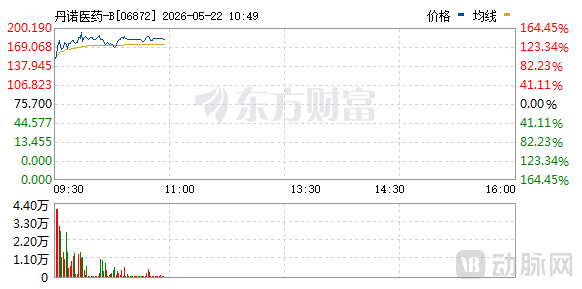
TenNor Therapeutics (Suzhou) Limited (Stock Code: 06872.HK; the “-B” suffix denotes a pre-revenue biotech company) was listed on the Main Board of the Hong Kong Stock Exchange today. The global offering comprised 8,280,600 shares at an offer price of HK$75.70 per share, raising gross proceeds of approximately HK$627 million and net proceeds of approximately HK$558 million. The joint sponsors were CITIC Securities (Hong Kong) Limited and ABC International Finance Limited. As of press time, TenNor Therapeutics’ share price stood at HK$180, with a market capitalization approaching HK$10 billion, representing a surge of over 130%.
TenNor Therapeutics’ core pipeline consists of two new molecular entity (NME) drug candidates: Tenfotidazole (TNP-2198), the first and currently only NME candidate for the treatment of Helicobacter pylori infection since the bacterium’s global discovery in 1982, submitted its New Drug Application (NDA) to the National Medical Products Administration (NMPA) in August 2025, which was accepted during the same period, with approval expected by the end of 2026; and Rifquinone (TNP-2092 injection), a triple-target candidate for treating implant-associated bacterial infections (such as prosthetic joint infections, acute bacterial skin infections, and left ventricular assist device infections), has completed six clinical trials, and has been granted Orphan Drug Designation and Fast Track designation by the U.S. Food and Drug Administration (FDA).
Taken together, TenNor Therapeutics presents not the narrative of an “early-pipeline biotech,” but rather that of an innovative anti-infective pharmaceutical company on the cusp of commercialization: its core product’s New Drug Application (NDA) approval is imminent, commercial partnerships have been secured (with a signed agreement for the Chinese market with Grand Life Sciences), and Phase IIb/III clinical trials are proceeding at an intensive pace. Based on TenNor Therapeutics’ Hong Kong IPO prospectus and publicly available data from global peers, this report systematically analyzes the company across four dimensions: competitive landscape, core products, pipeline portfolio, and foundational strengths along with future milestones.
01
In the antibacterial drug sector, why is there a “Chinese innovative drug” company?
Let us return to a global medical challenge. Since the clinical application of penicillin in the 1940s, antimicrobial agents have been one of the core pillars of human medicine; however, over the past few decades, “antimicrobial resistance” (AMR) has evolved into a global public health threat due to irrational use and frequent empirical application of broad-spectrum antibiotics. The World Health Organization has listed “antibiotic resistance” as one of the top ten global public health threats. In China, data from Frost & Sullivan, cited in the prospectus of TenNor Therapeutics, shows that the resistance rates are 20%–50% for clarithromycin, 60%–90% for metronidazole, and 20%–50% for levofloxacin—figures that directly undermine the clinical efficacy of bismuth quadruple therapy (BQT), the first-line treatment for Helicobacter pylori infection.
● On one hand, drug resistance rates are rising; on the other, there is a gap in the supply of innovative drugs
The problem is that few truly new molecular entity drugs have emerged in the field of antimicrobials over the past 30 years. On one hand, multinational pharmaceutical companies have scaled back their anti-infective R&D efforts because the commercial returns on antibiotics are relatively limited compared with those for major disease areas such as oncology and autoimmune disorders. On the other hand, antibiotic development is characterized by long timelines, challenges in designing controlled clinical trials, and stringent regulatory requirements. This has created an awkward situation: the efficacy of existing antibiotics continues to wane, while the pipeline of new drugs across the industry value chain grows increasingly thin.
It was precisely within this supply gap window that TenNor Therapeutics was registered and established in the Suzhou Industrial Park in 2013. The company’s founder, Dr. Ma Zhenkun, previously served as a Director in the Medicinal Chemistry Department at Cumbre Inc. in the United States. Cumbre had accumulated a portfolio of compound patents in the field of antibacterial drugs; during Series A financing, the rights to this patent portfolio were transferred to TenNor Therapeutics. The company independently advances subsequent clinical development both in China and globally, while retaining global rights for the development, manufacturing, and commercialization of these products. This combination of a “patent portfolio plus the founder’s deep industry expertise” constitutes the industrial starting point that distinguishes TenNor Therapeutics from typical Chapter 18A biotech companies.
● “Multi-Target Conjugate Molecules” – TenNor’s Differentiated Technological Pathway
TenNor’s core technology platform is called “Multi-Target Conjugated Molecules,” which covalently links two or more distinct pharmacophores (e.g., rifamycin + nitroimidazole, rifamycin + quinazolinone) into a single molecular entity via chemical synthesis, thereby simultaneously acting on multiple bacterial targets. This design offers two industrial advantages: first, the synergistic mechanism of action enhances bactericidal efficacy against drug-resistant strains; second, the probability of developing multi-drug resistance mutations from a single molecule is significantly lower than that associated with the separate administration of multiple drugs. As of the latest practicable date, the company has established a pipeline comprising seven projects, among which the patent rights for the compound compositions of four projects (Rifquinolone, topical TNP-2092, TNBi-2, and TNBm-1) were derived from the original assignment by Cumbre, while three projects (Rifotinidazole, oral TNP-2092, and TNBi-1) were independently developed by the company.
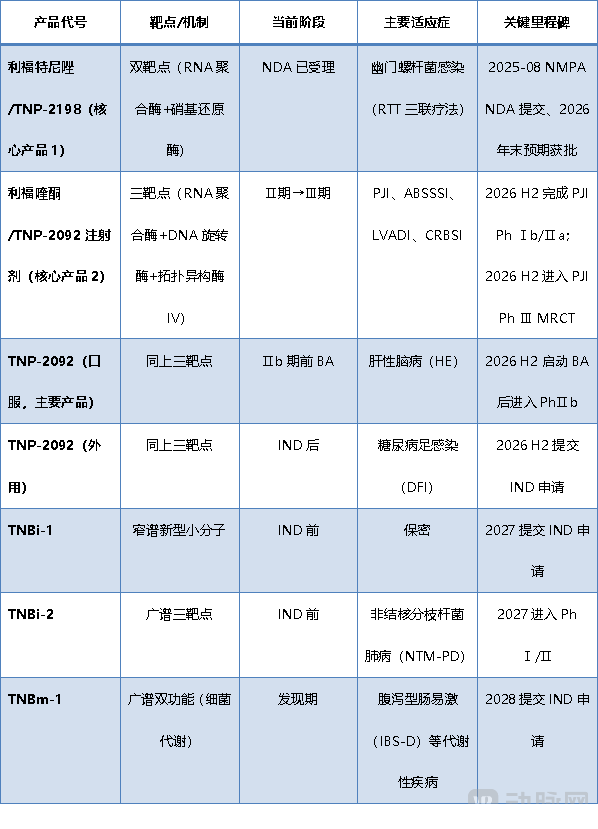
Figure 1: Progress of TenNor Therapeutics’ Seven Pipeline Candidates (Data Source: Prospectus [A.P.10-11] “Summary – Pipeline Chart”)
Lifortinidazole: A First-in-Class New Drug for Helicobacter pylori with an NDA Under Review Globally
From the perspective of product strength, the industrial significance of lifotrizole (TNP-2198) stems from a simple fact: in the 44 years since Australian scientists discovered Helicobacter pylori in 1982, no new molecular entity (NME) drug has been developed globally specifically for the treatment of H. pylori infection. All antibiotics currently used as first-line therapies for H. pylori (such as clarithromycin, metronidazole, levofloxacin, and amoxicillin) are repurposed “off-label” agents originally intended for other bacterial infections. This means that once approved, lifotrizole will become the world’s first NME drug specifically targeted against H. pylori.
● Phase III head-to-head data: 92.0% vs 87.9%, with a superior safety profile
TenNor Therapeutics has completed a Phase III head-to-head clinical trial in China comparing rifotizole triple therapy (RTT, i.e., rifotizole + amoxicillin + PPI) with standard bismuth quadruple therapy (BQT). According to the data disclosed in the prospectus:
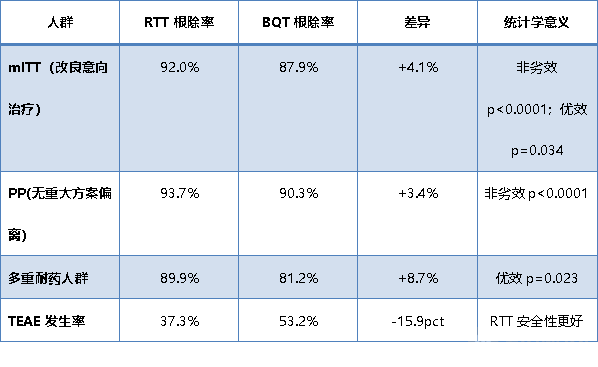
Figure 2: Head-to-Head Clinical Data of Rifotinib Phase III vs. BQT (Data Source: Prospectus [A.P.14] "Core Product - Rifotinib")
When the three datasets are analyzed together, RTT demonstrates non-inferiority to BQT across the mITT, PP, and multidrug-resistant (MDR) populations, with statistically significant superiority observed in the MDR subgroup. In terms of safety, the incidence of treatment-emergent adverse events (TEAEs) was 37.3% in the RTT group versus 53.2% in the BQT group, a difference of approximately 16 percentage points. Furthermore, RTT does not require prior antimicrobial susceptibility testing, allowing for smoother integration with the urea breath test (UBT). These two factors represent substantial advantages for patient adherence in clinical practice.
● Commercial Collaboration with Grand Life Sciences
Returning to the commercialization pathway. In November 2024, TenNor Therapeutics entered into an exclusive commercialization cooperation agreement with Grandlife Science Group (whose subsidiary, Grand Pharma (0512.HK), is a long-established pharmaceutical company in China). Under this agreement, Grandlife Science will undertake the commercial promotion of lifotinidazole in Greater China (excluding the Taiwan region). The specific financial terms are as follows: Grandlife Science shall pay TenNor Therapeutics milestone payments totaling RMB 6.5 billion in installments upon fulfillment of payment prerequisites, as well as promotional milestone payments of up to RMB 710 million, payable in six installments after reaching specified cumulative annual net sales thresholds for the first time. In return, TenNor Therapeutics will pay Grandlife Science promotional service fees (calculated on a tiered basis against net sales, decreasing gradually from 75% in the initial years following the first commercial sale to 65%) and promotional incentive payments of up to RMB 20 million, payable in two installments upon reaching specified annual net sales thresholds. As the exclusive Marketing Authorization Holder (MAH) for lifotinidazole, TenNor Therapeutics retains final decision-making authority over key matters affecting commercial success, such as initial pricing following inclusion in the National Reimbursement Drug List and participation in volume-based procurement programs. This “leveraging channels rather than building them” model allows TenNor Therapeutics to avoid establishing a sales team of hundreds during the early commercialization phase, thereby enabling the company to continue focusing its resources on R&D and overseas expansion.
● Simultaneous Global Advancement: Dual Designation of FDA Fast Track and QIDP
In the U.S. market, lifotizol has obtained FDA Investigational New Drug (IND) clearance, Fast Track designation, and Qualified Infectious Disease Product (QIDP) designation. The QIDP designation is a special pathway established by the FDA under the GAIN Act of 2012 to encourage the development of antibacterial drugs; products granted QIDP status benefit from policy support such as FDA priority review and a five-year extension of market exclusivity post-approval. Combined with its Fast Track designation, the review timeline for lifotizol in the United States is expected to be significantly shortened, allowing the company to enter the U.S. commercialization phase shortly after submitting its New Drug Application (NDA).
02
Rifampicin + 5 Pipeline Candidates: A Differentiated Strategy for Implant-Associated Bacterial Infections
Returning to the pipeline level. In addition to lifotrizole, TenNor Therapeutics’ second core product is rifiquinone (TNP-2092 injection), positioned for “implant-associated bacterial infections”—a niche segment that has been overlooked by the majority of biotech companies but is becoming increasingly urgent in clinical practice.
● Biofilm Infections—The Blind Spot Where Traditional Antibiotics Fail
The challenge in treating implant-associated bacterial infections lies in “biofilms.” When bacteria adhere to the surfaces of implants such as artificial joints, cardiac pacemakers, left ventricular assist devices (LVADs), and central venous catheters, they enter a low-metabolic “dormant state” and form an extracellular polysaccharide matrix. Traditional antibiotics typically work by targeting “actively dividing cells” (e.g., by disrupting cell wall synthesis); however, bacteria within biofilms are not actively dividing, rendering them highly tolerant to conventional antibiotics. As of the last practicable date, rifabutin is the only candidate drug globally in late-stage clinical development for implant-associated bacterial infections.
The design rationale for rifamycin quinolone is based on a three-target synergistic mechanism—simultaneously inhibiting RNA polymerase, DNA gyrase, and topoisomerase IV, all of which are involved in bacterial gene replication and expression. The advantage of this multi-target synergy is that even when bacteria enter a low-metabolic state or biofilm structures become dense, simultaneous inhibition of the three targets can maintain bactericidal efficiency. In the completed Phase II clinical trial for acute bacterial skin and skin structure infections (ABSSSI), the early clinical response rate in the modified intent-to-treat (mITT) population was 76.9% in the rifamycin quinolone group, compared to 67.5% in the vancomycin control group; the difference was more pronounced among patients with methicillin-resistant Staphylococcus aureus (MRSA) infections (78.1% vs. 57.9%). In another study conducted in the United States examining joint tissue distribution in patients undergoing artificial hip or knee replacement surgery, rifamycin quinolone achieved concentrations in synovial fluid and bone tissue that were expected to exceed the minimum biofilm bactericidal concentration for 90% of clinical isolates causing prosthetic joint infection (MBBC90).
● Regulatory Designation Portfolio: FDA Orphan Drug + Fast Track + QIDP
Rifiquinone has been granted Orphan Drug Designation by the FDA for prosthetic joint infection (PJI), as well as Fast Track designation and Qualified Infectious Disease Product (QIDP) designation for three indications: PJI, acute bacterial skin and skin structure infections (ABSSSI), and catheter-related bloodstream infections (CRBSI). Orphan Drug Designation confers seven years of market exclusivity upon FDA approval; when combined with the additional five-year exclusivity extension provided by QIDP status, Rifiquinone could theoretically enjoy a total of 12 years of market exclusivity in the United States following approval—a rare combination of policy benefits in the anti-infective field.
● Five other pipeline candidates: spanning from biofilms to metabolic diseases
In addition to the two core products, the remaining five pipeline candidates cover three distinct therapeutic areas. The first category comprises different dosage forms of the active ingredient rifaximin: TNP-2092 oral formulation for hepatic encephalopathy (HE) and TNP-2092 topical formulation for diabetic foot infections (DFI). Notably, in accordance with relevant regulations, although rifaximin injection, TNP-2092 oral formulation, and TNP-2092 topical formulation share the same active ingredient, they will be regulated as independent products due to differences in dosage form, route of administration, and indications.
The second category comprises next-generation candidate drugs for bacterial infections: TNBi-1 (a novel narrow-spectrum small molecule) and TNBi-2 (a broad-spectrum triple-target agent). Notably, TNBi-2 is a project acquired from Cumbre, targeting nontuberculous mycobacterial pulmonary disease (NTM-PD)—another therapeutic area marked by significant unmet clinical needs yet a scarce pipeline of innovative drugs.
The third category is TNBm-1, a broad-spectrum bifunctional small molecule targeting bacterial metabolism. This pipeline extends TenNor Therapeutics’ R&D landscape from “bacterial infections” to “diseases associated with bacterial metabolism.” Metabolites produced by the gut microbiome—the human body’s “second genome”—are closely linked to the pathogenesis of various metabolic and neurological disorders, making the targeting of bacterial metabolism a key direction for next-generation precision therapies.
03
Anchor Investor Lineup, Use of Proceeds, and Key Watch Points for the Next 24 Months
● Cornerstone Portfolio: The AMR Action Fund is an industry-focused investor in the field of antimicrobial drugs.
The global offering introduced five cornerstone investors, who collectively subscribed for approximately US$29.8 million (approximately HK$234 million): AMR Action Fund, L.P. and AMR Action Fund, SCSp (different entities of the same fund), Huayuan Management Consulting (Hong Kong), Orient Asset Management (Hong Kong), and Junsheng Global. Among them, AMR Action Fund deserves special mention. Established in 2020, this global specialized fund focused on antimicrobial resistance (AMR) was jointly initiated by more than 20 (approximately 23) multinational biopharmaceutical companies (including Pfizer, Merck, Roche, Novartis, and GlaxoSmithKline), with participation from the European Investment Bank (EIB) and initiative support from the World Health Organization (WHO) on AMR issues. With an initial fundraising size exceeding US$1 billion, the fund is dedicated to investing in biotech projects focused on antimicrobial drugs, aiming to bring 2–4 new antimicrobial agents to patients by 2030 (i.e., supporting their completion of clinical development and market launch). The participation of AMR Action Fund as a cornerstone investor in TenNor Therapeutics’ IPO reflects the judgment of global industrial capital in the antimicrobial sector regarding the company’s core products.
The remaining cornerstone investors—Orient Asset Management (the Hong Kong subsidiary of China Orient Asset Management, one of China’s four major AMCs), Huayuan Management Consulting, and Junsheng Global—are industrial capital firms with Chinese backgrounds.
● Use of proceeds: R&D + self-built manufacturing facility in Zhongshan + Phase IIb clinical trial for HE indication
The net proceeds from the offering, disclosed in the prospectus at approximately HK$558 million, are allocated across five areas: (i) research, development, regulatory registration and filing, and commercialization of core products; (ii) research and development of other drug candidates in the Company’s pipeline; (iii) funding for the Phase IIb multinational regional clinical trial (MRCT) of the oral formulation of TNP-2092 for the treatment of hepatic encephalopathy (HE); (iv) construction of the Company’s own manufacturing facility in Zhongshan City, Guangdong Province; and (v) working capital and other general corporate purposes. Regarding the Zhongshan manufacturing facility, the specific plan is to build internal production facilities compliant with current Good Manufacturing Practice (cGMP) standards in Zhongshan City, Guangdong Province. The facility is expected to commence operations in 2028, with an annual production capacity of approximately 300 million capsules. This project accounts for approximately 7.2% of the net proceeds. Early-stage 18A biotech companies typically rely on contract development and manufacturing organizations (CDMOs) for outsourced production. TenNor Therapeutics’ initiation of in-house capacity construction during the New Drug Application (NDA) review phase indicates that the Company is preparing for large-scale commercialization following the approval of liforitinib.
● Three Key Milestones for the Next 24 Months
From an industry observation perspective, there are three key milestones worth tracking for the company over the next 24 months.
The most anticipated milestone is, of course, the NMPA approval of lifotnerizole. The NDA was submitted and accepted in August 2025, with approval expected by the end of 2026. If successfully approved, lifotnerizole will become the world’s first new molecular entity (NME) drug targeting Helicobacter pylori and will enter the Chinese market through a commercialization agreement with Yida Life Sciences.
Second is the launch pace of the Phase III MRCT for rifampicin in the indication of PJI. The Phase Ib/IIa trial of rifampicin is expected to be completed in H2 2026, and the Phase III MRCT for PJI is expected to start in H2 2026. Phase III MRCT (Multi-Regional Clinical Trial) usually means that the company will simultaneously advance clinical registration in multiple countries, which is a relatively rare pace for global antimicrobial drug development.
Third is the advancement of TNP-2092 oral formulation into Phase IIb clinical trials for the treatment of hepatic encephalopathy (HE). HE is a common complication in patients with chronic liver disease. Currently, rifaximin is the primary clinical treatment, but issues of drug resistance and poor patient adherence have long persisted. If TNP-2092 demonstrates advantages over rifaximin in its Phase IIb data, it will mark the first tangible product realization of TenNor Therapeutics’ “bacterial metabolism” strategic direction.
Viewing these three developments together, they all fall within the period from the second half of 2026 to the first half of 2027—the first year after the company’s listing marks a concentrated window for the realization of industrial progress. This constitutes the core industry rationale for why industrial capital investors such as the AMR Action Fund are willing to participate as cornerstone investors at the IPO stage.
04
Final Thoughts
Viewed holistically, TenNor Therapeutics already holds liforilnazole (the world’s first new molecular entity [NME] for Helicobacter pylori) with its New Drug Application (NDA) under regulatory review, and rifalquinone (the only late-stage clinical product targeting implant-associated bacterial infections globally) with completed Phase II data. In addition, the company has five pipeline candidates at various stages of development and a secured commercialization pathway through a channel partnership with Grand Life Sciences. Taken together, these assets position the company as an industry exemplar in China’s anti-infective innovative drug sector that has completed a full R&D-to-NDA closed loop. This advances its corporate narrative, with a denser cluster of milestone deliverables expected over the next 24 months, each serving as a key marker in the company’s transition toward actual commercial revenue.
Primary Data Sources:
[A] TenNor Therapeutics’ HKEX Prospectus PHIP (PDF, 732 pages in total, file sehk26020301691_c.pdf);
[B] Frost & Sullivan Industry Research (Cited in the Prospectus);
[C] Sina Finance / East Money / Guoyuan International / Cailian Press 2026-05-14 IPO Announcement (Offer Price: HK$75.70, Net Proceeds: HK$558 million, 5 Cornerstone Investors, Subscription Period: May 14–19, Listing Date: May 22);
[D] hkexnews.hk Listing Document (Stock Code: 06872);
[E] AMR Action Fund official website and EIB/IFPMA announcement dated 2020-07-09 (23 founding companies, initial funding of ~$1 billion, aiming to deliver 2–4 new antimicrobials to patients by 2030);
[F] WHO public data on antibiotic resistance; FDA public regulatory information on QIDP, Fast Track, and Orphan Drug designations; NMPA public regulatory information on innovative drugs
This article presents an objective industry observation and sector research, and does not constitute any investment advice.