

Minhang Emerges as the Preferred Hub for Medical Innovation Enterprises Driven by 'Greater Lingang Bay' and International Medical Center
In 2026, China’s healthcare industry is entering a new phase.
In the past, local governments competed on the strength of their policies and industrial subsidies; today, the questions that truly matter to an increasing number of enterprises have become: How can clinical resources be efficiently connected? How can products gain hospital access more rapidly? Is ethical review efficient? Are there real-world application scenarios? Can data be made accessible? Are internationalization resources well-developed?
Especially in frontier fields such as brain-computer interfaces, AI-driven healthcare, cell and gene therapy (CGT), and high-end medical devices, enterprises’ demands for a full-chain industrial ecosystem have far surpassed what any single industrial park can offer.
In this context,On May 18, Shanghai Minhang District jointly held the “Closed-Door Promotion Meeting for Government-Enterprise Collaboration in the Greater Health Industry” with VCBeat., moderated by Liu Huiguang, CEO of VCBeat, the event facilitated in-depth exchanges between more than ten healthcare companies and entities including the Minhang District Science and Technology Commission, the Biopharmaceutical Industry Development Company, and investment platforms.
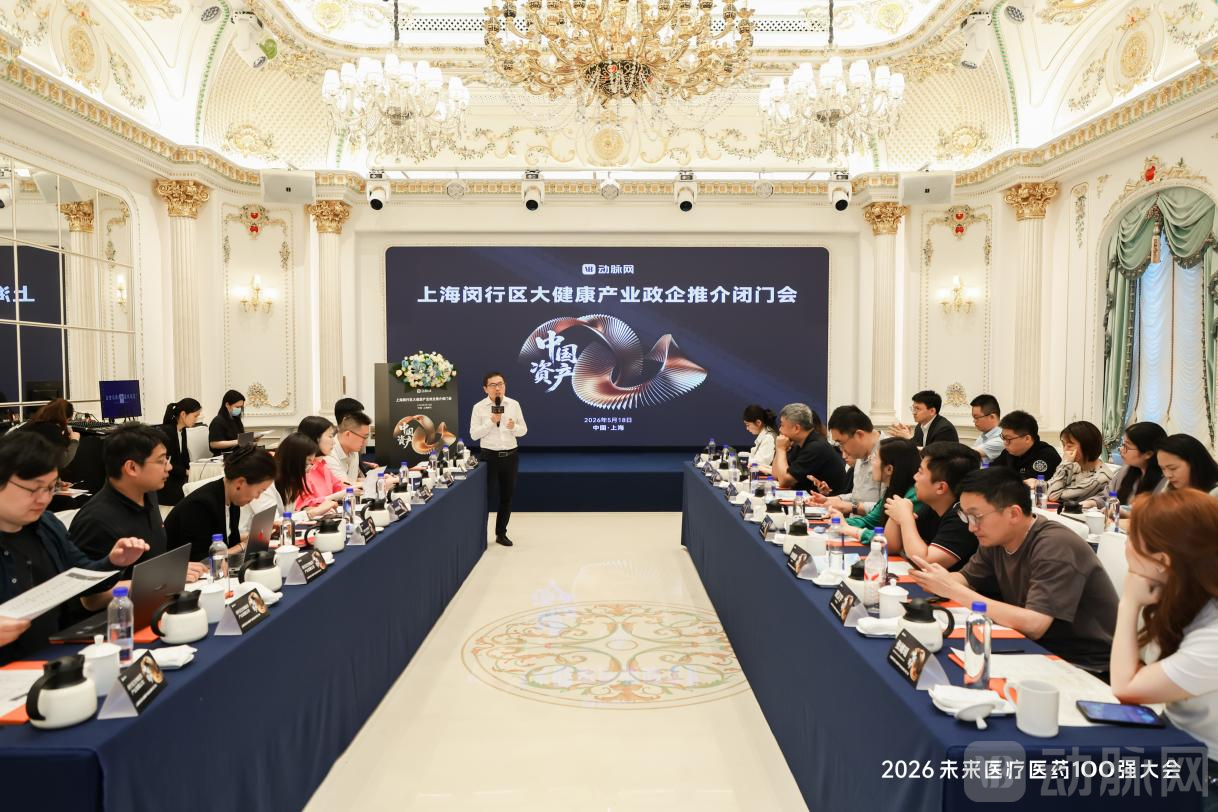
Closed-Door Government-Enterprise Promotion Meeting for the Big Health Industry in Minhang District, Shanghai
01
From “Policy Support” to “Ecosystem Building”: What Kind of Industrial Capacity Is Minhang Developing?
At the outset of the conference, Ye Peilin, Chief of the Biopharmaceutical Division at the Minhang District Science and Technology Commission, sent a clear signal:Minhang is accelerating its collaboration with Huashan Hospital to explore the establishment of a research-oriented hospital, providing full support for the development of a future industrial cluster focused on brain-computer interfaces.Meanwhile, we will continue to advance the development of Ruijin Hospital as a research-oriented hospital, providing seamless hospital-based collaborative support for clinical trials and the translation of early-stage scientific research.
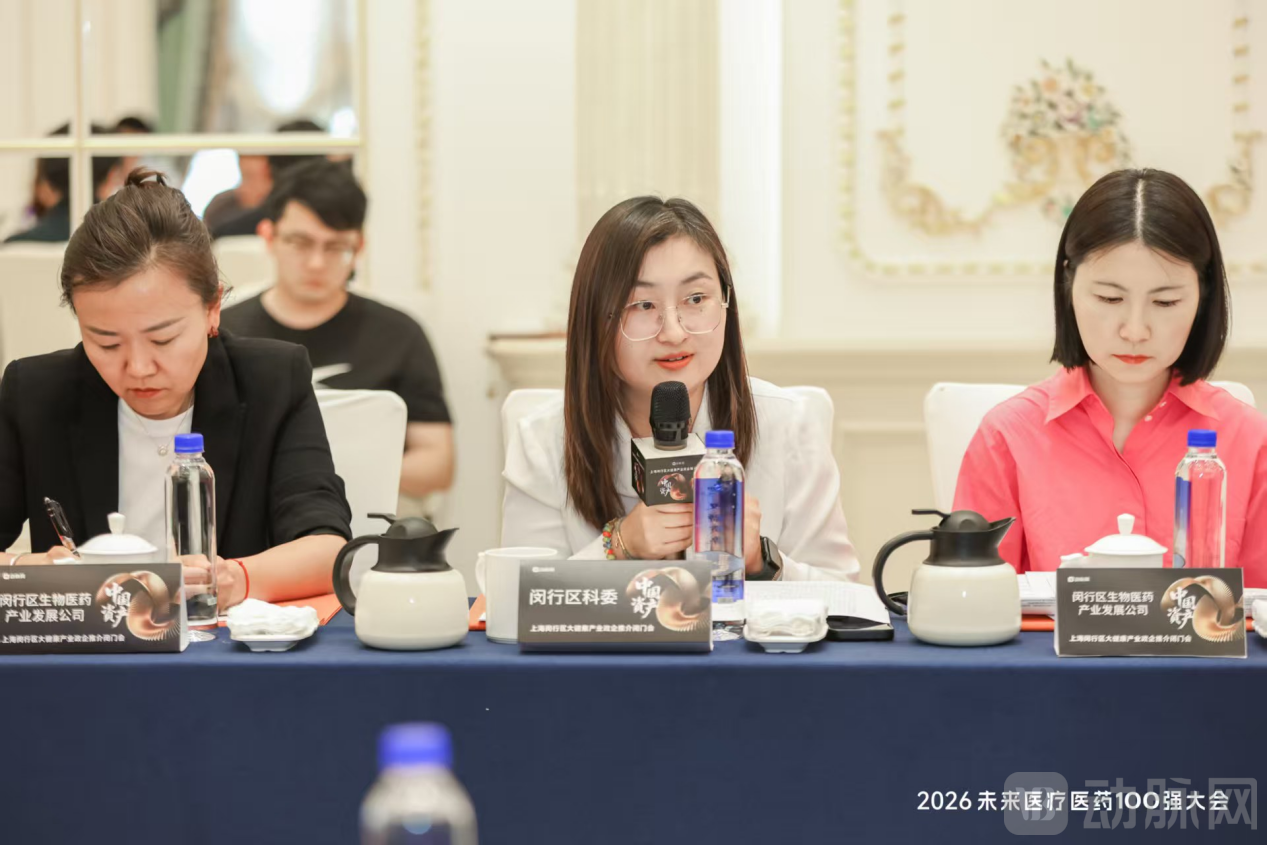
Ye Peilin, Chief of the Biomedical Division at the Science and Technology Commission of Minhang District, Shanghai, Delivers Industry Promotion Presentation
Behind this layout lies Minhang’s clear industrial development logic: moving beyond traditional investment promotion thinking to empower enterprises’ growth throughout their entire life cycle through a systematic ecosystem.
Currently,Minhang has established a strong advantage in the agglomeration of medical resources. The district is home to 31 public medical institutions, including eight Grade A tertiary hospitals. In the north, the New Hongqiao International Medical Center brings together more than 20 high-quality domestic and international medical resources, such as the Hongqiao Campus of Huashan Hospital.Build an integrated medical innovation ecosystem encompassing clinical diagnosis and treatment, translational research, international healthcare, and premium services.
At the source of innovation and in the translation of research outcomes, MinhangLeveraging top-tier academic resources from institutions such as Shanghai Jiao Tong University and East China Normal University, with the “Grand Neo Bay” as its core incubation hub,Accelerate the incubation of hard-tech innovations and the commercialization of research outcomes. Data shows that Minhang District’s R&D expenditure as a percentage of GDP reaches 8.9%, ranking first in Shanghai, thereby providing sustained and robust foundational momentum for medical innovation.
Building on this foundation, Minhang has established a comprehensive policy framework covering innovative R&D, achievement transformation, clinical application, and international expansion. Centered on the full-process needs of enterprises—from incubation and R&D breakthroughs to industrialization and market expansion—it has introduced precise, layered support measures.
The region not only provides comprehensive coverage of inclusive policies for high-tech enterprises and "Little Giant" tech firms, but also launches the city’s first-ever R&D funding support program for startups and high-growth enterprises.Leveraging the “Greater Zero Bay” city-district linkage policies, innovation platforms can receive up to RMB 50 million in support., continuously stimulating the vitality of original innovation.
In promoting the integrated development of industry, academia, and research, Minhang District encourages enterprises to establish joint laboratories with universities and research institutes, providing long-term, stable support for breakthroughs in key technologies. Focusing on the research and development of innovative drugs and high-end medical devices, the district amplifies its support through a 1:1 matching fund mechanism coordinated at the municipal and district levels, thereby ensuring robust financial backing for enterprises to overcome core technological barriers.
To address the industry pain points of high costs and long lead times associated with GMP facility construction for biopharmaceutical companies, Minhang District has introduced exclusive special support measures while simultaneously increasing assistance for major industrialization projects, striving to streamline key milestones from R&D to mass production. Furthermore, the district is continuously strengthening supply chain coordination and marketing support, encouraging collaboration and complementarity among upstream and downstream partners, supporting enterprises in obtaining international certifications and pursuing global expansion, thereby accelerating the entry of innovative products into broader markets.
Leveraging Minhang District’s Drug Review and Inspection Service Center—the first in the city to adopt a “city-supervised, district-built” model—Minhang has deployed a dedicated team to provide enterprises with end-to-end, one-on-one guidance. Concurrently, the district is advancing the development of a catalog for innovative drug and medical device products, thereby facilitating more efficient market launch and smoother hospital admission for these innovations.
From research-oriented hospitals and international medical centers to the “Grand Zero Bay” innovation hub; from R&D support and GMP facility construction to drug and device review processes and mechanisms for introducing innovative products into hospitals—Minhang District is further integrating policy, industrial, and clinical resources to build a full-chain industrial ecosystem covering research and development, translation, and commercialization.
02
Focus on the Real Needs of Enterprises to Precisely Solve Practical Challenges in Implementation and Development
The core segment of this closed-door meeting was in-depth matchmaking centered on the real pain points faced by enterprises. The conference focused on five key areas: CGT/CDMO, high-end medical devices, AI in healthcare, brain-computer interfaces, and healthcare services and elderly care. Government officials and corporate representatives directly addressed critical bottlenecks in R&D, clinical trials, regulatory approval, industrialization, and internationalization.
In the field of CGT/CDMO, companies are highly focused on regional manufacturing centers, the translation of in-hospital preparations into commercial products, and medical-enterprise collaboration. In response, Minhang District stated that it has established a special task force mechanism for biomedicine, led by the Science and Technology Commission, to facilitate regular docking between medical institutions and enterprises through multi-departmental coordination. Meanwhile, a combination of policies, including special support for GMP-compliant facilities and the Chunshen Talent Program, provides comprehensive guarantees for industrialization and project implementation.
In the field of high-end medical devices and surgical robots, companies are focusing on regulatory approval, hospital procurement, headquarters relocation, and global expansion. Minhang District has clarified that innovative medical devices will receive 1:1 matching support through coordinated municipal and district-level initiatives. Class III and Class II medical devices not covered by municipal subsidies remain eligible for district-level policy support. Leveraging the New Hongqiao High-End Medical Device Headquarters Economy and the Shanghai Global Innovative Medical Device Exhibition and Training Center, the district provides one-stop services for enterprises, including headquarters establishment, clinical training, and global promotion.
In the fields of AI-driven drug discovery and AI healthcare, core demands include computing power assurance, specialized facilities, hospital pilot programs, and incubator development. Minhang District has presented solutions on-site: service vouchers to subsidize computing costs; the Lingang Pujiang Industrial Park offers specialized facilities meeting chemical synthesis requirements; collaborative opening of innovative application scenarios in hospitals to support the establishment of AI healthcare incubators, with high-quality incubators eligible for up to RMB 30 million in startup funding.
In the field of brain-computer interfaces (BCI), Minhang District, as the city’s sole future industry cluster for BCI, provides specialized ecosystem support to enterprises. The district offers incentives such as rent reductions and R&D funding, without using short-term profitability as an entry criterion. Leveraging the proximate clinical resources of Huashan Hospital’s Hongqiao Campus, it has established platforms for mutual recognition of ethical reviews and for sharing EEG data. Furthermore, the biomedical industry fund, together with the upcoming BCI-specific fund and financial instruments such as “BCI Loans,” helps alleviate the financial pressures associated with early-stage R&D.
In the fields of healthcare services, elderly care and wellness, and internet hospitals, enterprises are focusing on medical data, expert resources, international medical services, open application scenarios, and the global expansion of Traditional Chinese Medicine (TCM). In response, Minhang District has designated the District Health Commission to lead coordination with tier-3 Grade-A hospitals for access to expert and data resources. The New Hongqiao International Medical Center is prioritizing international medical tourism and supporting cross-border diagnosis and treatment services. Meanwhile, pilot projects in elderly care technology are accelerating the market adoption of corporate products, directly opening market channels for the elderly care and wellness sector, TCM, and internet hospitals.
03
Competition in the Healthcare Industry Is Shifting from “Policy-Driven Investment Promotion” to “Ecosystem-Based Investment Promotion”
Judging from the entire closed-door meeting, a clear change is emerging:
“Corporate expectations of local governments have shifted from ‘whether subsidies are available’ to ‘whether industrial issues can be genuinely resolved.’”
Whether it is the data platforms and mutual recognition of ethical standards that concern brain-computer interface (BCI) enterprises, the computing power and application scenarios that matter to AI healthcare companies, or the hospital collaboration and regional preparation centers that CGT firms focus on, all these issues essentially point to the same question: Who can provide a more complete and efficient industrial ecosystem?
From research-oriented hospitals to brain-computer interface (BCI) clusters; from drug and medical device regulatory review to healthcare data platforms; from international medical centers to industrial funds and open application scenarios, Minhang District is striving to build a comprehensive system that covers R&D, clinical practice, regulatory approval, industrialization, and internationalization.
For healthcare innovation companies seeking growth opportunities in their next phase, this “ecosystem capability” may be more attractive than any single policy alone.