

Where There Is No Path: A Scientist's Solitary Breakthrough and the Resonance of Life
On May 21, at the VCBeat 2026 Top 100 Future Healthcare and Pharmaceuticals Conference, we hosted a special forum titled “Seeing · Stories of Life,” featuring keynote speeches on medical humanities. This marked the first time in the ten-year history of the Top 100 Conference that a dedicated session on medical humanities was established. Twelve speakers from research institutes, clinical frontline practice, and the industry shared their most authentic stories on the path of medical innovation over the course of a full day.
No financing figures, no technical specifications, no product roadshows. A scientist recounted his solitary twenty-year marathon to repair spinal cords; a surgeon described how surgical sketches drawn on an airplane evolved into an original Chinese medical device; and an ALS warrior delivered the entire speech as an AI digital avatar. These were the quietest yet most moving moments of the forum.
At the forum, Dai Jianwu, a researcher at the Institute of Genetics and Developmental Biology, Chinese Academy of Sciences, delivered a speech on regenerative medicine. He shared two stories that have spanned his career: one involves a repair technique developed over twenty years that has helped more than 100 families welcome “endometrial regeneration babies”; the other is a clinical study on spinal cord injury repair that has been ongoing for twenty-three years and continues to this day.
In Dai Jianwu’s view, the starting point of scientific research is not interest, but a sense of responsibility and original aspiration. “If you cannot endure solitude, it will be difficult for you to persevere.” His WeChat profile picture features a solitary tree by the shore of Dushu Lake in Suzhou. From solitude to clamor, there are many times when people need both solitude and steadfastness.
*The following content has been compiled from the live transcript of the on-site presentation, with certain omissions and adjustments made without altering the original meaning.
Professor Dai opened his talk by stating that this presentation was an assigned topic. At the time, VCBeat provided him with the theme, and he structured his narrative accordingly. This also marked his first public sharing on topics related to humanistic medicine. Therefore, this presentation itself constitutes a practice in medical humanities. It is also the first time in over two decades of scientific research that Professor Dai has recounted his research journey from a humanistic perspective.
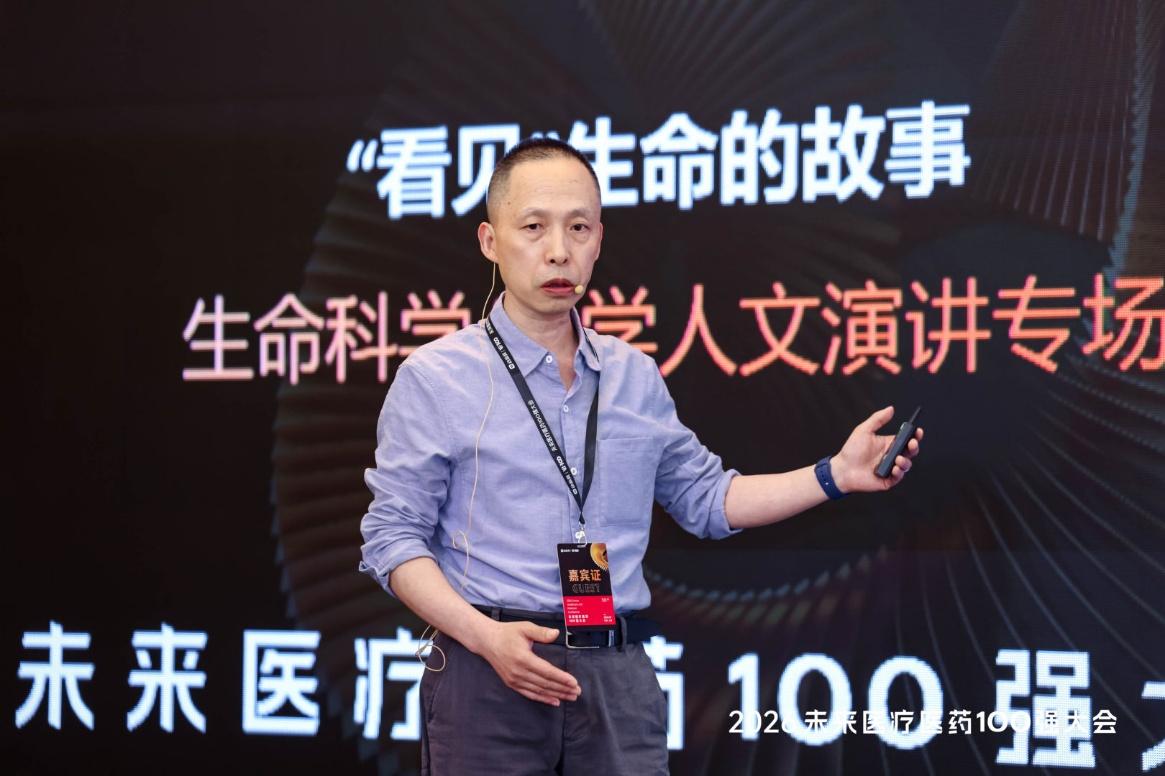
Speech by Dai Jianwu
Professor Dai returned to China in 2003, marking 23 years to date. Throughout his extensive research career, he is most eager to share two stories with us.
The First Story: Saving a Family on the Brink of Collapse.
Around 2004, Professor Dai had just returned to China. His laboratory was advancing collaborations with hospitals, and his research focus was on biomaterials, a field within regenerative medicine. His approach to scientific research,Deriving Research Topics from Clinical Needs, which is also the core essence of translational medicine.
One day twenty years ago, he discussed the issue of myocardial regeneration with the cardiology team at Nanjing Drum Tower Hospital, proposing that“With water, deserts can become oases.”, if blood vessels can grow into the necrotic myocardium after a myocardial infarction, the heart can regenerate; this concept has been endorsed by the team.
This exchange was led by an obstetrics and gynecology expert from Nanjing Drum Tower Hospital, who served as the Vice President in charge of scientific research at the time.Prof. Hu YaliModerator. As the discussion drew to a close, Professor Hu Yali remarked that infertility caused by endometrial injury has pushed countless families to the brink of collapse. These women are not unwilling to safeguard their families; rather, they struggle to maintain family integrity due to their inability to conceive. She then asked Professor Dai whether the endometrium can regenerate. Professor Dai responded with great certainty:Regeneration should be possible.
He reviewed extensive data: A 2021 report in The Lancet showed that the infertility rate among couples of childbearing age in China rose from 12% to 18% between 2007 and 2020, with approximately 55 million couples affected nationwide; data from Xinmin Network indicated that the divorce rate among infertile couples exceeded 70%; the China Health Statistics Yearbook reported an annual average of approximately 9.6 million induced abortions in China, with intrauterine adhesions affecting about 40% of female infertility patients; and data from the 2021 Global Burden of Disease Study estimated that around 33.8 million women of childbearing age in China suffered from infertility each year. Experts have reached a consensus on the need to promote endometrial repair and protect female fertility.
Professor Dai was able to provide an affirmative answer promptly because he had just completed the development of an oral patch. Following the resection of oral tumors, tissue defects occur, and primary closure often results in long-term limitation of mouth opening. The collagen patch he designed can be sutured into the defect site, allowing the membrane to adhere closely to the wound bed, thereby promoting vascular ingrowth. Complete regeneration of the oral mucosa can be achieved in approximately 15 days. Although the endometrium shares structural similarities with the oral mucosa, its regeneration is more challenging.
Subsequently, he collaborated with Professor Hu Yali to conduct uterine defect repair experiments in various animal models. The results confirmed that the regenerated endometrium possessed complete biological function; experimental rats successfully reproduced offspring, and pigs with injured endometrium also successfully delivered live piglets after transplantation of frozen-thawed embryos.
The core challenge in clinical application is how to place the repair membrane into the uterus.While the animal uterus can be directly opened for surgical manipulation, the narrow human cervical os has long posed a challenge to the medical community. Professor Dai’s team engaged in extensive discussions with Professor Hu Yali, ultimately drawing inspiration from clinical practice. Professor Hu proposed utilizing a Foley catheter: after inflating the balloon by injecting water, the repair membrane is wrapped around the balloon and further inflated, allowing the membrane to adhere precisely to the uterine wall. This approach resolved a key technical bottleneck in endometrial repair.
Professor Dai also showed us an operational video, demonstrating the process of rolling the repair membrane onto a catheter and hydrating it to ensure adherence, thereby solving a problem that had plagued the industry for two decades. Professor Dai has always acknowledged the crucial inspiration provided by the clinical team, believing that the successful delivery of the repair material into the uterus is the core component of the entire treatment.
In 2013, the team initiated an investigator-initiated trial (IIT). Throughout the study, everyone felt both excited and apprehensive. While animal experiments allowed for open-ended procedures, clinical research required strict control over patient selection and surgical protocols, all while maintaining high expectations for the outcomes.
Clinical results demonstrated that, following treatment, patients experienced endometrial regeneration and a significant increase in glandular density.On July 17, 2014, Professor Dai witnessed the successful birth of the first baby conceived following endometrial repair therapy in the delivery room, marking a major breakthrough in resolving uterine infertility, a clinical challenge that had persisted for many years.
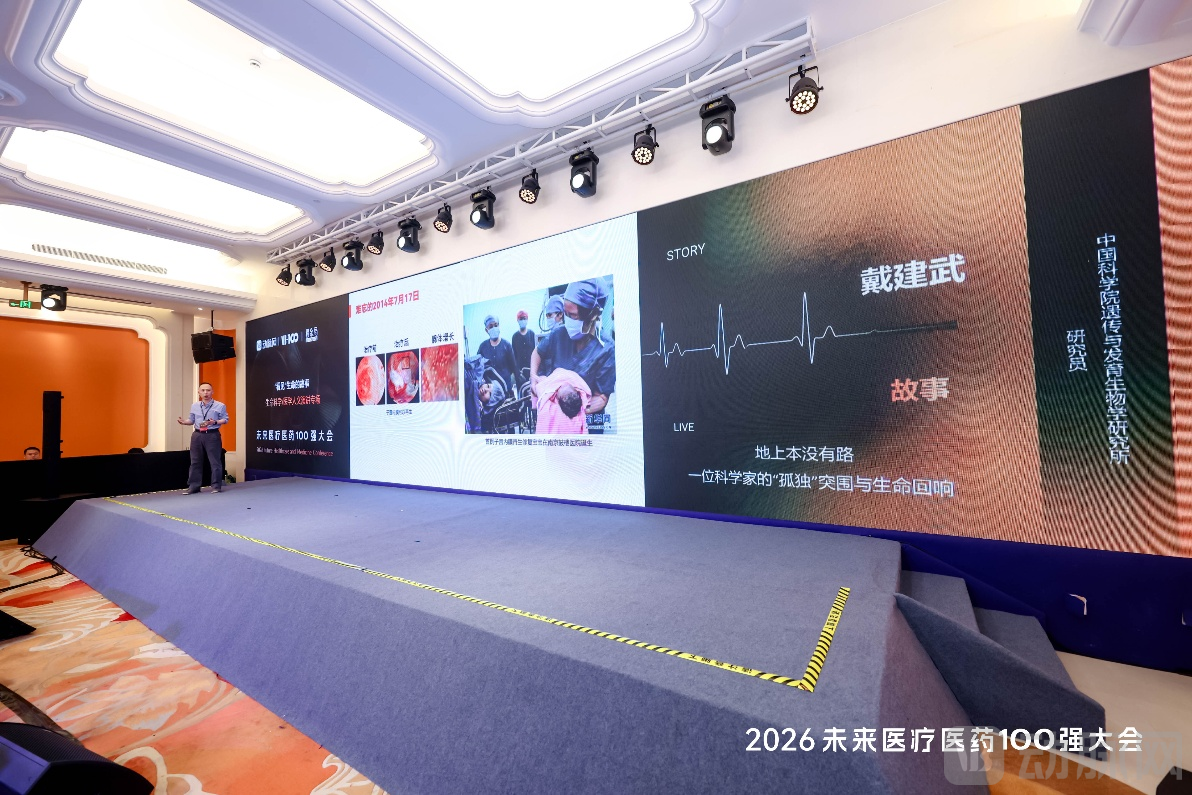
Since then, an increasing number of babies born through endometrial regeneration have entered the world, bringing wholeness back to countless families. This clinical study spanned 13 years, resulting in the successful birth of over 100 infants via endometrial regeneration, with numerous families expressing their sincere gratitude to Professor Dai’s team. One parent traveled specifically to express thanks, stating that after her daughter gave birth, their marriage, which had been on the verge of collapse, was restored to harmony. This scientific and technological advancement has not only addressed clinical challenges but also resolved many social issues, saving countless families from imminent breakdown.
In 2025, the relevant products developed by Professor Dai’s team successfully obtained product registration certificates. In 2014, he and Professor Hu Yali were invited to attend the CCTV Science and Technology Gala. In 2018, the project was awarded the First Prize of Jiangsu Province for Scientific and Technological Progress. After twenty years of dedicated efforts, this research has finally achieved a milestone outcome; however, there remain unresolved challenges on Professor Dai’s scientific journey.
Story 2: Helping Paraplegic Patients Stand Again.
Spinal cord injury is an age-old challenge that has accompanied human history; since the dawn of humanity and warfare, spinal cord injury has always existed.In ancient times, although spinal cord injury had a limited impact on lifespan, most patients struggled to survive long-term due to limited nursing care conditions. For a long time, spinal cord injury was regarded as an incurable clinical condition. Currently, there are 3.7 million patients with spinal cord injury in China, with approximately 100,000 new cases each year.
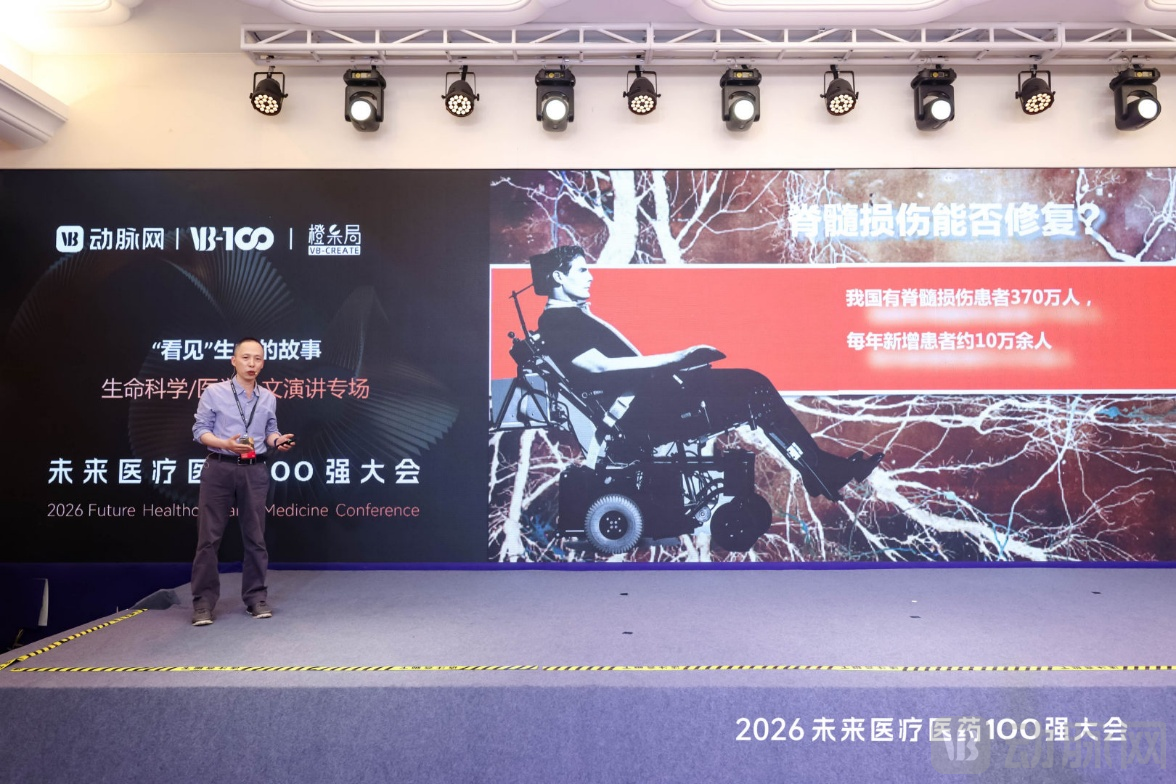
After returning to China in 2003, Professor Dai established a laboratory and resolved to tackle this world-class scientific challenge. Despite repeated discouragement from friends, family, and colleagues, who deemed the research excessively difficult, he firmly believed that scientific teams must strive for the highest peaks and conquer the most formidable challenges; only then would other related issues be readily resolved. The research on endometrial regeneration stands as a significant achievement in this endeavor.
What Is Spinal Cord Injury?Professor Dai shared a vivid analogy with us: the spinal cord is akin to a bundle of “cables” within the spinal column, responsible for transmitting sensory signals from the limbs and relaying motor commands from the brain to the extremities. Once damaged, it can lead to paraplegia, causing patients to lose sensation of bladder and bowel function as well as pain perception.
After thousands of years of development, the medical community still lacks effective treatments for spinal cord injury; current standard clinical protocols merely help patients adapt to life with disability. Spinal cord injury imposes a heavy burden on entire families, where substantial treatment and caregiving costs, combined with the long-term pressure of providing care, often plunge households into financial and emotional distress.
Why Can't the Spinal Cord Regenerate?Bones and skin can rapidly self-repair after injury, with fractures typically healing within three months. However, injuries to the central nervous system, spinal cord, and brain create a microenvironment that inhibits nerve regeneration, which is the core reason why the spinal cord cannot regenerate spontaneously.
Professor Dai’s team first considered how to build a “bridge” for nerve regeneration.Nerves are arranged in an orderly manner, and this organized structure is disrupted after injury; restoring structural orderliness is key to repair. Nerve defects in patients with spinal cord injury are mostly on the centimeter scale, with an average defect of 4 cm, whereas nerve cells are only on the micrometer scale. Therefore, the development of scaffolds with an ordered structure that can guide nerve regeneration has become the core of product design. In 2005, the team successfully developed an ordered collagen fiber scaffold, which can build a “bridge” across the spinal cord defect and precisely guide nerve growth.
Animal experiments showed that dogs in the control group with spinal cord injury were unable to stand, whereas those implanted with scaffolds regained the ability to stand within three months. Among the experimental monkeys, the control group remained unable to stand; although the treatment group could stand, they were temporarily unable to walk. Electrophysiological testing confirmed complete restoration of nerve conduction. Subsequent analysis revealed that monkeys in the treatment group developed coccygeal fusion due to strong forearm strength and difficulties in conducting rehabilitation training, which impaired their walking ability. This finding also highlights that long-term, standardized rehabilitation is an indispensable component of treatment for patients with spinal cord injury and cerebral palsy.
On January 16, 2015, the team initiated a clinical study on the use of the NeuroRegen scaffold to repair complete spinal cord injury, marking the world’s first clinical attempt to transplant a collagen scaffold into the human body for spinal cord injury repair.Research data indicate that patients’ quality of life improved significantly after treatment, with some individuals who were previously disabled and unable to perform activities of daily living gradually returning to normal life and starting families. This 11-year clinical study enrolled a total of 128 patients. Statistical results showed that 40% of patients with acute complete spinal cord injury experienced improvements in motor function, and 40% of acute patients regained sensation for bladder and bowel control. For patients with paraplegia, the primary goal is not immediate standing, but rather the restoration of bladder and bowel sensation, which is key to improving quality of life and facilitating caregiving.
Professor Dai’s team has dedicated 23 years to the field of spinal cord injury research. Although they have not yet obtained product registration certificates or achieved widespread clinical application, as seen in endometrial regeneration research, the team has conducted extensive studies over these two decades. They have amassed numerous scientific achievements, patents, and publications, while also enduring countless failures. Life is much the same: people often remember only the shining accomplishments, overlooking the unseen setbacks behind them.
For the past 23 years, Professor Dai’s team has remained steadfastly committed to the field of spinal cord injury research, earning recognition from the international academic community. ScholarGPS awarded him a certificate, ranking his team fourth globally in spinal cord injury research. Through persistent efforts, they have gradually secured a leading position on the international stage in this field.
Research on spinal cord injury has not yet achieved ultimate success, but Professor Dai likens it to the iron chains of the Luding Bridge: even a single chain can make forward progress possible. He anticipates that, through the relay efforts of several generations of scientists, a stable “bridge” will be constructed, bringing spinal cord injury repair to true maturity. He also hopes that more researchers will devote themselves to this field, so that the goal of completely overcoming spinal cord injury may one day be realized.
Many refer to Professor Dai as a pioneer in regenerative medicine, a field in which he harbors numerous visions and has consistently forged ahead without pause.He has his own understanding of the humanities:His phone stores a decade’s worth of photos of a single tree by Dushu Lake in Suzhou. He often visits the lake for walks and runs. When he first saw this tree on May 18, 2017, it stood alone by the lakeshore. Professor Dai even set it as his WeChat profile picture, feeling that many paths in scientific research require solitary perseverance, much like the tree’s quiet independence. In 2018, 2019, 2021 (when images showed people wearing masks during the special period), 2023, and 2024, the tree continued to stand there unassumingly. By 2026, however, the area around the tree had gradually become bustling, turning it into a popular social-media hotspot. The tree’s journey from solitude to clamor mirrors a poignant truth about life: many people may endure a lifetime of loneliness without ever witnessing their own moment in the spotlight.
Looking back on his many years of scientific research, Professor Dai has often had to stand alone in the field of regenerative medicine. When he was named one of CCTV’s Innovators of the Year in 2014,He proposed the concept of building a “4S Shop for the Human Body” using regenerative medicine., believing that humans, like automobiles, require maintenance, repair, and replacement of damaged tissues and organs. Over the past fourteen years, the team has remained steadfastly committed to this philosophy, accumulating multiple core technologies and dedicating itself to the research and development of products and technologies for the care, repair, and replacement of various human tissues and organs, advancing steadily step by step.
Returning to the themes of scientific humanism and medical humanism, Professor Dai has profound insights, as Mr. Lu Xun once said:“There was originally no path on the ground; but as many people walked, a path came into being.”
He believes that the starting point of any scientific research project stems from a sense of responsibility and original aspiration. While it is often said that scientific research originates from interest, he considers responsibility to be more important. This sense of responsibility encompasses social responsibility as well as the conviction to contribute to one’s field.
It is this original aspiration that sustains researchers through prolonged isolation, enabling them to remain persistent and focused; only by enduring solitude can one go far on the path of scientific research. Obtaining the product registration certificate for endometrial regeneration research marks a milestone, while research on spinal cord injury continues with steadfast commitment, as it has not yet been fully conquered. Professor Dai firmly believes that scientific exploration knows no bounds. He will continue to serve as a trailblazer in regenerative medicine, determined to forge a broad and promising path even where none previously existed.