

LeYue Health: After Payment Coordination, How Will China's Medical-Insurance Integration Move Into the Next Decade?
"The integration of medical and insurance services in China has reached a new starting point for the next decade."
In March, at the "Greater Bay Area International Medical Services and Cross-Border Commercial Insurance Payment Integration Seminar," a statement by Fu Xinhua, founder and CEO of LeYue Health (Shenzhen) Technology Co., Ltd. (hereinafter referred to as LeYue Health), highlighted the current stage of development in the integration of medical and insurance services.
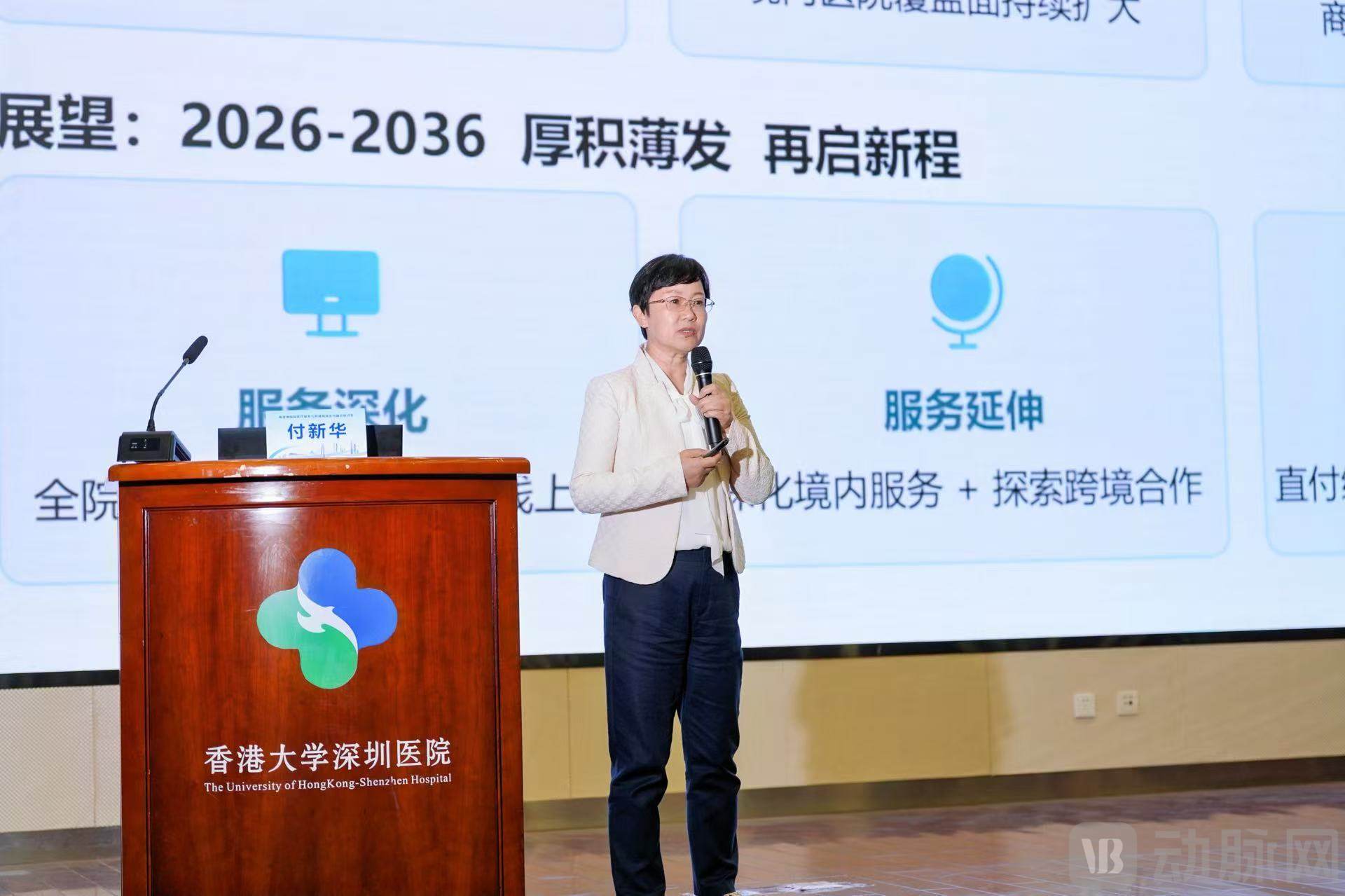
Over the past decade, Leyo Health has been deeply involved in the process of medical-insurance integration, from conceptual exploration to the implementation of infrastructure. According to information provided by the company, it launched the first direct commercial insurance claims platform at a Class III Grade A hospital in collaboration with Zhengzhou Central Hospital, and partnered with the Liaoning Provincial Health Commission to build the first regional one-stop commercial insurance settlement platform covering an entire province in China. Additionally, it has implemented one-stop commercial insurance settlement cooperation in over 200 Class III Grade A hospitals across China. Meanwhile, the company is also one of the main contributing units to the "Application Guidelines for Regional Medical One-Stop Settlement Services Based on the Electronic Health Card," published by the Statistical Information Center of the National Health Commission.
On the occasion of the "Greater Bay Area International Medical Services and Cross-Border Commercial Insurance Payment Integration Seminar," VCBeat held a nearly two-hour in-depth dialogue with Fu Xinhua. The significance of this dialogue goes beyond reviewing how a company has progressed over 10 years; it also uses its experiences and actions to re-understand why an industry chose to start with payment integration and why deeper collaboration is essential. Over the past decade, why did the integration of medical and insurance services first address settlement? In the next decade, where will it extend its value?
A Decade of Sharpening the Sword: From Cognitive Breakthrough to Infrastructure Implementation, One-Stop Settlement for Commercial Insurance Builds a Solid Foundation for Medical-Insurance Integration
The rise of medical-insurance integration has never been a spontaneous choice of a single industry, but rather a result of the叠加of multiple contemporary demands.
For the general public, health needs have long since evolved from "treating illnesses when sick" to comprehensive health management throughout the entire life cycle. Not only are expectations for basic medical insurance continuously rising, but there is also a hope that commercial health insurance can fill gaps in areas such as high-end medical services and special drug coverage. For the country, healthcare system reforms and changes in medical insurance payment methods are steadily advancing. On one hand, it is necessary to meet the growing healthcare demands of the people, while on the other hand, ensuring the sustainability of the medical insurance fund. As a result, the construction of a multi-layered medical security system involving "basic medical insurance + commercial insurance" is accelerating. For public hospitals, pressure to control medical expenses is increasing, traditional operational models face adjustments, and high-quality transformation along with refined development have become practical issues. Expanding diversified payment channels and service models is no longer just an added benefit. For insurance companies, problems such as slowed growth in the health insurance market, subpar user experience, severe product homogenization, insufficient coverage for pre-existing conditions, and inadequate payment for innovative drugs are pushing the industry to shift from "selling products" to "managing health."
Under the convergence of multiple demands, the integration of medical care and insurance has gradually become an important path for the industry to address practical issues. Specifically, looking at the practices over the past decade, the breakthrough in the settlement process was not accidental: it connects hospital charges and treatment procedures on one end, and links to the claims and risk control systems of insurance companies on the other. This is where medicine and insurance first and most necessarily collide in reality.
For users, one-stop settlement directly improves the experience of "paying first, then reimbursing." For hospitals and insurance companies, the digital transformation of the settlement process represents the easiest initial step toward data interoperability, process coordination, and rule alignment. In other words, while settlement is not the ultimate goal of medical-insurance integration, it is often the first place where two closed systems truly "shake hands."
Fu Xinhua frankly stated that technical issues can ultimately be broken down, but getting two originally independently operating, relatively closed systems to first change their perceptions and then be willing to truly "shake hands" is the most difficult hurdle for one-stop commercial insurance settlement.
First, looking at the insurance company side, one-stop settlement means a deep digital transformation of back-end operations such as claims processing. The claims process involves multiple complex steps, including medical record review, policy liability matching, liability determination, and cost calculation. It is one of the heaviest, most complex, and highly precise operational links for insurance companies, as well as one of the key scenarios that best demonstrates service capabilities. The transformation cycle is long, and implementation is highly challenging.
Looking at the hospital end, since settlement is only the final step in the medical process, its influence is naturally weaker than core processes like diagnosis and surgery. Additionally, commercial insurance settlements require modifications to the hospital's information systems and could lead to risks such as information security breaches, privacy leaks, and financial losses. For a long time, these concerns have been sufficient to make many hospitals cautious about pushing forward with this matter.
Fortunately, in every industry transition period, there are always institutions willing to take the lead. At the end of 2016, after repeated setbacks, Leyue Health found its "seed partner," Zhengzhou Central Hospital, and gained recognition from the Liaoning Provincial Health Commission. They respectively launched the first single-hospital version and regional version of a one-stop commercial insurance settlement service platform in China — the single-hospital version was implemented at Zhengzhou Central Hospital, while the regional version was implemented in Liaoning Province. Both versions of the platform went online in April 2017. Thus, between the two relatively closed systems of the insurance industry and medical institutions, meaningful payment collaboration and digital breakthroughs began to emerge.
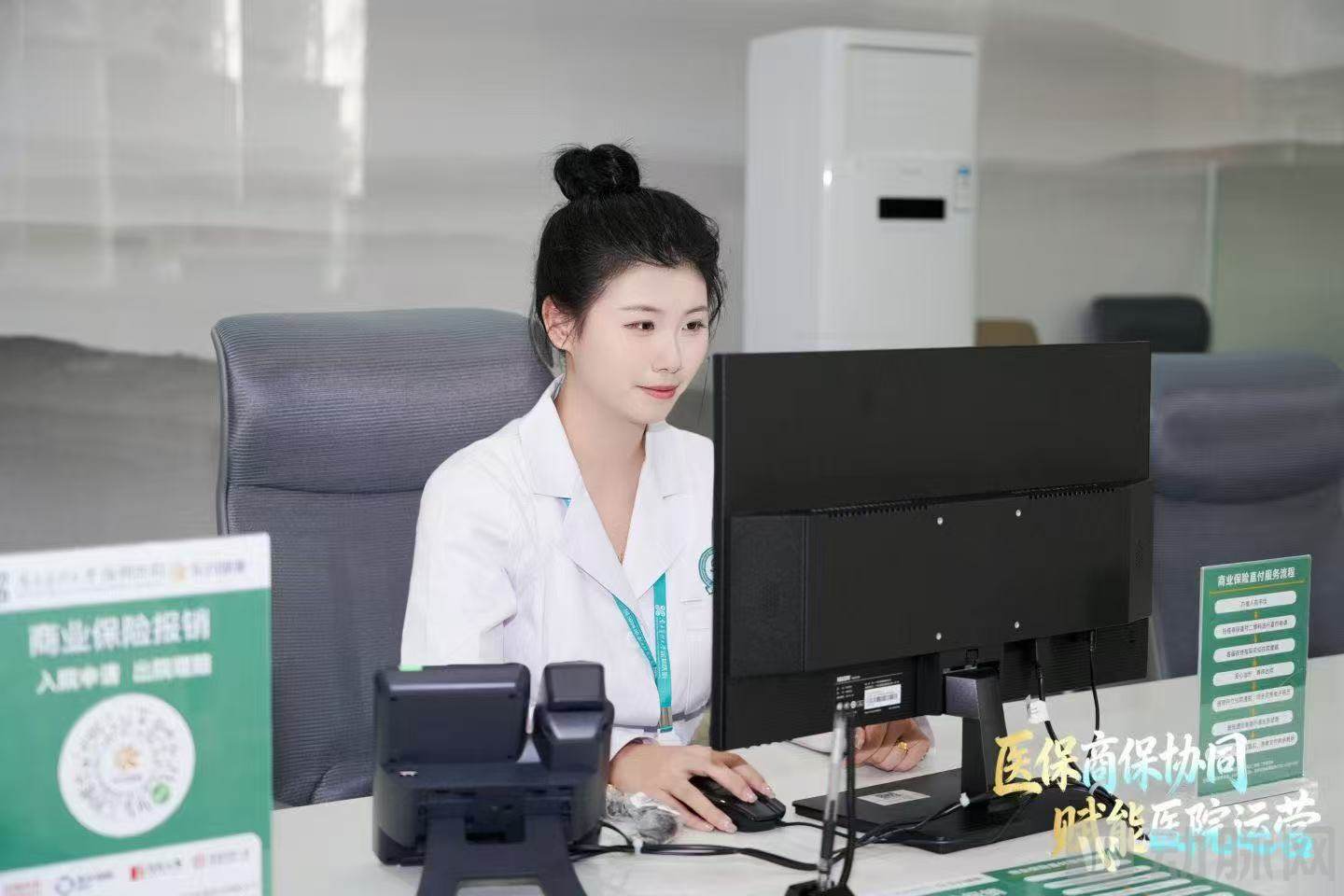
And when perceptions begin to shift, technology often finds more appropriate ways to take root. Specifically, for JoyHealth, leveraging the technical accumulation and over 80% market share of its strategic shareholder,中科软科技 (ChinaSoft Technology), in core business systems within the insurance industry, as well as the technological advantages of the Institute of Computing Technology, Chinese Academy of Sciences, in blockchain and privacy computing, the company has gradually developed a one-stop commercial insurance settlement solution that encompasses capabilities such as information security, blockchain, and privacy computing, which is both implementable and replicable.
From a "seed partner" to collaborating with over 200 tertiary hospitals on the one-stop commercial insurance settlement, it took Leyue Health 10 years. After a decade of persistence, Leyue Health has finally achieved small-scale implementation of one-stop commercial insurance settlement in tertiary hospitals in China, covering more than ten provinces and cities including Liaoning, Henan, Shaanxi, Tianjin, Sichuan, Chongqing, Jilin, Guangdong, Nanjing, Hunan, and Hubei.
In the next two years, the one-stop settlement platform for commercial insurance will enter the stage of large-scale implementation, and the "medical insurance-commercial insurance" one-stop settlement will become a standard service provided by medical institutions and the insurance industry.
As the one-stop settlement of commercial insurance gradually lands, the trust foundation, data interaction foundation, and industry collaboration foundation of medical-insurance integration begin to take shape, and the industry also enters the next phase. Meanwhile, a series of policies and measures will be introduced intensively in 2025. For example, seven departments in Shanghai launched 18 measures to strengthen the coordination of medical insurance and commercial insurance, the National Healthcare Security Administration issued a document supporting the integration of innovative drugs and commercial insurance, and The Commercial Health Insurance Innovative Drug List encourages insurance companies to cover innovative drugs and medical devices. These actions will inevitably reshape the industry landscape and open up new policy space for medical-insurance integration.
Embarking on a New Journey: Focusing on Three Key Directions to Unlock the Deep Value of Medical-Insurance Integration
"Co-development of products, co-operation of users, and cross-border healthcare" have become the three core directions for the next decade of medical-insurance integration. These three directions correspond to the extension of medical-insurance integration from payment synergy to earlier-stage product design, later-stage user operation, and broader international services, representing the three most noteworthy aspects for value release in the next phase.
Product Co-development: Cracking the Lack of Innovation in Commercial Insurance, Making Coverage More Aligned with Needs
Currently, the commercial health insurance industry is facing the challenge of a slowdown in growth. According to data disclosed by the Financial Supervisory Authority, in 2025, the premium income from health insurance businesses of life insurance and property insurance companies will stagnate at 997.3 billion yuan, failing to break through the trillion-yuan mark. Behind the slowdown in growth lies a long-standing pain point in the industry: the lack of innovation in commercial health insurance.
Scarcity of Coverage for Pre-Existing Conditions and Insufficient Protection for High-Value Innovative Drugs Exemplify Weak Innovation in Commercial Health Insurance. The "Innovative Research Report on Insurance for Pre-Existing Conditions (2025)" shows that although the market size of commercial health insurance for pre-existing conditions exceeded 12 billion yuan in 2024, more than half of individuals with pre-existing conditions believe there are too few options available, and nearly 30% were denied coverage due to failing health declarations. Meanwhile, high-value innovative drugs such as CAR-T cell therapies and new treatments for Alzheimer’s disease have not been included in China's medical insurance system due to their high costs and insufficient clinical data. Without commercial insurance coverage, patients often have to pay out-of-pocket, easily falling into the dilemma of "falling back into poverty due to illness."
However, for insurance companies, the high health risks of patients with pre-existing conditions and the high prices of innovative drugs mean extremely high risk control pressure, which has also hindered the pace of product innovation. In Fu Xinhua's view, the key to co-developing products does not lie in how novel the product concept is, but in whether the resources originally scattered among medical insurance, commercial insurance, hospitals, and pharmaceutical companies can be truly organized into an operational and sustainable chain: secure and compliant sharing of medical and commercial insurance data can provide more precise foundations for product innovation; hospitals can rely on specialized departments such as oncology, chronic diseases, and pediatrics to offer clinical support for insurers to develop customized coverage; innovative pharmaceutical companies can provide support in areas like pharmaceutical services and drug pricing. Insurance technology companies like Leyue Health are better suited to play the role of a hub connecting all parties.
If this collaborative chain can operate stably, patients will have the opportunity to receive more targeted support, hospitals can promote high-quality transformation around specialized departments, pharmaceutical companies can explore payment scenarios for innovative drugs outside of medical insurance, and insurance companies can enhance their competitive differentiation. The value of co-developed products is ultimately not just about "creating one more product," but about products beginning to align closely with real-world medical scenarios.
User Co-Operation: From "Financial Products" to "Health Services," Deepening Full-Cycle Management
The public's health needs are upgrading to comprehensive life-cycle health management, and disease treatment is transitioning from a single "diagnosis-treatment" model to a full-process management approach of "prevention-diagnosis-treatment-rehabilitation." These changes are pushing "user co-operation" into a more critical position.
For patients, the whole-process and continuous health support can not only enhance the sense of gain in medical treatment but also help improve health conditions and treatment outcomes; for hospitals, user co-operation helps alleviate operational pressure under the background of medical insurance cost control, optimize the allocation of medical resources, and improve service efficiency; for insurance companies, enhancing user stickiness through deeper health management and reducing the claim rate by early intervention are also one of the key paths for the industry to achieve sustainable development.
At present, the industry has already made initial explorations: monitoring users' health indicators through wearable devices to offer health points and premium discounts to those who meet the standards; providing professional chronic disease management services for patients with diabetes and hypertension to reduce the risk of complications… However, these practices have yet to form a scalable and replicable mature model due to factors such as insufficient data interconnection, lack of health management service standards, and low user willingness to pay.
"The essence of user co-operation is to upgrade commercial health insurance from a simple financial product to economic risk-sharing plus full-process health services." In her view, the real challenge here is not about adding a few more value-added services to the product, but enabling medical institutions, health management service providers, and insurance companies to shift from 'each managing their own segment' to working collaboratively around the same user. Only when the chain is truly connected will the services no longer remain as add-on options after the sale of the policy, but gradually become an integral part of health protection."
Cross-border Healthcare: Building China's International Medical Business Card, Tackling Cross-border Payment Challenges
At the beginning of 2026, a British blogger's medical bill in China went viral: 13 days of treatment cost less than 3,000 RMB, whereas in the UK, not only would they have to wait for two years, but the treatment expenses would also be as high as 35,000 RMB. This stark contrast serves as a vivid snapshot of the development wave of China's cross-border medical industry.
According to the 2025 Annual Report on Foreign-related Medical Services by the National Health Commission, international patients received by key foreign-related hospitals in China have exceeded one million throughout the year, surging 73.6% compared to three years ago; additionally, according toInternational Medical Services Professional Committee of the Chinese Hospital Association "2024 China International Medical Services Industry Development Report"As early as 2024, China has already established international medical services in 57 cities and 850 medical institutions, covering top-tier tertiary hospitals and private specialty clinics. With a high cost-performance ratio, high diagnostic efficiency, and continuously improving medical service capabilities, China's healthcare system is gradually moving towards internationalization.
But objectively speaking, China's cross-border medical industry is still in its early stage of development and faces many practical challenges: overseas patients' understanding of China's healthcare system still needs improvement, cultural barriers and language obstacles persist, the service processes and standards for cross-border medical care in China have yet to be fully unified, and the international medical service capabilities of some hospitals also have room for improvement. Meanwhile, payment methods remain one of the core bottlenecks constraining further industry development.
Talking about cross-border medical payment, Fu Xinhua frankly stated that what is holding back cross-border direct payment is far more than just a payment interface; it’s also that data cross-border flow, fund cross-border flow, and compliance frameworks have not yet truly aligned. Due to the relevant requirements not being fully clear, and differences in healthcare service standards, information technology standards, and digital development levels across different countries and regions, a true cross-border direct payment mechanism for commercial health insurance has yet to take shape. For overseas patients, after seeking medical treatment in China, they still need to pay medical expenses out of pocket and then seek reimbursement from their insurance companies upon returning home, significantly reducing the overall experience.
Therefore, if cross-border medical care is to further develop in the future, cross-border payment remains a "hard bone" that must be tackled. Only by gradually promoting the operability and implementation of the commercial insurance cross-border direct payment mechanism can overseas patients possibly enjoy settlement services as convenient as those available to domestic patients. This will also become an important lever for Chinese medical services to enter a broader international market.
Product co-development faces data barriers and risk control challenges, while user co-operation urgently needs unified service standards and打通 data chains. Cross-border medical care, on the other hand, must solve problems such as the lack of payment mechanisms and an incomplete service system… In the next decade of medical-insurance integration, opportunities and challenges coexist. However, regardless of which key direction is pursued, the common underlying issue remains "industry collaboration."
Fu Xinhua's judgment is that the key to further advancing the integration of medical and insurance industries lies not only in打通 the payment chain, but also in whether hospitals, insurance companies, pharmaceutical enterprises, and health service providers can be truly organized into a mutually beneficial ecosystem that operates sustainably; behind this, it requires joint efforts from all parties in the industry—policymakers, hospitals, insurers, and technology companies—each fulfilling their respective roles.
Among these, the policy end needs to further improve top-level design, clarify compliance standards and industry norms, and provide clearer guidance for industrial development; the hospital end can participate more actively in "product co-research and development" and "user co-operation," promoting medical services towards diversification and refinement; insurance companies need to gradually move away from a pure "product mindset" and establish a stronger "user mindset," innovating coverage while deepening health services; as for insurtech companies, they should continue to leverage technology and connectivity, integrating data and service chains to provide more solid support for industrial collaboration.
Ultimately, what needs to be verified in the next decade may not just be whether commercial health insurance can pay faster or offer a better claims experience, but whether it can be more deeply integrated into medical services and health management, becoming part of a continuously operating mechanism. Only when the mechanism truly functions can commercial health insurance move from being a supplementary payment tool to a more stable and resilient component of a multi-layered medical security system. This might be the most worthwhile question to explore in the long term after the integration of medical care and insurance enters its next phase.