

Cool Reflections on a Hot Trend: Where Is the Next Breakthrough in the Medical AI Surge?
In recent years, the domestic medical AI sector has continued to heat up.
Leading pharmaceutical companies, diagnostic firms, and technology enterprises are accelerating their AI deployments. In this process, innovative drug pipelines developed on AI platforms have rapidly advanced previously undruggable targets into clinical trials. AI products from representative companies such as Tencent Miying, Infervision, Keya Medical, and iFlytek have successively obtained Class II and Class III medical device registration certificates. Currently, AI in healthcare has been included in the scope of support for new infrastructure development. Since Shanghai pioneered pilot programs for insurance reimbursement of AI-assisted diagnostics in 2023, more than ten cities across China, including Beijing, have launched similar initiatives.
However, as the hype surrounding medical AI filters down to real-world clinical practice, it appears to have cooled considerably. Recently, a roundtable discussion themed “Cross-Border Co-Creation: The Most Explosive Ecological Growth Points in AI Healthcare Over the Next Three Years” at VCBeat’s 2026 Top 100 Future Healthcare Companies Forum drew significant industry attention. Drawing on industrial practices and academic research, the panelists dissected the implementation pathways and future trends of AI in healthcare, identifying a consensus-driven new breakout point for the future.

Cross-Boundary Co-Creation: Roundtable Forum on the Most Explosive Ecological Growth Points in AI Healthcare Over the Next Three Years | Image Source: VCBeat
AI Is Reshaping the Entire Healthcare Value Chain
In recent years, the vision of leveraging AI to reimagine the healthcare industry has become virtually a reality. From target screening to drug development, and from serious medical care to consumer health services, AI’s presence is ubiquitous. Notably, AI-driven explorations focused on novel target discovery and validation, clinical diagnosis, and health management have continued to generate significant momentum, gradually establishing their own distinct growth paradigms.
AI-driven drug discovery, an upstream sector, is the hottest topic at present and has brought the most profound changes to traditional practices.Notably, AI-driven target discovery and validation have established an efficient closed loop spanning venture capital investment, asset transactions, and profitable exits. The underlying reason is that traditional target development methods, as the core of new drug and diagnostic reagent development, heavily rely on manual trial-and-error, resulting in low efficiency and high failure rates. “The first step in new drug development is to leverage human intelligence to summarize the successes and failures in target research and development, thereby identifying potentially correct pathways,” pointed out Professor Pan Shiyang, Leader of the Laboratory Medicine Discipline at Nanjing Medical University, Vice Chairman of the Laboratory Medicine Branch of the Chinese Medical Association, and Chairman of the IFCC Committee on Molecular Diagnostics in Oncology (C-MDO), during the roundtable forum. He further noted that by the drug design stage, AI can simulate molecular spatial conformations, reducing trial-and-error costs—a key reason why leading pharmaceutical companies are enthusiastically embracing AI.

Academic Leader of Laboratory Medicine at Nanjing Medical University, Vice Chairperson of the Society of Laboratory Medicine, Chinese Medical Association
Pan Shiyang, Director and Chair of the IFCC Committee on Molecular Diagnostics in Oncology (C-MDO). Image source: VCBeat
According to reports, Director Pan Shiyang’s team previously identified a protein target that is highly expressed in tumor tissues and has already been applied in clinical diagnostics. Given that this target promotes tumor cell proliferation, invasion, and metastasis, the team is currently developing related drugs based on it. “I believe it is highly appropriate to leverage AI technology in this process,” stated Director Pan Shiyang. “Every stage of new drug development, clinical diagnosis and treatment, and scientific research involves massive amounts of data and complex decision-making. Protein molecular structures require individual analysis, multi-omics data necessitates cross-comparison, and vast bodies of literature demand precise traceability; every judgment impacts the overall outcome.” Mr. Ni Yongquan, CTO of Yingkang Life, added that this implies the deployment of AI in the broader healthcare sector requires not only powerful foundational models but also superior engineering capabilities, enabling large models to execute complex real-world tasks in a stable, controllable, and efficient manner.
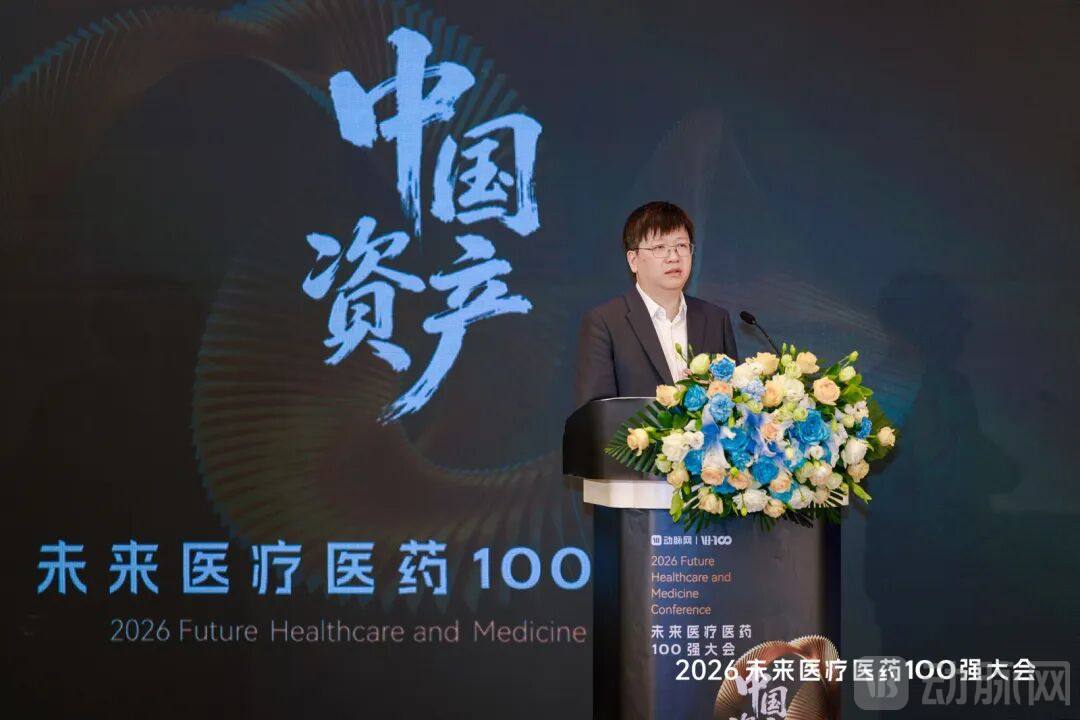
Mr. Ni Yongquan, CTO of Yingkang Life | Image source: VCBeat
MidstreamClinical DiagnosisAI, the fastest to implement, yet still with enormousEfficiency Improvement Potential.Mr. Yang Chuanjia, Director of Digital Business Innovation at Roche Diagnostics China, pointed out that 70% of clinical decisions are based on diagnostic results, and AI is well-positioned to address the resource shortages and performance limitations in the diagnostic process. Among various applications, pathology AI is one of the fastest-adopted scenarios in clinical practice. In China, there is a shortage of pathologists, with the gap being even more pronounced in primary care hospitals. “The integration of AI into the entire pathology workflow has been proven feasible. It not only improves the efficiency of pathologists in slide interpretation but also helps junior doctors accelerate their professional development, thereby compensating for the shortage of manpower,” said Mr. Yang.

Mr. Yang Chuanjia, Director of Digital Business Innovation at Roche Diagnostics China | Image source: VCBeat
Furthermore, no single biomarker can achieve ultimate sensitivity and specificity; however, algorithm-based multivariate analysis can further optimize biomarker performance. At present, Roche Diagnostics has integrated traditional biomarkers AFP and PIVKA-II with multidimensional data such as age and sex to assist in the early diagnosis of liver cancer. “After optimization, we have enhanced the performance of early-stage liver cancer monitoring, enabling the detection of more patients in the early stages of the disease,” stated Mr. Yang Chuanjia.
DownstreamHealth ManagementAI: Pioneering the earliest efforts and encountering the most pitfalls, a rational path is emerging, but the data barrier remains extremely high.In the early wave of medical AI, numerous technology platforms explored developing health management applications based on data obtained from offline physical examination centers, but very few managed to survive in the market. According to Mr. Ni Yongquan, health management data is divided into two parts: in-hospital and out-of-hospital. In-hospital data is generated within serious medical care scenarios, where its application value is relatively clear. Yingkang Life has focused more on tapping into health data outside traditional medical settings, leveraging data-driven intelligent applications to connect the entire continuum from in-hospital to out-of-hospital care.
“Ownership of out-of-hospital health management data clearly belongs to the users themselves; however, such data can provide significant value for effective health management. Users are also willing to leverage technical means to integrate their health data—reflecting changes in symptoms, physical signs, and psychological characteristics—with in-hospital medical data to better achieve health management goals.” According to Mr. Ni Yongquan, these data can be acquired through multiple channels, including patient self-reporting, physiological monitoring via wearable devices, and de-identified technical monitoring.
Before the Dawn, Data Remains the Greatest Barrier
Amid the AI Hype, Large-Scale Deployment of Medical AI Still Faces Significant Challenges
For instance, at the regulatory level, the state has explicitly clarified that medical AI itself cannot yet be listed as a billable add-on item for medical services. Furthermore, regarding commercialization, most medical AI products remain immature, and stable business models are still being explored. “The industry cannot rely indefinitely on investor funding; it must establish sustainable business models to achieve a positive cycle of ‘product iteration – enhanced clinical value – commercial return,’” stated Mr. Yang Chuanjia. In addition, the application of currently popular large AI models in clinical settings remains questionable. General-purpose large models cannot be directly applied to serious medical care; they must be underpinned by specialized medical knowledge, and their outputs must be interpretable. Mr. Ni Yongquan pointed out that the interpretability and complexity of general-purpose large models are not on the same order of magnitude as the complexities involved in diagnosis, treatment, and life sciences. Technical patches are required to ensure reliable results, posing significant engineering challenges.
However, at its core, the fundamental logic behind the continued obstacles to the large-scale deployment of medical AI lies in data barriers across various dimensions. For instance, the difficulty in pricing medical AI products is primarily due to insufficient evidence-based medicine data, while the key to establishing a viable commercial loop depends on whether the product can achieve performance improvements and cost reductions through data accumulation.
Throughout its development, the data challenges in medical AI have long moved beyond the narrative of “insufficient data volume” to reveal two types of systemic deficiencies. On one hand, there are inherent quality defects in the data itself, which constitute a foundational issue for model training. The quality of medical data is uneven, with significant disparities across hospitals of different tiers; some data contain errors or missing values, directly undermining training effectiveness. On the other hand, there are deficiencies in data standardization and accessibility, representing a systemic bottleneck to industrialization. The medical industry’s data standardization system remains immature, with substantial variations in data formats and annotation methods across different hospitals and equipment manufacturers. Yang Chuanjia noted that, from the perspective of vendor development, intra-hospital data silos pose a realistic challenge. Hospitals operate numerous internal systems, resulting in highly fragmented data and “siloed” states. If sufficiently large training datasets cannot be constructed, model performance will remain suboptimal, making it impossible to establish a viable commercial loop.
Nevertheless, the industry has never ceased its exploration of data-related challenges. At the forum, Mr. Yin Jie, Head of Market and Ecosystem for Alibaba Health’s Large Language Models, shared an evidence-based reliability framework for medical vertical large language models, which is becoming an industry consensus. First, a foundational hierarchy of evidence must be established, ensuring that all literature and clinical guidelines are structurally interpreted upon entry into the system based on the PICO framework and GRADE standards. Second, PICO-based retrieval and data augmentation should be implemented to guarantee that every statement generated is traceable to its sources. Furthermore, the model should be reinforced and fine-tuned to enable it to learn “what constitutes accurate, faithful, evidence-based, safe, and useful answers,” thereby ensuring strict adherence to the standards of evidence-based medicine. Finally, a medical AI expert evaluation system should be established, wherein specialists in specific diseases conduct dynamic assessments of the model’s reasoning capabilities and safety boundaries. This approach ensures that every response provided by the AI product “Hydrogen Ion” is traceable, verifiable, and trustworthy.
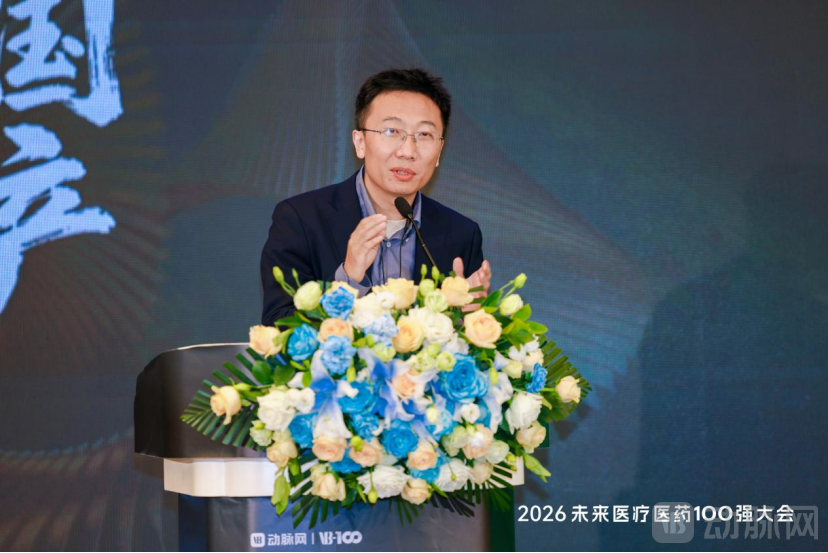
Mr. Yin Jie, Head of Market and Ecosystem for Alibaba Health’s Large Language Model | Image source: VCBeat
Furthermore, it is understood that Yingkang Life is building a data governance framework based on large language models, implementing data de-identification, privacy removal, auditing, and classification to establish a unified data lake, thereby ensuring data compliance and usability at the foundational level. Ni Yongquan proposed the approach of “moving models, not data,” leveraging technologies such as privacy-preserving computation and federated learning to enable secure cross-institutional collaborative training and fine-tuning through data service components. This ensures that raw data remains within hospital premises, technically resolving the conflict between data compliance requirements and data silos.
Final Thoughts
Regarding the trends in medical AI over the next three years, the roundtable panelists unanimously agreed that the diagnostics sector will be the core area of explosive growth for AI in healthcare. Director Pan Shiyang pointed out that AI will have extensive application scenarios in the field of clinical diagnosis. Mr. Yang Chuanjia also explicitly stated that the breakthrough in AI healthcare must be grounded in diagnostics, integrating multimodal and multidisciplinary comprehensive analysis to assist physicians in making more precise clinical decisions.
At this conference, Roche Diagnostics’ LanYun Laboratory AI Smart Assistant “Luo e Lian” and the Roche Diagnostics Technology Innovation Center were shortlisted for the “Top 50 Most Innovative Products and Technologies” and the “Top 50 Industrial Ecosystem Innovation and Empowerment Platforms,” respectively. VCBeat has learned that Luo e Lian has been deployed in over 600 laboratories across China, while the Roche Diagnostics Technology Innovation Center continues to empower product innovation in three key sectors—medical devices, intelligent diagnostics, and health management—emerging as a hub for Roche Diagnostics’ localized innovation.

Of course, beyond a mere understanding of industry trends, a more critical consensus is that the core value of AI lies in augmenting human capabilities rather than replacing humans. The healthcare sector’s interest in AI stems precisely from its ability to compensate for human limitations. Only by clearly defining AI’s role as “augmenting rather than replacing humans” can regulators establish reasonable pricing and liability mechanisms, can the industry develop sustainable business models, and can AI in healthcare truly transition from concept to large-scale implementation.