

Juncell Therapeutics Announces Successful Phase II Trial of GC101 (Nolgileucel), a Novel TIL Therapy, in Advanced Melanoma Patients Refractory to PD-1 Inhibitors at ASCO 2026 LBA
On June 1, 2026 (Central Time, US), JunSai Biologics announced its findings at the American Society of Clinical Oncology (ASCO) Annual Meeting, the most prestigious event in the global oncology community, through an oral presentation of a Late-Breaking Abstract (LBA).The World’s First Therapy Requiring No High-Intensity Conditioning Chemotherapy、No IL-2 Administration RequiredAutologous Natural Tumor-Infiltrating Lymphocyte (TIL) TherapyGC101 (Nolgileucel, Nuojilunsai)Key Results from a Phase II Clinical Study on the Treatment of Advanced Melanoma[1]。
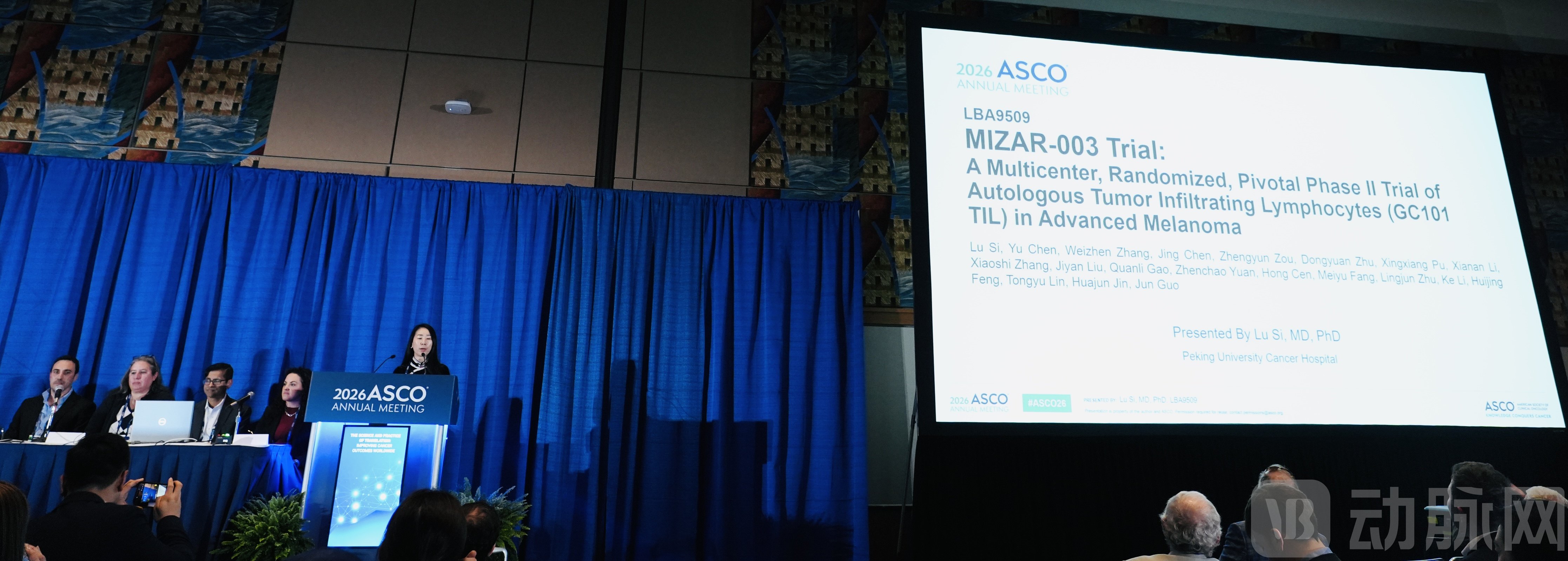
Figure 1. Professor Si Lu, Chief Physician and Doctoral Supervisor at Peking University Cancer Hospital, delivers an oral presentation on-site at ASCO 2026.
There is an urgent need for melanoma treatment in China. Unlike cutaneous melanoma in European and American populations,, acral and mucosal melanomas are the predominant subtypes in China, the proportion and degree of benefit from targeted therapies and immune checkpoint inhibitors (ICIs) are significantly inferior to those observed in cutaneous melanoma, posing greater treatment challenges. Even with pembrolizumab (a PD-1 antibody), there is a substantial disparity in clinical efficacy between Eastern and Western populations. In the pivotal first-line melanoma trial in Europe and the United States (KEYNOTE-006), the objective response rate (ORR) for pembrolizumab was47%, prolonged duration of response (DOR),At 42 months, 65% of responders remained in remission.[2]. In the phase I melanoma trial in China (LEAP-003), the ORR in the pembrolizumab monotherapy group was only16.4%, shorter DOR,At 12 months, only 58.4% of responders were in remission[3]。
Currently, the only TIL therapy approved worldwide is Lifileucel, indicated for the treatment of advanced melanoma in patients who have failed PD-1 antibody therapy.Although this TIL therapy can bring deep and lasting clinical benefits to patients, the ORR was 31.4%, the median progression-free survival (PFS) was 4.1 months, and the five-year overall survival (OS) rate was 19.7%[4]. However, it must be used in conjunction withHigh-intensity lymphodepleting chemotherapy and repeated high-dose IL-2 administration, causing numerous adverse reactions,Received an FDA Black Box Warning. There is an urgent clinical need for innovative therapies that combine potent antitumor activity with a favorable safety profile.
The MIZAR-003 study, selected as an ASCO Late-Breaking Abstract (LBA), is an open-label,Randomized Controlled, multicenterKey Phase IIClinical trial, launched in December 2024, by the Vice President of Peking University Cancer Hospital, Director of the Department of Medical Oncology for Melanoma and Sarcoma, and Director of the Department of Genitourinary Medical OncologyProf. Guo JunLed by the sponsor, this study is being conducted at 25 leading oncology centers across China, aiming to confirm the efficacy and safety of GC101 in patients with advanced, later-line melanoma who have failed PD-1 antibody therapy. The primary endpoint is progression-free survival (PFS).
MIZAR-003 The enrolled population consists entirely ofPatients with Advanced Melanoma Who Failed PD-1 Antibody Therapy,The median number of prior lines of systemic therapy was2Line,Acral and mucosal subtypes account for81.8%,Median Sum of Diameters (SOD) of Target Lesions:68.4mm,89.9% of patients developed distant metastases, with more than half experiencing metastasis in ≥ 3 organs; among these, 66.7% had metastases in vital organs such as the liver, lungs, and bones.. After randomization, the baseline characteristics were balanced between the experimental group and the control group.
As the first global registrational randomized controlled trial (RCT) of TIL therapy in later-line melanoma,MIZAR-003 Meets Primary Endpoint, Clinical Trial Succeeds。Median PFS in the GC101 trial group reached4.3months, significantly superior to that of the chemotherapy control group1.6month(HR=0.43,95% CI 0.26~0.68,P=0.0002),57% Reduction in Risk of Progression or Death. OS data are not yet mature but have shown a trend toward benefit.
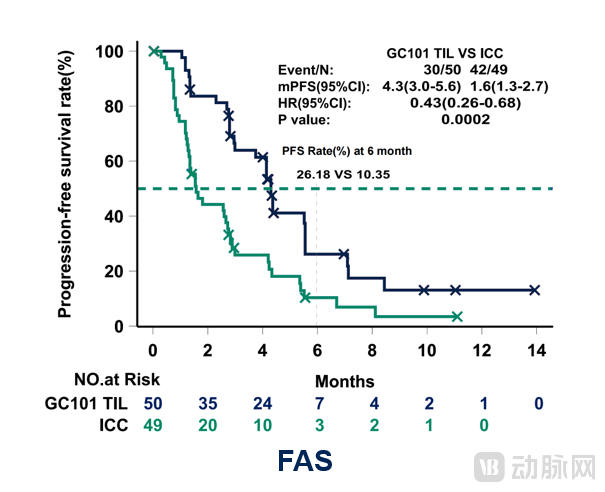
Figure 2. GC101 PFS Data
GC101 Trial GroupORR is42.0%,significantly higher than the 6.1% in the control group,Moreover, some patients in the experimental group converted from long-term partial response (PR) to complete response (CR), demonstrating superior efficacy.
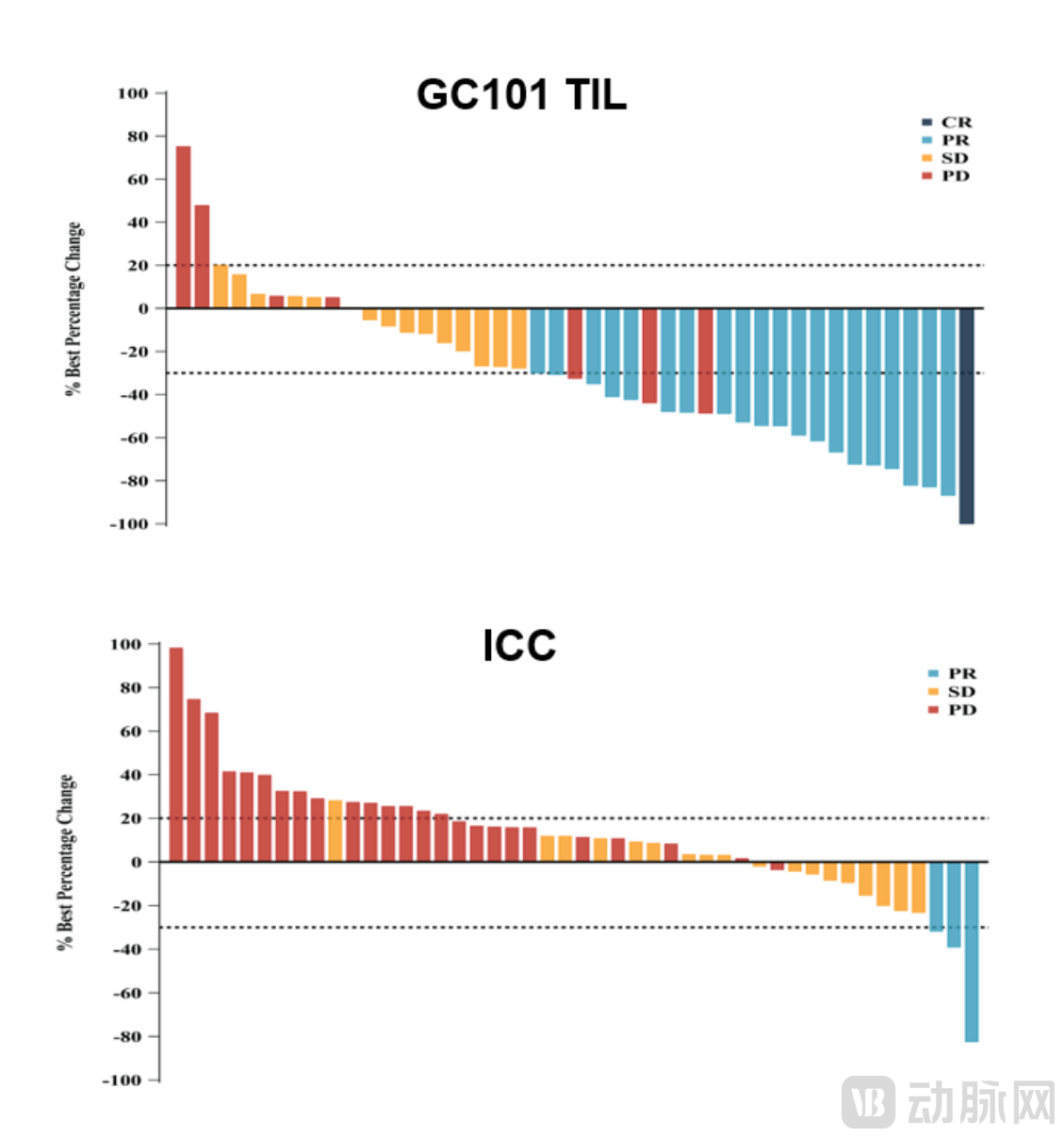
Figure 3. Waterfall plots for the experimental and control groups
GC101 subverts the inherent paradigm of traditional TIL therapy, which requires high-intensity lymphodepleting chemotherapy and high-dose IL-2 administration, by adoptingReduced-Intensity Conditioning、ExemptIL-2 Drug Administrationinnovative solutions to reduce related adverse events at their root cause.
In terms of overall safety results: Adverse reactions in the GC101 group were manageable; grade ≥3 adverse reactions were primarily hematologic toxicities caused by preconditioning, butThe median recovery time was even shorter than that of the chemotherapy control group (8 days vs. 13 days).. Compared with foreign marketed TIL therapies (non-head-to-head comparison)Safety Profile Stands Out More Prominently, no treatment-related deaths occurred(0% vs 7.5%), no persistent Grade ≥3 cytopenias lasting more than 30 days were observed(0% vs 45.5%),Lower platelet and red blood cell reinfusion rates (< 5% vs > 70%), most patients can recover without additional intervention, enabling rapid discharge.
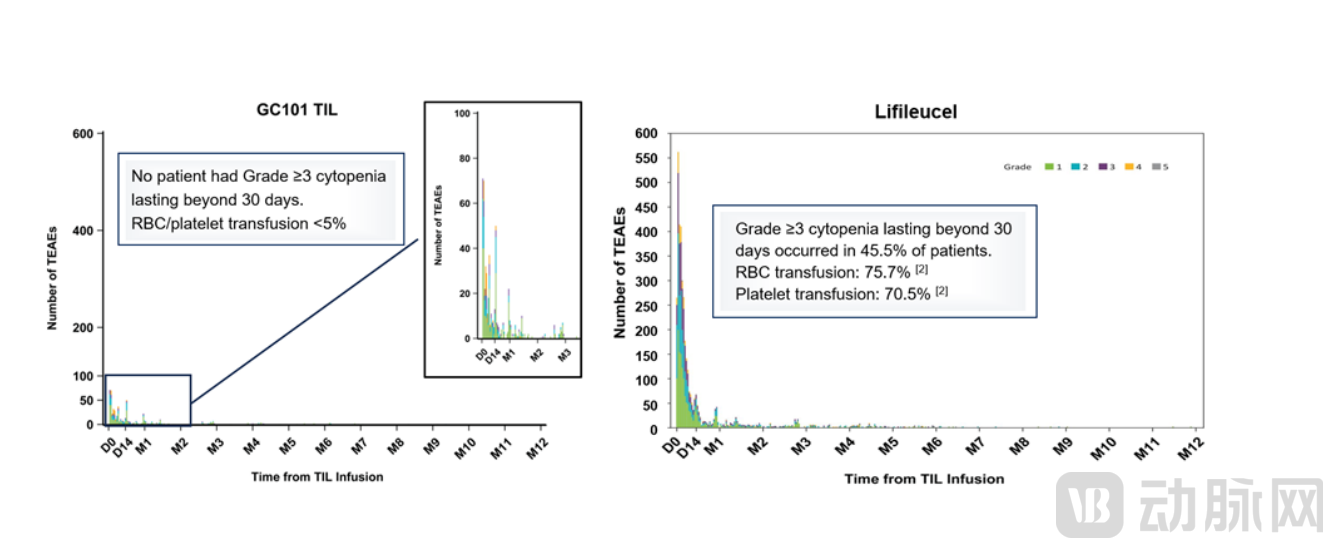
Figure 4. Safety Data for GC101
With its superior safety profile, GC101 no longer requires ICU support, enabling broader adoption across hospitals and meeting diverse clinical needs. This means that innovative TIL therapy no longer necessitates high-level specialized care, significantly lowering the threshold for clinical use and reducing the burden on medical resources, while also laying a solid foundation for more extensive combination therapies.

Vice President of Peking University Cancer Hospital, Melanoma and SarcomaChief of Medical OncologyProfessor Guo Jun, Director of the Department of Medical Oncology for Urologic Tumors, stated, the GC101 pivotal Phase II project isThe Sole Representative in the Cell Therapy Field at This Year’s ASCO LBA, underscoring the high level of attention ASCO has paid to this study. This research specifically targets the acral and mucosal subtypes, which are the two most common forms in China and alsoGlobally Recognized Refractory Melanoma. Although all enrolled participants wereLate-Stage End-of-Line Patients, and GC101 has achieved a technological breakthrough,Without the need for lymphodepleting chemotherapy or IL-2,still achieved favorable outcomes, with an ORR of 42.0% and a PFS of 4.3 months, it can be said that in the field of cellular immunotherapy, GC101 TIL has made a remarkable contribution, and its selection as an ASCO Late-Breaking Abstract (LBA) oral presentation is well-deserved. Currently,The 2026 Edition of the Chinese Society of Clinical Oncology (CSCO) Guidelines for the Diagnosis and Treatment of Melanoma has included TIL therapy in its recommendations., GC101 holds significant promise in the future, leveraging its superior efficacy and manageable safety profile,BecomeStandard of Care for Melanoma in Later Lines of Therapy After PD-1 Resistance。
A total of 63 Late-Breaking Abstracts (LBAs) were accepted at this year’s ASCO Annual Meeting, including the pivotal Phase II study of Junsei Bio’s GC101.The Sole Representative in the Cell Therapy Field at This Year’s ASCO LBA, and also isThe First Solid Tumor Cell Therapy Project Selected for LBA in ASCO History, marking the company as a trailblazer and an innovation pioneer in the field of cellular therapy for solid tumors globally, and signaling that Chinese cell therapy enterprises are poised to take the lead in this critical frontier sector.
GC101 asChinaThe First TIL Therapy to Achieve the Primary Endpoint in Pre-Marketing Clinical Trials, once approved, is expected to reshape the treatment landscape for advanced melanoma. In the future, leveraging TIL cell therapy can create more diverse treatment scenarios, bringing greater and more substantial benefits to patients with malignant melanoma.
Looking to the future, Junsaibio will continue to practice “Precision Cell Engineering, Safeguarding Life” mission, using melanoma as a breakthrough point to continuously explore the therapeutic potential of innovative TIL therapy in solid tumor indications such as lung cancer, head and neck cancer, pancreatic cancer, gynecologic tumors, glioma, and sarcoma, enablingHigh-Value TIL Cell Therapy Brings Hope to More Cancer Patients in Critical Conditions。
References
1.Lu S., et al. A multicenter, randomized, controlled, open-label, phase II trial of autologous tumor-infiltrating lymphocytes (GC101 TIL) in patients with advanced melanoma. 2026 ASCO. LBA 9509.
2.Georgina V. Long et al. 4-year survival and outcomes after cessation of pembrolizumab (pembro) after 2-years in patients (pts) with ipilimumab (ipi)-naive advanced melanoma in KEYNOTE-006.. J Clin Oncol 36, 9503-9503(2018).
3.Guo, et al. First-line lenvatinib plus pembrolizumab versus placebo plus pembrolizumab in Chinese patients with unresectable or metastatic melanoma: Results from LEAP-003. 2025 ASCO, Abstract #9553.
4.Theresa Medina et al. Long-Term Efficacy and Safety of Lifileucel Tumor-Infiltrating Lymphocyte Cell Therapy in Patients With Advanced Melanoma: A 5-Year Analysis of the C-144-01 Study. J Clin Oncol 43, 3565-3572(2025).