

Alveus Therapeutics Secures $197M Series A Financing Backed by Sanofi and Novo Nordisk to Advance Next-Gen Obesity Therapies
Alveus Therapeutics
Developer of Obesity and Metabolic Disease Therapies
The weight loss sector has entered deep waters; the era of wild growth driven by a single target, a single sequence, or a single round of financing is over.
Recently, U.S. clinical-stage biopharmaceutical company Alveus Therapeutics (“Alveus”), through a two-tranche closing,Oversubscribed Series A Financing Totaling Up to $197 Million (Approximately RMB 1.333 Billion), officially entering the global spotlight.
The initial closing of $159.8 million was co-led by New Rhein Healthcare Investors, Andera Partners, and Omega Funds, with participation from corporate venture capital firms including Sanofi Capital; the second closing secured additional support from Jeito Capital and Novo Holdings, further strengthening the capital syndicate and making it one of the most notable early-stage financings in the global weight-loss drug sector in recent years.
These funds will be directed toward advancing clinical development of core pipeline assets and filing Investigational New Drug (IND) applications for early-stage candidates. How can a newly launched biotech company secure substantial early-stage financing, attract leading industry investors, and rapidly advance its pipeline into clinical trials?
As Novo Nordisk and Eli Lilly construct comprehensive moats spanning basic research, clinical development, and commercialization, many startups continue to struggle for survival amid congestion and uncertainty: either engaging in price and speed wars within the saturated “me-too” landscape, or repeatedly trial-and-erroring unverified novel mechanisms, facing odds of nine deaths to one life.
The difference lies merely in whether the giants or the stones are being felt while crossing the river.
In contrast, Alveus is undoubtedly fortunate; born with a silver spoon in its mouth, it has never lacked routes, crew, or supplies. Alveus was not naturally spawned from laboratory molecules, nor did it start from scratch in the conventional sense; rather, itNew Rhein Healthcare Investors: Strategically Orchestrated and Targetedly Incubatedproject.
As an institution deeply rooted in the European and American life sciences sector that applies a private equity mindset to early-stage investing, New Rhein excels at reverse-engineering product value from the perspective of strategic buyers. Rather than betting on unproven frontier mechanisms, it first identifies promising therapeutic areas, then builds dedicated teams, and finally acquires or licenses assets—thereby leveraging mature industry logic to mitigate the uncertainties inherent in early-stage R&D.
Therefore, entering the field of obesity and metabolic diseases at this juncture is by no means accidental. As the global obesity drug market advances toward a scale of hundreds of billions of dollars, unmet clinical needs remain clearly evident:Although existing therapies can achieve short-term weight loss, they struggle to support long-term weight maintenance in patients, and there is still room for improvement in tolerability and dosing convenience.
To pave the way for this strategy, New Rhein has assembled a veritable dream team for Alveus: CEO Raj Kannan brings over three decades of global biopharmaceutical leadership experience, having previously served as CEO at I-Mab, Aerie Pharmaceuticals, and Chiasma. He has spearheaded product commercialization, mergers and acquisitions, and corporate transformations, with a proven track record of translating R&D pipelines into commercial value.
Chief Scientific Officer Dr. Jacob Jeppesen comes from Novo Nordisk’s core management team, where he served as Vice President and Therapeutic Area Head for Type 2 Diabetes and Cardiovascular Disease Research. He was deeply involved in the clinical translation of core weight-loss pathways such as GLP-1 and GIPR, and possesses hands-on experience in the end-to-end R&D process for metabolic diseases, from early discovery to clinical candidate development.
Dr. Brian Bloomquist, Chief Business and Strategy Officer, has served at Eli Lilly for nearly two decades, including as Vice President of External Innovation for Diabetes, Obesity, and Complications. He has spearheaded numerous blockbusters partnerships and in-licensing deals, possessing deep expertise in global pipeline positioning, deal logic, and major corporate strategies within the weight-loss sector, making him a pivotal link between technology and commerce.
Chief Technology OfficerDai XiaopingDr. [Name] has over twenty years of experience in the development and manufacturing of biologics, and previously served as Chief Technology Officer at IVERIC,Chief Technical Expert, WuXi Advanced Therapies, and held key positions at Celgene and Bristol-Myers Squibb, where he was deeply involved in the CMC development and commercialization of products such as Opdivo and Yervoy, ensuring a stable and feasible transition of candidate drugs from the laboratory to industrial-scale production.
This team is not a mere aggregation of talent, but encompasses R&D,Clinical, Commercial, ManufacturingFull-chain expertise: Every core member possesses proven success from molecular discovery to market launch, significantly reducing the trial-and-error costs and time cycles commonly encountered by startups at the source.
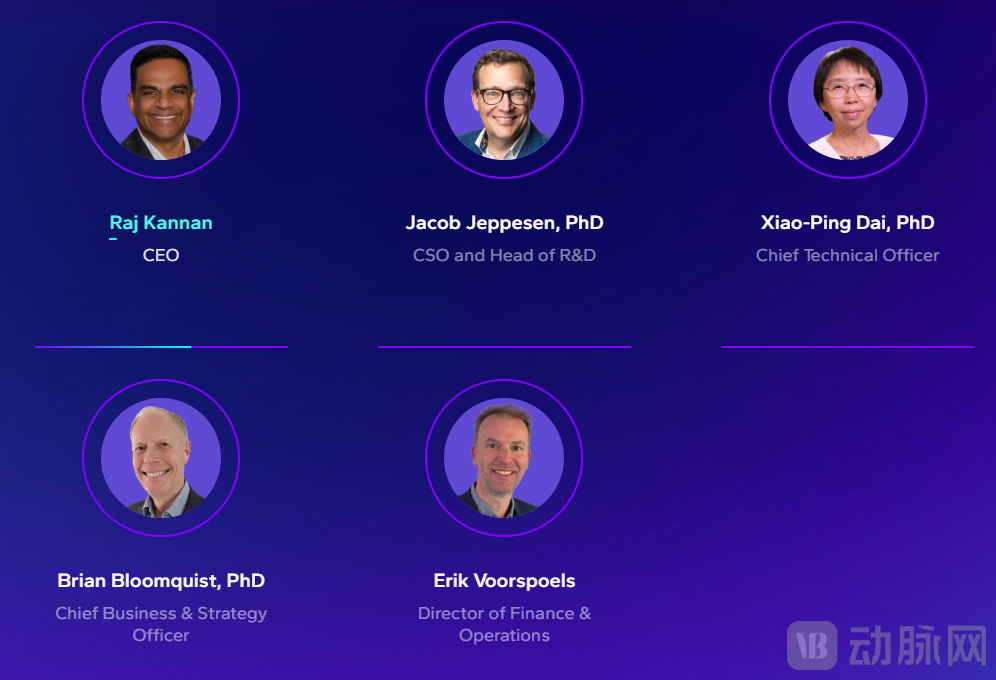 Alveus Team (Image source: Alveus official website)
Having clarified its strategic focus and team, Alveus Therapeutics swiftly established its R&D positioning: avoiding homogeneous competition by pursuing a path of differentiated innovation grounded in mechanisms thoroughly validated by human genetics and clinical evidence. Alveus Therapeutics steers clear of high-risk, novel targets, focusing instead onGLP-1R, GIPR, Amylin Receptormature pathways, shifting the R&D focus to long-term weight maintenance, improved treatment tolerability, and body composition improvement, in an attempt to address the prevalent issues with current weight-loss medicationsWeight rebound, significant side effects, and poor long-term adherenceand other issues.
In terms of pipeline layout, Alveus adopts a dual-drive model of "licensed-in plus in-house development.". Its core asset, ALV-100, is licensed from a clinical-stage pharmaceutical company based in Hangzhou, ChinaHongyun Huaning: In 2024, Alveus Therapeutics entered into a partnership with Hongyun Huaning, securing the global development and commercialization rights for ALV-100 outside of Greater China. As a fusion protein comprising a recombinant humanized GIPR antagonist IgG4 antibody and a GLP-1R agonist peptide, ALV-100 is clearly differentiated from mainstream products in the current weight-loss sector at the level of its mechanism of action.
Among the two weight-loss drugs currently leading in global market share, Novo Nordisk’s semaglutide is a single-target GLP-1 receptor (GLP-1R) agonist, while Eli Lilly’s tirzepatide adopts a dual GIPR/GLP-1R agonist approach; both are well-established, clinically validated mainstream therapies. In contrast, ALV-100 employs a combined mechanism of “receptor antagonism plus agonism,” which is also supported by human genetic evidence: population studies have shown that loss-of-function variants in the GIPR gene can effectively lower individual BMI levels and improve overall cardiometabolic indicators.
Alveus Therapeutics’ independently developed ALV-100 achieves, through an antibody-peptide fusion structure,Longer Half-Life and Lower Dosing Frequency. Preclinical study data indicate that ALV-100 demonstrates excellent pharmacological activity in obese non-human primate models, effectively preserving lean body mass while achieving efficient fat and weight loss; preliminary results from Phase I clinical trials further validate its weight-loss efficacy andLong-term Weight Maintenancecore value. In January 2026,ALV-100 Receives FDA IND Approval and Initiates Phase 1b Trial, with Phase III Clinical Trials Expected to Begin in 2027。
By rapidly supplementing its clinical-stage assets through ALV-100, Alveus Therapeutics has built a tiered early-stage pipeline centered on the amylin pathway, further establishing differentiated competitive barriers. Currently, most globally investigated amylin analogs are dual agonists of the amylin-calcitonin receptor (CTR), with gastrointestinal adverse effects remaining a core bottleneck that limits their clinical tolerability and patient adherence. The Alveus Therapeutics R&D team has clarified through mechanistic deconstruction that the core metabolic benefits of amylin (including the maintenance of lean body mass) are primarily mediated by the AMYR3 receptor, whereas gastrointestinal side effects such as nausea and vomiting mainly stem from CTR activation.
Developed Based on the Discovery of This MechanismHighly Selective AMYR3 Peptide Agonist ALV-200, preclinical models have confirmed that it fully preserves the effects of weight loss and appetite suppression whileHigh Selectivity for CTR, its pharmacokinetic profile supports once-weekly dosing, and it has currently entered the preparation stage for IND submission. In addition, Alveus is simultaneously advancing its strategic layoutOral Amylin Pipeline, with plans to initiate the first-in-human clinical study within 18 months.
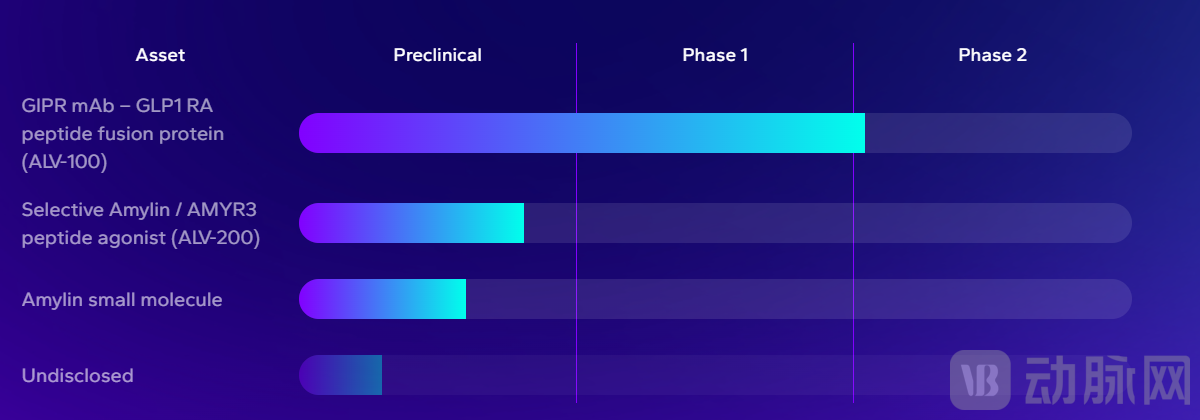 Alveus’ Current Pipeline (Image Source: Alveus Official Website)
The establishment of Alveus is, in essence, an investment institutionAnticipating Gaps from an Industry Perspective, Then Bridging Them with Capital and Resources...a typical operation. This incubation logic is not an isolated island; as the duopoly has thoroughly unlocked the hundred-billion-dollar ocean of metabolic diseases with GLP-1 drugs, global healthcare investment institutions are leveraging this mature industrial incubation paradigm, seeking to seize opportunities for profit amidst the turbulence created by these industry giants.
A Typical Case—Metsera, jointly incubated and established in 2022 by the world’s leading healthcare venture capital firm ARCH Venture Partners and Population Health Partners. The company centers its R&D strategy on three well-validated pathways: GLP-1, GIP, and GCGR. Following its inception, Metsera acquired Zihipp, a UK-based peptide technology company, thereby gaining access to its proprietary library of 20,000 Nutrient-Stimulating Hormone (NuSH) peptides and peptide/antibody conjugates, as well as an injectable product pipeline. Meanwhile, Metsera entered into a licensing agreement with South Korean biotechnology company D&D Pharmatech, securing exclusive global development rights to its oral delivery platform for peptide therapeutics.
Metsera has deeply integrated its acquired and internally developed technologies, anchoring its differentiated R&D strategy on long-acting delivery systems with reduced gastrointestinal side effects, and focusing on the development of once-monthly long-acting metabolic therapeutics. Its core pipeline candidate, MET-097i, has completed Phase 2b clinical trials, with clinical data showing:The 1.2 mg dose group achieved a mean placebo-corrected body weight reduction of 11.3% by Day 85, which further increased to 15% by Day 115.; The product has established significant differentiated advantages in long-acting drug delivery potential, safety, and tolerability.
Metsera listed on the Nasdaq in January 2025, and in November of the same yearAcquired in full by Pfizer for a total transaction consideration of approximately $10 billion. From its founding to its acquisition by a pharmaceutical giant, Metsera took only three years, becoming a paradigm in the biopharmaceutical sector for the model of institutional incubation, pipeline supplementation through M&A, and subsequent takeover by major pharmaceutical companies.
Another company, Versanis Bio, has similarly replicated this mature industrial closed-loop model. Versanis was incubated in 2021 by Aditum Bio, a life sciences incubation firm co-founded by former Novartis CEO Joe Jimenez, with joint investment from top-tier global healthcare funds such as Atlas Venture and Medicxi, making a deep strategic entry into the obesity and metabolic disease sector. Following its establishment, Versanis Bio obtained exclusive global development rights to the core antibody asset bimagrumab from its incubator, Aditum Bio. This asset was originally developed by Novartis and later transferred to Aditum Bio.
Bimagrumab targets ActRII (activin type II receptor).Versanis is prioritizing its Phase IIb BELIEVE clinical trial evaluating monotherapy or combination therapy with semaglutide for the treatment of obesity and overweight in adults., evaluate the clinical efficacy of monotherapy and combination therapy, highlight the differentiated value of weight loss while preserving muscle mass, and address the clinical application limitations of single GLP-1 agents. In August 2023,Eli Lilly Completes Acquisition of Versanis, with a maximum transaction consideration of $1.925 billion. Eli Lilly plans to combine incretin-based therapies with Bimagrumab to achieve the dual benefits of weight loss and muscle preservation, further strengthening its competitive moat in the metabolic weight management sector. This acquisition also makes Versanis another classic example of startup incubation, asset revaluation, and consolidation by industry giants in the metabolic disease arena.
These cases, together with Alveus Therapeutics, collectively outline the landscape of this incubation model: it upends the traditional biotech growth path—where scientists secure financing based on technological achievements, then build teams and gradually validate druggability—by leveraging industry foresight and resource integration to front-load, diversify, or even proactively mitigate risks. The rapid replicability and widespread adoption of this model in the weight-loss sector are fundamentally driven by the unique industrial characteristics of this field.
On one hand, the weight-loss drug market has achieved a breakthrough from zero to one. With annual sales exceeding $10 billion, semaglutide and tirzepatide have validated the commercial ceiling and willingness to pay in this sector. Capital no longer needs to bear the risk of market education; instead, it only needs to identify assets that can fill differentiated gaps within the product portfolios of industry giants. On the other hand, the core biological mechanisms underlying weight loss have been thoroughly validated through human genetics and clinical studies. The druggability of relevant targets has been repeatedly demonstrated, eliminating the need to gamble on the translation success rate of basic research. By optimizing mechanism design, molecular structure, and administration routes to address the pain points of existing therapies, clear clinical and commercial value can be established.
More importantly, the arms race among global pharmaceutical giants in the weight-loss sector has reached a fever pitch. Companies such as Novo Nordisk, Eli Lilly, Sanofi, AstraZeneca, and Roche are rapidly bolstering their pipelines through mergers and acquisitions.Differentiated assets that address the pain points of existing therapies consistently command high-premium acquisition offers from industry giants., providing incubated projects with clear and stable exit pathways; this is the core underlying logic that motivates leading institutions to continue making substantial investments in this incubation model.
For Alveus Therapeutics, this mature model has undoubtedly paved a sufficiently smooth path for its initial development; however, this does not mean it can win the competition without suspense. The current weight-loss market has entered an era of all-around intense competition.Eli Lilly’s oral GLP-1 weight-loss drug Orforglipron was approved for marketing in the United States this April, and Novo Nordisk plans to launch high-dose Phase III trials for its next-generation weight-loss product CagriSema in the second half of this year.。
Globally, several me-better products targeting the same mechanism are being advanced concurrently. Whether ALV-100’s differentiated advantages can be fully validated in clinical settings and whether they can secure sufficient market share amid intense competition from industry giants remain subject to considerable uncertainty. Meanwhile, its independently developed amylin pipeline also faces direct competition from similar targeted products by companies such as Roche and Pfizer.