

BingJing Intelligence Advances from 'Image Recognition' to 'Intraoperative Reasoning + Clinical Logic' with AI-ICE World Model; Completes Series A++ Funding Round

ICE
Next-Generation Intracardiac Ultrasound Device Developer
VCBeat has learned that ICE, the industry’s first enterprise to independently develop a full-chain intelligent interventional ultrasound imaging platform, recently announced the completion of its A++ round of financing. The investment in this round was led by Jiayu Ziniu Medical Fund. The funds raised will be primarily used for the R&D of AI products, mass production of approved products, daily operations, and supplementation of working capital. This financing marks another round secured by ICE in a short period following its Series A and Series A+ rounds.
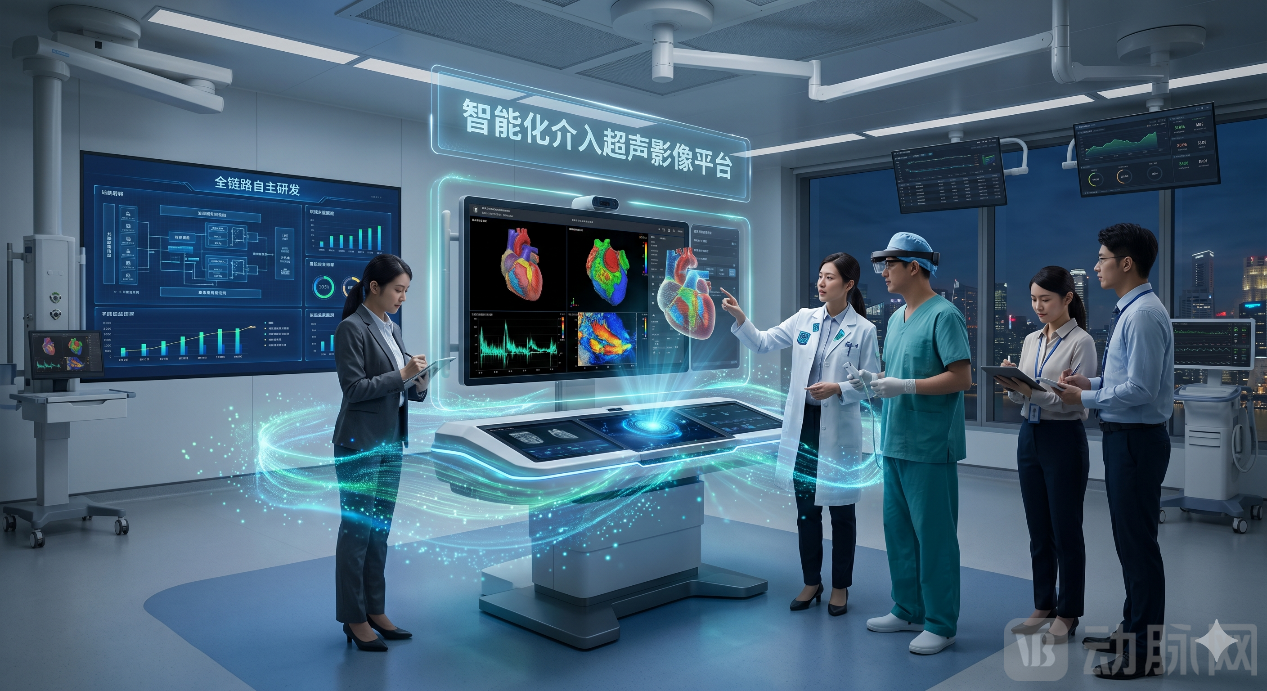
Established in 2021,ICEAssembled a strong core team. Team members come from industry leaders such as GE, Johnson & Johnson, Siemens, Abbott, and Sonoscape, with industry backgrounds fully covering interventional cardiology, imaging, consumables, artificial intelligence, and other related fields. The composite background of medicine, engineering, and commerce among core team members not only enables ICE to efficiently develop complex pipelines but also makes itThe only company in the industry to achieve independent, end-to-end R&D and cost control across the entire interventional ultrasound imaging chain (from transducers, probes, and host systems to image processing and AI algorithms).
ICE is positioned as an “intelligent interventional ultrasound technology platform enterprise,” focusing on cardiac interventional ultrasound while comprehensively expanding across the interventional ultrasound field. It provides comprehensive intelligent services spanning preoperative, intraoperative, and postoperative stages, thereby building a digital-intelligent ecosystem for clinical operating rooms.
ICE, having achieved full in-house R&D and manufacturing of its ultrasound imaging chain, continues to intensify its research and development efforts in AI technology.Continuously launching innovative products and services that meet genuine clinical needs in response to diverse clinical demands, thereby effectively addressing clinical pain points and challenges.
Throughout the history of medical device development, it has never been the devices themselves alone that truly drive clinical transformation, but rather innovation in therapeutic approaches. Without such therapeutic innovation, even the most advanced devices are essentially just running faster on a road already paved by others. Only when new device capabilities are deeply integrated with novel procedural logic, clinical pathways, and physician expertise can the technical boundaries of a medical specialty be redefined. In the field of interventional cardiology, the value of imaging equipment should not stop at “providing clearer visualization,” but should further evolve toward “understanding why physicians make certain decisions, what they might do next, and how to proceed more safely.”
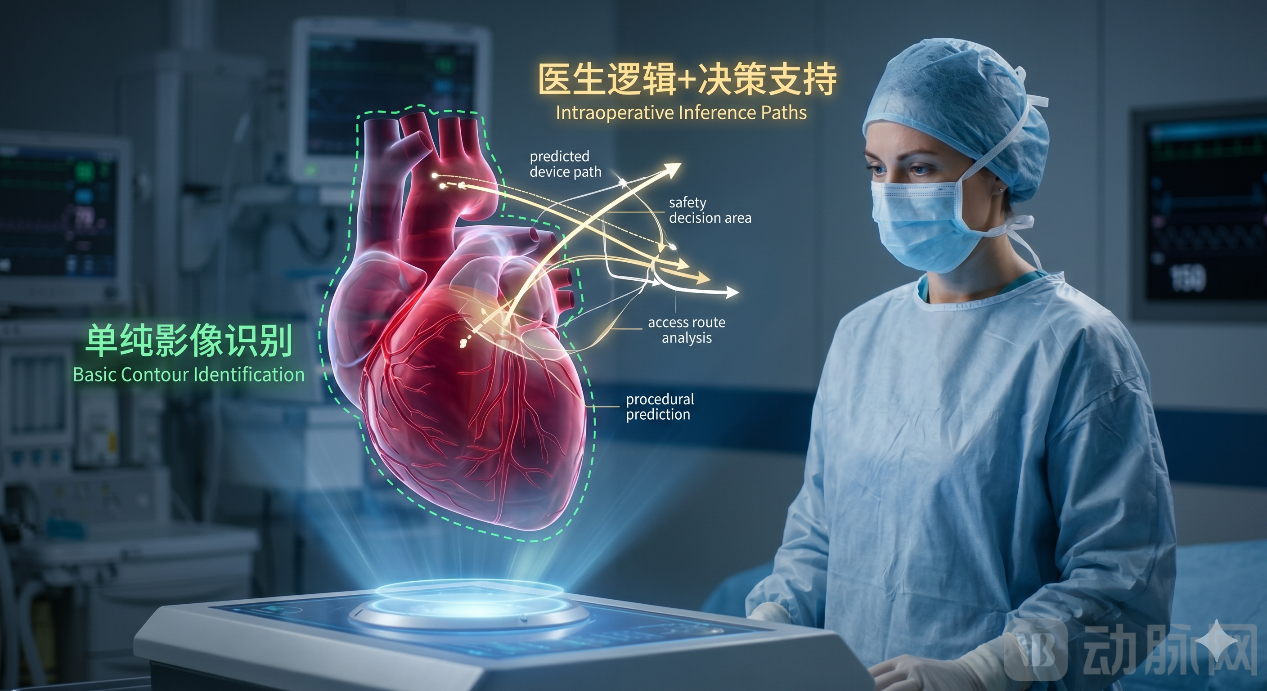
ICE believes that the ultimate challenge in cardiac intervention is akin to “driving through a pulsating maze.” During highly complex and rapidly changing cardiac interventional procedures, relying solely on “image interpretation” can no longer address the core challenges in today’s operating rooms. If clinical AI for interventional medicine remains stuck at the “recognition” stage, it serves at best as an advanced backup sensor, failing to truly meet the needs of clinicians.What the industry needs is a “super brain” capable of providing comprehensive, end-to-end support for the entire surgical workflow to assist surgeons in the operating room.
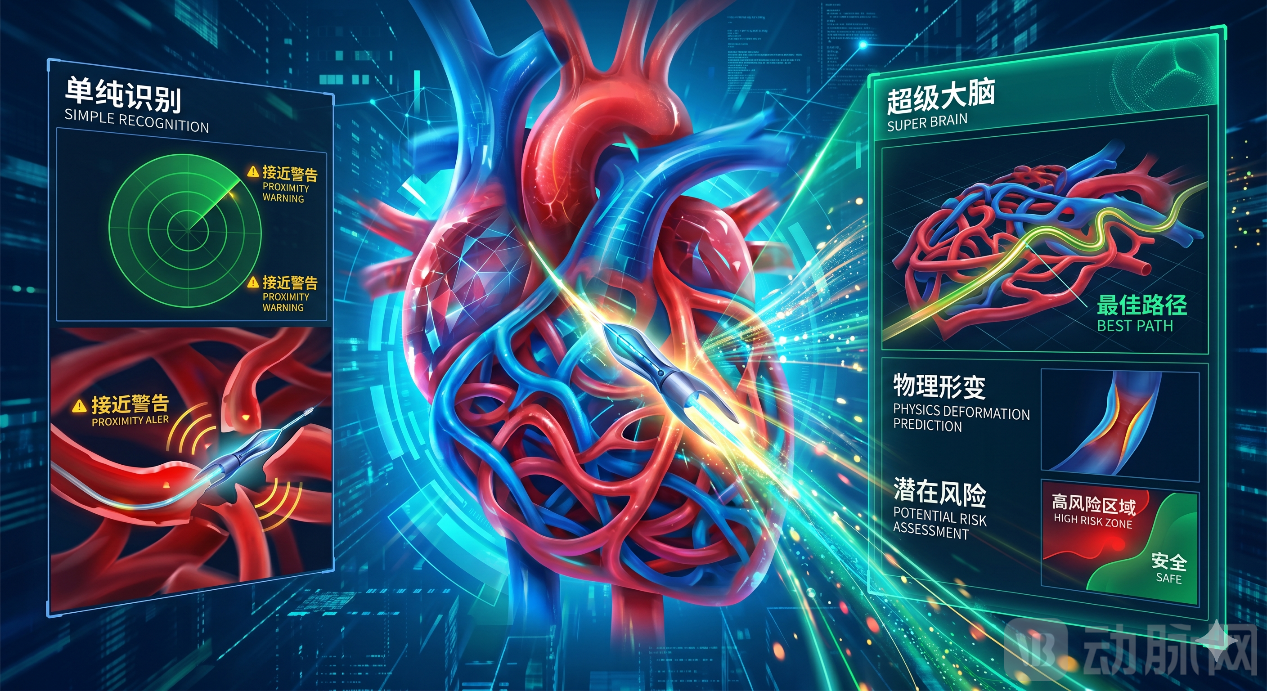
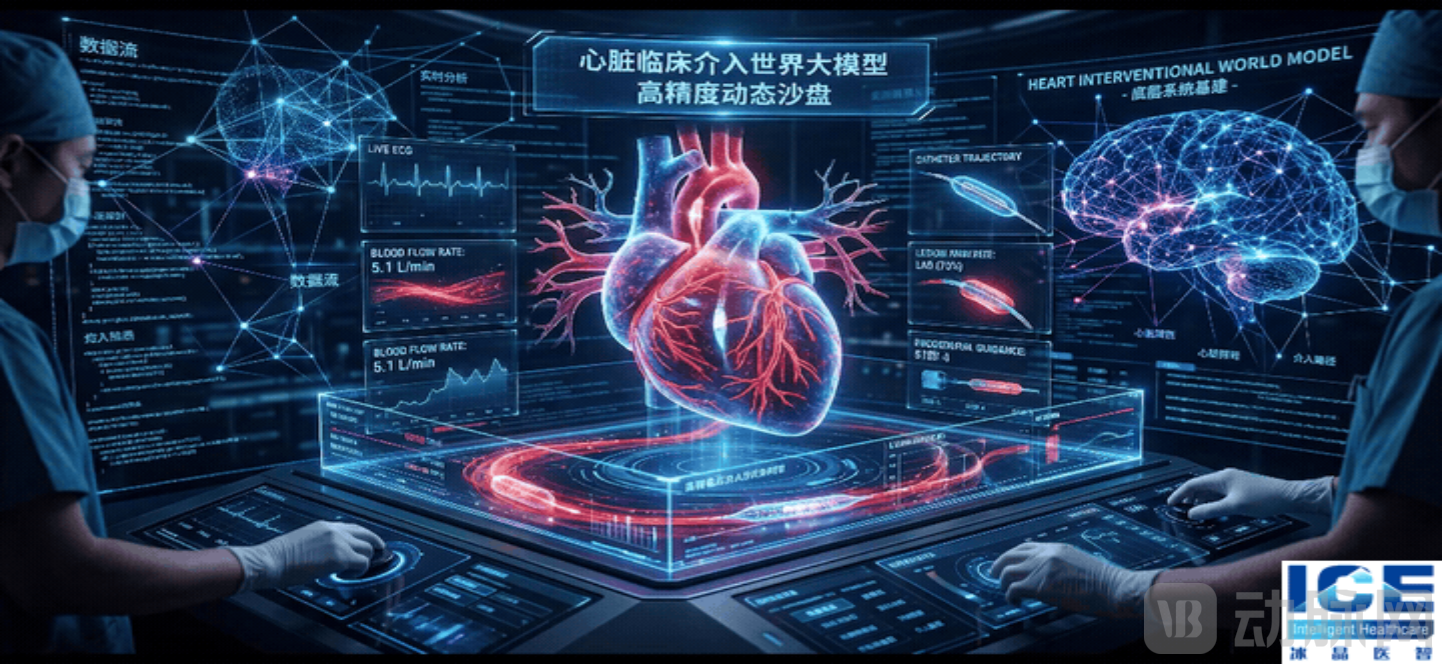
Based on such requirements,The concept of ICE’s “World Large Model for Cardiac Interventional Medicine” has thus emerged.It is no longer a collection of isolated AI algorithm packages, but rather foundational infrastructure designed for cardiac surgery scenarios.
“The World Large Model of Interventional Cardiology” features core capabilities that can be categorized into three progressively advanced steps:
1. Global Integration (Grasping the Big Picture): Consolidating multimodal data previously scattered across various screens—such as ultrasound radar, imaging maps, physiological dashboards, and instrument coordinates—into a unified dimension to construct a cohesive digital dynamic heart model, providing real-time algorithmic support and assistance;
2. Relationship Understanding (Physics Engine): It no longer merely recognizes “this is the heart wall” and “this is the catheter.” By deeply integrating conventional AI imaging models with a real-world physics engine, it performs real-time computation and interpretation of the continuous interaction between the operator and the surgical procedure, ensuring that intraoperative clinical judgments receive corresponding responses from the AI model.
3. Prospective Simulation (Future Prediction): This is the most critical component. Before the physician physically advances the device, the system leverages large AI models to simulate potential physical deformations, trajectory paths, and even risks of potential complications within a digital environment, providing predictive alerts for risks and possible adverse reactions.
Therefore, the true clinical AI as understood by ICE is not about mechanically performing classification, segmentation, and annotation on images, but rather about continuously learning from real surgical experience, understanding the decision-making logic of operators, and providing procedure-level support to physicians in complex interventional scenarios. Based on this insight, ICE is defining the next generation of intelligent interventional ultrasound products and further exploring new clinical paradigms such as AI-enabled catheterization laboratories and the deep integration of AI with surgical workflows, thereby transforming AI from an “imaging tool” into a “surgical cognitive system” that serves as a real-time deductive partner for physicians during interventional treatments.
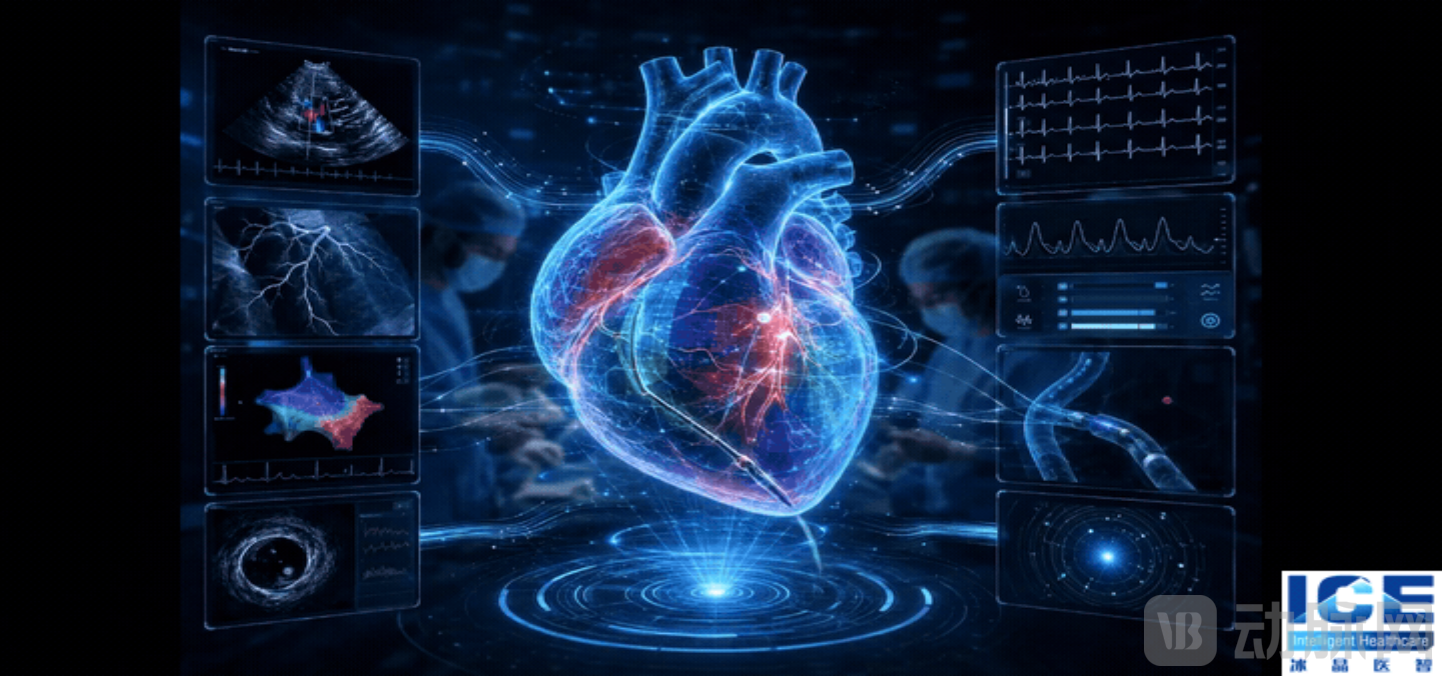
For example,AI-ICE, launched by ICEThree-dimensional cardiac models can be constructed based on ICE imaging, effectively assisting operators with intraoperative 3D modeling.Efficiently address the challenges of 3D cardiac image recognition and catheter localization without relying on 3D mapping systems, effectively assist physicians during procedures, and significantly reduce the learning curve.
The “World Large Model” created by ICE is not intended to replace surgeons’ hands; rather, it eliminates cognitive blind spots in surgeons’ brains when processing massive amounts of dynamic information and significantly saves time spent on reasoning through surgical procedures. Based on a new AI algorithm framework that evolves from “image recognition” to “intraoperative deduction + surgeon’s logic,” this development marks the transition of AI-powered surgical systems from a peripheral auxiliary role to the core of surgical decision-making.
AI-ICE, developed by ICELeveraging advanced "world-class large models" and vast amounts of real-world data, ICEBuilding an open ecosystem for cardiac interventional imaging. This ecosystem can embrace various types of cardiac electrophysiology systems,This fundamentally disrupts the monopolistic ecosystem that tech giants have attempted to establish through closed systems, thereby not only facilitating the widespread adoption of medical technologies but also contributing to greater cost efficiency in healthcare spending.
ICE's intelligent 2D ICE product was approved for market launch in February 2025,ICE is the first company in the industry to achieve fully independent R&D and autonomous manufacturing across its entire imaging chain.This product is not only independently developed, but its core components are also manufactured in-house. In addition to delivering superior image quality, it significantly reduces costs.With this round of financing, ICE will increase its investment in mass production capabilities, enabling clinicians and patients in China to access higher-performance, lower-cost products at an earlier date.
As the industrialization of ICE’s AI solutions progressively takes hold, its product model—driven by the dual engines of hardware (devices and consumables) and software (AI)—will become more closely aligned with clinical practice, better understanding and supporting clinical needs. This approach will accelerate commercialization while continuously advancing import substitution. In the future, domestic Chinese companies represented by ICE are poised to break the monopoly held by imported products, sustain their momentum in this market, and reshape the competitive landscape.
Dr. Yu Bo, Managing Partner of Jiayu Ziniu Medical Fund, stated: “ICE is the fourth company our fund has invested in along the ultrasound technology trajectory. We believe that imaging equipment is transitioning from traditional diagnostic departments to clinical interventional therapy settings. This shift in application scenarios is driving interventional imaging to become the infrastructure for minimally invasive interventional procedures, representing a billion-dollar investment opportunity. Furthermore, we firmly believe that AI capabilities will become a standard feature defining the competitiveness of future medical device products. Through its continuous innovation in AI visual navigation and large cardiac models, ICE is building an image-based intelligent operating system for minimally invasive cardiac interventions, aiming to achieve precise, intelligent, and highly accessible clinical treatment with lower barriers to entry. We are confident that under the leadership of Zhang Jihong, the company will rapidly grow into a leader in this sector.”
About Jiayu Ziniu Medical Fund
The Jiayu Purple Cow Healthcare Fund is an early-stage fund focused on the healthcare industry, jointly established by Jiayu Capital and Purple Cow Fund in 2026. Leveraging Purple Cow Fund’s professional expertise and industry resources in healthcare investment, along with Jiayu Capital’s extensive investment experience in consumption, technology, and cross-border sectors—as well as its unique strategy of consulting-enabled empowerment—the fund deeply explores sustainable commercial value driven by emerging scenarios and innovative technologies. It primarily invests in frontier areas such as innovative medical devices and advanced biotechnology.