

On the Eve of Clinical Translation: Visual Prosthetic Brain-Computer Interfaces Reach a Critical Inflection Point for Restoring Sight to the Blind | 2026VB100

Mindtrix
Invasive Brain-Computer Interface Technology Developer
On May 20, 2026, the Brain-Computer Interface Industry Innovation and Investment Forum, themed “Focusing on Clinical Breakthroughs in Visual Restoration and Industrial Launch,” was officially held in Shanghai. This forum was organized byMingShi BCI and VCBeatCo-hosted by,Shanghai State Investment Sci-Tech Innovation Industry Research InstituteCo-organized.
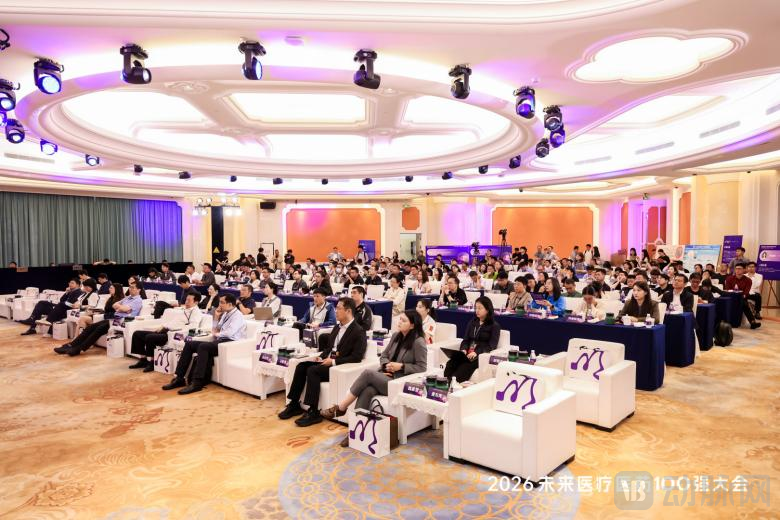
Brain-Computer Interface Industry Innovation and Investment Forum — Focusing on Clinical Breakthroughs in Visual Restoration and Industrial Launch
At the beginning of the conference,Yu Xinguang, Former Director of the Department of Neurosurgery, Chinese PLA General HospitalHe spoke first, setting the tone for the entire conference: “We must remain objective.” A decade ago, as a member of the National Brain Project’s General Expert Group, he helped facilitate some of the earliest closed-door meetings in China on visual reconstruction. Now, ten years later, as brain-computer interfaces move from the laboratory into the public eye, he repeatedly emphasizes that “the field of visual reconstruction still faces numerous scientific questions awaiting exploration, which cannot be addressed without solid basic research and adequate financial support. We must accurately convey technological advancements to help patients and society develop a rational understanding—this is also the responsibility of clinical practitioners.”
And this is precisely the most authentic reflection of the industry: on one hand, there is vast potential for innovation driven by technological breakthroughs; on the other, the clinical implementation must confront a long, tedious, and restrained reality.
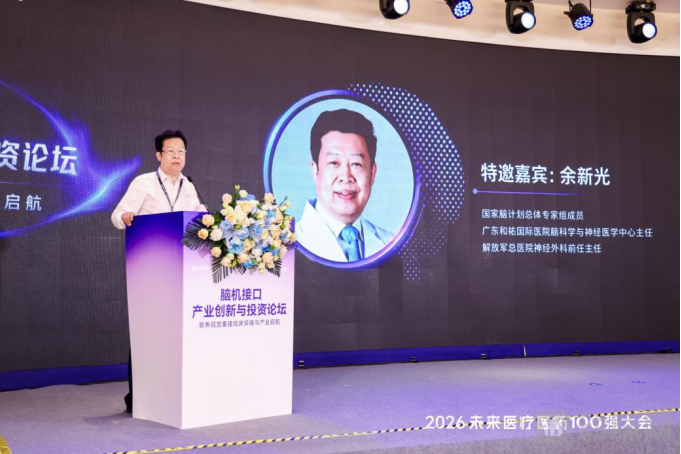
Yu Xinguang, Member of the Expert Committee of the China Brain Project, Director of the Center for Brain Science and Neurology at Guangdong Heyou International Hospital, and Former Director of the Department of Neurosurgery at the Chinese PLA General Hospital
The reason why visual reconstruction is called the “Mount Everest” of the brain-computer interface field is simple: the information density is too high.
“Developing a brain-computer interface for limb control may require only a dozen or so channels to achieve basic functionality. However, vision is different; it demands significantly higher bandwidth.”MingShi BCI Co-Founder and Chief Scientist, Zhang LiProvides a hardcore explanation.
Zhang Li’s MingShi Brain-Computer Interface team achieved the world’s first visual reconstruction of complex shapes and colors in 2026. By leveraging intracranial electrodes already implanted in epilepsy patients and employing multi-channel electrical stimulation, they enabled subjects not only to “see” shapes but also to perceive colors—a milestone with no previously reported international precedents. A further critical advancement was the reconstruction of grayscale information.
Zhang Li offered an analogy: “It used to be like a black-and-white television; now we’ve turned it into grayscale. Don’t underestimate grayscale—human perception of the shape of three-dimensional objects relies heavily on lighting and shadows. With grayscale, navigation, obstacle avoidance, and object recognition will see a qualitative leap in quality of life.”
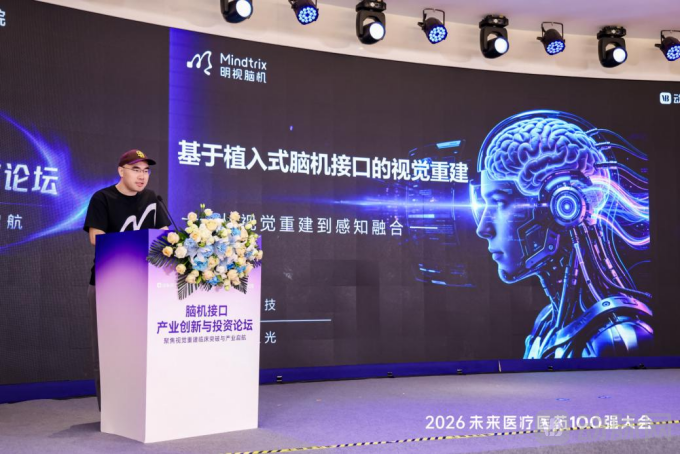
MingShi BCI Co-Founder and Chief Scientist Zhang Li
Yang Yi, Chief Physician at Beijing Tiantan Hospital, Capital Medical UniversityUnder the theme of “Clinical Applications of Brain-Computer Interfaces,” we shared another frontier in sensory restoration BCIs: motor function reconstruction.
At the Brain-Computer Interface Clinical Translation Center of Tiantan Hospital, where Director Yang Yi is based, more than 1,800 patients with motor dysfunction have been registered. Among them, 80% are stroke survivors, with a median age of 46 years—prime working age. “These data tell us that brain-computer interfaces are not merely for a small niche of geeks; they address real, urgent, and substantial societal needs. Current clinical research mostly focuses on the accuracy of technical decoding, while high-quality evidence demonstrating genuine improvements in patients’ clinical function remains insufficient. We must shift our focus from technical feasibility to clinical efficacy.”
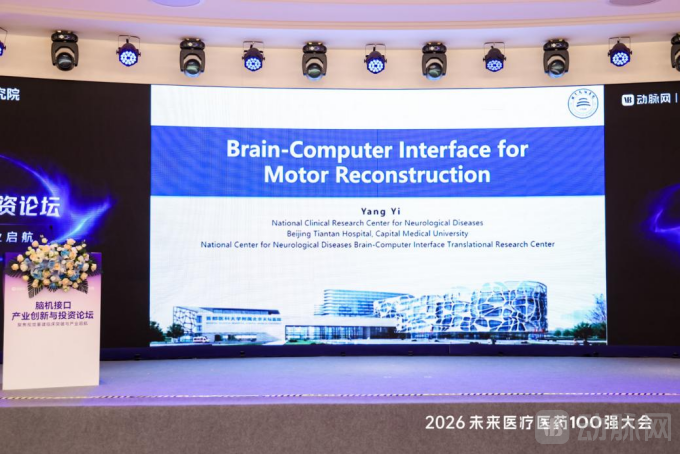
Yang Yi, Chief Physician, Beijing Tiantan Hospital, Capital Medical University
Hu Feng, Director of the Brain-Computer Interface Research Ward at Tongji Hospital Affiliated to Tongji Medical College of Huazhong University of Science and Technology, in the presentation “Challenges of Brain-Computer Interfaces and the Tongji Path,” a more theoretical framework was used to summarize this technological evolution, proposing the concept of “Triadic Intelligence”: brain-computer interfaces, AI, and embodied intelligence.
Director Hu Feng stated, “In the future, neurosurgeons will not only be disease treaters but also architects of human-centric intelligent systems. A true brain-computer interface (BCI) is a closed-loop system encompassing perception, decision-making, execution, and feedback; standalone neuromodulation does not constitute a complete BCI. Visual reconstruction represents the most challenging and highest-value direction in the BCI field, with technical complexity far exceeding that of motor control and epilepsy modulation. Only through collaborative efforts among clinical practice, scientific research, industry, and capital can we bridge the final gap to scalable visual restoration, enabling patients in darkness to regain their sight.”
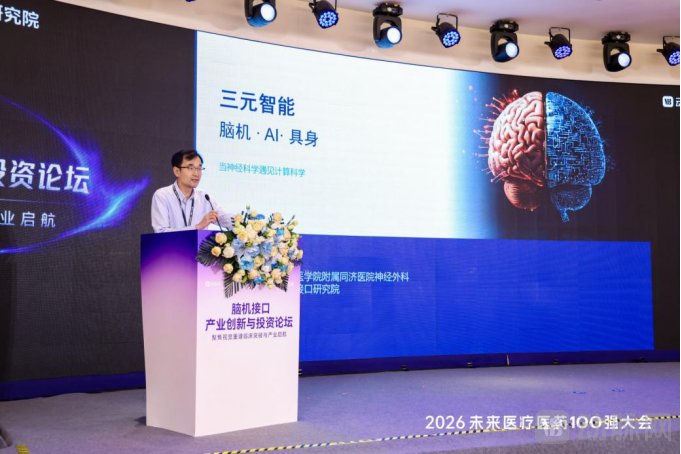
Hu Feng, Director of the Brain-Computer Interface Research Ward at Tongji Hospital Affiliated to Tongji Medical College, Huazhong University of Science and Technology
The technological ceiling is being gradually broken through, but the journey from “seeing points of light” to “seeing the world” involves not only engineering optimization but also a profound understanding of brain plasticity. Zhang Li candidly noted that stimulating the visual cortex is not like shooting at a static target, but rather at a moving one. “The brain is constantly changing. Neural activity differs depending on whether one is happy today or fatigued tomorrow. Our ‘brain-computer co-learning’ algorithm enables the system to learn in tandem with the brain.”
This is precisely the greatest distinction between brain-computer interfaces and other medical devices—it is not a scalpel, but a closed-loop system capable of “dialogue.”
Technological breakthroughs are exhilarating, but the complexities of clinical implementation constitute the true backdrop of this forum. At the conference, the preparatory work for the expert panel of the “Chinese Expert Consensus on Clinical Research of Implantable Brain-Computer Interfaces for Visual Reconstruction,” which has drawn significant attention from the industry, was officially launched.
Participating experts in the launch include:
Former Director of the Department of Neurosurgery, Chinese PLA General Hospital; Member of the Overall Expert Group for the National Brain Project; Director of the Center for Brain Science and Neurology, Guangdong Heyou International HospitalYu Xinguang;
Director of the Brain-Computer Interface Research Ward, Tongji Hospital Affiliated to Tongji Medical College of Huazhong University of Science and TechnologyHu Feng;
Chief Physician, Associate Professor, and Master's Supervisor at the Chinese PLA General HospitalYin Lan;
Associate Chief Physician, Department of Strabismus, Amblyopia and Visual Rehabilitation; Deputy Director, Information Technology Department, Zhongshan Ophthalmic Center, Sun Yat-sen UniversityWang Ruixin;
Assistant to the Director, State Key Laboratory of Ophthalmology Prevention and Treatment, Zhongshan Ophthalmic Center, Sun Yat-sen University; Associate ResearcherChen Wenben;
Chief Expert, China Electronics Standardization InstituteYu Yuntao;
Director, Jiangsu Provincial Assistive Technology Service Center for Persons with DisabilitiesMa Zhiyong;
Co-founder and Chief Scientist of Mingshi Brain-Computer InterfaceZhang Li。
As a milestone event in the field of visual reconstruction brain-computer interfaces (BCIs) in China, the preparation of this consensus will address the shortcomings in clinical application standards, marking that China’s visual reconstruction BCI sector is accelerating its transition from the research validation phase to a new stage of standardized clinical development. It also contributes Chinese solutions, Chinese standards, and Chinese wisdom to the global field of visual reconstruction.
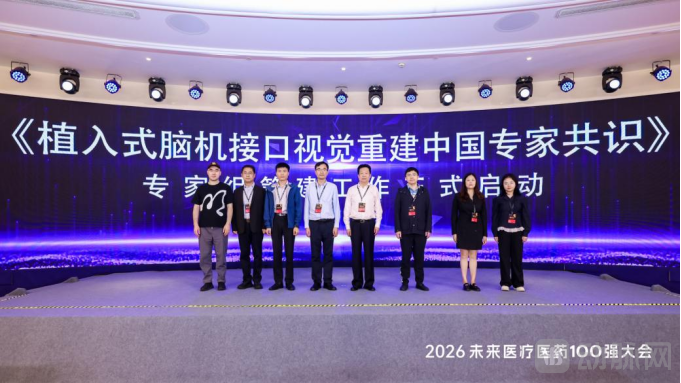
"Chinese Expert Consensus on Clinical Research of Visual Reconstruction with Implantable Brain-Computer Interfaces"
After the consensus was launched, a video silenced the entire audience. It was being filmed by independent producer Zheng Xiaoyang.Visual Reconstruction Documentary “Interface”...clip. He then invited the video’s protagonist, Mr. Tan, known online as “Tan Zou Yu Wei Wen,” to join him on stage.
Regarding the title “Interface,” Zheng Xiaoyang stated, “We named our documentary ‘Interface.’ On one hand, we aim to enable blind individuals to truly see and genuinely reintegrate into daily life. This endeavor relies not only on the contributions of the research and development team but also on the indispensable efforts of medical teams, clinical teams, industrialization teams, and even investment teams. Only through collaborative efforts among all stakeholders can blind individuals truly return to normal life.”
Mr. Tan lost his sight due to accidental optic nerve injury, yet he persists in running, playing basketball, and even attempting to use AI navigation for travel. However, the AI incorrectly alerted him to grass ahead when there was none, and claimed his friend’s store was just around the corner when it was actually far away. The audience laughed, but the laughter quickly subsided. “I hope brain-computer interface technology can truly help us, so that I will have fewer occasions to say ‘sorry’ when going out, feel more confident when stepping outside, enable society to truly see us, and allow us to truly see this world,” said Mr. Tan.
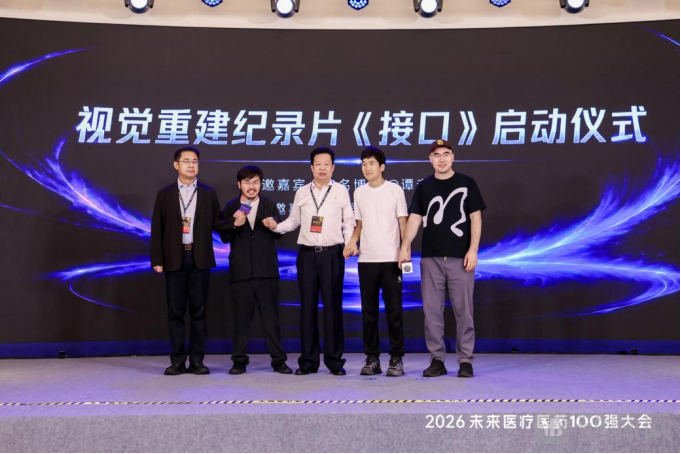
Launch Ceremony of the Visual Reconstruction Documentary “Interface”
As technological breakthroughs and clinical consensus gradually fall into place, a more pragmatic question comes to the fore: How can this technology be effectively implemented in practice, and who will bear the cost?
Released by Li Chengping, a researcher at VBInsight“2026 Brain-Computer Interface Industry Research Report: Exploring Early Commercialization”, pointing directly to the industry’s “sandwich dilemma”—“insufficient upstream supply, obstructed midstream translation, and difficult downstream value recognition. Isolated breakthroughs cannot solve the problem.” She outlined the clinical progress: Since 2025, companies have concentrated on entering clinical trials, with paraplegic patients becoming the first major cohort of subjects due to their stronger payment capacity. Although visual reconstruction poses the greatest technical challenge, it holds immense clinical value given the global population of 40 million blind individuals.
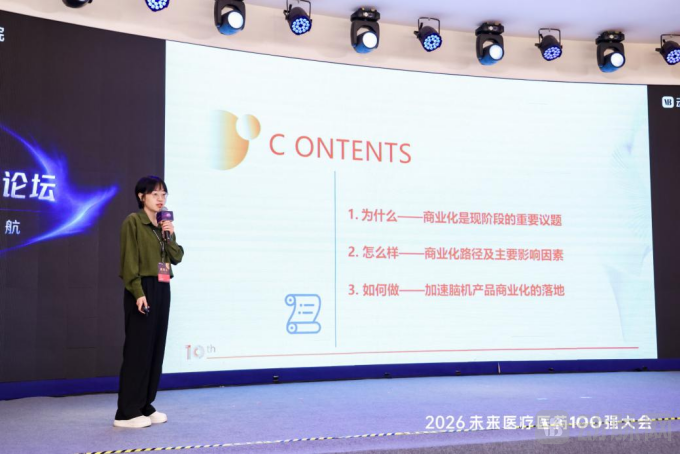
Li Chengping, Researcher at VBInsight
Wei Chenxue, Senior Investment Manager at CAS StarUnder the theme “The ‘Golden Window’ for Brain-Computer Interfaces: How Hard-Tech Investment Can Identify Opportunities,” she offered an investor’s perspective, asserting that “the state’s designation of brain-computer interfaces (BCIs) as a future industry is by no means limited to medical devices; it aims to penetrate everyday life, industrial, and consumer scenarios.” In her view, from both engineering and fundamental scientific perspectives, the visual cortex represents the most viable pathway, while “brain-computer co-learning” algorithms are key to addressing individual variability and enabling scalable applications.
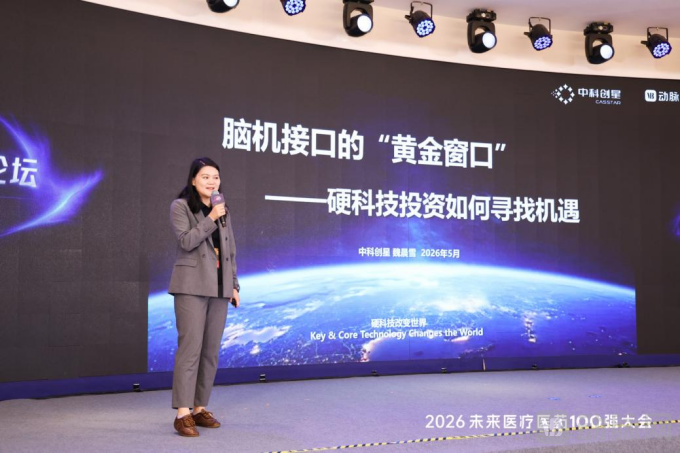
Wei Chenxue, Senior Investment Manager at CAS Star
Subsequently, the forum ushered in its most anticipated segment—the roundtable discussion. Themed “Tipping Point: The Last Mile Toward Scalable Visual Restoration,” the session brought together clinical authorities, research pioneers, industry experts, and investment leaders to jointly explore the critical pathway for translating technological breakthroughs in visual reconstruction into widespread clinical adoption.
Participating guests include:
Director of the Brain-Computer Interface Research Ward, Tongji Hospital Affiliated to Tongji Medical College, Huazhong University of Science and TechnologyHu Feng;
Associate Chief Physician, Department of Strabismus, Amblyopia and Visual Rehabilitation; Deputy Director, Information Technology Department, Zhongshan Ophthalmic Center, Sun Yat-sen UniversityWang Ruixin;
Director, Jiangsu Provincial Assistive Devices Service Center for Persons with DisabilitiesMa Zhiyong;
Co-founder and Chief Scientist of Mingshi Brain-Computer InterfaceZhang Li;
Executive Director, Honghui FundZhou Xin;
Vice President, Huafang CapitalZeng Li;
Senior Investment Manager, Delian Bojian Neuroscience FundChen Shuoqi;
The roundtable was chaired by the Chairman of Shanghai Lingyi Private Equity Fund Management Co., Ltd.Zhu QuanlianModerator.
The discussion centers on several core issues in visual restoration: how to overcome technical bottlenecks, establish clinical access and postoperative evaluation systems, design adaptation mechanisms for persons with disabilities and long-term payment frameworks, and maintain capital patience throughout the extended development cycle.
The participating guests have reached a preliminary consensus on this matter:Visual reconstruction requires the establishment of precise patient-specific criteria and postoperative evaluation systems to avoid a “one-size-fits-all” approach in clinical application. The government, enterprises, and disabled persons’ federations should collaborate to establish long-term payment mechanisms, drawing on the successful experience of cochlear implants, so that the technology truly benefits the general public rather than becoming a luxury for the few. Capital must exercise patience over a ten-year horizon, while enterprises need to strike a balance between technological breakthroughs and clinical standardization.
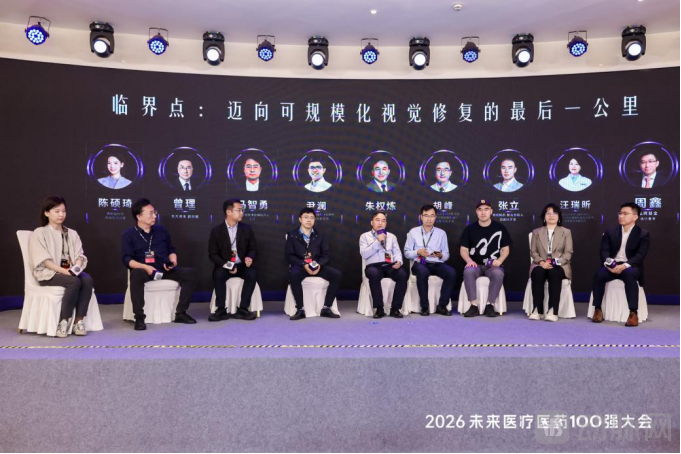
“Tipping Point: The Last Mile Toward Scalable Vision Restoration”
Dr. Zhang Li also formally disclosed MingShi Brain-Computer Interface’s product roadmap during the roundtable discussion:The first IIT trial in blind patients was completed in 2026, registration-enabling clinical trials commenced in 2028, and the product is expected to be officially launched in 2030.
Visual reconstruction has never been merely a scientific issue; it is a test of humanity’s collective wisdom and a protracted marathon of love.
May 20—A date widely embraced as a day to express love, now imbued with a new meaning: Love is using technology to illuminate the lives of those in darkness; it is the willingness to devote ten or twenty years to conquering seemingly insurmountable challenges for the sake of strangers one has never met.