

20 Biotech Companies Race for Their Debut Launch, Where Commercialization Determines Life or Death

Biokin Pharmaceutical
Pharmaceutical R&D Developer
Immunotech Biopharm
Developer of Cellular Immunotherapy Products

Northland
Innovative Biopharmaceutical Manufacturer

TJ Biopharma
Biopharmaceutical R&D and Manufacturer
Lupeng Pharmaceutical
Developer of New Anticancer Drugs

TransThera
Small Molecule Innovative Drug Research, Development, and Manufacturing
Imunopharm
Developer of Gene and Cell Therapy Technologies
Approval is merely the starting gun; commercialization is the meat grinder.
China's biotech sector is undergoing a historic inflection point, shifting from R&D-driven to commercialization-driven growth.
For a biotech company, the approval of its first commercialized product is never merely a box-ticking milestone; rather, it serves as a coming-of-age ceremony critical to its development. Over the past decade, Chinese biotech firms have built extensive innovative pipelines by leveraging capital dividends and the return of talent, yet the vast majority have long remained in a state of burning cash without generating revenue.
In 2026, this landscape is set to change. According to incomplete statistics, approximately 20 biotech companies are expected to achieve the milestone of launching their first commercialized innovative drug in 2026. Behind this figure lies a critical juncture for China's innovative pharmaceutical industry, marking its transition from pipeline competition to value realization.
The approval of the first commercialized innovative drug marks the completion of a closed-loop validation from laboratory to market for biotech companies. For investors, this signifies a shift in valuation logic from evaluating pipeline narratives to analyzing revenue statements; for the companies themselves, it represents a transition from a transfusion model reliant on external financing to an endogenous growth model driven by self-sustaining revenue generation. The success or failure of this inaugural product will profoundly influence the company's development trajectory.
The success of the first product lays the foundation for the company's positive development.
The successful cases of BeOne Medicines' zanubrutinib and Innovent Biologics' sintilimab demonstrate that the success of a flagship product not only contributes cash flow, providing internal funding for subsequent pipeline development, but also builds commercialization capabilities. Through team building, hospital network coverage, and maintenance of key opinion leader (KOL) relationships, it lays the foundation for the launch of future products. More importantly, it establishes brand equity. The clinical data and commercial performance of the first product build trust among physicians, patients, and payers, which plays a significant role in promoting subsequent products.
At this juncture, evaluating the value of a drug pipeline requires not only examining core metrics such as its potential to become first-in-class (FIC) or best-in-class (BIC) and the height of its technical barriers, but also assessing its market potential, including factors like patient population size, willingness to pay, competitive landscape, pricing space, and peak sales expectations.
Based on the aforementioned logic, we can categorize the most promising biotech products slated for their commercial debut in 2026 into two groups: global first-in-class innovations defining new therapeutic arenas, and domestically developed breakthroughs securing exclusive first-mover advantages.
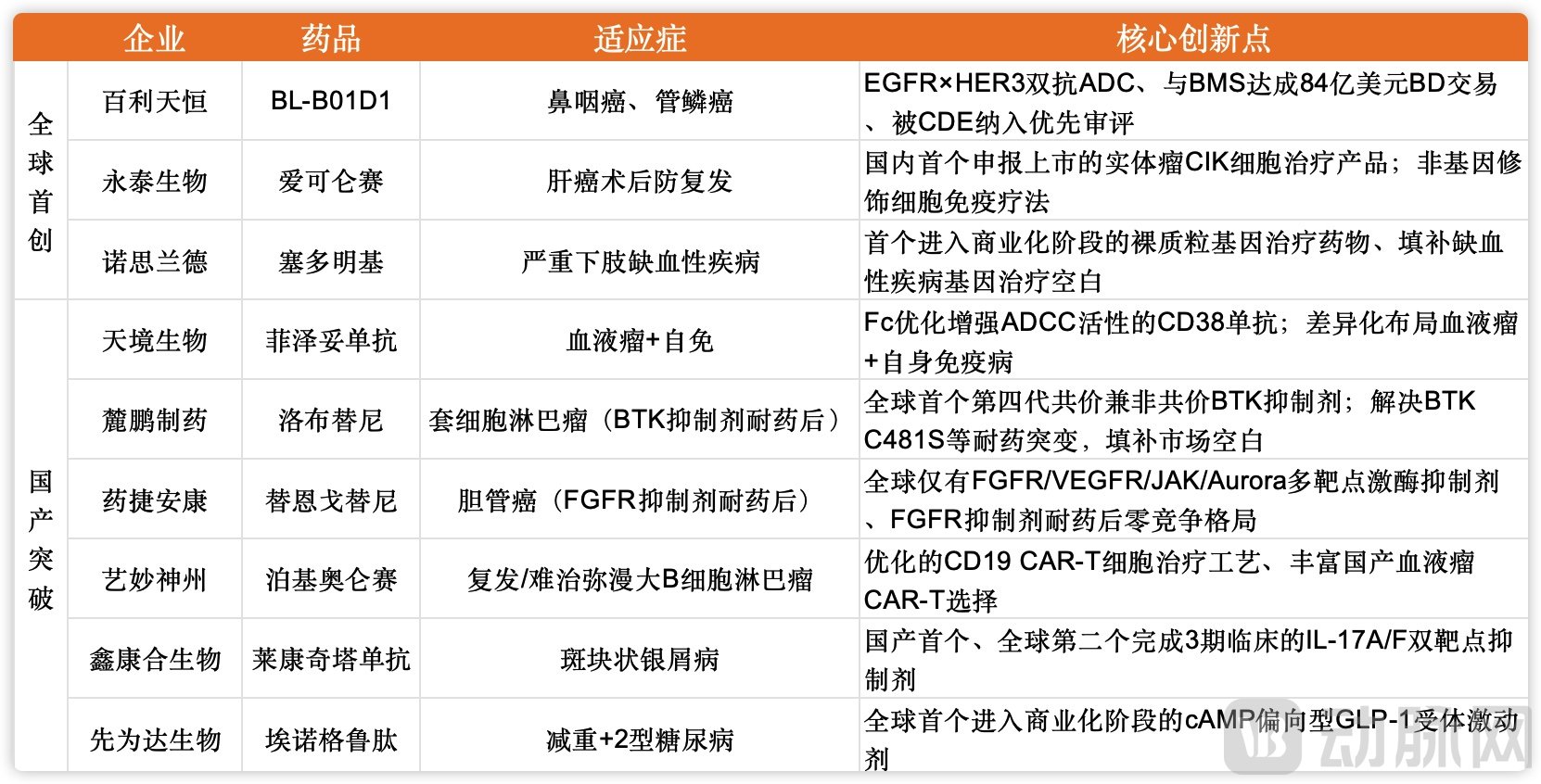
Most Promising Biotech Commercial Debut Products of 2026, Compiled from Public Sources
World's First, Defining the Track
The core characteristic of this group is high technological originality; rather than competing for shares in an existing market, they aim to create new therapeutic paradigms. The risk lies in the fact that their technological pathways have not yet been commercially validated, but successful ventures often enjoy the longest period of market exclusivity and the greatest pricing power.
Biokin's BL-B01D1: A Paradigm Breakthrough in Bispecific Antibody-Drug Conjugates
BL-B01D1 is the first EGFR×HER3 bispecific antibody-drug conjugate (ADC) globally to enter Phase III clinical trials, achieving breakthroughs in target combination, molecular design, and manufacturing processes. Its indication strategy reflects a classic approach: rapid approval for niche indications followed by value expansion into broader indications. The initial indication, nasopharyngeal carcinoma, has a high incidence in Asia. In November 2025, its New Drug Application (NDA) was accepted by the Center for Drug Evaluation (CDE) and included in the priority review program, with approval expected in the second half of 2026. The key highlight lies in non-small cell lung cancer (NSCLC), where clinical data show that BL-B01D1's objective response rate (ORR) and median progression-free survival (mPFS) are comparable to those of competitors, despite patients having poorer baseline characteristics, suggesting potentially superior real-world efficacy. Furthermore, BL-B01D1 is conducting Phase III clinical trials across more than ten indications, including esophageal cancer, gastric cancer, and breast cancer, creating synergistic effects within its ADC product portfolio.
More importantly, BL-B01D1 has received endorsement from multinational corporations (MNCs). As early as late 2023, Biokin entered into a collaboration with Bristol Myers Squibb (BMS), where an $800 million upfront payment set a historical record for licensing deals in innovative drugs at the time. BMS will commit global clinical development resources to accelerate the internationalization of BL-B01D1. Although Biokin had previously launched several generic drugs, it is core innovative drug pipelines like BL-B01D1 that will truly drive its leapfrog development.
Immunotech Biopharm's Aikelunsai: Breaking the Ice in Cell Therapy for Solid Tumors
Aikelunsai is the world's first CIK (cytokine-induced killer cell) therapy for solid tumors to be submitted for market approval, marking a pivotal breakthrough in China's cell therapy landscape as it expands from hematologic malignancies to solid tumors. Since initiating clinical research on EAL in 2006, Immunotech Biopharm has treated over 4,000 patients and established the global database for CIK therapy in solid tumors. More critically, its differentiated indication strategy focuses on postoperative adjuvant therapy for liver cancer—a niche yet unaddressed by existing cell therapies—rather than competing with current CAR-T products in late-line treatment settings. The indication expansion pathway for Aikelunsai includes postoperative adjuvant therapy for other solid tumors (such as gastric and lung cancers), combination with systemic therapies (e.g., PD-1 inhibitors and targeted drugs), and salvage therapy for advanced-stage tumors. With hepatocellular carcinoma as its initial indication, the market potential is already sufficient to support the product's commercial launch.
Northland Saidoming: Original Exploration of Naked Plasmid Gene Therapy
Saidoming (Donaperminogene Seltoplasmid) was approved in late May 2026, becoming the first commercially available naked plasmid gene therapy drug in China, representing an original breakthrough in China's gene therapy field. Its unique mechanism of action offers superior safety advantages compared to viral vector-based gene therapies. The indicated condition is critical limb ischemia (CLI), the end-stage manifestation of peripheral artery disease (PAD). In China, there are nearly 50 million PAD patients, approximately 10% of whom progress to CLI. Current treatments for CLI primarily focus on symptom relief and cannot reverse disease progression. Phase III clinical data demonstrated that Saidoming significantly outperformed placebo in terms of complete ulcer healing rates and limb salvage rates, holding promise to establish a new paradigm for CLI treatment. Further long-term growth potential lies in expanding indications to include conditions such as intermittent claudication and other ischemic diseases (e.g., coronary heart disease and diabetic foot).
Domestic Breakthrough, Exclusive First-Mover Advantage
The core logic of this group is to fill domestic gaps and capitalize on the benefits of the window period. They may not be the first globally, but they rank among the top in the domestic sequence. Coupled with the cost advantages of local production and the convenience of medical insurance access, they can often quickly establish a foothold in markets that multinational competitors have not yet fully covered.
TJ Bio's Felzartamab: A Domestic Breakthrough Targeting CD38
Felzartamab is the first domestically developed CD38 monoclonal antibody to file for market approval in China. As the world's first CD38 monoclonal antibody, Johnson & Johnson's daratumumab achieved global sales of $14.351 billion in 2025, underscoring the substantial commercial value of this target. Felzartamab's differentiated positioning lies in its dual-track strategy targeting both hematologic malignancies and autoimmune diseases. In addition to the pricing advantage afforded by local manufacturing, clinical development is actively advancing in autoimmune indications such as primary membranous nephropathy, antibody-mediated rejection in kidney transplantation, and IgA nephropathy. In 2024, Biogen partnered with TJ Bio to secure global rights to Felzartamab outside Greater China, with an upfront payment of $1.15 billion providing financial and clinical support for its further development in autoimmune diseases.
Lupeng Pharmaceuticals' Rocbrutinib: A Generational Leap in Fourth-Generation BTK Inhibitors
Rocbrutinib received conditional approval on June 4, becoming the first domestically developed fourth-generation BTK inhibitor to be marketed in China. Its technological breakthrough lies in its dual covalent and non-covalent mechanism of action, designed to address the common C481S mutation-mediated resistance associated with BTK inhibitors. In May 2024, Rocbrutinib was included in the Breakthrough Therapy Designation list by the Center for Drug Evaluation (CDE), marking it as the first BTK inhibitor recognized as a breakthrough therapy for diffuse large B-cell lymphoma (DLBCL) in China. Rocbrutinib's indication strategy follows a dual-track approach covering hematologic malignancies and autoimmune diseases. The oncology indications are primarily driven by in-house R&D, while the autoimmune portfolio is developed in collaboration with Hansoh Pharmaceutical (with a total transaction value of RMB 729 million). This collaborative, risk-sharing model has provided crucial financial support to Lupeng Pharmaceuticals while retaining full upside potential for the oncology indications.
TransThera Sciences' Tinengotinib: The Rule-Maker in the Drug-Resistant Market
Tinengotinib is the world's first and only drug targeting patients with cholangiocarcinoma who have developed resistance to FGFR inhibitors. Although the absolute market size for cholangiocarcinoma is not particularly large, its significant market potential is driven by a zero-competition landscape, strong pricing power, and expansion into multiple indications (with the breast cancer market being ten times larger than that of cholangiocarcinoma). Following TransThera Sciences' listing on the Hong Kong Stock Exchange in June 2025, its stock price surged by up to 18-fold within three months, fueled by expectations for Tinengotinib, thereby reflecting market sentiment.
Imunopharm Technology IM19: A Chinese Model of CAR-T Process Innovation
IM19 is a domestically developed, self-researched CD19-targeted autologous CAR-T cell therapy product. The innovation of its technical platform lies in the manufacturing process. This serum-free culture system enables efficient enrichment of Tem cells, extending the in vivo persistence of CAR-T cells by 2–3 times, thereby improving the rate of durable remission. In terms of indications, diffuse large B-cell lymphoma (DLBCL) is the most common type of non-Hodgkin lymphoma. In 2023, global sales for the DLBCL indication amounted to approximately USD 2.4 billion, accounting for about 64% of the total CAR-T market. Imunopharm has entered into an exclusive commercialization partnership with Huadong Medicine, which includes an upfront payment of RMB 125 million and milestone payments of up to RMB 950 million. Huadong Medicine's established sales network in the oncology sector will facilitate the volume ramp-up of IM19.
Furthermore, Kanova Biopharma's LZM-012 (Lecankitug) is the first domestically developed and the second globally to complete Phase III clinical trials as a dual IL-17A/F inhibitor. Additionally, Sciwind Biosciences' ecnoglutide is the first cAMP-biased GLP-1 receptor agonist in China to enter the commercialization stage, having taken the lead by receiving approval in January and March 2026 for the treatment of type 2 diabetes in adults and for weight management, respectively.
Cash flow stress testing on the eve of commercialization is the core imperative for biotech survival.
Companies racing to commercialize their first products in 2026 are generally facing pressure on the time window between their final round of financing and the point at which sales revenue turns positive. According to industry experience, it typically takes 12 to 24 months from the approval of the first product to achieve monthly break-even. During this period, continuous investment is required for sales team building, production operations, and national reimbursement drug list (NRDL) negotiations, among other expenses, potentially resulting in a cash burn rate higher than that during the pure R&D phase. Based on how these companies have structured their pipelines, they have adopted four distinct commercialization models.
Licensing deals front-loaded type, represented by Sciwind Biosciences, involves the company realizing part of its product value in advance through license-out deals to secure a cash flow safety margin. Before ecnoglutide's approval, Sciwind Biosciences entered into a $2.4 billion licensing agreement with UK-based Verdiva, receiving a $70 million upfront payment, which provided the enterprise with approximately three years of financial runway. Even if initial commercialization in China faces headwinds, overseas cash flows can sustain R&D and operations. However, this strategy of trading market space for time ultimately requires the company to prove its ability to build independent commercialization capabilities to achieve significant product volume growth.
Channel symbiosis type, represented by Lupeng Pharmaceutical and Immunotech Biopharm. Lupeng's rocbrutinib has entered into a strategic collaboration with Hansoh Pharmaceutical, while Immunotech Biopharm's Aikelunsai leverages China Resources Pharmaceutical's distribution network. Both companies are attempting to trade profits for survival. The essence of this model is the outsourcing of commercialization capabilities: biotech firms acknowledge their deficiencies in sales networks, hospital relationships, and national reimbursement drug list (NRDL) access, exchanging profit-sharing for the channel coverage provided by big pharma companies. Of course, this model is only suitable for products with exclusive channel advantages.
The lone brave breakout type, represented by TransThera Sciences, chose independent commercialization to retain full profits and strategic flexibility, refusing to have value siphoned off by channel partners or overseas entities before value realization. However, this choice requires the company to rapidly establish a sales team covering hospitals across China to achieve product volume growth within a short window period. Of course, it is not surprising that the company made this choice, after all, if successful, TransThera Sciences will become the rule-maker for global multi-target kinase inhibitors.
Platform-verified type, with Northland Biotech as a representative example. The core logic is to use the first product to validate the capabilities of the technology platform, paving the way for the subsequent pipeline. For instance, if Northland Biotech's gene therapy platform is proven effective, it will open up new frontiers in the treatment of ischemic diseases. From this perspective, Immunotech Biopharm's decision to outsource its commercialization capabilities is also driven by the desire to rapidly validate the efficacy of its solid tumor CIK cell therapy platform. If successful, this could enable rapid expansion into more indications such as lung cancer and gastric cancer, thereby maximizing future benefits.
Looking back from the present moment in 2026, some companies have already successfully navigated certain paths.
BeOne Medicines' path to independent commercialization stands as a paradigm of asset-heavy investment. Following the 2019 approval of zanubrutinib, BeOne Medicines opted against licensing it to multinational corporations (MNCs) for short-term cash flow, instead investing heavily in building its own commercialization team. This asset-heavy approach resulted in substantial losses initially; however, as zanubrutinib demonstrated its value in head-to-head trials, its global sales continued to rise, ultimately driving the company to full-year profitability in 2025.
Innovent Biologics' strategy of leveraging external strengths and pursuing gradual transformation represents another path. Following the approval of sintilimab, Innovent rapidly built a nationwide oncology commercialization network through a dual approach of licensing partnerships and in-house team development. This capability not only drove product sales but also attracted numerous collaborations with multinational corporations (MNCs) such as Eli Lilly, creating a virtuous cycle of product success, network enhancement, and partnership attraction. Ultimately, Innovent successfully transformed into a Big Pharma company with diversified revenue streams.
Of course, there are also many cases of failure. Behind the strategic divergence lies a harsh reality: not all companies can survive until their products achieve mass production and sales volume.
An examination of the financial health of companies that are already public or have filed prospectuses reveals that firms like Biokin and Sciwind Biosciences possess a substantial safety cushion. In contrast, based on financial report estimates, TransThera Sciences and TJ Bio have a runway of approximately two years. The financing status of private companies can only be estimated; for instance, although Lupeng Pharmaceuticals and Immunotech Biopharm have secured multiple rounds of funding and support from strategic investors, continuous capital injection is still required for capacity building in cell therapy and fourth-generation BTK inhibitors, as well as for clinical promotion. Furthermore, numerous factors—including the capacity trap, the window period for national medical insurance negotiations, and the organizational transition from scientist-led teams to commercialization-focused teams—will impact the commercialization process.
Ultimately, whether Chinese innovative drug companies complete the leap toward becoming BioPharma entities, adopt an asset-light model as a pipeline licensing deals mall, or are passively cleared out to become M&A targets for Big Pharma or industrial capital, it all represents the brutal evolution of Chinese Biotech from science-driven to commercial-driven.
The approval of the first product could mark the beginning of value destruction if commercialization preparations are inadequate.
Looking back from the end of 2027, among the companies that launched their first innovative drugs in 2026, some may face existential crises due to commercialization falling short of expectations, struggling hard in the winter of the capital market; some will realize value through licensing deals or mergers and acquisitions, exiting the track of independent development; and some will truly establish a sustainable Biotech business model, completing the transformation from cash-burning to self-sustaining, moving towards becoming the next BeOne Medicines or Innovent Biologics. Whether China's innovative drug industry can evolve from a follower to a rule-maker on the global stage requires the joint efforts of those enterprises that survive this great sifting process to accomplish this historic mission.