Beijing Hospitals Implement Surgical Robot Leasing; ZhiJing Technology Secures Nearly RMB 10 Million in Angel Funding

OYMotion
Provider of Rehabilitation Medical Technology Solutions

Comprehensive Medical News
1. The Jiangxi Provincial Health Commission Issued "Several Measures to Promote the Standardized and Efficient Conduct of Ethical Review for Clinical Research Projects in Jiangxi Province"
Recently, the Health Commission of Jiangxi Province issued the "Several Measures for Promoting Standardized and Efficient Ethical Review of Clinical Research Projects in Jiangxi Province." Focusing on improving the quality and efficiency of ethical reviews, safeguarding the rights and interests of research participants, and fostering innovation in clinical research, the document proposes systematic measures across five areas: institutional development, review processes, capacity building, supervision and management, and mutual recognition and information sharing. The document explicitly requires standardizing the establishment and operation of ethics committees, implementing mutual recognition of ethical review conclusions by the lead site to avoid duplicate reviews in multi-center studies; optimizing review procedures by promoting categorized, expedited, and online reviews to shorten review timelines; strengthening training for ethics committee members and researchers to enhance the professionalism of reviews; establishing a mechanism encompassing full-process supervision, adverse event reporting, and regular assessments to strictly investigate and handle violations; and simultaneously promoting the sharing of ethical review information and mutual recognition of results across the province to accelerate the implementation of clinical research projects and support the high-quality development of the biopharmaceutical industry. (Health Commission of Jiangxi Province)
2. Official Implementation of Four Major Group Standards
Recently, the China Mobile Communications Federation officially released and implemented four group standards in the series of healthcare data elements, including the "Methods for Asset Valuation of Healthcare Data Elements." These standards focus on four key areas: cataloging of healthcare data assets, value assessment, sharing security, and privacy protection. Jointly drafted by tertiary hospitals, universities, and industry stakeholders, they integrate expertise from multiple fields to establish a comprehensive standard system. Among them, the "Guidelines for Compiling Catalogs of Healthcare Data Asset Elements" unify systems such as data classification, serving as foundational pre-requisite norms for assetization; the "Methods for Asset Valuation of Healthcare Data Elements" is a specialized group standard for asset valuation, addressing industry pain points such as "pricing difficulties"; and the "Technical Requirements for Sharing and Security of Healthcare Big Data Elements" establishes a trusted circulation technical architecture and formulates multi-dimensional technical specifications. (Smart Healthcare Network)
3. MicroPort NeuroTech™ Partners with OYMotion
Recently, MicroPort NeuroTech™ and OYMotion signed a strategic cooperation agreement, focusing on the integration of brain-computer interface (BCI) and exoskeleton robot systems to promote medical and industrial implementation. Previously, MicroPort NeuroTech had already laid out its presence in the BCI sector: In 2024, its subsidiary MicroPort NeuroVascular collaborated with multiple parties to establish a RMB 1 billion CICC Neuroscience Fund; on November 20, 2025, it founded the Chaos Brain-Computer Interface Research Institute and appointed Dr. Will Zhang as Chief Researcher to advance BCI technology research and development. As a pioneer in China’s neurointerventional medical device industry, MicroPort NeuroTech™ boasts a comprehensive product portfolio and strong technical barriers, providing support for the clinical translation of BCIs. OYMotion is a representative enterprise in China’s non-invasive BCI field, possessing a mature product matrix and industrialization experience. Both parties will build a long-term, stable cooperative relationship to jointly explore innovative applications of BCI technology in areas such as medical rehabilitation and human-computer interaction. (MedDevice Home)
4. Surgical Robot Leasing Services Launched in Multiple Hospitals in Beijing
Special Symposium on Diversified Service Models and Clinical Applications of Surgical Robots Held in BeijingRecently, a special symposium on diversified service models and clinical applications of surgical robots was held in Beijing. Multiple medical institutions, including Beijing Friendship Hospital affiliated with Capital Medical University, have already implemented leasing services for surgical robots. To address pain points such as the high acquisition costs of high-value medical equipment, Beijing launched a pilot program for this service in municipal hospitals starting in December 2025. The leasing model offers two options: fixed-term leases and pay-per-use based on the number of procedures. Measures issued in April 2026 explicitly aim to accelerate the clinical adoption of all categories of surgical robots and comprehensively promote innovative leasing models. Beijing Friendship Hospital stated that this model helps alleviate pressures related to asset depreciation and capital fundraising. Zhang Jingbo, Director of the Beijing Medical and Health Science and Technology Promotion Center, indicated that the next step will be to expand the surgical robot leasing model from municipal hospitals to all types and levels of medical institutions across the city. (Da Jian Kang Pai)
5. Guizhou’s First 5T MRI Scanner Installed at the Affiliated Hospital of Zunyi Medical University
Recently, a “super device”—the 5T ultra-high-field whole-body magnetic resonance imaging (MRI) system—was officially installed at the Affiliated Hospital of Zunyi Medical University. Its deployment means that residents in Zunyi can now access more precise and efficient imaging diagnostic services right on their doorstep. “Previously, most ultra-high-field MRI systems were limited to brain imaging, but this 5T system is exceptional,” explained experts from the Affiliated Hospital of Zunyi Medical University. The equipment breaks through traditional limitations, truly achieving high-definition imaging of multiple organs throughout the body. Whether it is the head, heart, blood vessels, joints, abdomen, or lungs, the system can produce high-resolution, high-signal-to-noise-ratio “masterpiece” images. Particularly for neurological disorders such as cerebrovascular disease, epilepsy, Alzheimer’s disease, and Parkinson’s disease, the 5T MRI enables ultra-early diagnosis and precise localization. For chronic conditions like articular cartilage injury, peripheral neuropathy, and ligament tears, it also reveals richer details, helping physicians achieve clearer visualization and more accurate diagnosis. (Sina News)
6. Google Launches Upgraded Health App, AI Health Coach, and Fitbit Air
Google Unveils Revamped Google Health App, AI-Powered Health Coaching, and Fitbit Air, Marking Major Expansion of Its Digital Health and Wellness EcosystemRecently, Google launched a revamped version of the Google Health app, alongside new AI-driven health coaching features and the Fitbit Air, marking a significant expansion of the company’s digital health and wellness ecosystem. The updated Google Health app aims to create a unified platform, allowing users to access and manage health data from wearable devices, fitness apps, medical records, and health services through a single interface. The company stated that the platform is designed to streamline health tracking while providing users with a more comprehensive overview of their health status. A key highlight of this launch is the introduction of an AI-powered health coach, which offers personalized recommendations based on activity levels, sleep patterns, heart health metrics, fitness goals, and other health indicators. This feature is expected to leverage Google’s increasing investments in artificial intelligence to support preventive healthcare and healthier lifestyle choices. (Medgate Today)
7. What is the public service platform for medical devices?
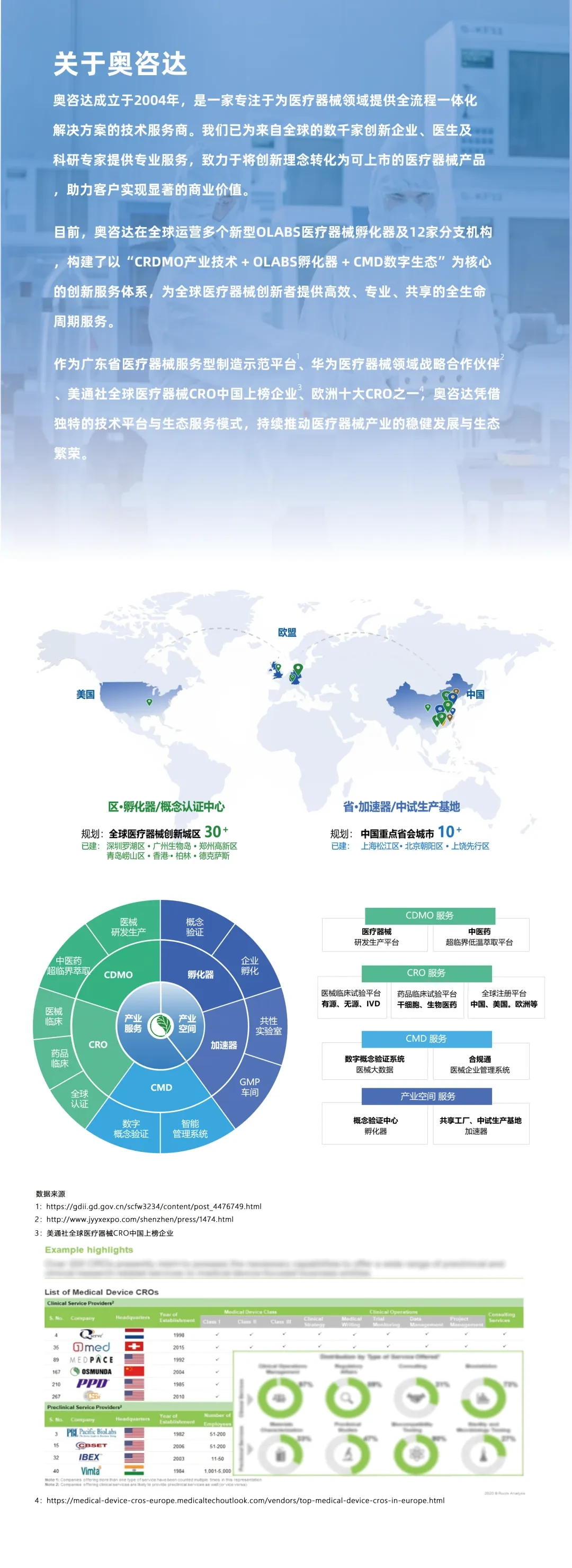
The Public Service Platform for Medical Devices is a key initiative jointly developed by OSIDA Group in collaboration with local governments, industrial parks, medical institutions, and research universities. It is dedicated to the incubation, translation, and investment of cutting-edge and innovative medical device technologies worldwide. By establishing research and technology transfer mechanisms aligned with international standards and implementing an open and shared operational model, the platform attracts and gathers high-caliber global scientific experts, physicians, and innovators. It provides comprehensive, end-to-end industrial technical services integrating R&D translation, incubation, and investment, fostering significant medical device innovations with substantial application value, thereby providing robust support for the advancement of the medical device industry and technological innovation. (Compiled by OSIDA)
8. Zhi Jing Ke Ji Completes Nearly RMB 10 Million in Angel Financing
Recently, Zhijing Technology, a product-focused company dedicated to the research and development of intelligent cleaning technologies, announced the completion of an angel financing round of nearly RMB 10 million. This round was jointly invested by Qicheng Investment and Canadian angel investors. The funds will be primarily used for the comprehensive expansion of domestic and international sales channels, the iterative upgrade of existing intelligent bathing assistance products for disabled elderly individuals, and the research and development of other new intelligent cleaning products. Zhijing Technology has launched a micro portable bathing robot specifically designed for people with disabilities. The main unit weighs only 4.5 kg and is comparable in size to a standard rice cooker, significantly enhancing the convenience of carrying and storage for caregivers or family members. In practical application scenarios, the device can be used directly on the bed without the need to move the elderly person. It takes only 10 minutes to complete the pre-bathing preparations, and a single caregiver can independently perform the entire assisted bathing procedure after simple training. Furthermore, the wrap-around bathing method on the bed ensures both thermal insulation and privacy protection. (Arterial Network)