Medtronic Announces Strategic Collaboration with Karl Storz to Integrate ENT Surgical Solutions

Medtronic
Medical Device Manufacturer

Source: Medical Device Business Review
01
June 4, 2026Medtronic Announces Strategic Partnership with KARL STORZ to Integrate KARL STORZ’s Endoscopic Instruments and Visualization Systems into Medtronic’s AiBLE ENT EcosystemBoth parties stated that this move aims to expand the coverage of integrated ENT surgical solutions and streamline the evaluation, procurement, and implementation processes in operating rooms across the United States.
This integration centers on Medtronic’s Stealth AXiS ENT Surgical System, which received FDA approval in March of this year. The system integrates preoperative planning, intraoperative navigation, and robotic guidance into a single platform. Under the collaboration agreement, the Stealth AXiS will work in conjunction with KARL STORZ’s sinus surgery endoscopy and imaging systems to form a cohesive, integrated solution.
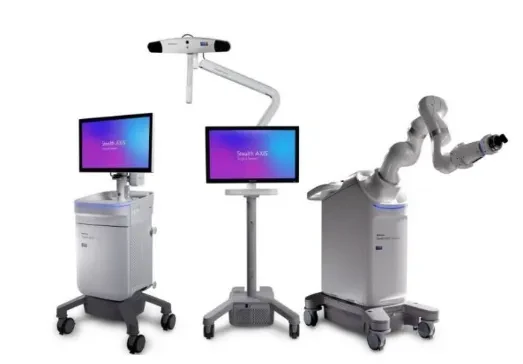
Stealth AXiS Surgical Robotic Platform for Otolaryngologic Surgery
In addition to device-level integration, the two companies will jointly provide medical education opportunities.Through advanced training courses, study seminars, and industry conferences, surgeons will have the opportunity to simultaneously practice operating Medtronic’s navigation and robotic systems alongside KARL STORZ’s endoscopic technology in the same setting.
Dan Mendelson, Vice President of Global Marketing for Medtronic’s ENT business, stated that the collaboration “aims to make it easier for customers to integrate appropriate technologies into the operating room,” with both parties “building a more interconnected ENT surgical ecosystem.” Chris Smith, Vice President of Sales and Marketing for Upper GI Endoscopy at KARL STORZ USA, pointed out that,The two companies have demonstrated “decades of continuous innovation” and established “trusted partnerships with clinicians.” This integration will “deliver a more unified and comprehensive solution, while remaining steadfastly centered on the needs of end-user clinicians.”
In addition, Medtronic released its fourth-quarter financial report the day before yesterday and disclosed progress in multiple R&D pipelines. This collaboration was announced shortly after the release of the financial report.
Previously, Medtronic’s AiBLE ecosystem had already integrated navigation, robotics, data and artificial intelligence, imaging, software, and implants. KARL STORZ primarily provides endoscopes and visualization systems in the field of otolaryngology, which are key instruments for direct intraoperative observation and manipulation.Following the integration of both systems, the workflow from image acquisition to surgical instrument localization will be seamlessly connected within a single ecosystem.
In its statement, Medtronic mentioned that the combined technologies can provide coordinated solutions and help streamline the evaluation, procurement, and implementation processes. This statement implies that,In the past, when constructing integrated ENT operating rooms, hospitals often needed to liaise separately with navigation system vendors and endoscope vendors, and address issues such as image transmission and data compatibility.External Validation. Medtronic and KARL STORZ now appear as a consortium, enabling the procurement side to evaluate and introduce this collaboratively designed combined solution in an integrated manner.
The joint medical education program similarly reflects this bundled approach. When surgeons, during their training curriculum, become accustomed from the learning phase onward to using the Stealth AXiS and KARL STORZ endoscopes within the same procedural workflow, this integrated user experience,This may alleviate the concerns of subsequent departments regarding the coordination of mixed use of equipment from different brands. For end users, the surgical team is familiar with a mutually validated integrated solution rather than several independent components.
This collaborative model aligns with the emerging “ecosystem” competition landscape in the field of surgical robots and navigation in recent years.By filling in the key modules within their product portfolios, companies provide hospitals with fully pre-integrated solutions. This reduces integration risks at the hospital level, but also implies that purchasers may become increasingly dependent on a single supply system.
This content is for reference only and does not constitute investment advice. Readers are advised to exercise due diligence in evaluating the information.If any platform republishes this article, it shall bear sole responsibility for such republication. Medical Device Business Review shall not be held liable for any secondary dissemination effects arising therefrom.

If you find the content helpful, please feel free to★、Like、Forward!
Your Support Is Our Greatest Motivation